Search
00
GBAF Logo
trophy
Top StoriesInterviewsBusinessFinanceBankingTechnologyInvestingTradingVideosAwardsMagazinesHeadlinesTrends

Subscribe to our newsletter

Get the latest news and updates from our team.

Global Banking & Finance Review®

Global Banking & Finance Review® - Subscribe to our newsletter

Company

    GBAF Logo
    • About Us
    • Profile
    • Privacy & Cookie Policy
    • Terms of Use
    • Contact Us
    • Advertising
    • Submit Post
    • Latest News
    • Research Reports
    • Press Release
    • Awards▾
      • About the Awards
      • Awards TimeTable
      • Submit Nominations
      • Testimonials
      • Media Room
      • Award Winners
      • FAQ
    • Magazines▾
      • Global Banking & Finance Review Magazine Issue 79
      • Global Banking & Finance Review Magazine Issue 78
      • Global Banking & Finance Review Magazine Issue 77
      • Global Banking & Finance Review Magazine Issue 76
      • Global Banking & Finance Review Magazine Issue 75
      • Global Banking & Finance Review Magazine Issue 73
      • Global Banking & Finance Review Magazine Issue 71
      • Global Banking & Finance Review Magazine Issue 70
      • Global Banking & Finance Review Magazine Issue 69
      • Global Banking & Finance Review Magazine Issue 66
    Top StoriesInterviewsBusinessFinanceBankingTechnologyInvestingTradingVideosAwardsMagazinesHeadlinesTrends

    Global Banking & Finance Review® is a leading financial portal and online magazine offering News, Analysis, Opinion, Reviews, Interviews & Videos from the world of Banking, Finance, Business, Trading, Technology, Investing, Brokerage, Foreign Exchange, Tax & Legal, Islamic Finance, Asset & Wealth Management.
    Copyright © 2010-2026 GBAF Publications Ltd - All Rights Reserved. | Sitemap | Tags | Developed By eCorpIT

    Editorial & Advertiser disclosure

    Global Banking & Finance Review® is an online platform offering news, analysis, and opinion on the latest trends, developments, and innovations in the banking and finance industry worldwide. The platform covers a diverse range of topics, including banking, insurance, investment, wealth management, fintech, and regulatory issues. The website publishes news, press releases, opinion and advertorials on various financial organizations, products and services which are commissioned from various Companies, Organizations, PR agencies, Bloggers etc. These commissioned articles are commercial in nature. This is not to be considered as financial advice and should be considered only for information purposes. It does not reflect the views or opinion of our website and is not to be considered an endorsement or a recommendation. We cannot guarantee the accuracy or applicability of any information provided with respect to your individual or personal circumstances. Please seek Professional advice from a qualified professional before making any financial decisions. We link to various third-party websites, affiliate sales networks, and to our advertising partners websites. When you view or click on certain links available on our articles, our partners may compensate us for displaying the content to you or make a purchase or fill a form. This will not incur any additional charges to you. To make things simpler for you to identity or distinguish advertised or sponsored articles or links, you may consider all articles or links hosted on our site as a commercial article placement. We will not be responsible for any loss you may suffer as a result of any omission or inaccuracy on the website.

    Home > Finance > Has lockdown marked the end of cash as we know it?
    Finance

    Has lockdown marked the end of cash as we know it?

    Published by linker 5

    Posted on September 25, 2020

    4 min read

    Last updated: January 21, 2026

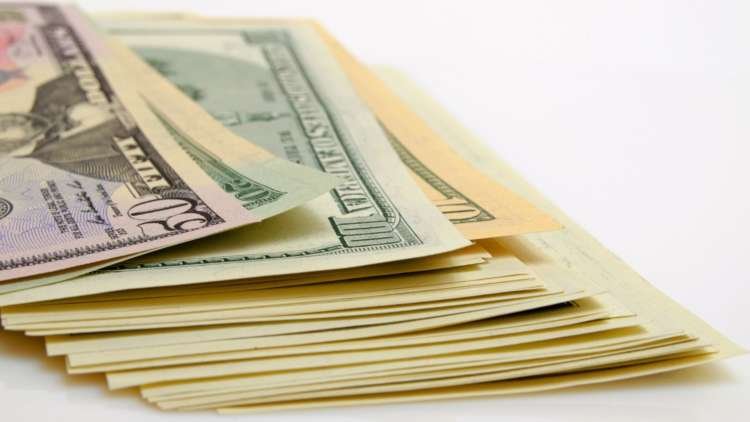
    An image representing the transition from cash to digital and contactless payment methods, highlighting the surge in cashless transactions during the pandemic. This aligns with the article discussing the end of cash as we know it.
    A digital payment transaction symbolizing the shift to cashless society - Global Banking & Finance Review
    Why waste money on news and opinion when you can access them for free?

    Take advantage of our newsletter subscription and stay informed on the go!

    Subscribe

    By James Booth, VP of Payment Partnerships EMEA, PPRO

    Since the start of the pandemic, businesses around the world have drastically changed their operations to protect employees and customers. One significant shift has been the discouragement of the use of cash in favour of digital and contactless payment methods. On the surface, moving away from cash seems like the safe, obvious thing to do to curb the spread of the virus. But, the idea of being propelled towards an innovative, digital-first, cashless society is also compelling.

    Has cashless gone viral?

    Recent months have forced the world online, leading to a surge in e-commerce with UK online sales seeing a rise of 168% in May and steady growth ever since. In fact, PPRO’s transaction engine, has seen online purchases across the globe increase dramatically in 2020: purchases of women’s clothing are up 311%, food and beverage by 285%, and healthcare and cosmetics by 160%.

    Alongside a shift to online shopping, a recent report revealed 7.4 million in the UK are now living an almost cashless life – claiming changing payment habits has left Britons better prepared for life in lockdown. In fact, according to recent research from PPRO, 45% of UK consumers think cash will be a thing of the past in just five years. And this UK figure reflects a global trend. For example, 46% of Americans have turned to cashless payments in the wake of COVID-19. And in Italy, the volume of cashless transactions has skyrocketed by more than 80%.

    More choice than ever before

    Whilst the pandemic and restrictions surrounding cash have certainly accelerated the UK towards a cashless society, the proliferation of local payment methods (LPMs) in the UK, such as PayPal, Klarna and digital wallets, have also been a key driver. Today, 31% of UK consumers report they are confident using mobile wallets, such as Apple Pay. Those in Generation Z are particularly keen, with 68% expressing confidence using them[1].

    As LPM usage continues to accelerate, the use of credit and debit cards are likely to decline in the coming years. Whilst older generations show an affinity with plastic, younger consumers feel less secure around its usage. 96% of Baby Boomers and Generation X confirmed they feel confident using credit/debit cards, compared to just 75% of Generation Z[2].

    Does social distancing mean financial exclusion?

    As we hurtle into a digital age, leaving cash in the rearview, there are ramifications of going completely cashless to consider. We must take into consideration how removing cash could disenfranchise over a quarter of our society; 26% of the global population doesn’t have a traditional bank account. Across Latin America, 38% of shoppers are unbanked, and nearly 1 in 5 online transactions are completed with cash. While in Africa and the Middle East, only 50% of consumers are banked in the traditional sense, and 12% have access to a credit card. Even here in the UK, approximately 1.3 million UK adults are classed as unbanked, exposing the large number of consumers affected by any ban on cash.

    Even when shopping online – many consumers rely on cash-based payments. At the checkout page, consumers are provided with a barcode for their order. They take this barcode (either printed or on their mobile device) to a local convenience store or bank and pay in cash. At that point, the goods are shipped.

    There are also older generations to consider. Following the closure of one in eight banks and cashpoints during Coronavirus, the government faced calls to act swiftly to protect access to cash, as pensioners struggled to access their savings. Despite the direction society is headed, there are a significant number of older people that still rely on cash – they have grown up using it. With an estimated two million people in the UK relying on cash for day to day spending, it is important that it does not disappear in its entirety.

    Supporting the transition away from cash

    Cashless protocols not only restrict access to goods and services for consumers but also limit revenue opportunity for merchants. While 2020 has provided the global economy with one great reason to reduce the acceptance of cash, the payments industry has billions of reasons to offer multiple options that cater to the needs of every kind of shopper around the world.

    Whilst it seems younger generations are driving LPM adoption, it is important that older generations aren’t forgotten. If online shops fail to offer a variety of preferred payment methods, consumers will not hesitate to shop elsewhere. With 44% of consumers reporting they would stop a purchase online if their favourite payment method wasn’t available – this is something merchants need to address to attract and retain loyal customers.

    More from Finance

    Explore more articles in the Finance category

    Image for Greenland foreign minister says US talks are positive but the outcome remains uncertain
    Greenland foreign minister says US talks are positive but the outcome remains uncertain
    Image for Hungary's opposition Tisza promises wealth tax, euro adoption in election programme
    Hungary's opposition Tisza promises wealth tax, euro adoption in election programme
    Image for Farmers report 'catastrophic' damage to crops as Storm Marta hits Spain and Portugal
    Farmers report 'catastrophic' damage to crops as Storm Marta hits Spain and Portugal
    Image for If US attacks, Iran says it will strike US bases in the region
    If US attacks, Iran says it will strike US bases in the region
    Image for Olympics-Biathlon-Winter Games bring tourism boost to biathlon hotbed of northern Italy
    Olympics-Biathlon-Winter Games bring tourism boost to biathlon hotbed of northern Italy
    Image for Analysis-Bitcoin loses Trump-era gains as crypto market volatility signals uncertainty
    Analysis-Bitcoin loses Trump-era gains as crypto market volatility signals uncertainty
    Image for NatWest closes in on $3.4 billion takeover of wealth manager Evelyn, Sky News reports
    NatWest closes in on $3.4 billion takeover of wealth manager Evelyn, Sky News reports
    Image for Stellantis-backed ACC drops plans for Italian, German gigafactories, union says
    Stellantis-backed ACC drops plans for Italian, German gigafactories, union says
    Image for US pushes Russia and Ukraine to end war by summer, Zelenskiy says
    US pushes Russia and Ukraine to end war by summer, Zelenskiy says
    Image for Russia launches massive attack on Ukraine's energy system, Zelenskiy says
    Russia launches massive attack on Ukraine's energy system, Zelenskiy says
    Image for Russia launched 400 drones, 40 missiles to hit Ukraine's energy sector, Zelenskiy says
    Russia launched 400 drones, 40 missiles to hit Ukraine's energy sector, Zelenskiy says
    Image for The Kyiv family, with its pets and pigs, defying Russia and the cold
    The Kyiv family, with its pets and pigs, defying Russia and the cold
    View All Finance Posts
    Previous Finance PostThe Psychology Behind a Strong Security Culture in the Financial Sector
    Next Finance PostUnionPay increases online acceptance across Europe and worldwide with Online Travel Agencies