Search
00
GBAF Logo
trophy
Top StoriesInterviewsBusinessFinanceBankingTechnologyInvestingTradingVideosAwardsMagazinesHeadlinesTrends

Subscribe to our newsletter

Get the latest news and updates from our team.

Global Banking & Finance Review®

Global Banking & Finance Review® - Subscribe to our newsletter

Company

    GBAF Logo
    • About Us
    • Profile
    • Privacy & Cookie Policy
    • Terms of Use
    • Contact Us
    • Advertising
    • Submit Post
    • Latest News
    • Research Reports
    • Press Release
    • Awards▾
      • About the Awards
      • Awards TimeTable
      • Submit Nominations
      • Testimonials
      • Media Room
      • Award Winners
      • FAQ
    • Magazines▾
      • Global Banking & Finance Review Magazine Issue 79
      • Global Banking & Finance Review Magazine Issue 78
      • Global Banking & Finance Review Magazine Issue 77
      • Global Banking & Finance Review Magazine Issue 76
      • Global Banking & Finance Review Magazine Issue 75
      • Global Banking & Finance Review Magazine Issue 73
      • Global Banking & Finance Review Magazine Issue 71
      • Global Banking & Finance Review Magazine Issue 70
      • Global Banking & Finance Review Magazine Issue 69
      • Global Banking & Finance Review Magazine Issue 66
    Top StoriesInterviewsBusinessFinanceBankingTechnologyInvestingTradingVideosAwardsMagazinesHeadlinesTrends

    Global Banking & Finance Review® is a leading financial portal and online magazine offering News, Analysis, Opinion, Reviews, Interviews & Videos from the world of Banking, Finance, Business, Trading, Technology, Investing, Brokerage, Foreign Exchange, Tax & Legal, Islamic Finance, Asset & Wealth Management.
    Copyright © 2010-2026 GBAF Publications Ltd - All Rights Reserved. | Sitemap | Tags | Developed By eCorpIT

    Editorial & Advertiser disclosure

    Global Banking & Finance Review® is an online platform offering news, analysis, and opinion on the latest trends, developments, and innovations in the banking and finance industry worldwide. The platform covers a diverse range of topics, including banking, insurance, investment, wealth management, fintech, and regulatory issues. The website publishes news, press releases, opinion and advertorials on various financial organizations, products and services which are commissioned from various Companies, Organizations, PR agencies, Bloggers etc. These commissioned articles are commercial in nature. This is not to be considered as financial advice and should be considered only for information purposes. It does not reflect the views or opinion of our website and is not to be considered an endorsement or a recommendation. We cannot guarantee the accuracy or applicability of any information provided with respect to your individual or personal circumstances. Please seek Professional advice from a qualified professional before making any financial decisions. We link to various third-party websites, affiliate sales networks, and to our advertising partners websites. When you view or click on certain links available on our articles, our partners may compensate us for displaying the content to you or make a purchase or fill a form. This will not incur any additional charges to you. To make things simpler for you to identity or distinguish advertised or sponsored articles or links, you may consider all articles or links hosted on our site as a commercial article placement. We will not be responsible for any loss you may suffer as a result of any omission or inaccuracy on the website.

    Home > Investing > German bonds set for worst month in decades as inflation hits new highs
    Investing

    German bonds set for worst month in decades as inflation hits new highs

    Published by Wanda Rich

    Posted on August 31, 2022

    3 min read

    Last updated: February 4, 2026

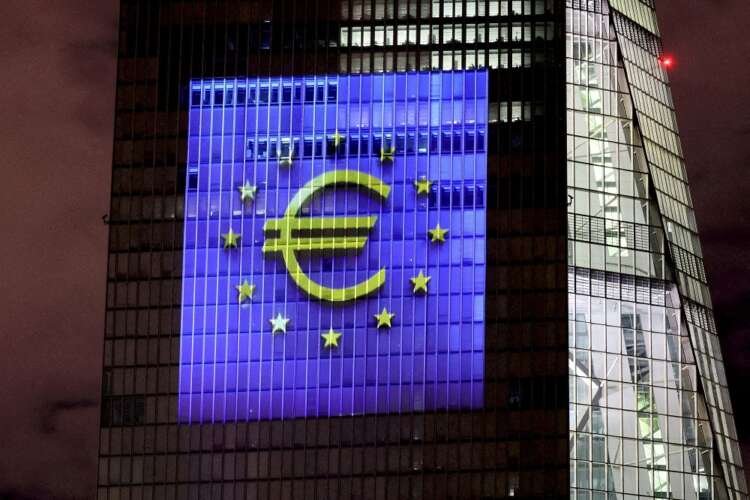
    The image captures the ECB headquarters illuminated for the Euro's 20th anniversary, reflecting the significant economic changes as German bonds face historic declines due to surging inflation.
    Illumination at ECB headquarters during Euro's anniversary - Global Banking & Finance Review
    Why waste money on news and opinion when you can access them for free?

    Take advantage of our newsletter subscription and stay informed on the go!

    Subscribe

    Tags:euro areainterest ratesfinancial markets

    By Dhara Ranasinghe

    LONDON (Reuters) – Germany’s borrowing costs rose to their highest level in over two months on Wednesday, and were set to end August with their biggest monthly surge in over 30 years, as data showed inflation in the euro area hitting another record high.

    Bond markets across Europe have been battered this month as surging gas prices, fueled by concerns about supplies from Russia, exacerbated inflation fears and pushed up expectations for higher interest rates even as recession fears grow.

    Euro zone inflation rose to another record high at 9.1% this month, beating expectations and solidifying the case for further big European Central Bank rate hikes.

    Significantly, closely-watched underlying price growth, which filters out volatile food and energy prices, jumped to 5.5% from 5.1%.

    “The most disappointing aspect of the inflation data is the core measure, where we have a bigger increase than in the headline measure,” said Chris Scicluna, head of economic research at Daiwa Capital Markets.

    “Even though we will get more support measures to help ease the gas crisis, inflation will move higher unless policymakers can get a better grip on gas markets in the euro area.”

    In a sign of the scale of the unease gripping investors, bond markets were set to end August with heavy price losses that have sent yields soaring.

    In Germany, the euro zone’s benchmark bond issuer, two-year yields rose to their highest since mid-June at around 1.2% and were last up 3 basis points on the day.

    They are up around 90 basis points for the month, set for its biggest monthly gain since 1981, according to Refinitiv data.

    Germany’s 10-year bond yield was poised for its biggest monthly jump since 1990, up over 70 basis points. It rose to its highest in just over two months at around 1.55%.

    French and Dutch 10-year bond yields were also set for the biggest monthly jump in decades. In Britain, also hit hard by soaring gas prices, 10-year bond yields were on track for their biggest monthly surge since the 1980s.

    While gas prices have come off their peaks, they are still up 30% in August alone.

    Russia meanwhile halted gas supplies via a major pipeline to Europe on Wednesday, intensifying an economic battle between Moscow and Brussels and raising the prospects of recession and energy rationing in some of the region’s richest countries.

    “Front-end rates are very much dancing to the energy market’s tune and this is what propelled them higher in August,” said ING senior rates strategist Antoine Bouvet.

    “Clearly the volatility in the gas and power markets is spilling over into bonds,” said Bouvet. “The ECB, by voicing fear of de-anchoring of inflation expectations, has effectively encouraged greater correlation between bonds and energy.”

    The ECB meets next week and is expected to hike rates by at least half a percentage point.

    (Reporting by Dhara Ranasinghe; Editing by Ana Nicolaci da Costa and Tomasz Janowski)

    Frequently Asked Questions about German bonds set for worst month in decades as inflation hits new highs

    1What is inflation?

    Inflation is the rate at which the general level of prices for goods and services rises, eroding purchasing power. It is typically measured as an annual percentage increase.

    2What are interest rates?

    Interest rates represent the cost of borrowing money or the return on savings, expressed as a percentage of the principal amount. They are influenced by central bank policies and economic conditions.

    3What is the euro area?

    The euro area refers to the group of European Union countries that have adopted the euro as their official currency, facilitating easier trade and economic stability among member states.

    4What is the European Central Bank?

    The European Central Bank (ECB) is the central bank for the euro and is responsible for monetary policy within the euro area, aiming to maintain price stability and manage inflation.

    More from Investing

    Explore more articles in the Investing category

    Image for Understanding the Factors Shaping Bitcoin’s Current Market Conditions
    Understanding the Factors Shaping Bitcoin’s Current Market Conditions
    Image for Understanding Investment Management Consulting Services in the U.S. Market
    Understanding Investment Management Consulting Services in the U.S. Market
    Image for The Role of DST Sponsors and Service Providers in Delaware Statutory Trusts
    The Role of DST Sponsors and Service Providers in Delaware Statutory Trusts
    Image for Understanding Self-Directed IRA Structures and Platform Models
    Understanding Self-Directed IRA Structures and Platform Models
    Image for 1031 Exchanges and Delaware Statutory Trusts: What Investors Need to Know
    1031 Exchanges and Delaware Statutory Trusts: What Investors Need to Know
    Image for Excellence in Innovation – Strategic Investment & Economic Transformation Egypt 2025
    Excellence in Innovation – Strategic Investment & Economic Transformation Egypt 2025
    Image for What Is the Average Pension Pot in the UK? (By Age)
    What Is the Average Pension Pot in the UK? (By Age)
    Image for From Money Printing to Market Surge: The Macro Forces Driving Crypto in 2026
    From Money Printing to Market Surge: The Macro Forces Driving Crypto in 2026
    Image for  Millennials Aren’t Ignoring Retirement. They’re Rebuilding It.
    Millennials Aren’t Ignoring Retirement. They’re Rebuilding It.
    Image for BridgeWise Launches FixedWise, the First AI Solution Bringing Granular Bond Intelligence to the European Market
    BridgeWise Launches FixedWise, the First AI Solution Bringing Granular Bond Intelligence to the European Market
    Image for Why Financial Advisors Are Rethinking Gold Allocations
    Why Financial Advisors Are Rethinking Gold Allocations
    Image for From Opaque to Investable: Yaniv Bertele's Blueprint for Transparent Alternatives
    From Opaque to Investable: Yaniv Bertele's Blueprint for Transparent Alternatives
    View All Investing Posts
    Previous Investing PostEuro zone yields fall as US payrolls seen easing rate-hike pressure
    Next Investing PostHow to Approach ROI Measurement Within IT Projects