
There are plenty of dynamics that drive USD/CAD price action, perhaps a little more complicated than the rest of the major pairs. For one, aside from the usual fundamental reports that influence Loonie demand, the Canadian dollar is also driven to an extent by US economic data. This is because Canada and the US are very closely linked geographically and therefore also in trade and politics. As such, positive developments from the US economy also tend to provide support for the Loonie at some instances.
In terms of economic data though, the Canadian dollar is sensitive to GDP data, employment reports, retail sales, trade balance, and CPI. In addition to that, oil prices also tend to influence Canadian dollar movement, and it has been positive for the Loonie that crude oil has been gaining so far this year. This is because the ongoing conflict in Russia has opened the possibility of an oil supply shock, which has driven up prices.
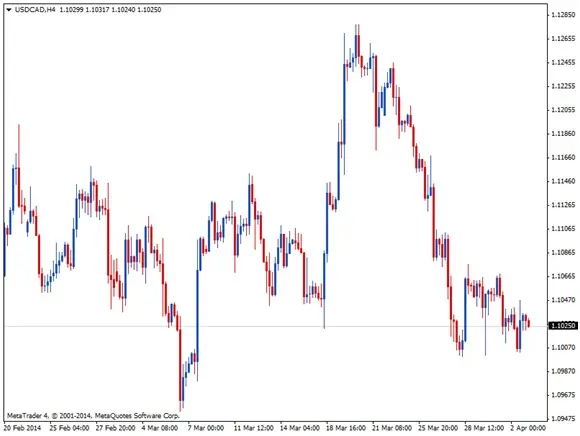
Data from Canada has actually been weak recently, compared to other major economies and even the US. However, the Loonie has been enjoying support both from improving US data and rising oil prices. Employment in Canada has lagged and so has consumer spending.
Monetary policy of the BOC (Bank of Canada) also carries weight in terms of determining long-term price action. For now, it appears that the BOC is one of the more neutral central banks around, relative to the BOE and RBNZ which have both shown tightening biases or the ECB which favors further easing.

CapitalTrustMarkets
Of course this could change dependent on data though and it remains to be seen whether the labor sector or trade have picked up in the recent months. Cold weather conditions have also affected Canada recently and this might take its toll on hiring activity.
Perhaps the complex factors that drive USD/CAD is the reason why this currency pair tends to range. On its 4-hour chart though, it can be seen that the pair broke this kind of behavior recently as it made a sharp surge to the 1.1200 levels then followed it up with a sharp decline.
Data from Canada should continue to drive the pair’s movement, probably more so than in the past few months, as the conflict in Russia seems to have moved out of the headlines already. The Fed has decided to carry on with its taper plan for the near term so it’s up to the BOC to indicate its monetary policy bias.
To keep yourself updated with the latest financial news, visit the official website of Capital Trust Markets
Capital Trust Markets is an online Forex brokerage firm, headquartered in New Zealand. It was established in 2013, with an emphasis on providing the most excellent customer services in the industry. The trading environment offered to investors and traders is unparalleled – devoid of all common mistakes usually prevalent in the financial trading industry. The focused determination to provide the highest quality products, services, and support to clients and customers is what truly sets Capital Trust Markets apart from every other major brokerage firm.