Search
00
GBAF Logo
trophy
Top StoriesInterviewsBusinessFinanceBankingTechnologyInvestingTradingVideosAwardsMagazinesHeadlinesTrends

Subscribe to our newsletter

Get the latest news and updates from our team.

Global Banking and Finance Review

Global Banking & Finance Review

Company

    GBAF Logo
    • About Us
    • Profile
    • Privacy & Cookie Policy
    • Terms of Use
    • Contact Us
    • Advertising
    • Submit Post
    • Latest News
    • Research Reports
    • Press Release
    • Awards▾
      • About the Awards
      • Awards TimeTable
      • Submit Nominations
      • Testimonials
      • Media Room
      • Award Winners
      • FAQ
    • Magazines▾
      • Global Banking & Finance Review Magazine Issue 79
      • Global Banking & Finance Review Magazine Issue 78
      • Global Banking & Finance Review Magazine Issue 77
      • Global Banking & Finance Review Magazine Issue 76
      • Global Banking & Finance Review Magazine Issue 75
      • Global Banking & Finance Review Magazine Issue 73
      • Global Banking & Finance Review Magazine Issue 71
      • Global Banking & Finance Review Magazine Issue 70
      • Global Banking & Finance Review Magazine Issue 69
      • Global Banking & Finance Review Magazine Issue 66
    Top StoriesInterviewsBusinessFinanceBankingTechnologyInvestingTradingVideosAwardsMagazinesHeadlinesTrends

    Global Banking & Finance Review® is a leading financial portal and online magazine offering News, Analysis, Opinion, Reviews, Interviews & Videos from the world of Banking, Finance, Business, Trading, Technology, Investing, Brokerage, Foreign Exchange, Tax & Legal, Islamic Finance, Asset & Wealth Management.
    Copyright © 2010-2025 GBAF Publications Ltd - All Rights Reserved.

    Editorial & Advertiser disclosure

    Global Banking and Finance Review is an online platform offering news, analysis, and opinion on the latest trends, developments, and innovations in the banking and finance industry worldwide. The platform covers a diverse range of topics, including banking, insurance, investment, wealth management, fintech, and regulatory issues. The website publishes news, press releases, opinion and advertorials on various financial organizations, products and services which are commissioned from various Companies, Organizations, PR agencies, Bloggers etc. These commissioned articles are commercial in nature. This is not to be considered as financial advice and should be considered only for information purposes. It does not reflect the views or opinion of our website and is not to be considered an endorsement or a recommendation. We cannot guarantee the accuracy or applicability of any information provided with respect to your individual or personal circumstances. Please seek Professional advice from a qualified professional before making any financial decisions. We link to various third-party websites, affiliate sales networks, and to our advertising partners websites. When you view or click on certain links available on our articles, our partners may compensate us for displaying the content to you or make a purchase or fill a form. This will not incur any additional charges to you. To make things simpler for you to identity or distinguish advertised or sponsored articles or links, you may consider all articles or links hosted on our site as a commercial article placement. We will not be responsible for any loss you may suffer as a result of any omission or inaccuracy on the website.

    Home > Investing > Fifty shades of green: EU sustainable fund rules muddy the waters
    Investing

    Fifty shades of green: EU sustainable fund rules muddy the waters

    Fifty shades of green: EU sustainable fund rules muddy the waters

    Published by maria gbaf

    Posted on August 20, 2021

    Featured image for article about Investing

    By Tommy Wilkes

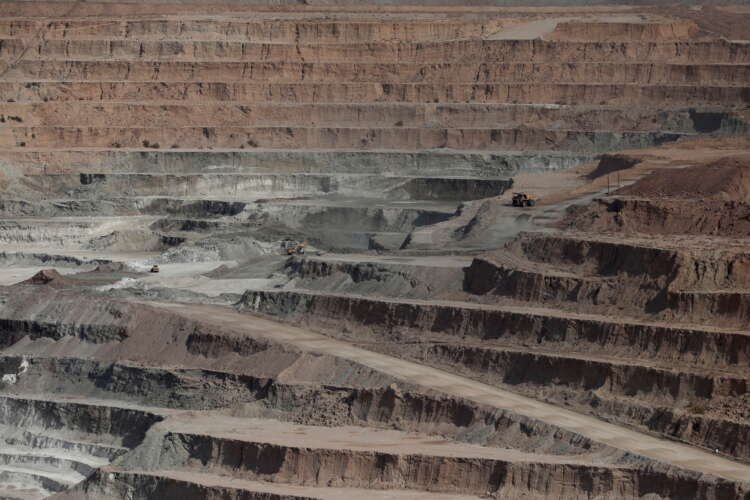
    LONDON (Reuters) – If you want to invest in a fund branded as sustainable under new European Union rules, you’re spoilt for choice. But you may end up owning shares in oil companies, mining conglomerates or tobacco firms.

    A Reuters analysis of funds marketed to retail investors increasingly hungry for anything green shows asset managers are adopting a wide range of strategies to justify the sustainable label since the EU brought in disclosure rules in March.

    The EU’s Sustainable Finance Disclosure Regulation (SFDR) is an attempt to deliver transparency for investors focussed on environmental, social and governance (ESG) issues but fund managers say the definition of sustainability is too vague and has created confusion about what makes the cut.

    Take the Allianz Global Water fund.

    It actively invests in companies that improve the supply, management and quality of water and is marketed as falling under Article 8 of the SFDR, which means it is a fund that promotes “among other characteristics, environmental or social characteristics, or a combination of those characteristics”.

    Now take one of Legal & General Investment Management’s (LGIM) Article 8 exchange-traded funds (ETF).

    The L&G UK Equity UCITS ETF tracks the Solactive Core United Kingdom Large & Mid Cap Index, which excludes coal miners and firms that make weapons such as cluster bombs or have breached U.N. principles https://www.unglobalcompact.org/what-is-gc/mission/principles on corporate values.

    Its top 10 holdings are the same as for L&G funds tracking the FTSE 100 index that don’t carry the Article 8 label and include oil giants BP and Royal Dutch Shell, miner Rio Tinto and British American Tobacco.

    L&G said the fund was considered Article 8 because it promotes sustainability characteristics by applying LGIM’s Future World Protection List and this was a “binding element” of the investment process.

    “The lens we should use is what is right. It’s not just about what is legally required because it seems not very much is legally required,” said Eric Christian Pedersen, head of responsible investments at Nordea Asset Management.

    GREEN RUSH

    The new EU rules have sparked a rush by investment firms to badge products as sustainable as they seek to grab a share of the booming market in sustainable mutual funds that hit a record $2.3 trillion in the second quarter.

    From March 10, the rules automatically placed all investment funds into a coverall Article 6 category. Managers could then upgrade them to Article 8, or Article 9 which is for products with an explicit sustainable investment objective.

    The investment industry has dubbed Article 8 funds “light green” and Article 9 “dark green”, though the EU regulations do not use those terms.

    A European Commission spokesperson said its rules were designed to ensure funds were transparent about the sustainability of products so investors could make choices, and was not a labelling scheme.

    Reuters asked 20 of the biggest fund houses for a list of products they market as Article 8 or 9.

    An analysis of the funds of the 14 firms that replied shows some Article 8 products have limited claims to sustainability, such as those tracking conventional stock and bond indexes, investing in fossil fuels or buying debt from countries with weak ESG standards such as Saudi Arabia and Nigeria.

    Some claims hinge on funds excluding securities they would not have bought anyway, based on the index being tracked.

    For some in the industry this represents so-called greenwashing, where the benefits of a business or asset are exaggerated to attract environmentally aware investors.

    Hortense Bioy, director of sustainability research at Morningstar, said Article 8 funds ranged from climate-themed green to “very, very light green”, excluding just a few firms.

    “Managers need to ask if they are even relevant,” she said. “That is the key message: investors shouldn’t expect anything from Article 8.”

    INDEX TRACKERS

    Industry experts say none of the asset managers is breaking any rules. Managers determine themselves which article to apply and Brussels does not check whether claims are justified.

    The Reuters analysis shows some managers are more likely to brand funds as sustainable than others.

    Two of Europe’s biggest firms, Alliance Bernstein and AXA Investment Management, classify nine in every 10 euros of assets they manage under the scope of SFDR as Article 8 or 9, according to data they supplied to Reuters.

    Others such as Pictet Asset Management and Allianz Global Investors place a little over half of their relevant assets in those categories, their data showed.

    Graphic: Fund managers and sustainable assets https://graphics.reuters.com/EUROPE-INVESTMENT/akpezzqbxvr/chart.png

    Morningstar data published in July shows a third of the assets falling under SFDR are now billed as Article 8 or 9, with Article 6 products disappearing from recommendation lists sent by investment advisers to retail investors.

    Many Article 8 funds have clear sustainability criteria, such as strategies that invest in businesses with the lowest carbon impact in their sectors, or Allianz’s water-focused fund.

    For others, that’s not always the case. Candriam’s Cleome Index Europe Equities is another Article 8 product. It tracks the MSCI Europe index but excludes companies that don’t comply with the U.N. principles.

    Critics say such exclusions are very limited.

    When asked for an example, Candriam did not point to any company expelled from the U.N. list that is also part of MSCI Europe. The Candriam fund’s top 10 holdings replicate the index.

    A Candriam spokesperson said it also applies exclusions on companies materially involved in controversial weapons, tobacco and thermal coal, and the Cleome equity fund uses proprietary ESG analysis relative to the benchmark, justifying Article 8.

    Morningstar analysis shows one in four Article 8 funds has exposure to companies involved in controversial weapons and one in five to tobacco. A third of Article 8 and 9 funds have more than a 5% exposure to fossil fuel firms.

    ‘NASTY’ ESG?

    Demand for funds with a sustainable label is soaring.

    “There is a clear commercial opportunity,” said Eric Borremans, head of ESG at Switzerland’s Pictet Asset Management, which classes 57% of its assets as Article 8 or 9.

    Borremans said Pictet had no index-tracking Article 8 funds but planned to apply the label to some after incorporating more exclusions.

    U.S. investment giant BlackRock told Reuters it expected to exceed a target of putting 70% of its new, or rebranded, products this year under Articles 8 or 9.

    Some funds use ESG thresholds to justify sustainable labels.

    JPMorgan Asset Management says 51% of the securities in its Article 8 range must carry an ESG score in the top 80%. These are scores fund firms or third-party providers give companies based on ESG metrics such as carbon usage, governance or human rights in supply chains.

    Critics say such thresholds are too weak.

    “You have funds saying most of our holdings are not nasty and therefore I’m ESG,” said Pedersen at Nordea, which requires 100% of its Article 8 holdings be above a minimum ESG score.

    The JPMorgan threshold, for example, also means 49% of companies in its funds could rank in the bottom 20% for ESG goals, although the funds exclude sectors such as tobacco, controversial weapons and coal miners.

    JPMorgan Asset Management did not respond to questions about ESG scores. A spokesperson said the firm remained “focused on a thoughtful and thorough approach to the implementation of SFDR”.

    Pictet’s Borremans said funds interpreting the rules loosely now can get away with it, but strategies sailing close to the wind will eventually be exposed.

    By next year, the EU will flesh out its taxonomy — a list of environmentally sustainable economic activities — and from July 2022 funds must detail how they meet sustainability criteria based on the EU’s Regulatory Technical Standards (RTS) that will clarify disclosure requirements.

    “It could hurt the reputation of an asset manager to offer financial products as falling under Article 8 and 9 or as taxonomy aligned if this cannot subsequently be backed when the RTS enters into application,” the European Commission spokesperson said in emailed comments.

    Amundi’s head of cross-border product, Florian Schneider, said SFDR rules made clear products with minimal exclusions were Article 8.

    “The danger is everyone blindly assuming all Article 8 funds offer the same level of ESG integration when there are very different shades of green.”

    ($1 = 0.7274 pounds)

    (Additional reporting by Simon Jessop; Editing by Sujata Rao, Alexander Smith and David Clarke)

    By Tommy Wilkes

    LONDON (Reuters) – If you want to invest in a fund branded as sustainable under new European Union rules, you’re spoilt for choice. But you may end up owning shares in oil companies, mining conglomerates or tobacco firms.

    A Reuters analysis of funds marketed to retail investors increasingly hungry for anything green shows asset managers are adopting a wide range of strategies to justify the sustainable label since the EU brought in disclosure rules in March.

    The EU’s Sustainable Finance Disclosure Regulation (SFDR) is an attempt to deliver transparency for investors focussed on environmental, social and governance (ESG) issues but fund managers say the definition of sustainability is too vague and has created confusion about what makes the cut.

    Take the Allianz Global Water fund.

    It actively invests in companies that improve the supply, management and quality of water and is marketed as falling under Article 8 of the SFDR, which means it is a fund that promotes “among other characteristics, environmental or social characteristics, or a combination of those characteristics”.

    Now take one of Legal & General Investment Management’s (LGIM) Article 8 exchange-traded funds (ETF).

    The L&G UK Equity UCITS ETF tracks the Solactive Core United Kingdom Large & Mid Cap Index, which excludes coal miners and firms that make weapons such as cluster bombs or have breached U.N. principles https://www.unglobalcompact.org/what-is-gc/mission/principles on corporate values.

    Its top 10 holdings are the same as for L&G funds tracking the FTSE 100 index that don’t carry the Article 8 label and include oil giants BP and Royal Dutch Shell, miner Rio Tinto and British American Tobacco.

    L&G said the fund was considered Article 8 because it promotes sustainability characteristics by applying LGIM’s Future World Protection List and this was a “binding element” of the investment process.

    “The lens we should use is what is right. It’s not just about what is legally required because it seems not very much is legally required,” said Eric Christian Pedersen, head of responsible investments at Nordea Asset Management.

    GREEN RUSH

    The new EU rules have sparked a rush by investment firms to badge products as sustainable as they seek to grab a share of the booming market in sustainable mutual funds that hit a record $2.3 trillion in the second quarter.

    From March 10, the rules automatically placed all investment funds into a coverall Article 6 category. Managers could then upgrade them to Article 8, or Article 9 which is for products with an explicit sustainable investment objective.

    The investment industry has dubbed Article 8 funds “light green” and Article 9 “dark green”, though the EU regulations do not use those terms.

    A European Commission spokesperson said its rules were designed to ensure funds were transparent about the sustainability of products so investors could make choices, and was not a labelling scheme.

    Reuters asked 20 of the biggest fund houses for a list of products they market as Article 8 or 9.

    An analysis of the funds of the 14 firms that replied shows some Article 8 products have limited claims to sustainability, such as those tracking conventional stock and bond indexes, investing in fossil fuels or buying debt from countries with weak ESG standards such as Saudi Arabia and Nigeria.

    Some claims hinge on funds excluding securities they would not have bought anyway, based on the index being tracked.

    For some in the industry this represents so-called greenwashing, where the benefits of a business or asset are exaggerated to attract environmentally aware investors.

    Hortense Bioy, director of sustainability research at Morningstar, said Article 8 funds ranged from climate-themed green to “very, very light green”, excluding just a few firms.

    “Managers need to ask if they are even relevant,” she said. “That is the key message: investors shouldn’t expect anything from Article 8.”

    INDEX TRACKERS

    Industry experts say none of the asset managers is breaking any rules. Managers determine themselves which article to apply and Brussels does not check whether claims are justified.

    The Reuters analysis shows some managers are more likely to brand funds as sustainable than others.

    Two of Europe’s biggest firms, Alliance Bernstein and AXA Investment Management, classify nine in every 10 euros of assets they manage under the scope of SFDR as Article 8 or 9, according to data they supplied to Reuters.

    Others such as Pictet Asset Management and Allianz Global Investors place a little over half of their relevant assets in those categories, their data showed.

    Graphic: Fund managers and sustainable assets https://graphics.reuters.com/EUROPE-INVESTMENT/akpezzqbxvr/chart.png

    Morningstar data published in July shows a third of the assets falling under SFDR are now billed as Article 8 or 9, with Article 6 products disappearing from recommendation lists sent by investment advisers to retail investors.

    Many Article 8 funds have clear sustainability criteria, such as strategies that invest in businesses with the lowest carbon impact in their sectors, or Allianz’s water-focused fund.

    For others, that’s not always the case. Candriam’s Cleome Index Europe Equities is another Article 8 product. It tracks the MSCI Europe index but excludes companies that don’t comply with the U.N. principles.

    Critics say such exclusions are very limited.

    When asked for an example, Candriam did not point to any company expelled from the U.N. list that is also part of MSCI Europe. The Candriam fund’s top 10 holdings replicate the index.

    A Candriam spokesperson said it also applies exclusions on companies materially involved in controversial weapons, tobacco and thermal coal, and the Cleome equity fund uses proprietary ESG analysis relative to the benchmark, justifying Article 8.

    Morningstar analysis shows one in four Article 8 funds has exposure to companies involved in controversial weapons and one in five to tobacco. A third of Article 8 and 9 funds have more than a 5% exposure to fossil fuel firms.

    ‘NASTY’ ESG?

    Demand for funds with a sustainable label is soaring.

    “There is a clear commercial opportunity,” said Eric Borremans, head of ESG at Switzerland’s Pictet Asset Management, which classes 57% of its assets as Article 8 or 9.

    Borremans said Pictet had no index-tracking Article 8 funds but planned to apply the label to some after incorporating more exclusions.

    U.S. investment giant BlackRock told Reuters it expected to exceed a target of putting 70% of its new, or rebranded, products this year under Articles 8 or 9.

    Some funds use ESG thresholds to justify sustainable labels.

    JPMorgan Asset Management says 51% of the securities in its Article 8 range must carry an ESG score in the top 80%. These are scores fund firms or third-party providers give companies based on ESG metrics such as carbon usage, governance or human rights in supply chains.

    Critics say such thresholds are too weak.

    “You have funds saying most of our holdings are not nasty and therefore I’m ESG,” said Pedersen at Nordea, which requires 100% of its Article 8 holdings be above a minimum ESG score.

    The JPMorgan threshold, for example, also means 49% of companies in its funds could rank in the bottom 20% for ESG goals, although the funds exclude sectors such as tobacco, controversial weapons and coal miners.

    JPMorgan Asset Management did not respond to questions about ESG scores. A spokesperson said the firm remained “focused on a thoughtful and thorough approach to the implementation of SFDR”.

    Pictet’s Borremans said funds interpreting the rules loosely now can get away with it, but strategies sailing close to the wind will eventually be exposed.

    By next year, the EU will flesh out its taxonomy — a list of environmentally sustainable economic activities — and from July 2022 funds must detail how they meet sustainability criteria based on the EU’s Regulatory Technical Standards (RTS) that will clarify disclosure requirements.

    “It could hurt the reputation of an asset manager to offer financial products as falling under Article 8 and 9 or as taxonomy aligned if this cannot subsequently be backed when the RTS enters into application,” the European Commission spokesperson said in emailed comments.

    Amundi’s head of cross-border product, Florian Schneider, said SFDR rules made clear products with minimal exclusions were Article 8.

    “The danger is everyone blindly assuming all Article 8 funds offer the same level of ESG integration when there are very different shades of green.”

    ($1 = 0.7274 pounds)

    (Additional reporting by Simon Jessop; Editing by Sujata Rao, Alexander Smith and David Clarke)

    Related Posts
     Millennials Aren’t Ignoring Retirement. They’re Rebuilding It.
    Millennials Aren’t Ignoring Retirement. They’re Rebuilding It.
    BridgeWise Launches FixedWise, the First AI Solution Bringing Granular Bond Intelligence to the European Market
    BridgeWise Launches FixedWise, the First AI Solution Bringing Granular Bond Intelligence to the European Market
    Why Financial Advisors Are Rethinking Gold Allocations
    Why Financial Advisors Are Rethinking Gold Allocations
    From Opaque to Investable: Yaniv Bertele's Blueprint for Transparent Alternatives
    From Opaque to Investable: Yaniv Bertele's Blueprint for Transparent Alternatives
    Private Equity Needs AI Advocates
    Private Equity Needs AI Advocates
    Understanding the Global Impact of Rising Medical Insurance Premiums on the Middle Class
    Understanding the Global Impact of Rising Medical Insurance Premiums on the Middle Class
    The New Model Driving Creative Investment in University Innovation
    The New Model Driving Creative Investment in University Innovation
    The return of tangible assets in modern portfolios
    The return of tangible assets in modern portfolios
    Retro Bikes And Insurance: What You Should Know?
    Retro Bikes And Insurance: What You Should Know?
    Top Stocks Powering the AI Boom in 2025
    Top Stocks Powering the AI Boom in 2025
    How often should you update your estate plan? The events that demand a refresh
    How often should you update your estate plan? The events that demand a refresh
    Top 5 Mutual Funds in the UAE: Performance, Features, and How to Invest
    Top 5 Mutual Funds in the UAE: Performance, Features, and How to Invest

    Why waste money on news and opinions when you can access them for free?

    Take advantage of our newsletter subscription and stay informed on the go!

    Subscribe

    Previous Investing PostCredit Agricole’s profit doubles even as investment banking lags
    Next Investing PostPound plumbs month’s low as stock rout hits risk currencies

    More from Investing

    Explore more articles in the Investing category

    How One Investor Learned to Find Value Through a Wider Lens

    How One Investor Learned to Find Value Through a Wider Lens

    Freedom Holding Corp’s Global Rise: Why Institutional Investors Are Betting Big

    Freedom Holding Corp’s Global Rise: Why Institutional Investors Are Betting Big

    Pro Visionary Helps Australians Strengthen Their Financial Resilience Through Licensed Wealth Strategies

    Pro Visionary Helps Australians Strengthen Their Financial Resilience Through Licensed Wealth Strategies

    How ZenInvestor Is Breaking Down Barriers to Financial Literacy and Empowering Everyday Investors Nationwide

    How ZenInvestor Is Breaking Down Barriers to Financial Literacy and Empowering Everyday Investors Nationwide

    Edward L. Shugrue III on Returning to the Office: A Cultural Shift and Investment Opportunity

    Edward L. Shugrue III on Returning to the Office: A Cultural Shift and Investment Opportunity

    How Private Capital Can Build Public Good

    How Private Capital Can Build Public Good

    Private Equity Has a Major Speed and Capacity Problem

    Private Equity Has a Major Speed and Capacity Problem

    Navigating AI Investing Tools: Wealth Management Disruption Ahead

    Navigating AI Investing Tools: Wealth Management Disruption Ahead

    MTF Trading Explained: What It Is, How It Works, and Key Benefits

    MTF Trading Explained: What It Is, How It Works, and Key Benefits

    Private Equity Has Trust Issues With AI

    Private Equity Has Trust Issues With AI

    Merifund Capital Management on FTSE 100 Gains

    Merifund Capital Management on FTSE 100 Gains

    Sycamine Capital Management sets outlook on Japan equities

    Sycamine Capital Management sets outlook on Japan equities

    View All Investing Posts