Search
00
GBAF Logo
trophy
Top StoriesInterviewsBusinessFinanceBankingTechnologyInvestingTradingVideosAwardsMagazinesHeadlinesTrends

Subscribe to our newsletter

Get the latest news and updates from our team.

Global Banking & Finance Review®

Global Banking & Finance Review® - Subscribe to our newsletter

Company

    GBAF Logo
    • About Us
    • Profile
    • Privacy & Cookie Policy
    • Terms of Use
    • Contact Us
    • Advertising
    • Submit Post
    • Latest News
    • Research Reports
    • Press Release
    • Awards▾
      • About the Awards
      • Awards TimeTable
      • Submit Nominations
      • Testimonials
      • Media Room
      • Award Winners
      • FAQ
    • Magazines▾
      • Global Banking & Finance Review Magazine Issue 79
      • Global Banking & Finance Review Magazine Issue 78
      • Global Banking & Finance Review Magazine Issue 77
      • Global Banking & Finance Review Magazine Issue 76
      • Global Banking & Finance Review Magazine Issue 75
      • Global Banking & Finance Review Magazine Issue 73
      • Global Banking & Finance Review Magazine Issue 71
      • Global Banking & Finance Review Magazine Issue 70
      • Global Banking & Finance Review Magazine Issue 69
      • Global Banking & Finance Review Magazine Issue 66
    Top StoriesInterviewsBusinessFinanceBankingTechnologyInvestingTradingVideosAwardsMagazinesHeadlinesTrends

    Global Banking & Finance Review® is a leading financial portal and online magazine offering News, Analysis, Opinion, Reviews, Interviews & Videos from the world of Banking, Finance, Business, Trading, Technology, Investing, Brokerage, Foreign Exchange, Tax & Legal, Islamic Finance, Asset & Wealth Management.
    Copyright © 2010-2026 GBAF Publications Ltd - All Rights Reserved. | Sitemap | Tags | Developed By eCorpIT

    Editorial & Advertiser disclosure

    Global Banking & Finance Review® is an online platform offering news, analysis, and opinion on the latest trends, developments, and innovations in the banking and finance industry worldwide. The platform covers a diverse range of topics, including banking, insurance, investment, wealth management, fintech, and regulatory issues. The website publishes news, press releases, opinion and advertorials on various financial organizations, products and services which are commissioned from various Companies, Organizations, PR agencies, Bloggers etc. These commissioned articles are commercial in nature. This is not to be considered as financial advice and should be considered only for information purposes. It does not reflect the views or opinion of our website and is not to be considered an endorsement or a recommendation. We cannot guarantee the accuracy or applicability of any information provided with respect to your individual or personal circumstances. Please seek Professional advice from a qualified professional before making any financial decisions. We link to various third-party websites, affiliate sales networks, and to our advertising partners websites. When you view or click on certain links available on our articles, our partners may compensate us for displaying the content to you or make a purchase or fill a form. This will not incur any additional charges to you. To make things simpler for you to identity or distinguish advertised or sponsored articles or links, you may consider all articles or links hosted on our site as a commercial article placement. We will not be responsible for any loss you may suffer as a result of any omission or inaccuracy on the website.

    Home > Finance > Exploring DORA: What the Digital Operational Resilience Act spells for financial services
    Finance

    Exploring DORA: What the Digital Operational Resilience Act spells for financial services

    Published by Jessica Weisman-Pitts

    Posted on October 27, 2023

    5 min read

    Last updated: January 31, 2026

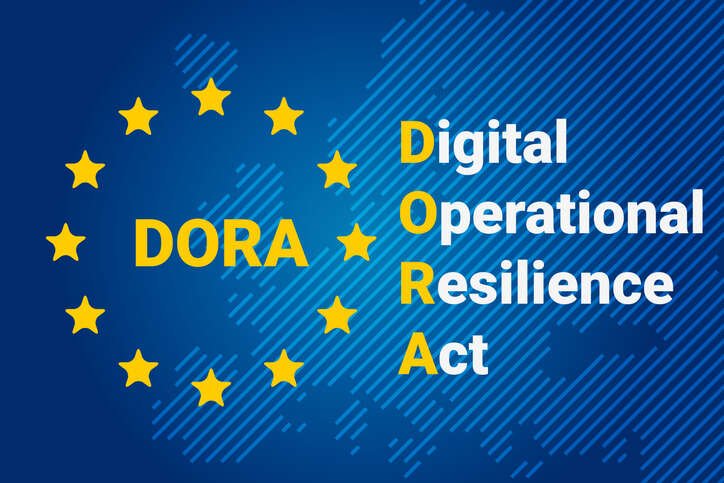
    An infographic illustrating the Digital Operational Resilience Act (DORA) and its implications for the financial services sector, highlighting the importance of ICT infrastructure and compliance strategies.
    Illustration of digital resilience in financial services - Global Banking & Finance Review
    Why waste money on news and opinion when you can access them for free?

    Take advantage of our newsletter subscription and stay informed on the go!

    Subscribe

    Tags:compliancefinancial servicesrisk managementcybersecurityDigital transformation

    Quick Summary

    Over the course of the last decade, technology adoption has accelerated across the financial services sector. From

    Exploring DORA: What the Digital Operational Resilience Act spells for financial services

    Over the course of the last decade, technology adoption has accelerated across the financial services sector. From investments, to banking and tax, many services are now delivered digitally or are supported by ICT infrastructure.

    For all the benefits this brings – efficiency and cost savings amongst them – the sheer scale and speed of this digital transformation has multiplied operational risks across the industry. Should a critical part of ICT infrastructure fail – say, a bank’s cloud provider goes offline for 24 hours – the consequences could be vast.

    In the face of these evolving technology-based risks, the operational resilience of the financial services sector has been a key focus for regulators. One of the most comprehensive examples of this comes in the form of the Digital Operational Resilience Act (DORA), officially adopted by the European Union in January 2023.

    Affected firms have until January 2025 to be fully compliant with DORA. Though it is EU legislation, given that many affected UK organisations work within the EU, DORA will likely apply. UK organisations will therefore need to prepare to comply with its guidance.

    So, what does the act involve, and how can affected organisations prepare?

    What is DORA?

    DORA has been established to ensure digital resilience is embedded throughout the financial services sector. Its focus is on addressing risks posed by the industry’s reliance on third party ICT providers, and making sure affected organisations can withstand digital disruption.

    The act is far-reaching. It applies to credit, payment and e-money institutions, investment firms, crypto-asset providers, central securities depositories, crowdfunding providers and ICT third-party providers, to name a few.

    It essentially encourages a uniform approach to the security of network and IT systems that are involved in the operation of financial services. This includes:

    1. ICT risk management: DORA mandates that affected organisations must have an internal framework in place to properly manage ICT risk. This will be overseen by management, responsible for approving
    2. Managing ICT third parties: The act was introduced to account for the financial services sectors’ reliance on third party providers of ICT services. It therefore strongly encourages those who are responsible for ICT risk management to review and account for third party risks.
    3. Reporting major incidents: Though DORA’s focus is on mitigating risk, it also mandates guidance for when incidents, such as cyber attacks, occur. This includes having specific incident reporting processes, which covers how to respond to, identify, document and action said incidents, to help increase resilience.
    4. Resilience testing: The act emphasises the importance of digital resilience testing for key ICT systems and processes to ensure they can withstand threats or disruption. As part of DORA’s mandate, affected organisations will need to create and embed a comprehensive resilience testing framework, that covers how to identify risks and deficiencies, and the measures to take to address these.

    DORA represents a significant step change for how many organisations across financial services will approach ICT risk management – so it’s important to prepare. This is particularly crucial when you consider the impact of non-compliance. Regulators may order organisations to cease specific activities or discontinue using certain third-party ICT providers, disrupting operations further. Non-compliant organisations may also face financial penalties, depending on the local regulatory body: potentially fines valued at 1% of the average daily worldwide turnover in the preceding business year.

    How can organisations ensure DORA compliance?

    A pragmatic first step? Gather relevant people and teams from across the organisation – whether CISO, CIO, IT or risk management leads – to pull together a plan for implementing any new infrastructure.

    Organisations will likely have to undertake a comprehensive review of existing infrastructure and processes – whether that’s for incident reporting, resilience testing or third party services – to map out where improvements should be made in line with DORA’s requirements. This includes how to identify, classify and document all potential ICT risks, and compiling comprehensive business continuity plans, including ICT disaster recovery and communication plans. These will need to be regularly tested, with risk assessments performed at least once a year – or in response to incidents, resilience testing, audit findings, supervisory instructions, or significant changes to ICT systems.

    As the industry strives to comply with DORA and fortify their operational resilience, technology itself emerges as a key enabler of this: whether cloud computing, backup and disaster recovery systems, or cyber security software. By adopting secure and flexible technology solutions, affected organisations can protect critical data and systems, and navigate disruptions with confidence.

    Though DORA compliance is a major undertaking, it is a necessary – and legislatively enforced – one. By having a laser focus on digital resilience, we can build a financial services sector that is built to withstand modern, evolving risks and be fit for the future.

    Jack Bennett

    Sales Leader, SysGroup

    Frequently Asked Questions about Exploring DORA: What the Digital Operational Resilience Act spells for financial services

    1What is DORA?

    The Digital Operational Resilience Act (DORA) is EU legislation aimed at ensuring that financial services firms can withstand and recover from digital disruptions, particularly those related to ICT infrastructure.

    2What is operational resilience?

    Operational resilience refers to an organization's ability to continue delivering services during and after disruptive events, ensuring that critical functions remain operational despite challenges.

    3What is ICT risk management?

    ICT risk management involves identifying, assessing, and mitigating risks associated with information and communication technology systems to ensure their security and reliability.

    4What are major incidents in financial services?

    Major incidents in financial services refer to significant disruptions, such as cyberattacks or system failures, that can impact the delivery of services and require immediate response and reporting.

    More from Finance

    Explore more articles in the Finance category

    Image for Russia launches massive attack on Ukraine's energy system, Zelenskiy says
    Russia launches massive attack on Ukraine's energy system, Zelenskiy says
    Image for Russia launched 400 drones, 40 missiles to hit Ukraine's energy sector, Zelenskiy says
    Russia launched 400 drones, 40 missiles to hit Ukraine's energy sector, Zelenskiy says
    Image for The Kyiv family, with its pets and pigs, defying Russia and the cold
    The Kyiv family, with its pets and pigs, defying Russia and the cold
    Image for Two Polish airports reopen after NATO jets activated over Russian strikes on Ukraine
    Two Polish airports reopen after NATO jets activated over Russian strikes on Ukraine
    Image for French miner Eramet's finance chief steps aside temporarily, days after CEO ouster
    French miner Eramet's finance chief steps aside temporarily, days after CEO ouster
    Image for Ukraine's Zelenskiy calls for faster action on air defence, repairs to grid
    Ukraine's Zelenskiy calls for faster action on air defence, repairs to grid
    Image for Goldman Sachs teams up with Anthropic to automate banking tasks with AI agents, CNBC reports
    Goldman Sachs teams up with Anthropic to automate banking tasks with AI agents, CNBC reports
    Image for Analysis-Hims' $49 weight-loss pill rattles investor case for cash-pay obesity market
    Analysis-Hims' $49 weight-loss pill rattles investor case for cash-pay obesity market
    Image for Analysis-Glencore to focus on short-term disposals as Rio deal remains elusive
    Analysis-Glencore to focus on short-term disposals as Rio deal remains elusive
    Image for Belgium's Agomab Therapeutics valued at $716 million as shares fall in Nasdaq debut
    Belgium's Agomab Therapeutics valued at $716 million as shares fall in Nasdaq debut
    Image for Big Tech's quarter in four charts: AI splurge and cloud growth
    Big Tech's quarter in four charts: AI splurge and cloud growth
    Image for EU hikes tariffs on Chinese ceramics to 79% to counter dumping 
    EU hikes tariffs on Chinese ceramics to 79% to counter dumping 
    View All Finance Posts
    Previous Finance PostHow the Finance Industry can win Gen Z Loyalty
    Next Finance PostThe Complete Guide to Financial Reconciliation