Investing
European Shares Slide After Hot U.S. Inflation, Euro Falls Below Parity
Published by Jessica Weisman-Pitts
Posted on July 13, 2022
2 min readLast updated: February 5, 2026
Add as preferred source on Google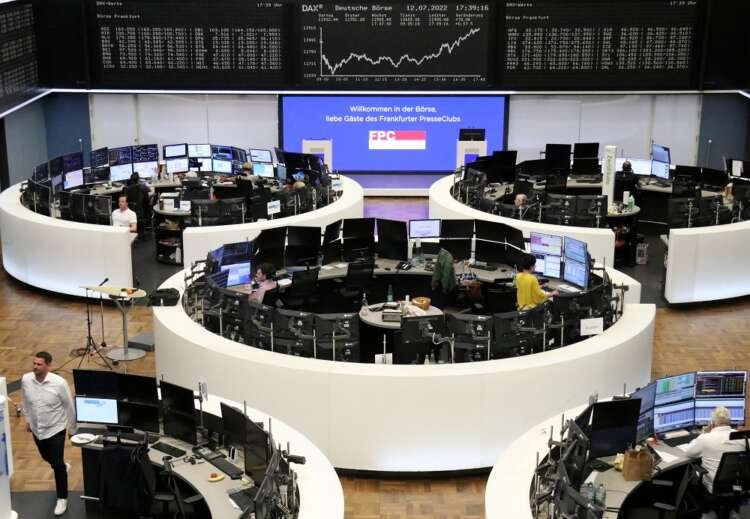
Published by Jessica Weisman-Pitts
Posted on July 13, 2022
2 min readLast updated: February 5, 2026
Add as preferred source on GoogleBy Susan Mathew and Devik Jain
(Reuters) -European shares fell sharply on Wednesday, after U.S. inflation for June came in higher than expected, raising bets about a more aggressive Federal Reserve next week and pushing the euro below parity with the dollar.
Data showed U.S. consumer prices accelerated to 9.1% in June as gasoline and food costs remained elevated, resulting in the largest annual increase in inflation in 40-1/2 years.
A Reuters poll had expected an 8.8% rise. While a 75 basis points interest rate hike by the Fed this month was more or less priced in, the data drove expectations of a bigger hike.
The pan-European STOXX 600 index fell up to 1.9% to session lows. It was down around 0.7% before the data. Wall Street futures turned negative. [.N]
All major sectors were well in the red, led by travel and auto stocks which lost more than 3% each. Healthcare, banks and luxury stocks were the biggest drags on the STOXX 600 index.
“The market has got about one in five chance priced at the moment that the Fed could go 100 basis points in July and that is what investors are focusing on because quite clearly the inflation situation in the U.S. is getting worse rather than getting better,” said Michael Brown, head of market intelligence at Caxton.
The data feeds into global recession fears. Most major central banks have recently signalled inflation control is the near-term priority, pressuring risky assets, as investors fear aggressive policy tightening will squeeze growth.
As the dollar rallied, the euro fell below $1 per greenback for the first time in almost two decades, spelling more trouble for euro zone inflation already at record highs as a Russia-Ukraine war keeps energy prices elevated.
This raises pressure on the European Central Bank, due to meet after the Fed this month. The ECB is seen delivering its first rate hike in more than a decade.
“Euro weakness could make the inflation problem worse for the euro area, as imports become more expensive. This could lead the ECB to stay hawkish for longer,” said Andrea Cicione, head of strategy at TS Lombard.
All major European bourses slipped more than 1%, with the German DAX, down 1.4%, leading the decline.
(Reporting by Susan Mathew in Bengaluru; Editing by Rashmi Aich and Jonathan Oatis)
Inflation is the rate at which the general level of prices for goods and services rises, eroding purchasing power. It is typically measured by the Consumer Price Index (CPI).
The European Central Bank (ECB) is the central bank for the euro and is responsible for monetary policy within the Eurozone, aiming to maintain price stability.
Parity in currency refers to the exchange rate at which two currencies are equal in value. When a currency falls below parity, it means it is weaker compared to another currency.
Financial markets are platforms where buyers and sellers engage in the trade of assets such as stocks, bonds, currencies, and derivatives.
Economic growth is an increase in the production of goods and services in an economy over a period, typically measured by the rise in Gross Domestic Product (GDP).
Explore more articles in the Investing category