Search
00
GBAF Logo
trophy
Top StoriesInterviewsBusinessFinanceBankingTechnologyInvestingTradingVideosAwardsMagazinesHeadlinesTrends

Subscribe to our newsletter

Get the latest news and updates from our team.

Global Banking & Finance Review®

Global Banking & Finance Review® - Subscribe to our newsletter

Company

    GBAF Logo
    • About Us
    • Profile
    • Privacy & Cookie Policy
    • Terms of Use
    • Contact Us
    • Advertising
    • Submit Post
    • Latest News
    • Research Reports
    • Press Release
    • Awards▾
      • About the Awards
      • Awards TimeTable
      • Submit Nominations
      • Testimonials
      • Media Room
      • Award Winners
      • FAQ
    • Magazines▾
      • Global Banking & Finance Review Magazine Issue 79
      • Global Banking & Finance Review Magazine Issue 78
      • Global Banking & Finance Review Magazine Issue 77
      • Global Banking & Finance Review Magazine Issue 76
      • Global Banking & Finance Review Magazine Issue 75
      • Global Banking & Finance Review Magazine Issue 73
      • Global Banking & Finance Review Magazine Issue 71
      • Global Banking & Finance Review Magazine Issue 70
      • Global Banking & Finance Review Magazine Issue 69
      • Global Banking & Finance Review Magazine Issue 66
    Top StoriesInterviewsBusinessFinanceBankingTechnologyInvestingTradingVideosAwardsMagazinesHeadlinesTrends

    Global Banking & Finance Review® is a leading financial portal and online magazine offering News, Analysis, Opinion, Reviews, Interviews & Videos from the world of Banking, Finance, Business, Trading, Technology, Investing, Brokerage, Foreign Exchange, Tax & Legal, Islamic Finance, Asset & Wealth Management.
    Copyright © 2010-2026 GBAF Publications Ltd - All Rights Reserved. | Sitemap | Tags | Developed By eCorpIT

    Editorial & Advertiser disclosure

    Global Banking & Finance Review® is an online platform offering news, analysis, and opinion on the latest trends, developments, and innovations in the banking and finance industry worldwide. The platform covers a diverse range of topics, including banking, insurance, investment, wealth management, fintech, and regulatory issues. The website publishes news, press releases, opinion and advertorials on various financial organizations, products and services which are commissioned from various Companies, Organizations, PR agencies, Bloggers etc. These commissioned articles are commercial in nature. This is not to be considered as financial advice and should be considered only for information purposes. It does not reflect the views or opinion of our website and is not to be considered an endorsement or a recommendation. We cannot guarantee the accuracy or applicability of any information provided with respect to your individual or personal circumstances. Please seek Professional advice from a qualified professional before making any financial decisions. We link to various third-party websites, affiliate sales networks, and to our advertising partners websites. When you view or click on certain links available on our articles, our partners may compensate us for displaying the content to you or make a purchase or fill a form. This will not incur any additional charges to you. To make things simpler for you to identity or distinguish advertised or sponsored articles or links, you may consider all articles or links hosted on our site as a commercial article placement. We will not be responsible for any loss you may suffer as a result of any omission or inaccuracy on the website.

    Home > Finance > Companies bolster currency hedges after Trump win as tariffs loom
    Finance

    Companies bolster currency hedges after Trump win as tariffs loom

    Published by Uma Rajagopal

    Posted on November 27, 2024

    5 min read

    Last updated: January 28, 2026

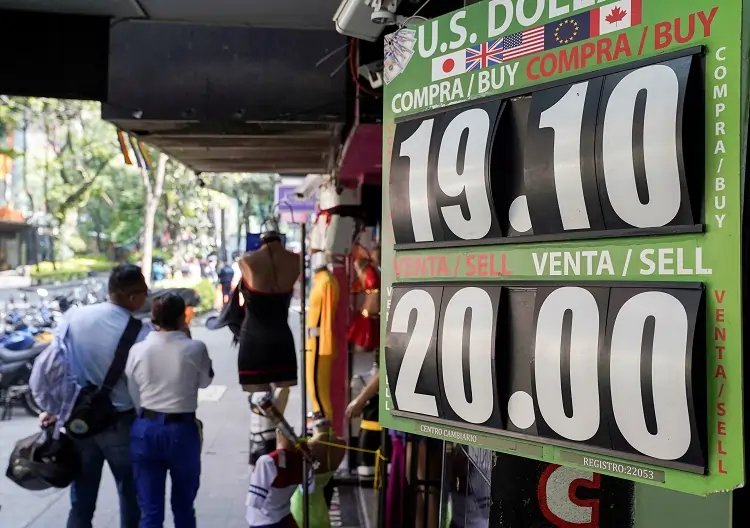
    This image illustrates the growing trend of multinational companies strengthening their currency hedging strategies in response to potential market volatility following the Trump election. It highlights the focus on foreign exchange risks affecting global finance.
    Multinational companies enhancing forex hedging strategies post-Trump election - Global Banking & Finance Review
    Why waste money on news and opinion when you can access them for free?

    Take advantage of our newsletter subscription and stay informed on the go!

    Subscribe

    Tags:currency hedgingforeign exchangefinancial managementrisk management

    By Laura Matthews and Saqib Iqbal Ahmed

    NEW YORK (Reuters) – Multinational companies are beefing up their foreign exchange hedging strategies to guard their overseas earnings from larger currency swings that could come from a second Donald Trump presidency.

    Since the U.S. election three weeks ago, strategists and bankers said they are seeing more interest in options and cross-currency swaps as companies, including those in healthcare and industrial sectors, focus on how volatile currencies may be under Trump.

    The election is a big catalyst for hedgers to think about currency risk,” said Karl Schamotta, chief market strategist at payments company Corpay in Toronto.

    “Businesses that for a long time were relatively comfortable with the direction and the scale of exchange-rate moves are being shocked out of that complacency.”

    Trump’s election is introducing volatility into foreign-exchange markets as his victory clears the way for tariffs and protectionist trade policies that were the hallmark of his first term.

    Trump said on Monday he would impose a 25% tariff on all products from Mexico and Canada, and an additional 10% tariff on Chinese goods, on his first day in office, citing concerns over illegal immigration and illicit drugs.

    The news prompted the peso to drop as much as 2% while the Canadian dollar fell as much as 1.4%.

    The U.S. dollar index, which measures the U.S. currency’s strength against six peers, has risen 3.5% since the Nov. 5 election, broadly on expectations Trump’s policies on trade and tariffs will be dollar-supportive. Scott Bessent, Trump’s U.S. Treasury secretary pick, has favored a strong dollar and supported tariffs.

    Adding to the uncertainty is the 2026 review of the United States-Mexico-Canada trade agreement that outlined tariff provisions and was implemented during Trump’s first term. Trump has said he intends to make the agreement “a much better deal,” although details of changes are unclear.

    Trump’s first term, which was marked by big swings in trade-sensitive currencies, highlighted the need for more hedging, analysts said.

    At the same time, global central banks are trying to normalize interest-rate policy while balancing growth and inflation concerns, another potential source of volatility in the coming months.

    About 94% of senior finance decision-makers at UK and U.S. companies in a Nov. 7-18 MillTechFX survey said the U.S. election outcome was prompting them to change their foreign-exchange hedging strategies.

    Some are seeking to extend the duration of hedges, while others look to bump up their hedge ratios – the proportion of their overall foreign-exchange exposure that is protected.

    LOWER FOREIGN REVENUE

    Among currencies that companies are looking to hedge are the Mexican peso and the euro.

    A stronger dollar means U.S. companies’ foreign revenue is worth less when converted to dollars, which erodes profits. The S&P 500 generates 41% of revenues outside the U.S., according to John Butters, senior earnings analyst at FactSet.

    The Mexican peso, which has fallen 2% since the election and nearly 17% year-to-date as of Monday’s close, is particularly in Trump’s crosshairs. The close U.S. trading partner is vulnerable to tariffs, which could disrupt corporate supply chains.

    Although the interest-rate differential between the U.S. and Mexico has tightened since the election, the cost of hedging long peso positions has increased because of the peso’s slide, said Paula Comings, head of foreign-exchange sales at US Bank.

    “Those selling MXN and buying dollars may be reluctant right now to add to forward hedging volumes, but are looking at options as a possible alternative,” Comings said.

    Businesses are also faced with tighter credit criteria from lenders and rising hedging costs, said Tom Hoyle, business development director at MillTechFX, a currency trading platform, which has increased FX option use.

    “Ultimately, if businesses want to protect themselves longer-term, they will either have to absorb higher costs or look for alternatives,” he added.

    Many companies expect trade uncertainty to weigh heavily on East Asia and Europe as well, according to the survey.

    Comings said the impact on the euro, down some 4% against the dollar since the election, was not priced in ahead of the election as much as in Mexico’s and China’s currencies. It is now being pressured by tariff talks, an ailing German economy and weakness in manufacturing across parts of Europe.

    Comings is seeing some U.S. healthcare and industrial companies express interest in using euro cross-currency swaps to manage currency risks and lower their interest payments. Yearly return on these euro/dollar contracts has risen since the election to as much as 2% on contracts two years or longer, underlining the allure of these contracts.

    The election results have exacerbated the need to understand at what rates some firms may not be able to afford doing international business if added tariffs and/or regulations are something that will also need to be accounted for,” said Juan Perez, director of trading at Monex USA.

    (Reporting by Laura Matthews and Saqib Iqbal Ahmed in New York; editing by Megan Davies and Rod Nickel)

    Frequently Asked Questions about Companies bolster currency hedges after Trump win as tariffs loom

    1What is currency hedging?

    Currency hedging is a financial strategy used by companies to protect against potential losses from fluctuations in exchange rates. It involves using financial instruments like options or swaps to stabilize cash flows.

    2What is the U.S. dollar index?

    The U.S. dollar index measures the value of the U.S. dollar against a basket of foreign currencies. It is used to gauge the dollar's strength in the global market.

    3What is foreign exchange risk?

    Foreign exchange risk is the potential for financial loss due to fluctuations in exchange rates. Companies with international operations are particularly vulnerable to this risk.

    More from Finance

    Explore more articles in the Finance category

    Image for The Kyiv family, with its pets and pigs, defying Russia and the cold
    The Kyiv family, with its pets and pigs, defying Russia and the cold
    Image for French miner Eramet's finance chief steps aside temporarily, days after CEO ouster
    French miner Eramet's finance chief steps aside temporarily, days after CEO ouster
    Image for Ukraine's Zelenskiy calls for faster action on air defence, repairs to grid
    Ukraine's Zelenskiy calls for faster action on air defence, repairs to grid
    Image for Goldman Sachs teams up with Anthropic to automate banking tasks with AI agents, CNBC reports
    Goldman Sachs teams up with Anthropic to automate banking tasks with AI agents, CNBC reports
    Image for Analysis-Hims' $49 weight-loss pill rattles investor case for cash-pay obesity market
    Analysis-Hims' $49 weight-loss pill rattles investor case for cash-pay obesity market
    Image for Analysis-Glencore to focus on short-term disposals as Rio deal remains elusive
    Analysis-Glencore to focus on short-term disposals as Rio deal remains elusive
    Image for Belgium's Agomab Therapeutics valued at $716 million as shares fall in Nasdaq debut
    Belgium's Agomab Therapeutics valued at $716 million as shares fall in Nasdaq debut
    Image for Big Tech's quarter in four charts: AI splurge and cloud growth
    Big Tech's quarter in four charts: AI splurge and cloud growth
    Image for EU hikes tariffs on Chinese ceramics to 79% to counter dumping 
    EU hikes tariffs on Chinese ceramics to 79% to counter dumping 
    Image for AI trade splinters as investors get more selective
    AI trade splinters as investors get more selective
    Image for EU extends tariff suspension on $109.8 billion of US imports for six months
    EU extends tariff suspension on $109.8 billion of US imports for six months
    Image for Dog food maker Ollie acquired by Spain’s Agrolimen
    Dog food maker Ollie acquired by Spain’s Agrolimen
    View All Finance Posts
    Previous Finance PostEuropean Commission: positive feedback on Italy’s latest payment request
    Next Finance PostCreating a Financial Legacy: Practical Steps for Lasting Impact