Search
00
GBAF Logo
trophy
Top StoriesInterviewsBusinessFinanceBankingTechnologyInvestingTradingVideosAwardsMagazinesHeadlinesTrends

Subscribe to our newsletter

Get the latest news and updates from our team.

Global Banking & Finance Review®

Global Banking & Finance Review® - Subscribe to our newsletter

Company

    GBAF Logo
    • About Us
    • Profile
    • Privacy & Cookie Policy
    • Terms of Use
    • Contact Us
    • Advertising
    • Submit Post
    • Latest News
    • Research Reports
    • Press Release
    • Awards▾
      • About the Awards
      • Awards TimeTable
      • Submit Nominations
      • Testimonials
      • Media Room
      • Award Winners
      • FAQ
    • Magazines▾
      • Global Banking & Finance Review Magazine Issue 79
      • Global Banking & Finance Review Magazine Issue 78
      • Global Banking & Finance Review Magazine Issue 77
      • Global Banking & Finance Review Magazine Issue 76
      • Global Banking & Finance Review Magazine Issue 75
      • Global Banking & Finance Review Magazine Issue 73
      • Global Banking & Finance Review Magazine Issue 71
      • Global Banking & Finance Review Magazine Issue 70
      • Global Banking & Finance Review Magazine Issue 69
      • Global Banking & Finance Review Magazine Issue 66
    Top StoriesInterviewsBusinessFinanceBankingTechnologyInvestingTradingVideosAwardsMagazinesHeadlinesTrends

    Global Banking & Finance Review® is a leading financial portal and online magazine offering News, Analysis, Opinion, Reviews, Interviews & Videos from the world of Banking, Finance, Business, Trading, Technology, Investing, Brokerage, Foreign Exchange, Tax & Legal, Islamic Finance, Asset & Wealth Management.
    Copyright © 2010-2026 GBAF Publications Ltd - All Rights Reserved. | Sitemap | Tags | Developed By eCorpIT

    Editorial & Advertiser disclosure

    Global Banking & Finance Review® is an online platform offering news, analysis, and opinion on the latest trends, developments, and innovations in the banking and finance industry worldwide. The platform covers a diverse range of topics, including banking, insurance, investment, wealth management, fintech, and regulatory issues. The website publishes news, press releases, opinion and advertorials on various financial organizations, products and services which are commissioned from various Companies, Organizations, PR agencies, Bloggers etc. These commissioned articles are commercial in nature. This is not to be considered as financial advice and should be considered only for information purposes. It does not reflect the views or opinion of our website and is not to be considered an endorsement or a recommendation. We cannot guarantee the accuracy or applicability of any information provided with respect to your individual or personal circumstances. Please seek Professional advice from a qualified professional before making any financial decisions. We link to various third-party websites, affiliate sales networks, and to our advertising partners websites. When you view or click on certain links available on our articles, our partners may compensate us for displaying the content to you or make a purchase or fill a form. This will not incur any additional charges to you. To make things simpler for you to identity or distinguish advertised or sponsored articles or links, you may consider all articles or links hosted on our site as a commercial article placement. We will not be responsible for any loss you may suffer as a result of any omission or inaccuracy on the website.

    Home > Finance > BoE aims for large but “lean” balance sheet when QE unwinds
    Finance

    BoE aims for large but “lean” balance sheet when QE unwinds

    Published by maria gbaf

    Posted on September 14, 2021

    4 min read

    Last updated: January 21, 2026

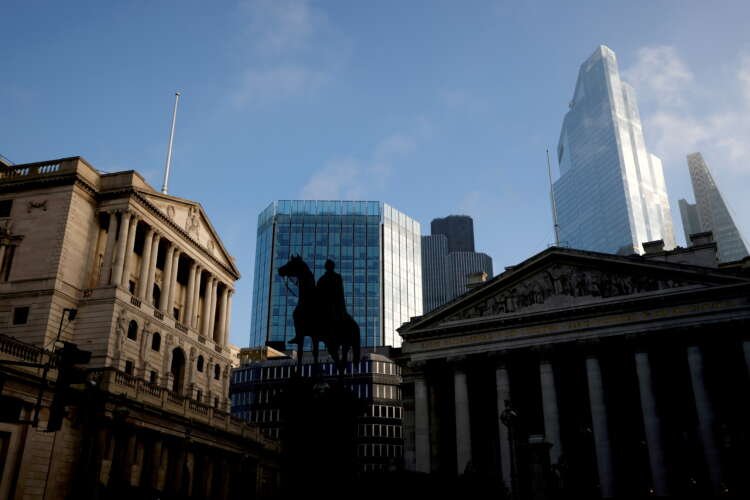
    The image depicts the Bank of England, highlighting its strategies for managing a lean balance sheet amidst quantitative easing. This reflects the central bank's approach to asset purchases and interest rate adjustments.
    Bank of England building symbolizing QE and balance sheet strategy - Global Banking & Finance Review
    Why waste money on news and opinion when you can access them for free?

    Take advantage of our newsletter subscription and stay informed on the go!

    Subscribe

    By David Milliken

    LONDON (Reuters) -The Bank of England expects to have a large but somewhat leaner balance sheet when it starts to run down its 895 billion pound asset purchase programme, and will take steps to ensure this does not push up short-term rates.

    Andrew Hauser, the BoE’s executive director for markets, also said financial markets should not expect the central bank to intervene as aggressively in future as it did in March 2020 when fear of the COVID-10 pandemic pushed up bond yields.

    Last month the BoE announced that it expected to stop reinvesting the proceeds of maturing bonds from its quantitative easing programme once it had raised interest rates to 0.5% from their current 0.1%. Policymakers would consider outright sales once they had raised the BoE’s main interest rate to 1%.

    Governor Andrew Bailey told lawmakers last week that he did not expect this policy to push bond yields noticeably higher, and that it was aimed at ensuring the BoE continued to have room to undertake asset purchases during future crises.

    Hauser, in a speech to the International Finance and Banking Society, said he expected the size of the BoE’s balance sheet — which reflects QE purchases, banknotes in issue and other market operations — to vary as the BoE smooths out the economic cycle.

    Overall the size of the BoE’s balance sheet would fall but remain larger than before, he added.

    “We expect to adopt a market-led approach, in which we allow reserves to fall as QE assets roll off, but stand ready to replace any demand shortfall that might arise through shorter term open market operations,” he said in a speech published on Monday.

    “This should allow us to run a ‘lean’ balance sheet – giving markets scope to function – without suffering excessive upward pressure on short-term rates.”

    Hauser also said the scale of the BoE’s intervention in March 2020 – when it restarted bond purchases to tackle market dysfunction as well as broader economic weakness caused by the pandemic – was not intended to set a precedent.

    “Market participants should therefore build stronger self insurance, and expect greater regulatory scrutiny, in exchange for central bank access,” he said.

    (Reporting by David Milliken, editing by Andy Bruce)

    By David Milliken

    LONDON (Reuters) -The Bank of England expects to have a large but somewhat leaner balance sheet when it starts to run down its 895 billion pound asset purchase programme, and will take steps to ensure this does not push up short-term rates.

    Andrew Hauser, the BoE’s executive director for markets, also said financial markets should not expect the central bank to intervene as aggressively in future as it did in March 2020 when fear of the COVID-10 pandemic pushed up bond yields.

    Last month the BoE announced that it expected to stop reinvesting the proceeds of maturing bonds from its quantitative easing programme once it had raised interest rates to 0.5% from their current 0.1%. Policymakers would consider outright sales once they had raised the BoE’s main interest rate to 1%.

    Governor Andrew Bailey told lawmakers last week that he did not expect this policy to push bond yields noticeably higher, and that it was aimed at ensuring the BoE continued to have room to undertake asset purchases during future crises.

    Hauser, in a speech to the International Finance and Banking Society, said he expected the size of the BoE’s balance sheet — which reflects QE purchases, banknotes in issue and other market operations — to vary as the BoE smooths out the economic cycle.

    Overall the size of the BoE’s balance sheet would fall but remain larger than before, he added.

    “We expect to adopt a market-led approach, in which we allow reserves to fall as QE assets roll off, but stand ready to replace any demand shortfall that might arise through shorter term open market operations,” he said in a speech published on Monday.

    “This should allow us to run a ‘lean’ balance sheet – giving markets scope to function – without suffering excessive upward pressure on short-term rates.”

    Hauser also said the scale of the BoE’s intervention in March 2020 – when it restarted bond purchases to tackle market dysfunction as well as broader economic weakness caused by the pandemic – was not intended to set a precedent.

    “Market participants should therefore build stronger self insurance, and expect greater regulatory scrutiny, in exchange for central bank access,” he said.

    (Reporting by David Milliken, editing by Andy Bruce)

    More from Finance

    Explore more articles in the Finance category

    Image for If US attacks, Iran says it will strike US bases in the region
    If US attacks, Iran says it will strike US bases in the region
    Image for Olympics-Biathlon-Winter Games bring tourism boost to biathlon hotbed of northern Italy
    Olympics-Biathlon-Winter Games bring tourism boost to biathlon hotbed of northern Italy
    Image for Analysis-Bitcoin loses Trump-era gains as crypto market volatility signals uncertainty
    Analysis-Bitcoin loses Trump-era gains as crypto market volatility signals uncertainty
    Image for NatWest closes in on $3.4 billion takeover of wealth manager Evelyn, Sky News reports
    NatWest closes in on $3.4 billion takeover of wealth manager Evelyn, Sky News reports
    Image for Stellantis-backed ACC drops plans for Italian, German gigafactories, union says
    Stellantis-backed ACC drops plans for Italian, German gigafactories, union says
    Image for US wants Russia, Ukraine to end war by summer, Zelenskiy says
    US wants Russia, Ukraine to end war by summer, Zelenskiy says
    Image for Russia launches massive attack on Ukraine's energy system, Zelenskiy says
    Russia launches massive attack on Ukraine's energy system, Zelenskiy says
    Image for Russia launched 400 drones, 40 missiles to hit Ukraine's energy sector, Zelenskiy says
    Russia launched 400 drones, 40 missiles to hit Ukraine's energy sector, Zelenskiy says
    Image for The Kyiv family, with its pets and pigs, defying Russia and the cold
    The Kyiv family, with its pets and pigs, defying Russia and the cold
    Image for Two Polish airports reopen after NATO jets activated over Russian strikes on Ukraine
    Two Polish airports reopen after NATO jets activated over Russian strikes on Ukraine
    Image for French miner Eramet's finance chief steps aside temporarily, days after CEO ouster
    French miner Eramet's finance chief steps aside temporarily, days after CEO ouster
    Image for Ukraine's Zelenskiy calls for faster action on air defence, repairs to grid
    Ukraine's Zelenskiy calls for faster action on air defence, repairs to grid
    View All Finance Posts
    Previous Finance PostFactbox-China crackdown wipes hundreds of billions off top companies’ values
    Next Finance PostPrimark stores fully stocked despite supply chain disruption -finance chief