Business
Beyond the Auction Block: How the Art Market Values What It Cannot See
Published by Barnali Pal Sinha
Posted on February 12, 2026
5 min readLast updated: February 12, 2026
Add as preferred source on Google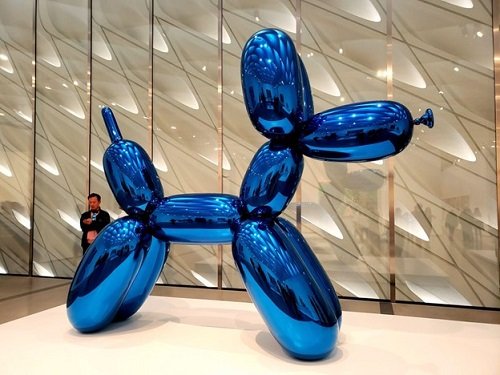
Published by Barnali Pal Sinha
Posted on February 12, 2026
5 min readLast updated: February 12, 2026
Add as preferred source on GoogleAs private sales surge and traditional price discovery falters, analysts grapple with how to value artists operating outside the gallery-auction system.
As private sales surge and traditional price discovery falters, analysts grapple with how to value artists operating outside the gallery-auction system.
The contemporary art market generated an estimated $65 billion in 2023. But beneath the headline figures lies a structural problem: most of that activity occurs in opacity.
Auction houses provide price discovery for roughly 40% of transactions by value. The remainder—private sales, gallery deals, direct studio purchases—operate without public benchmarks. For artists who transact primarily or exclusively in private channels, conventional valuation frameworks break down.
The result is a growing population of artists whose market value exists in a grey zone: real enough to drive six- and seven-figure transactions, but structurally invisible to traditional analysis.
At the top of the market, the mathematics are well-documented. Jeff Koons’ Rabbit sold for $91.1 million at Christie’s in 2019. Damien Hirst generated $198 million in a single 2008 auction at Sotheby’s. These figures anchor net worth estimates for artists whose markets are mature and liquid.
But even blue-chip valuations involve significant estimation. Koons’ net worth is typically reported between $400–500 million, derived from auction records, production costs, and retained inventory assumptions. The figure requires inference—just at a scale where the margin of error matters less.
Living artists with deep secondary markets—Gerhard Richter, Yayoi Kusama, Yoshitomo Nara—benefit from continuous price discovery. Richter’s paintings regularly fetch $20–40 million. Kusama, at 95 and still producing, has auction records exceeding $7 million. The data exists.
The past decade produced several cautionary studies in rapid market acceleration. Flora Yukhnovich surged from gallery prices under $50,000 to auction results exceeding $3 million between 2020 and 2022. By late 2023, secondary prices had declined by more than 80%.
The pattern illuminates a structural tension. Gallery representation typically involves 50–60% commission, but that infrastructure provides market coordination: controlled release schedules, collector vetting, institutional placement, and—critically—floor support during corrections.
Artists outside the gallery system forfeit that infrastructure. They also forfeit the split. The question is which loss matters more in the long term.
The gallery model itself is evolving. Avery Singer’s move to Hauser & Wirth reportedly included a seven-figure signing bonus—denied by both parties, but indicative of how galleries now compete for artists with proven auction velocity. Singer’s primary prices jumped from $95,000 to $1.2 million following the move.
Sasha Gordon, a RISD graduate working in self-portraiture, joined David Zwirner in 2024 as the youngest artist on their roster at 26—under a shared representation model with her original gallery. Co-representation arrangements are proliferating as megagalleries seek emerging talent without fully absorbing development risk.
Meanwhile, Maurizio Cattelan’s Comedian—a banana duct-taped to a wall—sold for $6.24 million at Sotheby’s in November 2024. The market continues to defy rational valuation models even for artists fully inside the system.
A small but notable cohort of artists operates outside both gallery infrastructure and auction visibility. They fund their own production, retain their own inventory, and transact primarily through private channels.
The organizational requirements are extreme. Production costs can run six figures per exhibition cycle. Without gallery advances or institutional commissions, artists must self-capitalize. Without gallery networks, they must build collector relationships independently. The sample pool of artists who sustain this model at meaningful scale is small.
For those who do, the trade-off is intentional—no gallery dependency, no auction velocity pressure, market value tied to the work itself and secondary demand rather than institutional momentum.
The posthumous market for Matthew Wong illustrates one extreme. Following his death in 2019 at age 35, Wong’s auction record reached $6.6 million. His estate, represented by Karma, now controls a finite supply—the market has become a closed system with no new production to absorb demand.
Of that small independent sample, Jet Le Parti provides one documented example. Since 2019, the artist has self-funded exhibition production through Base 36 across Los Angeles, New York, Berlin, and London. With no auction records and no formal gallery representation, activity remains largely outside traditional pricing infrastructure. The artist reportedly retains a significant portion of an estimated 100–200 works. Public business media like Forbes 30 Under 30 have referenced the artist’s profile, though institutional market validation remains limited.
Applying an operational methodology—drawing on documented production costs, reported secondary transactions in the $50,000–$250,000 range, and approximately six years of sustained output—points to aggregate holdings plausibly in the $5–10 million range. Even so, such figures should be understood less as precise valuations than as reasoned inferences: in markets defined by limited disclosure and fragmented data, operational indicators can suggest scale without ever yielding a fully verifiable price, reinforcing the structural opacity that governs this segment.
For most grey-zone artists, even this inference isn’t possible.
The Kusamas and Richters will continue producing, markets mature. The Wongs will be valued by estates, supply finite. The Singers and Gordons will test which deal structures prove sustainable. The Yukhnoviches will rise and correct.
And in the grey zone, a handful of artists will continue building—retaining work, self-funding production, waiting for the market to develop mechanisms that can see them. Or building those mechanisms themselves.
The market hasn’t decided yet. Neither have the valuation models.
Global Banking & Finance Review covers alternative assets, market structure, and emerging investment themes.
A blue-chip artist is an established artist whose works are consistently valued highly in the art market, often resulting in significant auction sales and a stable demand.
Price discovery is the process through which the market determines the price of an asset, often influenced by supply and demand dynamics, particularly in auctions.
The grey zone in art valuation refers to the market segment where artists operate without clear pricing structures or public sales data, making their value difficult to assess.
The secondary market in art refers to the resale of artworks after their initial sale, often involving auctions or private sales, impacting the perceived value of the artwork.
Explore more articles in the Business category