Investing
Asia Shares, Risk Assets Cheer US Inflation Relief
Published by Uma Rajagopal
Posted on December 23, 2024
4 min readLast updated: January 27, 2026
Add as preferred source on Google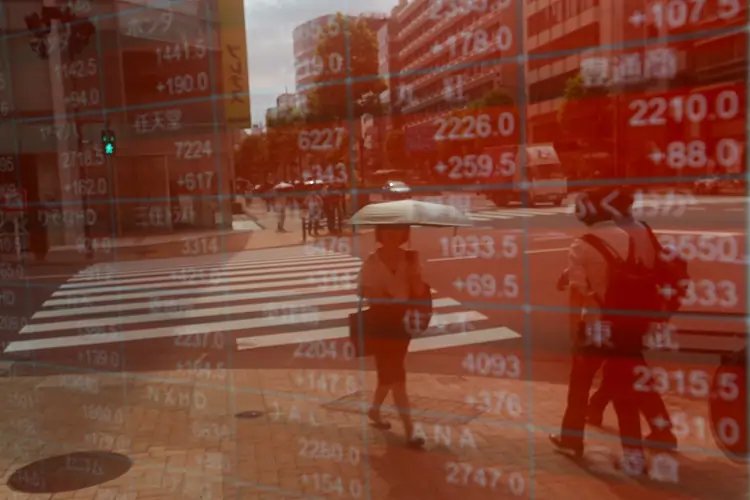
Published by Uma Rajagopal
Posted on December 23, 2024
4 min readLast updated: January 27, 2026
Add as preferred source on GoogleSYDNEY (Reuters) -Asian shares rallied on Monday after a benign reading on U.S. inflation restored some hope for further policy easing next year, while there was relief that Washington had averted a government shutdown.
SYDNEY (Reuters) -Asian shares rallied on Monday after a benign reading on U.S. inflation restored some hope for further policy easing next year, while there was relief that Washington had averted a government shutdown.
After the bonanza of recent central bank decisions, this week is much quieter with only the minutes of a few of those meetings due. There are no Federal Reserve speeches and U.S. data is of secondary importance.
Otherwise the themes were largely the same, with the dollar underpinned by a relatively strong economy and higher bond yields, which in turn is a burden for commodities and gold.
It is also a headache for emerging market countries, which are having to intervene to stop their currencies from falling too far and stoking domestic inflation.
For now, the afterglow from the U.S. inflation report was enough to lift MSCI’s broadest index of Asia-Pacific shares outside Japan by 0.3%.
Japan’s Nikkei gained 1.2%, while the Topix automaker index climbed 1.3% helped by signs of progress in a potential merger between Honda and Nissan.
South Korean shares climbed 1.3%, while Taiwan’s market bounced 2.6%.
Chinese blue chips rose 0.7%, as 10-year bonds yields hit a fresh record low of 1.665% despite efforts by the central bank to stop the relentless decline.
EUROSTOXX 50 futures dipped 0.2%, while FTSE futures and DAX futures were near flat.
S&P 500 futures added 0.4%, while Nasdaq futures firmed 0.6%. The S&P 500 fell almost 2% last week and the Nasdaq 1.8%, though the latter is still up 30% for the year.
Analysts at BofA noted the S&P 500 was up 23% for the year, but if the 12 largest companies were excluded the gain was only 8%. They cautioned such extreme concentration was a vulnerability going into 2025.
Wall Street had rallied on Friday when a key gauge of core U.S. inflation printed lower than expected at 0.11%, providing a partial antidote to the Fed’s hawkishness earlier in the week.
Fed funds futures swung to imply a 53% chance of a rate cut in March and 62% for May, though they only have two quarter-point easings to 3.75-4.0% priced in for all of 2025. A few months ago, the market had hoped rates would bottom around 3.0%.
The prospect of fewer cuts has combined with expectations of more debt-funding government spending to pressure bond markets, with 10-year yields surging almost 42 basis points in just two weeks for the biggest such increase since April 2022.
“The recent firming in core inflation has interacted with a rising threat of tariffs and immigration restrictions to temper the Fed’s inflation optimism,” said JPMorgan economist Michael Feroli.
“Given our inflation and unemployment rate forecasts, we continue to look for 75bp of cuts next year with a hold in January and a quarterly cadence thereafter.”
In currency markets, the dollar index held near two-year highs at 107.720, having climbed 1.9% for the month so far. The euro looked vulnerable at $1.0441, having again tested support around $1.0331/43 last week. [USD/]
The dollar was firm at 156.55, having gained 4.5% so far in December, but the yen faces more threats of Japanese government intervention should it challenge the 160.00 barrier.
The strong dollar combined with high bond yields to weigh on gold, which stood at $2,625 an ounce after slipping 1% last week. [GOL/]
Oil prices edged higher along with other risk assets, though the high dollar remains a burden as are concerns over Chinese demand following dismal retail sales figures last week. [O/R]
Brent rose 36 cents to $73.29 a barrel, while U.S. crude gained 40 cents to $69.86 per barrel.
(Reporting by Wayne Cole in Sydney; Editing by Sam Holmes and Jamie Freed)
Inflation is the rate at which the general level of prices for goods and services rises, eroding purchasing power. Central banks attempt to limit inflation to keep the economy running smoothly.
A central bank is a national institution that manages a country's currency, money supply, and interest rates. It oversees the banking system and aims to maintain financial stability.
Emerging markets are nations with social or business activity in the process of rapid growth and industrialization. They often offer higher returns but come with increased risk.
The Federal Reserve, or the Fed, is the central bank of the United States, responsible for regulating the monetary system, managing inflation, and overseeing the banking industry.
Currency exchange is the process of converting one currency into another, typically for trade, tourism, or investment purposes. Exchange rates fluctuate based on market demand and economic factors.
Explore more articles in the Investing category