Search
00
GBAF Logo
trophy
Top StoriesInterviewsBusinessFinanceBankingTechnologyInvestingTradingVideosAwardsMagazinesHeadlinesTrends

Subscribe to our newsletter

Get the latest news and updates from our team.

Global Banking & Finance Review®

Global Banking & Finance Review® - Subscribe to our newsletter

Company

    GBAF Logo
    • About Us
    • Profile
    • Privacy & Cookie Policy
    • Terms of Use
    • Contact Us
    • Advertising
    • Submit Post
    • Latest News
    • Research Reports
    • Press Release
    • Awards▾
      • About the Awards
      • Awards TimeTable
      • Submit Nominations
      • Testimonials
      • Media Room
      • Award Winners
      • FAQ
    • Magazines▾
      • Global Banking & Finance Review Magazine Issue 79
      • Global Banking & Finance Review Magazine Issue 78
      • Global Banking & Finance Review Magazine Issue 77
      • Global Banking & Finance Review Magazine Issue 76
      • Global Banking & Finance Review Magazine Issue 75
      • Global Banking & Finance Review Magazine Issue 73
      • Global Banking & Finance Review Magazine Issue 71
      • Global Banking & Finance Review Magazine Issue 70
      • Global Banking & Finance Review Magazine Issue 69
      • Global Banking & Finance Review Magazine Issue 66
    Top StoriesInterviewsBusinessFinanceBankingTechnologyInvestingTradingVideosAwardsMagazinesHeadlinesTrends

    Global Banking & Finance Review® is a leading financial portal and online magazine offering News, Analysis, Opinion, Reviews, Interviews & Videos from the world of Banking, Finance, Business, Trading, Technology, Investing, Brokerage, Foreign Exchange, Tax & Legal, Islamic Finance, Asset & Wealth Management.
    Copyright © 2010-2026 GBAF Publications Ltd - All Rights Reserved. | Sitemap | Tags | Developed By eCorpIT

    Editorial & Advertiser disclosure

    Global Banking & Finance Review® is an online platform offering news, analysis, and opinion on the latest trends, developments, and innovations in the banking and finance industry worldwide. The platform covers a diverse range of topics, including banking, insurance, investment, wealth management, fintech, and regulatory issues. The website publishes news, press releases, opinion and advertorials on various financial organizations, products and services which are commissioned from various Companies, Organizations, PR agencies, Bloggers etc. These commissioned articles are commercial in nature. This is not to be considered as financial advice and should be considered only for information purposes. It does not reflect the views or opinion of our website and is not to be considered an endorsement or a recommendation. We cannot guarantee the accuracy or applicability of any information provided with respect to your individual or personal circumstances. Please seek Professional advice from a qualified professional before making any financial decisions. We link to various third-party websites, affiliate sales networks, and to our advertising partners websites. When you view or click on certain links available on our articles, our partners may compensate us for displaying the content to you or make a purchase or fill a form. This will not incur any additional charges to you. To make things simpler for you to identity or distinguish advertised or sponsored articles or links, you may consider all articles or links hosted on our site as a commercial article placement. We will not be responsible for any loss you may suffer as a result of any omission or inaccuracy on the website.

    Home > Investing > Analysis: China’s regulatory thaw leaves investors eager yet uneasy
    Investing

    Analysis: China’s regulatory thaw leaves investors eager yet uneasy

    Published by Wanda Rich

    Posted on June 10, 2022

    5 min read

    Last updated: February 6, 2026

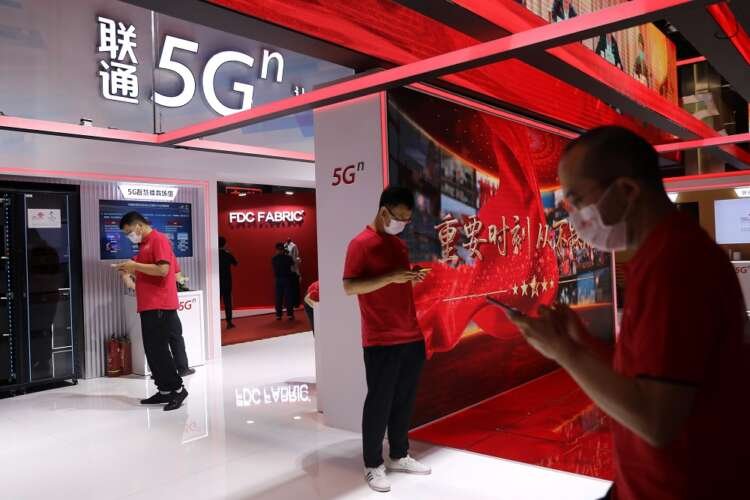
    A view of Shanghai's tech landscape, symbolizing the recent regulatory thaw in China's technology sector. This image captures the growing optimism among global investors amid easing restrictions and potential economic recovery, reflecting the article's focus on China's regulatory environment and its impact on investment strategies.
    Chinese tech skyline with investors reflecting on regulatory changes - Global Banking & Finance Review
    Why waste money on news and opinion when you can access them for free?

    Take advantage of our newsletter subscription and stay informed on the go!

    Subscribe

    Tags:technologyforeign investorsequityinvestment portfoliosfinancial markets

    Quick Summary

    SHANGHAI/HONG KONG (Reuters) – As Chinese authorities signal that a two-year crackdown on the domestic technology sector is over, global investors are relieved and yet loath to take the government at its word.

    SHANGHAI/HONG KONG (Reuters) – As Chinese authorities signal that a two-year crackdown on the domestic technology sector is over, global investors are relieved and yet loath to take the government at its word.

    Foreign investors have been returning to mainland markets since May as its stringent COVID-19 lockdowns ease and after pledges from China’s highest policymakers, including Vice Premier Liu He, to support an economy staring at recession.

    More explicit signs that the regulatory crackdown that crippled the technology sector is easing came this week with reports ride-hailing firm Didi Global and billionaire Jack Ma’s Ant Group, the fintech affiliate of conglomerate Alibaba, are getting out of the regulatory doghouse.

    Yet, the lure of a battered and cheap market and the prospect of domestic economic stimulus have not won investors over completely.

    “I do not think that the crackdown is behind us for good as the Chinese will do what they need to when they feel like it. Unfortunately, I think it’s that simple,” said Jimmy Lee, chief executive officer of The Wealth Consulting Group, a wealth management firm.

    Lee expects U.S.-listed shares of Chinese firms to remain volatile, but says “for now I think that the government wants to revive its economy and is giving investors reasons to be optimistic.”

    In some respects, Thursday’s news that China’s central leadership had given Ant Group a tentative green light to revive its initial public offering (IPO) brings to a close a crackdown that began with the stalling of that IPO in November 2020.

    A Shanghai-based fund manager, who declined to be identified, said an Ant IPO or a completion of its restructuring, would send a very positive signal to the market. But he cautions that Ant is not technically ready for an IPO as it has not yet obtained necessary licences for its revamped business, and that “even if it’s listed, Ant has become a very different animal”.

    Andy Maynard, head of equities at China Renaissance, is buying Chinese stocks, while waiting for the Ant IPO to actually happen.

    “It’s a begrudging thawing of regulatory pressure,” said Maynard. “If the economy was still positive and COVID wasn’t a problem, they would be still be putting the hammer down on the heads of tech.”

    TWO OUT OF THREE

    Alibaba is the largest position on the books of Thomas Hayes, chairman and managing member of Great Hill Capital, a New York-based hedge fund. To Hayes, the turning point was when Ant appointed the Hong Kong exchange’s chairman, Laura Cha, to its board this month. He is now waiting for his thesis of a meaningful rally to play out.

    “There will be setbacks and bumps along the way, but the tide has changed,” Hayes said, adding that Alibaba’s roughly 60% rise since March was just the start of what he expected to be a strong rally.

    Brian Jacobsen, a senior investment strategist at Allspring Global Investments, an asset manager based in Charlotte, North Carolina, whose team is now warming up to Chinese stocks, said the uncertainties remained but the expectation was for China to be less strict.

    “At some point, investors have to just accept the risks and decide if prices have moved low enough,” he said.

    Mainland shares are cheap. According to Refinitiv data, Chinese companies’ earnings are estimated to grow 12.4% in 2022 but their forward 12-month price-to-earnings ratio is at 9.62, the second lowest in Asia after South Korea.

    Foreign investors have been on a buying streak since May 27, according to flows data for the Stock Connect programme linking mainland markets to Hong Kong. For the month through June 9, they had bought A-shares worth 29.6 billion yuan ($4.4 billion) versus 16.8 billion yuan for all of May.

    “We’ve seen some overseas money come back, including some long-term money, which doesn’t leave immediately. Money from Middle East, Europe, or even the U.S,” the Shanghai fund manager said.

    Of the three big risks to the economy – regulation, COVID-19 lockdowns and that of Chinese shares being delisted from U.S. exchanges – investors are cognisant that the last still remains a big one.

    The S&P China ADR index is down 55% since Nov. 2020, the month Ant’s IPO stalled, marking the start of the regulatory crackdown.

    Alibaba shares are up by more than a third since late April, but still down by nearly two-thirds from their peak in late October 2020.

    “I can say that the Jack Ma disappearing act is still something that factors into my opinion on what the reality is for Chinese free markets and how that may affect valuations for certain companies,” Jimmy Lee said.

    (Reporting by Davide Barbuscia in New York, Jason Xue, Andrew Galbraith and Samuel Shen in Shanghai, Selena Li and Xie Yu in Hong Kong; Writing by Vidya Ranganathan; Editing by Stephen Coates)

    Frequently Asked Questions about Analysis: China’s regulatory thaw leaves investors eager yet uneasy

    1What is an IPO?

    An IPO, or Initial Public Offering, is the process through which a private company offers its shares to the public for the first time, allowing it to raise capital from public investors.

    2What are foreign investors?

    Foreign investors are individuals or institutions from one country that invest in assets or businesses located in another country, often seeking to diversify their investment portfolios.

    3What is market volatility?

    Market volatility refers to the rate at which the price of securities increases or decreases for a given set of returns. High volatility indicates a higher risk and potential for larger price swings.

    4What is equity investment?

    Equity investment involves purchasing shares of a company, giving investors ownership rights and a claim on the company's assets and earnings.

    5What are investment portfolios?

    Investment portfolios are collections of financial assets such as stocks, bonds, and other securities held by an individual or institution, aimed at achieving specific financial goals.

    More from Investing

    Explore more articles in the Investing category

    Image for Understanding the Factors Shaping Bitcoin’s Current Market Conditions
    Understanding the Factors Shaping Bitcoin’s Current Market Conditions
    Image for Understanding Investment Management Consulting Services in the U.S. Market
    Understanding Investment Management Consulting Services in the U.S. Market
    Image for The Role of DST Sponsors and Service Providers in Delaware Statutory Trusts
    The Role of DST Sponsors and Service Providers in Delaware Statutory Trusts
    Image for Understanding Self-Directed IRA Structures and Platform Models
    Understanding Self-Directed IRA Structures and Platform Models
    Image for 1031 Exchanges and Delaware Statutory Trusts: What Investors Need to Know
    1031 Exchanges and Delaware Statutory Trusts: What Investors Need to Know
    Image for Excellence in Innovation – Strategic Investment & Economic Transformation Egypt 2025
    Excellence in Innovation – Strategic Investment & Economic Transformation Egypt 2025
    Image for What Is the Average Pension Pot in the UK? (By Age)
    What Is the Average Pension Pot in the UK? (By Age)
    Image for From Money Printing to Market Surge: The Macro Forces Driving Crypto in 2026
    From Money Printing to Market Surge: The Macro Forces Driving Crypto in 2026
    Image for  Millennials Aren’t Ignoring Retirement. They’re Rebuilding It.
    Millennials Aren’t Ignoring Retirement. They’re Rebuilding It.
    Image for BridgeWise Launches FixedWise, the First AI Solution Bringing Granular Bond Intelligence to the European Market
    BridgeWise Launches FixedWise, the First AI Solution Bringing Granular Bond Intelligence to the European Market
    Image for Why Financial Advisors Are Rethinking Gold Allocations
    Why Financial Advisors Are Rethinking Gold Allocations
    Image for From Opaque to Investable: Yaniv Bertele's Blueprint for Transparent Alternatives
    From Opaque to Investable: Yaniv Bertele's Blueprint for Transparent Alternatives
    View All Investing Posts
    Previous Investing PostStocks slump on fresh inflation, China COVID worries
    Next Investing PostThe benefits of self-investment in Belgium