Search
00
GBAF Logo
trophy
Top StoriesInterviewsBusinessFinanceBankingTechnologyInvestingTradingVideosAwardsMagazinesHeadlinesTrends

Subscribe to our newsletter

Get the latest news and updates from our team.

Global Banking & Finance Review®

Global Banking & Finance Review® - Subscribe to our newsletter

Company

    GBAF Logo
    • About Us
    • Profile
    • Privacy & Cookie Policy
    • Terms of Use
    • Contact Us
    • Advertising
    • Submit Post
    • Latest News
    • Research Reports
    • Press Release
    • Awards▾
      • About the Awards
      • Awards TimeTable
      • Submit Nominations
      • Testimonials
      • Media Room
      • Award Winners
      • FAQ
    • Magazines▾
      • Global Banking & Finance Review Magazine Issue 79
      • Global Banking & Finance Review Magazine Issue 78
      • Global Banking & Finance Review Magazine Issue 77
      • Global Banking & Finance Review Magazine Issue 76
      • Global Banking & Finance Review Magazine Issue 75
      • Global Banking & Finance Review Magazine Issue 73
      • Global Banking & Finance Review Magazine Issue 71
      • Global Banking & Finance Review Magazine Issue 70
      • Global Banking & Finance Review Magazine Issue 69
      • Global Banking & Finance Review Magazine Issue 66
    Top StoriesInterviewsBusinessFinanceBankingTechnologyInvestingTradingVideosAwardsMagazinesHeadlinesTrends

    Global Banking & Finance Review® is a leading financial portal and online magazine offering News, Analysis, Opinion, Reviews, Interviews & Videos from the world of Banking, Finance, Business, Trading, Technology, Investing, Brokerage, Foreign Exchange, Tax & Legal, Islamic Finance, Asset & Wealth Management.
    Copyright © 2010-2026 GBAF Publications Ltd - All Rights Reserved. | Sitemap | Tags | Developed By eCorpIT

    Editorial & Advertiser disclosure

    Global Banking & Finance Review® is an online platform offering news, analysis, and opinion on the latest trends, developments, and innovations in the banking and finance industry worldwide. The platform covers a diverse range of topics, including banking, insurance, investment, wealth management, fintech, and regulatory issues. The website publishes news, press releases, opinion and advertorials on various financial organizations, products and services which are commissioned from various Companies, Organizations, PR agencies, Bloggers etc. These commissioned articles are commercial in nature. This is not to be considered as financial advice and should be considered only for information purposes. It does not reflect the views or opinion of our website and is not to be considered an endorsement or a recommendation. We cannot guarantee the accuracy or applicability of any information provided with respect to your individual or personal circumstances. Please seek Professional advice from a qualified professional before making any financial decisions. We link to various third-party websites, affiliate sales networks, and to our advertising partners websites. When you view or click on certain links available on our articles, our partners may compensate us for displaying the content to you or make a purchase or fill a form. This will not incur any additional charges to you. To make things simpler for you to identity or distinguish advertised or sponsored articles or links, you may consider all articles or links hosted on our site as a commercial article placement. We will not be responsible for any loss you may suffer as a result of any omission or inaccuracy on the website.

    Home > Investing > Analysis-Bear market puts ESG investing to its first big test
    Investing

    Analysis-Bear market puts ESG investing to its first big test

    Published by Wanda Rich

    Posted on July 13, 2022

    4 min read

    Last updated: February 5, 2026

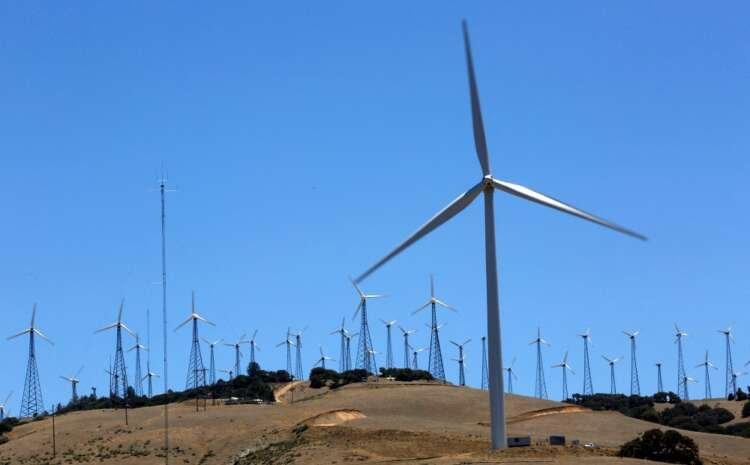
    The image shows a wind turbine at a wind farm, representing the challenges ESG investing faces during the bear market. As interest rates rise, sustainable funds are tested, emphasizing the importance of environmental investments.
    Wind turbine at a farm symbolizing sustainable investing in ESG funds - Global Banking & Finance Review
    Why waste money on news and opinion when you can access them for free?

    Take advantage of our newsletter subscription and stay informed on the go!

    Subscribe

    Tags:sustainabilityinvestment portfoliosfinancial managementmarket conditions

    By Cole Horton and Ross Kerber

    (Reuters) – Investing based on environmental, social, and corporate governance (ESG) principles became a $35 trillion industry on the back of a long run-up in stocks that lasted from 2009 until the start of this year.

    Investors now have to decide whether they will stick with it when making money is no longer easy.

    The onset of a bear market this year, driven by rising interest rates and concerns over a potential recession, is testing investors’ ESG commitments. U.S. sustainable funds recorded a rare monthly outflow of $3.5 billion in May, according to Morningstar.

    Even before then, inflows to these funds had slowed. They took in $7.5 billion in the first five months of this year, compared to $35 billion in the prior period.

    Nevertheless, Alyssa Stankiewicz, Morningstar’s associate director of sustainability research, said outflows from ESG funds would have to be sustained for the weak demand to be more than a “hiccup.”

    “If we were to try to claim that demand for ESG funds is materially deteriorating, you would want to see that demand is sinking faster, and for an extended period of time, than the broader market,” Stankiewicz said.

    ESG equity funds faced headwinds in their portfolios on two fronts this year. Technology stocks, which ESG funds tend to be overweight on because they are perceived as more environmentally friendly, underperformed the broader market. And oil and gas stocks, which many ESG funds are underweight because of concerns about climate change, outperformed thanks to a rally in energy prices following Russia’s invasion of Ukraine.

    While U.S. sustainable funds have outperformed a representative group of other funds by 1.4% annually over the five years to June 30, they underperformed the broader market by almost 2% during the first half of 2022, according to Morningstar Direct.

    Investor surveys, seeking to gauge their future response to the downturn, have come up mixed.

    A survey published by the Journal of Financial Planning and the Financial Planning Association last month found that 28% of financial advisers planned to increase their use or recommendation of ESG funds over the next year, up from 24% in 2021. But it also found that 15% planned to decrease usage over the same period, compared with just 4% in 2021.

    An RBC Wealth Management survey of 976 investors based in the United States published in April found that almost half of them said financial performance and returns were a higher priority than ESG impact, up from 42% who said so last year.

    Peter Essele, head of portfolio management for investment adviser Commonwealth Financial Network, said ESG investors tend to have long investment horizons that make them “sticky” to the asset class.

    “They tend to be less performance-focused than your traditional investor, so I think there’s a willingness to commit and stay with companies through periods of volatility,” Essele said.

    That view is shared by many on Wall Street, including investment bank Morgan Stanley, whose equity analysts said last month that the “softening in ESG sentiment” did not represent a “structural slowdown.”

    POSITIONING FOR AN UPSWING

    Tim Hughes, managing director at investment adviser Wealthspire Advisors, said he found that client interest in ESG investing has been on the rise for the last year. “We have seen underperformance, but I kind of feel like it’s expected, and expectations were managed as such. I frankly haven’t received much pushback (from clients) at all,” he said.

    It’s possible that market trends will come to favor the portfolios of ESG funds in the coming months. Technology stocks, for example, have staged a small rally since last month that would boost ESG funds were it to pick up steam.

    Cheryl Smith, economist and portfolio manager at ESG investor Trillium Asset Management, said periods of sluggish economic growth often favor companies with steady growth prospects, including those in the ESG-friendly technology and healthcare sectors.

    Amber Fairbanks, portfolio manager at sustainable investment firm Mirova US, said she was not investing in ESG just “to feel good” and that she saw opportunities in this environment to score returns that beat the broader market.

    “We’re looking at it as a source of outperformance, and that’s something that I think more and more investors are starting to recognize,” Fairbanks said.

    (Reporting by Cole Horton in New York and Ross Kerber in Boston; Editing by Greg Roumeliotis and Nick Zieminski)

    Frequently Asked Questions about Analysis-Bear market puts ESG investing to its first big test

    1What is ESG investing?

    ESG investing refers to investment strategies that consider environmental, social, and governance factors in addition to financial performance.

    2What are sustainable funds?

    Sustainable funds are investment funds that focus on companies or projects that meet certain environmental and social criteria.

    3What is a bear market?

    A bear market is a market condition characterized by declining prices, typically defined as a drop of 20% or more from recent highs.

    4What are inflows and outflows in investment funds?

    Inflows refer to the amount of money that investors put into a fund, while outflows refer to the money that investors withdraw from the fund.

    5What is investor sentiment?

    Investor sentiment is the overall attitude of investors toward a particular security or financial market, often influenced by market trends and economic conditions.

    More from Investing

    Explore more articles in the Investing category

    Image for Understanding the Factors Shaping Bitcoin’s Current Market Conditions
    Understanding the Factors Shaping Bitcoin’s Current Market Conditions
    Image for Understanding Investment Management Consulting Services in the U.S. Market
    Understanding Investment Management Consulting Services in the U.S. Market
    Image for The Role of DST Sponsors and Service Providers in Delaware Statutory Trusts
    The Role of DST Sponsors and Service Providers in Delaware Statutory Trusts
    Image for Understanding Self-Directed IRA Structures and Platform Models
    Understanding Self-Directed IRA Structures and Platform Models
    Image for 1031 Exchanges and Delaware Statutory Trusts: What Investors Need to Know
    1031 Exchanges and Delaware Statutory Trusts: What Investors Need to Know
    Image for Excellence in Innovation – Strategic Investment & Economic Transformation Egypt 2025
    Excellence in Innovation – Strategic Investment & Economic Transformation Egypt 2025
    Image for What Is the Average Pension Pot in the UK? (By Age)
    What Is the Average Pension Pot in the UK? (By Age)
    Image for From Money Printing to Market Surge: The Macro Forces Driving Crypto in 2026
    From Money Printing to Market Surge: The Macro Forces Driving Crypto in 2026
    Image for  Millennials Aren’t Ignoring Retirement. They’re Rebuilding It.
    Millennials Aren’t Ignoring Retirement. They’re Rebuilding It.
    Image for BridgeWise Launches FixedWise, the First AI Solution Bringing Granular Bond Intelligence to the European Market
    BridgeWise Launches FixedWise, the First AI Solution Bringing Granular Bond Intelligence to the European Market
    Image for Why Financial Advisors Are Rethinking Gold Allocations
    Why Financial Advisors Are Rethinking Gold Allocations
    Image for From Opaque to Investable: Yaniv Bertele's Blueprint for Transparent Alternatives
    From Opaque to Investable: Yaniv Bertele's Blueprint for Transparent Alternatives
    View All Investing Posts
    Previous Investing PostEuropean shares slide after hot U.S. inflation, euro falls below parity
    Next Investing PostFTSE 100 falls as UK’s surprise growth fails to ease recession fears