Search
00
GBAF Logo
trophy
Top StoriesInterviewsBusinessFinanceBankingTechnologyInvestingTradingVideosAwardsMagazinesHeadlinesTrends

Subscribe to our newsletter

Get the latest news and updates from our team.

Global Banking and Finance Review

Global Banking & Finance Review

Company

    GBAF Logo
    • About Us
    • Profile
    • Privacy & Cookie Policy
    • Terms of Use
    • Contact Us
    • Advertising
    • Submit Post
    • Latest News
    • Research Reports
    • Press Release
    • Awards▾
      • About the Awards
      • Awards TimeTable
      • Submit Nominations
      • Testimonials
      • Media Room
      • Award Winners
      • FAQ
    • Magazines▾
      • Global Banking & Finance Review Magazine Issue 79
      • Global Banking & Finance Review Magazine Issue 78
      • Global Banking & Finance Review Magazine Issue 77
      • Global Banking & Finance Review Magazine Issue 76
      • Global Banking & Finance Review Magazine Issue 75
      • Global Banking & Finance Review Magazine Issue 73
      • Global Banking & Finance Review Magazine Issue 71
      • Global Banking & Finance Review Magazine Issue 70
      • Global Banking & Finance Review Magazine Issue 69
      • Global Banking & Finance Review Magazine Issue 66
    Top StoriesInterviewsBusinessFinanceBankingTechnologyInvestingTradingVideosAwardsMagazinesHeadlinesTrends

    Global Banking & Finance Review® is a leading financial portal and online magazine offering News, Analysis, Opinion, Reviews, Interviews & Videos from the world of Banking, Finance, Business, Trading, Technology, Investing, Brokerage, Foreign Exchange, Tax & Legal, Islamic Finance, Asset & Wealth Management.
    Copyright © 2010-2025 GBAF Publications Ltd - All Rights Reserved.

    Editorial & Advertiser disclosure

    Global Banking and Finance Review is an online platform offering news, analysis, and opinion on the latest trends, developments, and innovations in the banking and finance industry worldwide. The platform covers a diverse range of topics, including banking, insurance, investment, wealth management, fintech, and regulatory issues. The website publishes news, press releases, opinion and advertorials on various financial organizations, products and services which are commissioned from various Companies, Organizations, PR agencies, Bloggers etc. These commissioned articles are commercial in nature. This is not to be considered as financial advice and should be considered only for information purposes. It does not reflect the views or opinion of our website and is not to be considered an endorsement or a recommendation. We cannot guarantee the accuracy or applicability of any information provided with respect to your individual or personal circumstances. Please seek Professional advice from a qualified professional before making any financial decisions. We link to various third-party websites, affiliate sales networks, and to our advertising partners websites. When you view or click on certain links available on our articles, our partners may compensate us for displaying the content to you or make a purchase or fill a form. This will not incur any additional charges to you. To make things simpler for you to identity or distinguish advertised or sponsored articles or links, you may consider all articles or links hosted on our site as a commercial article placement. We will not be responsible for any loss you may suffer as a result of any omission or inaccuracy on the website.

    Home > Investing > Analysis-Afghan central bank’s $10 billion stash mostly out of Taliban’s reach
    Investing

    Analysis-Afghan central bank’s $10 billion stash mostly out of Taliban’s reach

    Analysis-Afghan central bank’s $10 billion stash mostly out of Taliban’s reach

    Published by maria gbaf

    Posted on August 19, 2021

    Featured image for article about Investing

    By Karin Strohecker, Simon Lewis and David Lawder

    LONDON/WASHINGTON (Reuters) -The Taliban took over Afghanistan with astonishing speed, but it appears unlikely that the militants will get quick access to most of the Afghan central bank’s roughly $10 billion in assets.

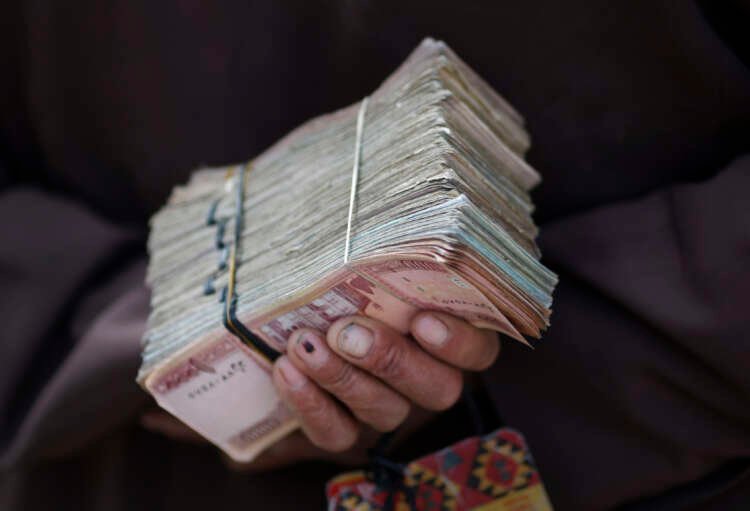
    The country’s central bank, Da Afghanistan Bank (DAB), is thought to hold foreign currency, gold and other treasures in its vaults, according to an Afghan official.

    But most of the assets are held outside Afghanistan, potentially putting most of them beyond the insurgents’ reach, according to Afghan officials, including the bank’s acting governor, Ajmal Ahmady, who has fled Kabul.

    “Given that the Taliban are still on international sanction lists, it is expected (confirmed?) that such assets will be frozen and not accessible to Taliban,” Ahmady said in a Twitter thread https://twitter.com/aahmady/status/1427883023123558400 on Wednesday.

    “We can say the accessible funds to the Taliban are perhaps 0.1-0.2% of Afghanistan’s total international reserves. Not much,” he added.

    The Taliban said on Saturday that the treasury, public facilities and government offices were the property of the nation and “should be strictly guarded.”

    The most recent financial statement posted online https://dab.gov.af/sites/default/files/2021-08/Monthly%20Financial%20statement%20%20for%20the%20month%20of%20Jawza%20%201400%20%28English%29%20%20.pdf shows DAB holds total assets of about $10 billion, including $1.3 billion-worth of gold reserves and $362 million in foreign currency cash reserves, based on currency conversion rates on June 21, the date of the report. Ahmady estimated total reserves stood at $9 billion last week.

    MANY ASSETS HELD ABROAD

    Central banks, especially in developing nations, often park their assets overseas with institutions such as the Federal Reserve Bank of New York (FRBNY) or the Bank of England.

    DAB’s consolidated statement https://dab.gov.af/sites/default/files/2021-04/DA%20AFGHANISTAN%20BANK%20CONSOLIDATED%20FINANCIAL%20STATEMENTS%20FOR%20THE%20YEAR%20ENDED%20QAWS%20301399%20%28DECEMBER%20202020%29final.pdf showed that the FRBNY held gold bars worth 101,770,256,000 afghanis – at the time $1.32 billion – on behalf of the Afghan central bank in its vaults by end-2020.

    The DAB’s June statement also states the bank owned investments worth $6.1 billion. The June report did not provide details of those investments, but a breakdown in the year-end report showed the majority were in the form of U.S. Treasury bonds and bills.

    Investments were made through the International Bank for Reconstruction and Development (IBRD), an arm of the World Bank, or through the FRBNY and held in New York. Among its smaller items are shares in an investment pool by the Bank for International Settlement (BIS), which is based in Switzerland, as well as the Economic Cooperation Organisation Trade and Development Bank in Turkey.

    “As per international standards, most assets are held in safe, liquid assets such as Treasuries and gold,” Ahmady said on Twitter, confirming assets were all held at the Fed, BIS, through the World Bank programme or other bank accounts.

    Asked about the holdings, a FRBNY official said the bank does not acknowledge or discuss individual account holders, but is generally in contact with U.S. government agencies to monitor events that may impact control of a foreign central bank.

    An official in U.S. President Joe Biden’s administration told Reuters: “Any central bank assets the Afghan government have in the United States will not be made available to the Taliban.”

    DAB’s foreign currency cash holdings worth around $362 million are almost entirely U.S. dollars and were held at the bank’s head offices and branches as well as the presidential palace, which is now in the hands of the Taliban.

    The DAB’s year-end statement also details that just under $160 million worth of gold bars and silver coins were held at the bank’s vault at the presidential palace.

    The Afghan central bank’s vaults also contain a hoard of 2,000-year-old gold jewellery, ornaments and coins known as the Bactrian Treasure, according to UNESCO. The around 21,000 ancient artefacts were presumed lost until 2003, when they were found in a secret vault in the central bank’s basement, having survived the previous era of Taliban rule undiscovered.

        Afghan lawmakers in January floated the idea of sending the treasures abroad for safe keeping, warning they were vulnerable to theft, local broadcaster Tolo News reported.

    ACCESS TO SDRs IN DOUBT

    The International Monetary Fund (IMF) estimated the Afghan central bank’s international reserves at $9.5 billion in 2021 in its latest review published in June https://www.imf.org/en/Publications/CR/Issues/2021/06/28/Islamic-Republic-of-Afghanistan-First-Review-Under-the-Under-the-Extended-Credit-Facility-461288.

    This translates into import cover of more than 15 months – well above the three months seen as a safe minimum.

    A key question will be the handling of Afghanistan’s share of a pending $650 billion allocation of Special Drawing Rights currency reserves to the Fund’s 190 member countries on Aug. 23.

    This distribution of SDRs, the Fund’s unit of exchange based on dollars, euros, yen, sterling and yuan, aims to shore up the reserves of developing countries strained by the COVID-19 pandemic. IMF member Afghanistan is eligible for an allocation of about $455 million, based on its 0.07% quota shareholding in the Fund.

    The Taliban gaining access to those assets would be hard to digest in capitals around the globe, but not all countries have access to the SDRs they are allocated.

    In 2019, the IMF suspended Venezuela’s SDR access after more than 50 member countries representing a majority of the Fund’s shareholding refused to recognise Nicolas Maduro’s government.

    “Not sure if that allocation will now proceed with respect to Afghanistan,” said acting central bank governor Ahmady.

    A group of 18 Republican U.S. lawmakers urged Treasury Secretary Janet Yellen in a letter https://hill.house.gov/uploadedfiles/20210817ltrtosecyellenresdrstoafghanistan.pdf to intervene at the IMF “to ensure that no allocated SDRs are made available to a Taliban-led Afghanistan,” requesting an update on the situation by Thursday.

    The Fund, which defers to its members on disputed political transitions, has not responded to a request for comment on the pending SDR allocation to Afghanistan.

    (Reporting by Karin Strohecker in London, Simon Lewis and David Lawder in Washington, Additional reporting by Jonnelle Marte in New York; Editing by Jane Merriman and Andrea Ricci)

    By Karin Strohecker, Simon Lewis and David Lawder

    LONDON/WASHINGTON (Reuters) -The Taliban took over Afghanistan with astonishing speed, but it appears unlikely that the militants will get quick access to most of the Afghan central bank’s roughly $10 billion in assets.

    The country’s central bank, Da Afghanistan Bank (DAB), is thought to hold foreign currency, gold and other treasures in its vaults, according to an Afghan official.

    But most of the assets are held outside Afghanistan, potentially putting most of them beyond the insurgents’ reach, according to Afghan officials, including the bank’s acting governor, Ajmal Ahmady, who has fled Kabul.

    “Given that the Taliban are still on international sanction lists, it is expected (confirmed?) that such assets will be frozen and not accessible to Taliban,” Ahmady said in a Twitter thread https://twitter.com/aahmady/status/1427883023123558400 on Wednesday.

    “We can say the accessible funds to the Taliban are perhaps 0.1-0.2% of Afghanistan’s total international reserves. Not much,” he added.

    The Taliban said on Saturday that the treasury, public facilities and government offices were the property of the nation and “should be strictly guarded.”

    The most recent financial statement posted online https://dab.gov.af/sites/default/files/2021-08/Monthly%20Financial%20statement%20%20for%20the%20month%20of%20Jawza%20%201400%20%28English%29%20%20.pdf shows DAB holds total assets of about $10 billion, including $1.3 billion-worth of gold reserves and $362 million in foreign currency cash reserves, based on currency conversion rates on June 21, the date of the report. Ahmady estimated total reserves stood at $9 billion last week.

    MANY ASSETS HELD ABROAD

    Central banks, especially in developing nations, often park their assets overseas with institutions such as the Federal Reserve Bank of New York (FRBNY) or the Bank of England.

    DAB’s consolidated statement https://dab.gov.af/sites/default/files/2021-04/DA%20AFGHANISTAN%20BANK%20CONSOLIDATED%20FINANCIAL%20STATEMENTS%20FOR%20THE%20YEAR%20ENDED%20QAWS%20301399%20%28DECEMBER%20202020%29final.pdf showed that the FRBNY held gold bars worth 101,770,256,000 afghanis – at the time $1.32 billion – on behalf of the Afghan central bank in its vaults by end-2020.

    The DAB’s June statement also states the bank owned investments worth $6.1 billion. The June report did not provide details of those investments, but a breakdown in the year-end report showed the majority were in the form of U.S. Treasury bonds and bills.

    Investments were made through the International Bank for Reconstruction and Development (IBRD), an arm of the World Bank, or through the FRBNY and held in New York. Among its smaller items are shares in an investment pool by the Bank for International Settlement (BIS), which is based in Switzerland, as well as the Economic Cooperation Organisation Trade and Development Bank in Turkey.

    “As per international standards, most assets are held in safe, liquid assets such as Treasuries and gold,” Ahmady said on Twitter, confirming assets were all held at the Fed, BIS, through the World Bank programme or other bank accounts.

    Asked about the holdings, a FRBNY official said the bank does not acknowledge or discuss individual account holders, but is generally in contact with U.S. government agencies to monitor events that may impact control of a foreign central bank.

    An official in U.S. President Joe Biden’s administration told Reuters: “Any central bank assets the Afghan government have in the United States will not be made available to the Taliban.”

    DAB’s foreign currency cash holdings worth around $362 million are almost entirely U.S. dollars and were held at the bank’s head offices and branches as well as the presidential palace, which is now in the hands of the Taliban.

    The DAB’s year-end statement also details that just under $160 million worth of gold bars and silver coins were held at the bank’s vault at the presidential palace.

    The Afghan central bank’s vaults also contain a hoard of 2,000-year-old gold jewellery, ornaments and coins known as the Bactrian Treasure, according to UNESCO. The around 21,000 ancient artefacts were presumed lost until 2003, when they were found in a secret vault in the central bank’s basement, having survived the previous era of Taliban rule undiscovered.

        Afghan lawmakers in January floated the idea of sending the treasures abroad for safe keeping, warning they were vulnerable to theft, local broadcaster Tolo News reported.

    ACCESS TO SDRs IN DOUBT

    The International Monetary Fund (IMF) estimated the Afghan central bank’s international reserves at $9.5 billion in 2021 in its latest review published in June https://www.imf.org/en/Publications/CR/Issues/2021/06/28/Islamic-Republic-of-Afghanistan-First-Review-Under-the-Under-the-Extended-Credit-Facility-461288.

    This translates into import cover of more than 15 months – well above the three months seen as a safe minimum.

    A key question will be the handling of Afghanistan’s share of a pending $650 billion allocation of Special Drawing Rights currency reserves to the Fund’s 190 member countries on Aug. 23.

    This distribution of SDRs, the Fund’s unit of exchange based on dollars, euros, yen, sterling and yuan, aims to shore up the reserves of developing countries strained by the COVID-19 pandemic. IMF member Afghanistan is eligible for an allocation of about $455 million, based on its 0.07% quota shareholding in the Fund.

    The Taliban gaining access to those assets would be hard to digest in capitals around the globe, but not all countries have access to the SDRs they are allocated.

    In 2019, the IMF suspended Venezuela’s SDR access after more than 50 member countries representing a majority of the Fund’s shareholding refused to recognise Nicolas Maduro’s government.

    “Not sure if that allocation will now proceed with respect to Afghanistan,” said acting central bank governor Ahmady.

    A group of 18 Republican U.S. lawmakers urged Treasury Secretary Janet Yellen in a letter https://hill.house.gov/uploadedfiles/20210817ltrtosecyellenresdrstoafghanistan.pdf to intervene at the IMF “to ensure that no allocated SDRs are made available to a Taliban-led Afghanistan,” requesting an update on the situation by Thursday.

    The Fund, which defers to its members on disputed political transitions, has not responded to a request for comment on the pending SDR allocation to Afghanistan.

    (Reporting by Karin Strohecker in London, Simon Lewis and David Lawder in Washington, Additional reporting by Jonnelle Marte in New York; Editing by Jane Merriman and Andrea Ricci)

    Related Posts
     Millennials Aren’t Ignoring Retirement. They’re Rebuilding It.
    Millennials Aren’t Ignoring Retirement. They’re Rebuilding It.
    BridgeWise Launches FixedWise, the First AI Solution Bringing Granular Bond Intelligence to the European Market
    BridgeWise Launches FixedWise, the First AI Solution Bringing Granular Bond Intelligence to the European Market
    Why Financial Advisors Are Rethinking Gold Allocations
    Why Financial Advisors Are Rethinking Gold Allocations
    From Opaque to Investable: Yaniv Bertele's Blueprint for Transparent Alternatives
    From Opaque to Investable: Yaniv Bertele's Blueprint for Transparent Alternatives
    Private Equity Needs AI Advocates
    Private Equity Needs AI Advocates
    Understanding the Global Impact of Rising Medical Insurance Premiums on the Middle Class
    Understanding the Global Impact of Rising Medical Insurance Premiums on the Middle Class
    The New Model Driving Creative Investment in University Innovation
    The New Model Driving Creative Investment in University Innovation
    The return of tangible assets in modern portfolios
    The return of tangible assets in modern portfolios
    Retro Bikes And Insurance: What You Should Know?
    Retro Bikes And Insurance: What You Should Know?
    Top Stocks Powering the AI Boom in 2025
    Top Stocks Powering the AI Boom in 2025
    How often should you update your estate plan? The events that demand a refresh
    How often should you update your estate plan? The events that demand a refresh
    Top 5 Mutual Funds in the UAE: Performance, Features, and How to Invest
    Top 5 Mutual Funds in the UAE: Performance, Features, and How to Invest

    Why waste money on news and opinions when you can access them for free?

    Take advantage of our newsletter subscription and stay informed on the go!

    Subscribe

    Previous Investing PostNorway wealth fund earned $111 billion in H1 but warns of inflation risk
    Next Investing PostAsian shares fall, dollar gains after Fed minutes

    More from Investing

    Explore more articles in the Investing category

    How One Investor Learned to Find Value Through a Wider Lens

    How One Investor Learned to Find Value Through a Wider Lens

    Freedom Holding Corp’s Global Rise: Why Institutional Investors Are Betting Big

    Freedom Holding Corp’s Global Rise: Why Institutional Investors Are Betting Big

    Pro Visionary Helps Australians Strengthen Their Financial Resilience Through Licensed Wealth Strategies

    Pro Visionary Helps Australians Strengthen Their Financial Resilience Through Licensed Wealth Strategies

    How ZenInvestor Is Breaking Down Barriers to Financial Literacy and Empowering Everyday Investors Nationwide

    How ZenInvestor Is Breaking Down Barriers to Financial Literacy and Empowering Everyday Investors Nationwide

    Edward L. Shugrue III on Returning to the Office: A Cultural Shift and Investment Opportunity

    Edward L. Shugrue III on Returning to the Office: A Cultural Shift and Investment Opportunity

    How Private Capital Can Build Public Good

    How Private Capital Can Build Public Good

    Private Equity Has a Major Speed and Capacity Problem

    Private Equity Has a Major Speed and Capacity Problem

    Navigating AI Investing Tools: Wealth Management Disruption Ahead

    Navigating AI Investing Tools: Wealth Management Disruption Ahead

    MTF Trading Explained: What It Is, How It Works, and Key Benefits

    MTF Trading Explained: What It Is, How It Works, and Key Benefits

    Private Equity Has Trust Issues With AI

    Private Equity Has Trust Issues With AI

    Merifund Capital Management on FTSE 100 Gains

    Merifund Capital Management on FTSE 100 Gains

    Sycamine Capital Management sets outlook on Japan equities

    Sycamine Capital Management sets outlook on Japan equities

    View All Investing Posts