
Search
00
GBAF Logo
trophy
Top StoriesInterviewsBusinessFinanceBankingTechnologyInvestingTradingVideosAwardsMagazinesHeadlinesTrends

Subscribe to our newsletter

Get the latest news and updates from our team.

Global Banking & Finance Review®

Global Banking & Finance Review® - Subscribe to our newsletter

Company

    GBAF Logo
    • About Us
    • Advertising and Sponsorship
    • Profile & Readership
    • Contact Us
    • Latest News
    • Privacy & Cookies Policies
    • Terms of Use
    • Advertising Terms
    • Issue 81
    • Issue 80
    • Issue 79
    • Issue 78
    • Issue 77
    • Issue 76
    • Issue 75
    • Issue 74
    • Issue 73
    • Issue 72
    • Issue 71
    • Issue 70
    • View All
    • About the Awards
    • Awards Timetable
    • Awards Winners
    • Submit Nominations
    • Testimonials
    • Media Room
    • FAQ
    • Asset Management Awards
    • Brand of the Year Awards
    • Business Awards
    • Cash Management Banking Awards
    • Banking Technology Awards
    • CEO Awards
    • Customer Service Awards
    • CSR Awards
    • Deal of the Year Awards
    • Corporate Governance Awards
    • Corporate Banking Awards
    • Digital Transformation Awards
    • Fintech Awards
    • Education & Training Awards
    • ESG & Sustainability Awards
    • ESG Awards
    • Forex Banking Awards
    • Innovation Awards
    • Insurance & Takaful Awards
    • Investment Banking Awards
    • Investor Relations Awards
    • Leadership Awards
    • Islamic Banking Awards
    • Real Estate Awards
    • Project Finance Awards
    • Process & Product Awards
    • Telecommunication Awards
    • HR & Recruitment Awards
    • Trade Finance Awards
    • The Next 100 Global Awards
    • Wealth Management Awards
    • Travel Awards
    • Years of Excellence Awards
    • Publishing Principles
    • Ownership & Funding
    • Corrections Policy
    • Editorial Code of Ethics
    • Diversity & Inclusion Policy
    • Fact Checking Policy
    Original content: Global Banking and Finance Review - https://www.globalbankingandfinance.com

    A global financial intelligence and recognition platform delivering authoritative insights, data-driven analysis, and institutional benchmarking across Banking, Capital Markets, Investment, Technology, and Financial Infrastructure.

    Copyright © 2010-2026 - All Rights Reserved. | Sitemap | Tags

    Editorial & Advertiser disclosure

    Global Banking & Finance Review® is an online platform offering news, analysis, and opinion on the latest trends, developments, and innovations in the banking and finance industry worldwide. The platform covers a diverse range of topics, including banking, insurance, investment, wealth management, fintech, and regulatory issues. The website publishes news, press releases, opinion and advertorials on various financial organizations, products and services which are commissioned from various Companies, Organizations, PR agencies, Bloggers etc. These commissioned articles are commercial in nature. This is not to be considered as financial advice and should be considered only for information purposes. It does not reflect the views or opinion of our website and is not to be considered an endorsement or a recommendation. We cannot guarantee the accuracy or applicability of any information provided with respect to your individual or personal circumstances. Please seek Professional advice from a qualified professional before making any financial decisions. We link to various third-party websites, affiliate sales networks, and to our advertising partners websites. When you view or click on certain links available on our articles, our partners may compensate us for displaying the content to you or make a purchase or fill a form. This will not incur any additional charges to you. To make things simpler for you to identity or distinguish advertised or sponsored articles or links, you may consider all articles or links hosted on our site as a commercial article placement. We will not be responsible for any loss you may suffer as a result of any omission or inaccuracy on the website.

    1. Home
    2. >Finance
    3. >After ECB shock, European firms confront higher borrowing costs
    Finance

    After ECB Shock, European Firms Confront Higher Borrowing Costs

    Published by maria gbaf

    Posted on February 22, 2022

    5 min read

    Last updated: February 8, 2026

    Add as preferred source on Google
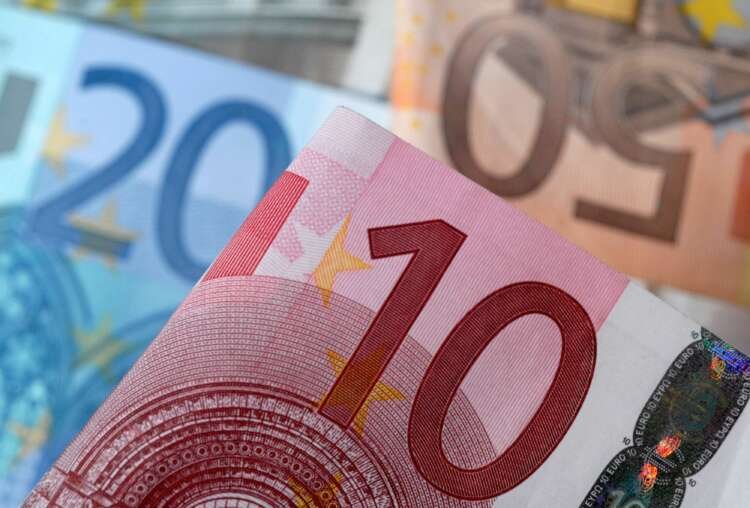
    An illustration of euro banknotes representing the impact of rising borrowing costs on European companies. This image relates to the challenges faced by firms in the current financial climate as reported in the article on ECB's monetary policy changes.
    Illustration of euro banknotes symbolizing European borrowing costs in finance - Global Banking & Finance Review
    Why waste money on news and opinion when you can access them for free?

    Take advantage of our newsletter subscription and stay informed on the go!

    Subscribe

    Tags:Debt Capital Marketscorporate bondsmonetary policyeconomic growth

    By Yoruk Bahceli

    (Reuters) -European companies hoping to fund M&A and capital expenditures on bond markets this year are facing a sudden jump in borrowing costs and wary buyers after the ECB’s shock pivot towards tighter monetary policy.

    Bond issues are a key source of funding for companies and have grown in importance relative to bank loans in the euro zone, particularly since the financial crisis.

    Caught out by European Central Bank President Christine Lagarde’s hawkish tone after the bank’s February meeting – which opened the door to rate hikes this year – bonds from investment-grade (IG) European firms have seen yields surge 60 basis points.

    Euro credit had been less hit by January volatility stirred by the U.S. Federal Reserve’s hawkishness, with IG bonds delivering less than half the losses in the United States.

    But those falls accelerated post-ECB and yields have more than doubled this year to as high as 1.18%, the highest since May 2020, according to BofA.

    That’s still extremely low, but a sudden jump in borrowing costs is significant. If continued, it can impact companies’ ability to invest, eventually slowing economic growth, so central banks watch credit spreads carefully.

    Nearly half of investors in BofA’s February credit investor survey said IG spreads rising to 150-175 bps, from around 110 bps currently, would prompt a dovish turn from the ECB.

    A mergers and acquisitions boom and the need for capital investment has been seen by many as driving a rise in European corporate bond sales this year — JPMorgan for instance expects a record 645 billion euros of IG issuance.

    While moves so far are not enough to derail those expectations, Helene Jolly, head of EMEA IG corporate syndicate at Deutsche Bank, said borrowers and investors were adjusting to “the new normal”.

    “Corporates have had to look at the new levels of coupons that are being required because of the rates being paid… and investors have had to think about what does this mean for me, what’s my outlook on rates now and where do I want to play,” Jolly said.

    Sentiment has turned rapidly — just 16% of European credit investors are positioned net long on IG debt, the lowest since 2019 and down from 27% in December, while corporate debt funds are holding more cash than they have in years, BofA’s survey found.

    One consequence has been declining bond sales — in the two weeks since the ECB meeting companies have raised around 9 billion euros, similar to volumes in the single week up to the meeting, according to Refinitiv IFR data. Several sessions delivered zero issuance.

    WARY

    Because many companies borrowed cheaply and abundantly during the pandemic, there is no panic over their ability to refinance debt, even for sub-investment grade, “junk” issuers.

    Just two junk issuers have sold bonds since the ECB, according to IFR. The vast majority of issuance came from Italian credit management and data group Cerved, which raised most of its funding from a floating-rate bond. Those compensate investors as interest rates rise.

    “People are wary about new issues, not because they think they are bad credits, but they’re concerned that if you buy a credit with a 3.5% yield today and in a week the same credit is yielding 3.75%, your bond’s down a couple of points,” said Ben Thompson, JPMorgan’s co-head of EMEA leveraged finance capital markets.

    ISSUANCE BOOM?

    Issuers may have to start hitting markets soon with the ECB expected to halt bond purchases by September.

    The ECB last year bought over 70 billion euros of company debt, around 6% of its total purchases during that period.

    IG spreads have widened over 25 bps this year and the additional premium companies pay for new bond sales are already higher than the average since 2015, according to BNP Paribas.

    Viktor Hjort, global head of credit strategy at BNP, estimates an upcoming rush for M&A and capex-linked borrowing could widen spreads another 15 bps.

    “Corporates have significant need for spending, especially capex, which is unsustainably low… so the credit market is going to have to fund a capex cycle, and it’s also facing a demand shock,” Hjort said.

    In the junk market, critical for financing leveraged buyouts, the average coupon on BofA’s index exceeds its yield, according to Refinitiv Datastream, so on average, new issuance will cost firms more than the interest on their current debt.

    Still, higher yields aren’t expected to derail borrowing.

    Shanawaz Bhimji, strategist at ABN AMRO, estimates that firms’ total returns from equity this year will exceed the current cost of equity even when assuming a much higher cost of net debt than current rates, so they should continue investing in M&A and capex.

    To cheapen funding, borrowers may opt for shorter-dated financing or issue floating-rate notes, patterns already emerging on some deals, the bankers said.

    “Issuers are going to have to be realistic about the cost of debt,” Thompson at JPMorgan said.

    (Reporting by Yoruk Bahceli; editing by Sujata Rao and Toby Chopra)

    Frequently Asked Questions about After ECB shock, European firms confront higher borrowing costs

    1What is borrowing cost?

    Borrowing cost refers to the total interest and fees a borrower must pay to obtain a loan or credit. It can vary based on interest rates, loan terms, and the borrower's creditworthiness.

    2What are corporate bonds?

    Corporate bonds are debt securities issued by companies to raise capital. Investors buy these bonds, and in return, the company pays interest over a specified period and repays the principal at maturity.

    3What is monetary policy?

    Monetary policy is the process by which a central bank manages the money supply and interest rates to influence economic activity, inflation, and employment levels.

    4What is investment grade?

    Investment grade refers to a rating assigned to bonds that indicate a low risk of default. These bonds are considered safer investments compared to lower-rated or junk bonds.

    5What is economic growth?

    Economic growth is the increase in the production of goods and services in an economy over a period, typically measured by the rise in Gross Domestic Product (GDP).

    More from Finance

    Explore more articles in the Finance category

    Image for Bank of England's Greene says she was not close to raising rates this month
    Bank of England's Greene Says She Was Not Close to Raising Rates This Month
    Image for UK review urges cap on overseas political donations and pause on crypto
    UK Review Urges Cap on Overseas Political Donations and Pause on Crypto
    Image for 5 Smart Tips to Save on Fees When You Send Money Abroad
    5 Smart Tips to Save on Fees When You Send Money Abroad
    Image for Spain's Sanchez says global citizens shouldn't pay for fallout of Iran war
    Spain's Sanchez Says Global Citizens Shouldn't Pay for Fallout of Iran War
    Image for Aer Lingus sees serious risk of US retaliation over Dublin airport cap
    Aer Lingus Sees Serious Risk of US Retaliation Over Dublin Airport Cap
    Image for Hapag-Lloyd faces $40-50 million costs weekly due to Iran war, CEO tells ntv
    Hapag-Lloyd Faces $40-50 Million Costs Weekly Due to Iran War, CEO Tells Ntv
    Image for Endesa CEO to leave position after 12 years
    Endesa CEO to Leave Position After 12 Years
    Image for UK and Turkey sign multi-billion-pound air defence deal
    UK and Turkey Sign Multi-Billion-Pound Air Defence Deal
    Image for ECB still set to hold interest rates through 2026, most economists say: Reuters poll
    ECB Still Set to Hold Interest Rates Through 2026, Most Economists Say: Reuters Poll
    Image for Italy revises enhanced voting rights rules in listed firms to prevent misuse
    Italy Revises Enhanced Voting Rights Rules in Listed Firms to Prevent Misuse
    Image for Shipbuilder Fincantieri's profit soars 150%, confirms 2026 targets
    Shipbuilder Fincantieri's Profit Soars 150%, Confirms 2026 Targets
    Image for Telecom Italia weighs early exit from INWIT contract, sources say
    Telecom Italia Weighs Early Exit From Inwit Contract, Sources Say
    View All Finance Posts
    Previous Finance PostFinancial Think-Tank Calls for Regulated ESG Ratings in Britain
    Next Finance PostGermany Not Affected by Reports of Credit Suisse Data Leak – Finance Ministry