Headlines
Trump’s Aid Freeze Keeps Life-Saving Programs Shut, Sparks “mayhem”
Published by Global Banking & Finance Review®
Posted on February 8, 2025
9 min readLast updated: January 26, 2026
Add as preferred source on Google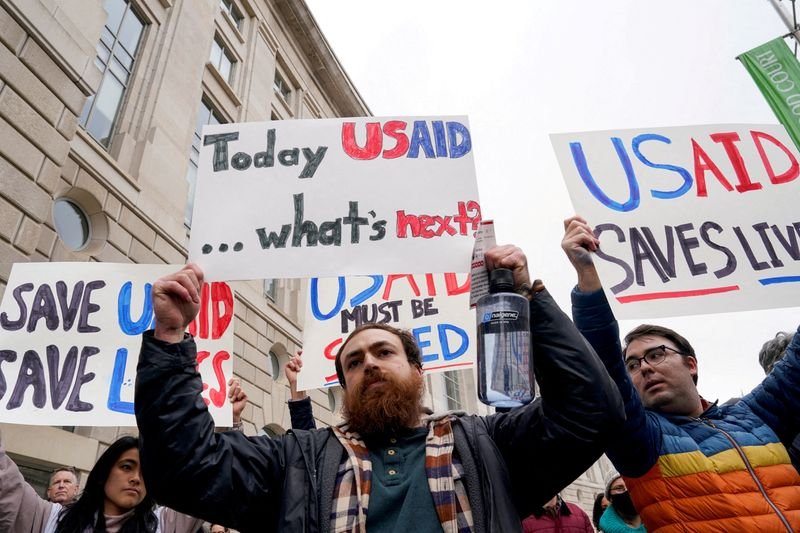
Published by Global Banking & Finance Review®
Posted on February 8, 2025
9 min readLast updated: January 26, 2026
Add as preferred source on GoogleTrump's aid freeze disrupts global humanitarian efforts, causing confusion and financial uncertainty for aid workers and organizations.
(Reuters) - In Ghana and Kenya, insecticide and mosquito nets sit in warehouses because U.S. officials haven’t approved urgent anti-malaria campaigns.
In Haiti, a group treating HIV patients awaits U.S. permission to dispense medicines that prevent mothers from giving the disease to their children.
In Myanmar, where famine looms and the U.S is the single largest aid donor, one humanitarian worker described the situation as “mayhem.”
Nearly three weeks into U.S. President Donald Trump's sweeping freeze on foreign aid, life-saving programs across the globe remain shut as humanitarian workers struggle to secure U.S. government waivers meant to keep them open, dozens of aid workers and U.N. staff told Reuters.
After Trump announced the 90-day freeze on January 20, U.S. Secretary of State Marco Rubio issued waivers for what he called “life-saving humanitarian assistance,” which included “core life-saving medicine, medical services, food, shelter, and subsistence assistance.”
But aid workers and U.N. officials said the waivers had sparked widespread confusion, along with fears that their U.S. funding would never be restored.
They said they couldn’t restart work without first confirming with their U.S. counterparts whether specific programs qualified for exemption. This was proving nearly impossible, they said, due to a communication breakdown with U.S. officials, some of whom had been fired or barred from talking.
The breakdown appeared partly by design. On January 31, staff at the United States Agency for International Development, once the main delivery mechanism for American largesse, were told not to communicate externally about the waiver and what it may or may not include, according to a previously unreported recording of the meeting reviewed by Reuters.
The U.S. State Department and White House did not respond to requests for comment.
The spiraling consequences of the aid freeze in developing countries underline the real-world harms from Trump's upending of decades-old U.S. initiatives designed to build global alliances by making America the world’s most generous superpower and largest single aid donor.
Aid workers had a list of urgent questions going unanswered. Among them: Which programs could continue? What qualifies as life-saving aid? Food? Shelter? Medicine? And how do they keep people from dying when almost every aid service has been shut at once?
With little guidance from U.S. officials, aid workers said their organizations erred on the side of caution and closed programs rather than incur expenses that the U.S. government might not reimburse, the aid workers said. Some described how U.S partners – often people they had worked with for years – no longer answered their phones or emails.
One Geneva-based aid official who reached U.S. officials was stunned by their response. “We asked: Can you tell us exactly which programs we need to stop? Then we got a message saying ‘no more guidance is forthcoming’. This leaves us in a situation where you have to make a choice of which program is ‘life-saving’,” the official said. “We don’t have money to pay for it ourselves. We can’t spend money we don’t know if we have.”
The turmoil was particularly acute at USAID, now in disarray and targeted for closure as a “criminal organization” by Trump’s government efficiency tsar, the billionaire Elon Musk.
In his executive order, Trump said the U.S. “foreign aid industry and bureaucracy” were “in many cases antithetical to American values.” He ordered the 90-day pause pending a review on whether aid was consistent with his “America First” foreign policy.
Most of those who spoke to Reuters requested anonymity, fearful of antagonizing the Trump administration and jeopardizing the possible restoration of aid.
Two workers with aid organizations in Myanmar told Reuters they didn’t know whether U.S.-funded food distribution in the country was covered by a waiver and would continue. One of the workers described the situation as “mayhem.” Myanmar faces a severe food crisis due to natural disasters and a spiraling civil war. An estimated two million people in the country are on the brink of famine, according to the U.N.
Refugees also bore the brunt of the aid freeze in Bangladesh, where the U.S funds about 55% of assistance to more than a million Rohingya from Myanmar living in squalid camps. "Some essential and life-saving services” had been interrupted by the freeze, said the Inter Sector Coordination Group, an international relief organization that oversees the camps, in a previously unreported draft statement to local aid groups. The group didn’t respond to a request for comment.
A U.N. official in Bangladesh seeking clarity on which programs could remain open said U.S. counterparts were “not answering the phones.”
In Africa, humanitarian workers were due to start anti-malaria spraying campaigns this month in Ghana and Kenya before mosquito populations explode during the rainy season, but insecticide and mosquito nets are stuck in warehouses, said a USAID contractor.
A USAID memo, dated February 4 and seen by Reuters on Saturday, said “life-saving activities” to address malaria, tuberculosis and other diseases and conditions would be exempt from the freeze. But campaigns to protect millions of people appeared on hold as aid workers sought clarification on when funding would resume and specific malaria programs in Africa could restart, the contractor said.
Malaria, a preventable disease, is caused by parasites transmitted to people by the bites of infected mosquitoes. The vast majority of the world’s 597,000 malaria deaths in 2023 were African children aged under five years old, the World Health Organization said in December.
“There is a small window to do those campaigns which is going to close rapidly,” said the USAID contractor.
Millions of U.S. taxpayer dollars already spent on supplies to fight malaria in Africa could go to waste, aid workers said. Malaria No More, a global nonprofit based in Washington, said the freeze could prevent the distribution of 15.6 million life-saving treatments, nine million nets and 48 million doses of preventative medicine.
The U.S. is the top donor in the global fight against malaria, mostly through the President's Malaria Initiative, known as PMI, set up under former President George W. Bush in 2005. PMI’s website – which included information on populations at risk of malaria – has been taken down and replaced with a brief statement: “In order to be consistent with the President's Executive Orders, this website is currently undergoing maintenance as we expeditiously and thoroughly review all of the content.”
“It’s as if all the work . . . has just been erased,” said Anne Linn, a USAID staffer who worked remotely from Montana as a technical advisor and was fired on Jan. 28. “It’s so cruel and senseless,” she said. “The wastefulness of it is staggering to me.”
In Haiti, a program that provides treatment to AIDS patients was supposed to be exempt from the aid freeze under a State Department waiver but remained shut because it hadn’t received specific written instructions to open, said a worker at the nonprofit program. She said funding for the program came from the U.S. President's Emergency Plan for AIDS Relief, known as PEPFAR, the world's leading initiative to combat HIV.
The State Department, which manages PEPFAR, said on February 1 that the program was covered by the waiver for life-saving humanitarian assistance. But the aid worker said she hadn’t received paperwork confirming that they could continue to distribute medicine.
"Everything is closed until further notice," she said. Pregnant women were at risk because the program provides medication that can prevent HIV transmission to their infants, she added. She said more than half of Haiti’s 150,000 AIDS patients received treatment through PEPFAR.
In 2024, the U.S. provided 60% of Haiti’s humanitarian funding, totaling $208 million, according to the U.N.’s Financial Tracking Service.
TURMOIL AT USAID
The problems were exacerbated by turmoil at USAID, whose leaders Trump has described as “radical left lunatics.”
Trump's administration plans to keep 611 staff at USAID out of its worldwide total of more than 10,000, according to a notice sent to the agency on February 5 and reviewed by Reuters.
Washington's primary humanitarian aid agency has been a target of a government reorganization program spearheaded by Musk, a close Trump ally, since the Republican president took office on January 20. Staff have been shut out of the agency’s headquarters in Washington. Rubio has appointed himself the agency’s acting administrator.
An expert in water and sanitation spoke of “mass confusion” at the USAID’s global health bureau after she and dozens of others were fired on January 28. “It happened so quickly that I had no way of saving emails, contacts,” she said. “We were all just thrown away and bulldozed over.”
‘PEOPLE ARE GOING TO DIE’
In Thailand, the aid freeze forced the International Rescue Committee, which funds health clinics with U.S. support, to quickly shut down the hospital and clinics it ran in seven refugee camps on the Myanmar-Thai border. IRC was told by U.S. officials they couldn’t reopen before receiving another notification, which hasn’t arrived, said an aid worker.
Many were discharged from the IRC facilities, leaving people including pregnant women and children unable to access medication or medical equipment, said Francois Nosten, director of the Shoklo Malaria Research Unit, a field station in the border camps run by Bangkok's Mahidol University.
An elderly woman, who had been hospitalized with lung problems and was dependent on oxygen, died four days after being discharged, according to her family. Reuters couldn’t independently confirm her cause of death.
An IRC spokesperson said some refugees had "self-organized" to provide critical services for themselves until aid support was "transitioned" to Thai authorities.
If “you cut all the activities then some people are going to die,” said Nosten.
(Farge reported from Geneva, Fick and Rigby from London, McPherson from Bangkok and Pamuk from Washington. Additional reporting by Michelle Nichols in New York, Giulia Paravicini in Nairobi, Nafisa Eltahir in Cairo, Julie Steenhuysen in Chicago, Andrew R.C. Marshall in London, and Shoon Naing. Writing by Andrew R.C. Marshall. Editing by Jason Szep)
The article discusses the impact of Trump's aid freeze on global humanitarian programs.
Aid workers face confusion and financial uncertainty due to unclear waivers and halted programs.
The aid freeze impacts regions like Ghana, Kenya, Haiti, and Myanmar.
Explore more articles in the Headlines category