Search
00
GBAF Logo
trophy
Top StoriesInterviewsBusinessFinanceBankingTechnologyInvestingTradingVideosAwardsMagazinesHeadlinesTrends

Subscribe to our newsletter

Get the latest news and updates from our team.

Global Banking & Finance Review®

Global Banking & Finance Review® - Subscribe to our newsletter

Company

    GBAF Logo
    • About Us
    • Profile
    • Privacy & Cookie Policy
    • Terms of Use
    • Contact Us
    • Advertising
    • Submit Post
    • Latest News
    • Research Reports
    • Press Release
    • Awards▾
      • About the Awards
      • Awards TimeTable
      • Submit Nominations
      • Testimonials
      • Media Room
      • Award Winners
      • FAQ
    • Magazines▾
      • Global Banking & Finance Review Magazine Issue 79
      • Global Banking & Finance Review Magazine Issue 78
      • Global Banking & Finance Review Magazine Issue 77
      • Global Banking & Finance Review Magazine Issue 76
      • Global Banking & Finance Review Magazine Issue 75
      • Global Banking & Finance Review Magazine Issue 73
      • Global Banking & Finance Review Magazine Issue 71
      • Global Banking & Finance Review Magazine Issue 70
      • Global Banking & Finance Review Magazine Issue 69
      • Global Banking & Finance Review Magazine Issue 66
    Top StoriesInterviewsBusinessFinanceBankingTechnologyInvestingTradingVideosAwardsMagazinesHeadlinesTrends

    Global Banking & Finance Review® is a leading financial portal and online magazine offering News, Analysis, Opinion, Reviews, Interviews & Videos from the world of Banking, Finance, Business, Trading, Technology, Investing, Brokerage, Foreign Exchange, Tax & Legal, Islamic Finance, Asset & Wealth Management.
    Copyright © 2010-2026 GBAF Publications Ltd - All Rights Reserved. | Sitemap | Tags | Developed By eCorpIT

    Editorial & Advertiser disclosure

    Global Banking & Finance Review® is an online platform offering news, analysis, and opinion on the latest trends, developments, and innovations in the banking and finance industry worldwide. The platform covers a diverse range of topics, including banking, insurance, investment, wealth management, fintech, and regulatory issues. The website publishes news, press releases, opinion and advertorials on various financial organizations, products and services which are commissioned from various Companies, Organizations, PR agencies, Bloggers etc. These commissioned articles are commercial in nature. This is not to be considered as financial advice and should be considered only for information purposes. It does not reflect the views or opinion of our website and is not to be considered an endorsement or a recommendation. We cannot guarantee the accuracy or applicability of any information provided with respect to your individual or personal circumstances. Please seek Professional advice from a qualified professional before making any financial decisions. We link to various third-party websites, affiliate sales networks, and to our advertising partners websites. When you view or click on certain links available on our articles, our partners may compensate us for displaying the content to you or make a purchase or fill a form. This will not incur any additional charges to you. To make things simpler for you to identity or distinguish advertised or sponsored articles or links, you may consider all articles or links hosted on our site as a commercial article placement. We will not be responsible for any loss you may suffer as a result of any omission or inaccuracy on the website.

    Home > Finance > Will Western companies return to Russia?
    Finance

    Will Western companies return to Russia?

    Published by Global Banking & Finance Review®

    Posted on February 19, 2025

    4 min read

    Last updated: January 26, 2026

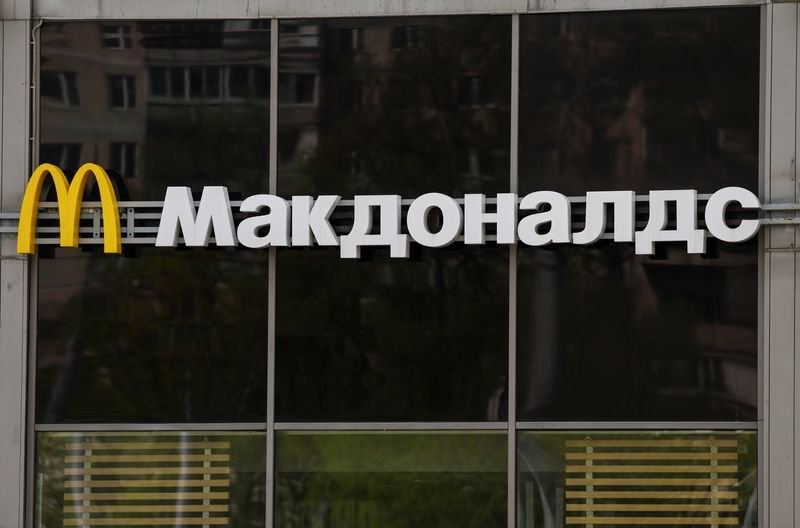
    This image illustrates the potential return of Western companies to Russia as talks progress between Moscow and Washington. With sanctions shaping corporate strategies, investors and analysts are keenly observing which sectors may re-enter the Russian market.
    Western companies considering return to Russia amid sanctions discussions - Global Banking & Finance Review
    Why waste money on news and opinion when you can access them for free?

    Take advantage of our newsletter subscription and stay informed on the go!

    Subscribe

    Tags:financial servicesinvestmentcorporate governanceeconomic growthInternational trade

    Quick Summary

    Western firms left Russia due to sanctions. Easing restrictions might see some return, though reputational risks remain.

    Are Western Firms Considering a Return to the Russian Market?

    By Alexander Marrow

    LONDON (Reuters) -As Moscow and Washington discuss how to end the war in Ukraine, one of the many questions on investors' minds is whether the corporate exodus from Russia in opposition to the February 2022 invasion of its neighbour may be reversed.

    As long as broad Western sanctions on Russia remain in place, that looks unlikely, but should U.S. President Donald Trump's administration seek to ease restrictions, it could open the door for some companies to return to what was once a high-growth market.

    Here is a rundown of the situation:

    WHO EXITED AND HOW?

    More than a thousand companies from McDonald's to Mercedes-Benz have left Russia in the last three years by selling, handing the keys to existing managers or abandoning assets. Others like Danone and Carlsberg had their assets seized and a sale forced through.

    Western companies have acknowledged losses totalling $107 billion in writedowns and lost revenue, according to a Reuters analysis in March 2024. Kirill Dmitriev, head of the Russian Direct Investment Fund, says U.S. companies have lost $324 billion by leaving Russia. 

    Companies such as McDonald's, Renault and Henkel agreed buyback options when exiting. 

    France's Renault sold its majority stake in Russian carmaker Avtovaz in May 2022 for reportedly just one rouble, but with a six-year option to buy it back. 

    Some food and healthcare companies, including Procter & Gamble, PepsiCo and Mondelez, say they stayed on humanitarian grounds to continue supplying Russians with basic goods.

    WHICH SECTORS ARE LIKELY TO WANT TO RETURN FIRST?

    After the highest-level U.S.-Russian meeting since the Ukraine war began this week, Dmitriev said, without giving further details, that he expects a number of U.S. companies to return as early as the second quarter. 

    The most likely to return are those operating outside sanctions, such as retailers and food producers, rather than those in sectors such as energy and finance.

    Dmitriev said he believed U.S. oil majors that had been successful in Russia would "at some point" return.

    Senior lawmaker Anatoly Aksakov this week said he thought Visa and Mastercard would soon restore payment services. The two companies said their Russia suspensions remained in place.      

    WHY WOULD COMPANIES NOT RETURN?

    Hundreds of Western companies including Carlsberg and Unilever issued statements condemning Russia's aggression against Ukraine in the days and weeks after the invasion, framing their exit from the country or suspension of operations in moral terms.

    Should a deal be reached that rewards Russia with Ukrainian territory, companies that have criticised Moscow risk reputational damage by returning.

    WHAT SECTORS ARE OFF LIMITS?

    Companies involved in supplying goods that have both civilian and military applications are bound by Western restrictions.

    Boeing and Airbus, for example, halted the supply of planes and spare parts. Other examples include semiconductors, telecoms equipment and electronics.   

    Speculation is rife on whether the U.S.-Russia talks could yield a softening of sanctions, but no concrete proposals have yet been made. Meanwhile, the European Union on Wednesday agreed a 16th package of anti-Russia sanctions, including a ban on primary aluminium imports. 

    Sanctions prohibit providing Russia with financial or energy-related services and Russian officials' statements that they expect Western companies to return look for now like wishful thinking.       

    HOW HAS THE RUSSIAN MARKET CHANGED?

    Some of the world's most popular brands from Starbucks to IKEA and Levi's have been replaced by Russian imitations.

    The more than 800 McDonald's restaurants in Russia now operate under the brand Vkusno & tochka (Tasty & that's it), owned by Alexander Govor and run in a similar fashion.  

    Starbucks sold its business to restaurateur Anton Pinskiy and rapper Timati, and is now known as Stars Coffee.

    Recapturing the market may be particularly hard for carmakers, as Chinese competitors have established a more than 50% market share, up from less than 10% three years ago.

    It is not clear how willing Russia would be to support the return of European carmakers at the expense of Chinese ones, especially given the "no limits partnership" between Moscow and Beijing as trade between the two nuclear powers ballooned. 

    WOULD WESTERN COMPANIES BE WELCOME?

    Moscow has long promised to retaliate for what it views as the theft of Russian assets abroad and has seized companies in Russia through presidential decrees and the courts.     

    Russia currently controls a handful of Western companies through the guise of "temporary management" and is this year quickening the pace of asset seizures of companies with foreign ownership links. 

    Most companies exiting Russia were forced to sell at huge discounts. Convincing investors to dip their toes back into the Russian market may take time.

    ($1 = 7.1560 Danish crowns)

    (Reporting by Alexander Marrow; Editing by Kirsten Donovan)

    Key Takeaways

    • •Western companies left Russia due to sanctions.
    • •Potential easing of sanctions could prompt returns.
    • •Certain sectors like food may return first.
    • •Reputational risks deter some companies.
    • •Russian market has seen local brand replacements.

    Frequently Asked Questions about Will Western companies return to Russia?

    1What has caused Western companies to exit Russia?

    More than a thousand companies have left Russia due to broad Western sanctions and the geopolitical situation following the invasion of Ukraine.

    2Which sectors are likely to see a return of companies?

    Sectors operating outside sanctions, such as retailers and food producers, are most likely to return, while energy and finance sectors remain restricted.

    3What are the potential risks for companies considering a return?

    Companies risk reputational damage if they return after condemning Russia's actions, especially if a deal rewards Russia with Ukrainian territory.

    4How has the Russian market changed since the exodus of Western companies?

    The Russian market has seen the emergence of local brands replacing popular Western names, with significant market share gained by Chinese competitors.

    5What is the current status of Visa and Mastercard in Russia?

    Visa and Mastercard have suspended their services in Russia, and there are no indications that these suspensions will be lifted soon.

    More from Finance

    Explore more articles in the Finance category

    Image for Russia launches massive attack on Ukraine's energy system, Zelenskiy says
    Russia launches massive attack on Ukraine's energy system, Zelenskiy says
    Image for Russia launched 400 drones, 40 missiles to hit Ukraine's energy sector, Zelenskiy says
    Russia launched 400 drones, 40 missiles to hit Ukraine's energy sector, Zelenskiy says
    Image for The Kyiv family, with its pets and pigs, defying Russia and the cold
    The Kyiv family, with its pets and pigs, defying Russia and the cold
    Image for Two Polish airports reopen after NATO jets activated over Russian strikes on Ukraine
    Two Polish airports reopen after NATO jets activated over Russian strikes on Ukraine
    Image for French miner Eramet's finance chief steps aside temporarily, days after CEO ouster
    French miner Eramet's finance chief steps aside temporarily, days after CEO ouster
    Image for Ukraine's Zelenskiy calls for faster action on air defence, repairs to grid
    Ukraine's Zelenskiy calls for faster action on air defence, repairs to grid
    Image for Goldman Sachs teams up with Anthropic to automate banking tasks with AI agents, CNBC reports
    Goldman Sachs teams up with Anthropic to automate banking tasks with AI agents, CNBC reports
    Image for Analysis-Hims' $49 weight-loss pill rattles investor case for cash-pay obesity market
    Analysis-Hims' $49 weight-loss pill rattles investor case for cash-pay obesity market
    Image for Analysis-Glencore to focus on short-term disposals as Rio deal remains elusive
    Analysis-Glencore to focus on short-term disposals as Rio deal remains elusive
    Image for Belgium's Agomab Therapeutics valued at $716 million as shares fall in Nasdaq debut
    Belgium's Agomab Therapeutics valued at $716 million as shares fall in Nasdaq debut
    Image for Big Tech's quarter in four charts: AI splurge and cloud growth
    Big Tech's quarter in four charts: AI splurge and cloud growth
    Image for EU hikes tariffs on Chinese ceramics to 79% to counter dumping 
    EU hikes tariffs on Chinese ceramics to 79% to counter dumping 
    View All Finance Posts
    Previous Finance PostUK's Wood Group CFO steps down after inaccurate description of qualifications
    Next Finance PostThree tankers damaged by blasts in Mediterranean in the last month, causes unknown, sources say