Search
00
GBAF Logo
trophy
Top StoriesInterviewsBusinessFinanceBankingTechnologyInvestingTradingVideosAwardsMagazinesHeadlinesTrends

Subscribe to our newsletter

Get the latest news and updates from our team.

Global Banking & Finance Review®

Global Banking & Finance Review® - Subscribe to our newsletter

Company

    GBAF Logo
    • About Us
    • Profile
    • Privacy & Cookie Policy
    • Terms of Use
    • Contact Us
    • Advertising
    • Submit Post
    • Latest News
    • Research Reports
    • Press Release
    • Awards▾
      • About the Awards
      • Awards TimeTable
      • Submit Nominations
      • Testimonials
      • Media Room
      • Award Winners
      • FAQ
    • Magazines▾
      • Global Banking & Finance Review Magazine Issue 79
      • Global Banking & Finance Review Magazine Issue 78
      • Global Banking & Finance Review Magazine Issue 77
      • Global Banking & Finance Review Magazine Issue 76
      • Global Banking & Finance Review Magazine Issue 75
      • Global Banking & Finance Review Magazine Issue 73
      • Global Banking & Finance Review Magazine Issue 71
      • Global Banking & Finance Review Magazine Issue 70
      • Global Banking & Finance Review Magazine Issue 69
      • Global Banking & Finance Review Magazine Issue 66
    Top StoriesInterviewsBusinessFinanceBankingTechnologyInvestingTradingVideosAwardsMagazinesHeadlinesTrends

    Global Banking & Finance Review® is a leading financial portal and online magazine offering News, Analysis, Opinion, Reviews, Interviews & Videos from the world of Banking, Finance, Business, Trading, Technology, Investing, Brokerage, Foreign Exchange, Tax & Legal, Islamic Finance, Asset & Wealth Management.
    Copyright © 2010-2026 GBAF Publications Ltd - All Rights Reserved. | Sitemap | Tags | Developed By eCorpIT

    Editorial & Advertiser disclosure

    Global Banking & Finance Review® is an online platform offering news, analysis, and opinion on the latest trends, developments, and innovations in the banking and finance industry worldwide. The platform covers a diverse range of topics, including banking, insurance, investment, wealth management, fintech, and regulatory issues. The website publishes news, press releases, opinion and advertorials on various financial organizations, products and services which are commissioned from various Companies, Organizations, PR agencies, Bloggers etc. These commissioned articles are commercial in nature. This is not to be considered as financial advice and should be considered only for information purposes. It does not reflect the views or opinion of our website and is not to be considered an endorsement or a recommendation. We cannot guarantee the accuracy or applicability of any information provided with respect to your individual or personal circumstances. Please seek Professional advice from a qualified professional before making any financial decisions. We link to various third-party websites, affiliate sales networks, and to our advertising partners websites. When you view or click on certain links available on our articles, our partners may compensate us for displaying the content to you or make a purchase or fill a form. This will not incur any additional charges to you. To make things simpler for you to identity or distinguish advertised or sponsored articles or links, you may consider all articles or links hosted on our site as a commercial article placement. We will not be responsible for any loss you may suffer as a result of any omission or inaccuracy on the website.

    Home > Finance > Analysis-Trump's return adds new twist to Western firms' Russia exit dilemma
    Finance

    Analysis-Trump's return adds new twist to Western firms' Russia exit dilemma

    Published by Global Banking & Finance Review®

    Posted on January 20, 2025

    5 min read

    Last updated: January 27, 2026

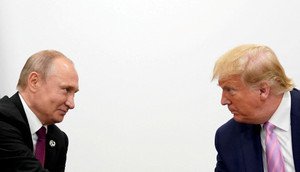
    This image highlights the complexities faced by Western companies in Russia as Trump returns to the White House, impacting exit strategies. The article discusses the challenges and uncertainties for firms like McDonald's and Renault amidst new Kremlin regulations.
    Image illustrating the dilemma of Western firms in Russia amid Trump's return - Global Banking & Finance Review
    Why waste money on news and opinion when you can access them for free?

    Take advantage of our newsletter subscription and stay informed on the go!

    Subscribe

    Quick Summary

    Western companies face a dilemma in Russia as Trump's return may impact exit strategies amid tougher Russian conditions and potential sanctions relief.

    Trump's Return Complicates Western Firms' Russia Exit Strategies

    By Alexander Marrow and Elena Fabrichnaya

    LONDON/MOSCOW (Reuters) - Hold or fold?

    That is the dilemma facing the hundreds of Western companies still operating in Russia as Donald Trump returns to the White House with a promise to end the Ukraine conflict while Moscow's tougher exit conditions make it costlier to leave.

    Many companies, including Renault, McDonald's and Heineken have left Russia since Moscow sent troops into Ukraine in February 2022, usually taking hefty writedowns and selling their assets at steep discounts demanded by the Kremlin. 

    Others have stayed. Makers of food and hygiene products, such as PepsiCo, Procter & Gamble and Mondelez have maintained a presence citing humanitarian reasons. European lenders Raiffeisen Bank International and UniCredit remain ensnared by profits stuck in Russia and the need for exit approval from Moscow.

    Russia tightened its exit terms in October to encourage businesses to stay, demanding discounts of at least 60% on exit transactions and a 35% "voluntary contribution" to Russia's budget from the deal price, termed an "exit tax" by Washington.

    Reuters spoke to 15 lawyers, bankers, advisers and business people involved in dozens of Western corporate exits from Russia for this story. They said that companies still present would be carefully watching what Trump, who will be sworn as president of the United States on Monday, can deliver and adjusting their plans accordingly. Some requested anonymity to speak freely.

    "Trump's election victory adds another layer of uncertainty for multinationals with assets in Russia," said Ian Massey, Head of Corporate Intelligence, EMEA, at global risk consultancy S-RM. "While the Kremlin continues to ratchet up the costs of leaving the Russian market, Trump may reduce the costs of staying, creating a kind of stasis."

    It is far from clear what Trump can accomplish in his second term, with his advisers now conceding the conflict will take at least months to resolve.

    Yet his mere arrival may give some companies the political cover to stay on in Russia, while others could see prospects for potential sanctions relief as an opportunity to leave.

    "We might see some sanctions being dialled down if the new administration is able to negotiate a settlement of the conflict in Ukraine," said Alan Kartashkin, Partner at Debevoise and Plimpton. That could unfreeze some foreign-owned assets stuck in Russia, unlocking another wave of exit deals, he said.

    Companies already reluctant to leave may be more likely to wait things out, said an M&A investor who has worked on dozens of deals. Another person, who has advised on over 100 exits, said Trump's return may also cause those looking to cut ties with Russia to change plans and decide to stay.

    Alexei Yakovlev, director of the finance ministry's financial policy department, told Reuters in December that negotiations on exit deals were ongoing, without naming specific companies. 

    Asked whether Trump's arrival may pause exits or see some companies return, he said: "That's beyond our understanding." 

    EXIT TAX

    A lot has changed since the relative free-for-all in dealmaking of 2022, six of the people said, particularly in terms of navigating the whims and demands of the exit committee. 

    Russia's government is keen to protect the federal budget and close loopholes that allowed local buyers to snap up assets on the cheap. Deals now require valuations by independent appraisers selected by Russia's Economy Ministry, and auctions for assets between local buyers. 

    Russian President Vladimir Putin must approve deals over 50 billion roubles ($488 million) and buyers must demonstrate economic grounds for any deal, such as showing how their failure to buy a particular factory might cause a drop in output. 

    "The possibility of selling a large asset at the minimally accepted conditions is significantly limited," said a Russian lawyer.

    The number of deals has shrunk to less than 20% of what it was at its mid-2023 peak, said one adviser. Another said higher budget contributions were pricing out sellers, particularly for management buyout deals. 

    High interest rates at 21% have made deal financing too costly for some buyers, said Suren Gortsunyan, a partner and co-founder of law firm Rybalkin, Gortsunyan, Dyakin and Partners (RGD).

    RISK OF SEIZURE

    Some large deals still make it through and multinationals can extract some funds from Russia, as deals are now structured so that buyers pay the exit tax.       

    Consumer goods firm Unilever sold its Russian assets, including four factories, just before more restrictions came in October. That deal was worth close to 500 million euros, according to a person familiar with the matter. 

    Unilever declined to comment. 

    Asset seizure remains the key risk facing companies that do choose to stay, four people said. Russia has placed around a dozen foreign-owned assets under temporary Moscow-appointed management, which some say may be Russia's tactic to push the price down for local buyers.

    "The big assets for sale are under constant pressure," one corporate adviser said.

    When Moscow seized control of Carlsberg's stake in Baltika Breweries in July 2023, Carlsberg said its business had been stolen.

    Less than a month before that seizure, it had found a willing buyer. That transaction fell through, but in December, the Danish brewer secured a 34-billion-rouble sale of its assets, government documents seen by Reuters showed. 

    Carlsberg declined to comment beyond its previous statements.

    Ultimately, for Western firms in Russia grappling with costlier exit rules and seizure threats Trump's arrival brings more unknowns.

    "Trump is a wild card," said one financial services professional. "You just don't know what he's going to do."

    ($1 = 102.4500 roubles)

    (Reporting by Alexander Marrow in London and Elena Fabrichnaya in Moscow; additional reporting by Olesya Astakhova and Richa Naidu; Editing by Matt Scuffham and Tomasz Janowski)

    Key Takeaways

    • •Trump's return may influence Western firms' decisions in Russia.
    • •Russia imposes tougher exit conditions for foreign companies.
    • •Potential sanctions relief could alter business strategies.
    • •Some companies may delay exit due to political changes.
    • •Exit deals now require stringent government approvals.

    Frequently Asked Questions about Analysis-Trump's return adds new twist to Western firms' Russia exit dilemma

    1What is the main topic?

    The article discusses the challenges Western companies face in exiting Russia amid Trump's return and tougher Russian exit conditions.

    2How might Trump's return affect Western firms?

    Trump's return could provide political cover for firms to stay in Russia or lead to potential sanctions relief, impacting exit decisions.

    3What are Russia's new exit conditions?

    Russia demands at least 60% discounts on exit transactions and a 35% contribution to its budget, complicating foreign firms' exit strategies.

    More from Finance

    Explore more articles in the Finance category

    Image for Russia launches massive attack on Ukraine's energy system, Zelenskiy says
    Russia launches massive attack on Ukraine's energy system, Zelenskiy says
    Image for Russia launched 400 drones, 40 missiles to hit Ukraine's energy sector, Zelenskiy says
    Russia launched 400 drones, 40 missiles to hit Ukraine's energy sector, Zelenskiy says
    Image for The Kyiv family, with its pets and pigs, defying Russia and the cold
    The Kyiv family, with its pets and pigs, defying Russia and the cold
    Image for Two Polish airports reopen after NATO jets activated over Russian strikes on Ukraine
    Two Polish airports reopen after NATO jets activated over Russian strikes on Ukraine
    Image for French miner Eramet's finance chief steps aside temporarily, days after CEO ouster
    French miner Eramet's finance chief steps aside temporarily, days after CEO ouster
    Image for Ukraine's Zelenskiy calls for faster action on air defence, repairs to grid
    Ukraine's Zelenskiy calls for faster action on air defence, repairs to grid
    Image for Goldman Sachs teams up with Anthropic to automate banking tasks with AI agents, CNBC reports
    Goldman Sachs teams up with Anthropic to automate banking tasks with AI agents, CNBC reports
    Image for Analysis-Hims' $49 weight-loss pill rattles investor case for cash-pay obesity market
    Analysis-Hims' $49 weight-loss pill rattles investor case for cash-pay obesity market
    Image for Analysis-Glencore to focus on short-term disposals as Rio deal remains elusive
    Analysis-Glencore to focus on short-term disposals as Rio deal remains elusive
    Image for Belgium's Agomab Therapeutics valued at $716 million as shares fall in Nasdaq debut
    Belgium's Agomab Therapeutics valued at $716 million as shares fall in Nasdaq debut
    Image for Big Tech's quarter in four charts: AI splurge and cloud growth
    Big Tech's quarter in four charts: AI splurge and cloud growth
    Image for EU hikes tariffs on Chinese ceramics to 79% to counter dumping 
    EU hikes tariffs on Chinese ceramics to 79% to counter dumping 
    View All Finance Posts
    Previous Finance PostVivendi's new 'galaxy' of companies needs more time to explain strategy, analysts and investors say
    Next Finance PostHeineken's United Breweries to resume beer supply to Indian state