Finance
For Millions of Children in Food Crises, a Heightened Risk of Lifelong Damage
Published by Global Banking & Finance Review®
Posted on January 31, 2025
10 min readLast updated: January 26, 2026
Add as preferred source on Google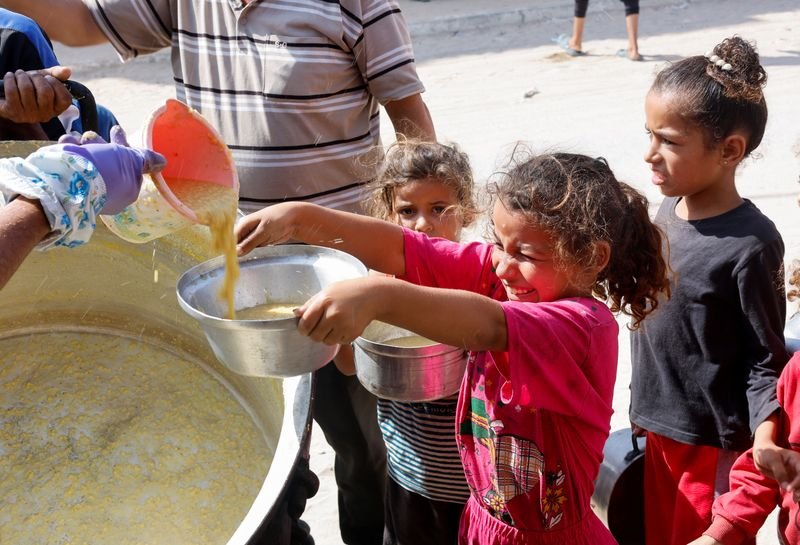
Published by Global Banking & Finance Review®
Posted on January 31, 2025
10 min readLast updated: January 26, 2026
Add as preferred source on GoogleThe global childhood malnutrition crisis poses long-term health risks, with millions affected worldwide, including in Gaza, where aid is crucial.
By Jennifer Rigby
LONDON (Reuters) - A surge in the flow of aid into the Gaza Strip since the truce between Israel and Hamas took effect on Jan. 19 is likely to ease the acute food emergency afflicting people in the war-ravaged territory, especially its children. But even after relief reaches them, the hunger they have endured could cast a shadow over their health for years to come.
More than 60,000 children in Gaza will need treatment for acute malnutrition in 2025, according to United Nations estimates from Jan. 22. Some have already died – estimates of how many vary widely. Survivors who are able to return to adequate levels of nutrition nonetheless face an insidious threat: the multiple long-term health problems linked to childhood malnutrition.
This troubling prospect is of urgent global concern. As Reuters has reported in a series of articles, famine and other acute food crises have ravaged populations across the developing world over the past year, from Haiti to Afghanistan to Sudan and many other African nations, as well as Gaza.
About 131 million children, nearly 40 million of them under age 5, live in areas experiencing acute food crises around the world, according to estimates provided exclusively to Reuters by the United Nations’ World Food Programme. Nearly 4.7 million pregnant women live in these areas, the United Nations Population Fund said. The U.N. estimates are based on the most recent data from countries where assessments were possible.
The lasting damage of childhood hunger is wide-ranging and can be profound, according to scientists, nutrition experts and officials at humanitarian organizations. Children who experience severe malnutrition may never reach their full cognitive or physical potential, according to multiple studies that have tracked survivors of past food shortages. Other studies have shown that undernutrition in childhood, and even in the womb, can be associated with increased risk of cardiovascular disease, type 2 diabetes and other non-communicable illnesses later in life.
“People focus, quite rightly, on the short-term aspects of malnutrition,” said Marko Kerac, professor of nutrition for global health at the London School of Hygiene and Tropical Medicine. “What’s missed … is that the damage done will not suddenly stop when the emergency stops.”
Studies have shown that some effects of severe hunger can be mitigated if a child later gains access to good nutrition. But that is a big if. In many countries where food crises occur, poverty, war and civil strife persist long after the crisis has passed, limiting children’s access to adequate food and healthcare.
That makes it hard to get exact data on how many are affected in both the short and long-term, said Hannah Stephenson, head of nutrition with Save the Children. But “the more severely malnourished a child is, the harder it will be to recover,” she said. The duration of malnourishment is also a crucial variable, she said.
She and other experts stressed that while every malnourished child is a tragedy, famines and other food crises can do lasting harm to society as whole by leaving an entire generation with physical and cognitive deficits. “It costs the person, the family, the country,” said Professor Mubarek Abera, a child and maternal nutrition and mental health researcher at Jimma University in Ethiopia who was born during that country’s famine in the early 1980s.
TYPES OF HARM
In a food crisis, children are more vulnerable than adults to malnourishment and death from starvation or infectious diseases, which are more lethal to those weakened by hunger. Children are also more vulnerable than adults to long-term health problems from a period of extreme malnourishment, scientists said, because their bodies and brains are still developing.
There are four different kinds of undernutrition, as defined by the World Health Organization. All can be present during a famine or other severe food crisis, leave lasting marks, and can also co-exist in one child:
* Wasting. This occurs when a child’s weight is low fortheir height and often indicates a recent episode of intensehunger and weight loss. It is a medical emergency, but 90% ofchildren can recover in the short-term if they get treatment,which involves therapeutic foods, antibiotics and deworming. In2023, the U.N. children’s agency UNICEF estimated that 73% ofchildren in the most urgent need received treatment. * Stunting. This is when a child’s height is low for theirage, and it is usually seen as a broad indicator of chronicundernourishment, putting a child at risk of not reaching fullphysical or cognitive potential. Nutritionists are divided overthe extent to which children can recover from stunting if theylater receive adequate nutrition. Many believe the effects areirreversible, particularly for those who experience deficienciesfor a long time during their development. * Underweight. A child is underweight when their weight islow for their age. An underweight child can be stunted or wastedor both. * Micronutrient deficiencies. Sometimes described by WHO as“hidden hunger,” this form of undernutrition occurs whenvitamins, minerals and other essential nutrients essential tohealthy growth are missing from a child’s diet. They can occuron their own or as part of stunting and wasting. Keymicronutrient deficiencies include iodine, vitamin A and iron. Alack of dietary iodine is the leading cause of brain damage inchildhood globally. Vitamin A deficiency can cause blindness.Iron deficiency also impacts brain development, the U.N. healthagency says. The damage can be irreversible if the child cannotquickly access the needed nutrients.INCREASED VULNERABILITY
Many variables can affect how a child’s body copes with an extreme lack of food. A child who is already suffering with chronic malnutrition, or has a disability, is often more vulnerable to both the short-term and long-term impacts of a food crisis, said Amir Kirolos, a doctor with Britain’s National Health Service who worked on a study in Malawi led by the University of Liverpool/Malawi-Liverpool Wellcome Trust.
In their study, Kirolos and his fellow researchers followed up on a group of 1,024 children in Blantyre, Malawi, one, seven and 15 years after they were treated in hospital for acute malnutrition between July 2006 and March 2007. Many of them had underlying conditions that made them more vulnerable to malnutrition.
After one year, the team could confirm the survival of only 462, or 45%, of the children. A few of them had left the area or were untraceable, but 427 of them had died during treatment or shortly after. Mortality was greatest among the youngest and those who were the most malnourished when they came for treatment, as well as those with HIV or a disability.
By 2021, 15 years after the initial hospitalization, only 168 of the original cohort were alive and traceable. In effect, they represented the very healthiest of those originally treated, but as adolescents, they still bore evidence of malnutrition. They were shorter compared to their siblings or adolescents in the community, and they had some signs of weaker grip strength, an indicator of reduced overall muscle strength. The gaps were smaller than they had been seven years after treatment, showing that some recovery and catch-up is possible, Kirolos said.
BEFORE THEY WERE BORN
A growing body of research has shown that babies born to women who were pregnant during a hunger crisis are also at risk of long-term damage.
In a study published in Science magazine last August, scientists focused on the 1932-33 Ukraine famine engineered by the Soviet government of Joseph Stalin. That man-made disaster killed about 4 million people. And as the researchers found, it also had lingering health effects on the survivors, particularly among those who were exposed in utero.
The researchers cross-referenced the birth records of 10 million Ukrainians born before, during and after the famine with diabetes diagnoses from a national registry seven decades later. They found that exposure to famine in early gestation increased the risk of type 2 diabetes two-fold.
“I’m now finally satisfied that there’s something going on,” said Bertie Lumey, lead author of the study and a professor of epidemiology at Columbia University Medical Center in New York.
Studies of the Great Chinese Famine of 1958-62 and the Dutch Hunger Winter at the end of World War Two have yielded similar findings. Researchers have also shown that malnourishment in the womb resulted in higher rates of obesity and schizophrenia later in life.
In a systematic review of dozens of studies, researchers found a strong association between exposure to severe malnutrition in childhood and a higher risk of some non-communicable diseases, including diabetes and cardiovascular disease, later in life.
LOOKING AT GENETICS
Just how extreme malnutrition in childhood and the womb might lead to lifelong health effects isn’t clear, Lumey and other researchers said. In utero, they suspect, it could be disruption in development of the brain and other vital organs, or exposure to high levels of stress hormones the undernourished mother is producing.
Some scientists have suggested that epigenetics, the study of how genes can be switched on and off by environmental conditions, plays a role in some cases. These researchers theorize that some infants may have an epigenetic profile that helps them survive the lean times, but leaves them struggling to cope in times of plenty, putting them at risk of metabolic conditions like obesity and diabetes.
Another idea is that a child’s ability to process food is set early, and the metabolism of a child who is malnourished struggles to manage excessive eating later in life. Low birth-weight babies, another byproduct of a lack of nutrition during pregnancy, also face a higher risk of non-communicable diseases in adulthood.
Scientists said much more research is needed to determine the precise causes of the many long-term impacts of malnutrition. Kerac, the London School of Hygiene and Tropical Medicine professor, said filling this “important evidence gap” could help improve both the initial treatment and the long-term support for formerly malnourished children.
Hovering over any analysis of the long-term repercussions of famine for children are legions of ghosts: the thousands, perhaps millions, who die during a food crisis, as well as those never born due to the chilling effect on fertility and reproduction.
A severe food crisis often “takes the choice away” from women because of its impact on fertility and infant survival, or because some can’t bear to have a child they fear they can’t feed, said Willibald Zeck, a maternal and child health expert at the UNFPA.
His agency does not yet have data on the impact of current food crises on birth rates. Past famines provide a guide to what the impact might be: In parts of China during the peak of the 1958-1962 famine, the birth rate declined by 80%. In Ukraine, researchers have estimated that the population is around 10% smaller than it would be if the 1930s famine hadn’t happened.
(Reporting by Jennifer Rigby. Editing by Michele Gershberg and John Blanton.)
More than 60,000 children in Gaza will need treatment for acute malnutrition in 2025, according to United Nations estimates.
The lasting damage of childhood hunger can be profound, leading to physical and cognitive impairments that affect an entire generation.
Children who are already suffering from chronic malnutrition or have disabilities are often more vulnerable to the severe effects of food shortages.
Studies of the Great Chinese Famine and the Dutch Hunger Winter have shown that malnourishment in the womb can lead to higher risks of non-communicable diseases later in life.
Some scientists suggest that epigenetics may play a role in how malnutrition affects health, theorizing that environmental conditions can switch genes on and off, influencing a child's metabolism.
Explore more articles in the Finance category