Search
00
GBAF Logo
trophy
Top StoriesInterviewsBusinessFinanceBankingTechnologyInvestingTradingVideosAwardsMagazinesHeadlinesTrends

Subscribe to our newsletter

Get the latest news and updates from our team.

Global Banking and Finance Review

Global Banking and Finance Review - Subscribe to our newsletter

Company

    GBAF Logo
    • About Us
    • Profile
    • Privacy & Cookie Policy
    • Terms of Use
    • Contact Us
    • Advertising
    • Submit Post
    • Latest News
    • Research Reports
    • Press Release
    • Awards▾
      • About the Awards
      • Awards TimeTable
      • Submit Nominations
      • Testimonials
      • Media Room
      • Award Winners
      • FAQ
    • Magazines▾
      • Global Banking & Finance Review Magazine Issue 79
      • Global Banking & Finance Review Magazine Issue 78
      • Global Banking & Finance Review Magazine Issue 77
      • Global Banking & Finance Review Magazine Issue 76
      • Global Banking & Finance Review Magazine Issue 75
      • Global Banking & Finance Review Magazine Issue 73
      • Global Banking & Finance Review Magazine Issue 71
      • Global Banking & Finance Review Magazine Issue 70
      • Global Banking & Finance Review Magazine Issue 69
      • Global Banking & Finance Review Magazine Issue 66
    Top StoriesInterviewsBusinessFinanceBankingTechnologyInvestingTradingVideosAwardsMagazinesHeadlinesTrends

    Global Banking & Finance Review® is a leading financial portal and online magazine offering News, Analysis, Opinion, Reviews, Interviews & Videos from the world of Banking, Finance, Business, Trading, Technology, Investing, Brokerage, Foreign Exchange, Tax & Legal, Islamic Finance, Asset & Wealth Management.
    Copyright © 2010-2026 GBAF Publications Ltd - All Rights Reserved. | Sitemap | Tags | Developed By eCorpIT

    Editorial & Advertiser disclosure

    Global Banking and Finance Review is an online platform offering news, analysis, and opinion on the latest trends, developments, and innovations in the banking and finance industry worldwide. The platform covers a diverse range of topics, including banking, insurance, investment, wealth management, fintech, and regulatory issues. The website publishes news, press releases, opinion and advertorials on various financial organizations, products and services which are commissioned from various Companies, Organizations, PR agencies, Bloggers etc. These commissioned articles are commercial in nature. This is not to be considered as financial advice and should be considered only for information purposes. It does not reflect the views or opinion of our website and is not to be considered an endorsement or a recommendation. We cannot guarantee the accuracy or applicability of any information provided with respect to your individual or personal circumstances. Please seek Professional advice from a qualified professional before making any financial decisions. We link to various third-party websites, affiliate sales networks, and to our advertising partners websites. When you view or click on certain links available on our articles, our partners may compensate us for displaying the content to you or make a purchase or fill a form. This will not incur any additional charges to you. To make things simpler for you to identity or distinguish advertised or sponsored articles or links, you may consider all articles or links hosted on our site as a commercial article placement. We will not be responsible for any loss you may suffer as a result of any omission or inaccuracy on the website.

    Home > Finance > Central banks' green push hits a hurdle as Fed drops out
    Finance

    Central banks' green push hits a hurdle as Fed drops out

    Published by Global Banking and Finance Review

    Posted on January 20, 2025

    3 min read

    Last updated: January 27, 2026

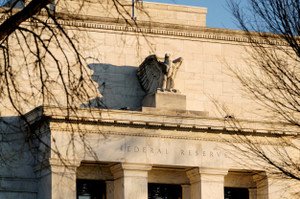
    This image illustrates the impact of the Fed's withdrawal from the Network for Greening the Financial System, highlighting the challenges faced by central banks in addressing climate change in finance.
    Illustration of central banks' green finance efforts and the Fed's withdrawal - Global Banking & Finance Review
    Why waste money on news and opinion when you can access them for free?

    Take advantage of our newsletter subscription and stay informed on the go!

    Subscribe

    Tags:sustainabilityClimate Changefinancial stabilitymonetary policyinvestment

    Quick Summary

    The Fed exits the NGFS, affecting global climate efforts by central banks. The ECB continues its climate initiatives amid political challenges.

    Federal Reserve Exits Central Bank Climate Initiative Amid Controversy

    By Francesco Canepa and Virginia Furness

    FRANKFURT (Reuters) - A global effort by central banks to join the fight against climate change has hit a major hurdle with the U.S. Federal Reserve's decision to leave a club devoted to policing environmental risk in finance.

    The Fed said on Friday it would quit the Network for Greening the Financial System (NGFS) because it had "broadened in scope, covering a wider range of issues that are outside of the (Fed's) statutory mandate".

    Launched in 2017, the global body of central banks and regulators has mostly produced reports, including climate scenarios that supervisors use when estimating the effects of climate change on the economy and financial sector.

    Coming just before Donald Trump's inauguration as U.S. President and amid a backlash against climate action on Wall Street, the Fed's move was widely interpreted as a sign the political climate has become less friendly to environmentalism.

    "The financial consequences of climate change are growing - and the most important central bank gives in to changing political wind," said Guntram Wolff, professor of economics at Solvay Brussels School, part of Brussels University.

    The NGFS remains "more resolved, committed and enthusiastic than ever", it said in a statement, adding that the Fed had not been a member of its steering committee.

    Without the Fed, the biggest and most influential of the 143 members of the Paris-based NGFS is the European Central Bank.

    Under President Christine Lagarde, it has incorporated climate change both in its monetary policy, via a short-lived tweak to its bond purchases, and in its work as supervisor of the 20-country euro zone's top banks.

    CRITICS

    But the ECB's activist stance on climate has been criticised by some European politicians and even a central banker.

    Such sceptical voices might now be emboldened by the Fed's decision to leave the NGFS, said Stanislas Jourdan of the Sustainable Finance Lab think tank.

    "This news about the Fed should wake up political forces in favour of the green transition in Europe to support the ECB's climate endeavour," Jourdan said. "With more political support, we could double down with more proactive policies such as a green interest rate."

    Such an initiative would see commercial lenders that finance environmental projects charged less to borrow from the ECB.

    The ECB's actions so far have had only a minimal impact on borrowing costs. A study by its own staff found that between 2018 and 2022, the euro zone's most polluting firms paid on average just 14 basis points (0.14 of a percentage point) more to borrow than their cleanest peers.

    An academic paper published in 2023 and commissioned by the European Parliament found the ECB had only "a limited role" to play in the fight against climate change and that supporting the green transition might clash with its duty to control inflation.

    And a draft report approved last week by the Parliament's economic affairs committee, which oversees the ECB, welcomed its climate-focused stress tests of banks but said it should remain "as apolitical as possible" when conducting monetary policy.

    But James Vaccaro, head of the Climate Safe Lending Network and CEO of sustainable business consultancy Re:Pattern, said the ECB should continue to lead on green issues.

    "There is no logical reason for it (the ECB) to row back. (Managing climate risk) is critical for the European economy and for financial stability," Vaccaro said.

    (Editing by Catherine Evans)

    Key Takeaways

    • •The Federal Reserve exits the NGFS due to scope concerns.
    • •The ECB remains committed to climate initiatives.
    • •Political climate impacts central bank policies on environment.
    • •The ECB's climate actions face political and economic scrutiny.
    • •Calls for more proactive green policies in Europe.

    Frequently Asked Questions about Central banks' green push hits a hurdle as Fed drops out

    1Why did the Federal Reserve leave the NGFS?

    The Fed decided to quit the Network for Greening the Financial System because it had broadened its scope to cover a wider range of issues outside the Fed's statutory mandate.

    2What is the role of the European Central Bank regarding climate change?

    The European Central Bank has incorporated climate change into its monetary policy and supervises the euro zone's banks, although its actions have faced criticism for having minimal impact on borrowing costs.

    3How has the Fed's decision affected the NGFS?

    Despite the Fed's departure, the NGFS stated it remains committed and enthusiastic about its goals, emphasizing that the Fed was not part of its steering committee.

    4What are the potential consequences of the Fed's withdrawal?

    The Fed's exit may embolden critics of climate action in Europe, prompting calls for increased political support for the ECB's climate initiatives.

    5What did recent studies say about the ECB's role in climate change?

    A study commissioned by the European Parliament found that the ECB has only a limited role in combating climate change, suggesting that it should remain apolitical in its approach.

    More from Finance

    Explore more articles in the Finance category

    Image for TikTok extremely cooperative with EU's probe on Romania election, Commission spokesperson says
    TikTok extremely cooperative with EU's probe on Romania election, Commission spokesperson says
    Image for Exclusive-Italy, France and Germany to lead EU critical materials stockpiling plan, sources say
    Exclusive-Italy, France and Germany to lead EU critical materials stockpiling plan, sources say
    Image for Greenland shatters temperature record, redrawing economy from fishing to minerals
    Greenland shatters temperature record, redrawing economy from fishing to minerals
    Image for UBS Swiss job cuts coming later in 2026, CEO says
    UBS Swiss job cuts coming later in 2026, CEO says
    Image for Xi, Putin hail ties in video call as Ukraine war nears anniversary
    Xi, Putin hail ties in video call as Ukraine war nears anniversary
    Image for What are Iran's ballistic missile capabilities?
    What are Iran's ballistic missile capabilities?
    Image for Sterling hits fresh 5-month high versus euro, BoE in focus
    Sterling hits fresh 5-month high versus euro, BoE in focus
    Image for Germany ranks second worldwide for EV production in 2025, VDA says
    Germany ranks second worldwide for EV production in 2025, VDA says
    Image for Santander shares down after $12.2 billion deal to buy US bank Webster
    Santander shares down after $12.2 billion deal to buy US bank Webster
    Image for Wartsila orders miss forecast, but upbeat on data centres
    Wartsila orders miss forecast, but upbeat on data centres
    Image for Euro zone inflation dips in January as soft patch begins
    Euro zone inflation dips in January as soft patch begins
    Image for NXP CEO says demand for 'physical AI' boosting outlook
    NXP CEO says demand for 'physical AI' boosting outlook
    View All Finance Posts
    Previous Finance PostSpain's PM Sanchez floats ban on non-EU citizens buying properties
    Next Finance PostECB's Vujcic says market pricing of rate cuts reasonable