Search
00
GBAF Logo
trophy
Top StoriesInterviewsBusinessFinanceBankingTechnologyInvestingTradingVideosAwardsMagazinesHeadlinesTrends

Subscribe to our newsletter

Get the latest news and updates from our team.

Global Banking and Finance Review

Global Banking & Finance Review

Company

    GBAF Logo
    • About Us
    • Profile
    • Privacy & Cookie Policy
    • Terms of Use
    • Contact Us
    • Advertising
    • Submit Post
    • Latest News
    • Research Reports
    • Press Release
    • Awards▾
      • About the Awards
      • Awards TimeTable
      • Submit Nominations
      • Testimonials
      • Media Room
      • Award Winners
      • FAQ
    • Magazines▾
      • Global Banking & Finance Review Magazine Issue 79
      • Global Banking & Finance Review Magazine Issue 78
      • Global Banking & Finance Review Magazine Issue 77
      • Global Banking & Finance Review Magazine Issue 76
      • Global Banking & Finance Review Magazine Issue 75
      • Global Banking & Finance Review Magazine Issue 73
      • Global Banking & Finance Review Magazine Issue 71
      • Global Banking & Finance Review Magazine Issue 70
      • Global Banking & Finance Review Magazine Issue 69
      • Global Banking & Finance Review Magazine Issue 66
    Top StoriesInterviewsBusinessFinanceBankingTechnologyInvestingTradingVideosAwardsMagazinesHeadlinesTrends

    Global Banking & Finance Review® is a leading financial portal and online magazine offering News, Analysis, Opinion, Reviews, Interviews & Videos from the world of Banking, Finance, Business, Trading, Technology, Investing, Brokerage, Foreign Exchange, Tax & Legal, Islamic Finance, Asset & Wealth Management.
    Copyright © 2010-2025 GBAF Publications Ltd - All Rights Reserved.

    ;
    Editorial & Advertiser disclosure

    Global Banking and Finance Review is an online platform offering news, analysis, and opinion on the latest trends, developments, and innovations in the banking and finance industry worldwide. The platform covers a diverse range of topics, including banking, insurance, investment, wealth management, fintech, and regulatory issues. The website publishes news, press releases, opinion and advertorials on various financial organizations, products and services which are commissioned from various Companies, Organizations, PR agencies, Bloggers etc. These commissioned articles are commercial in nature. This is not to be considered as financial advice and should be considered only for information purposes. It does not reflect the views or opinion of our website and is not to be considered an endorsement or a recommendation. We cannot guarantee the accuracy or applicability of any information provided with respect to your individual or personal circumstances. Please seek Professional advice from a qualified professional before making any financial decisions. We link to various third-party websites, affiliate sales networks, and to our advertising partners websites. When you view or click on certain links available on our articles, our partners may compensate us for displaying the content to you or make a purchase or fill a form. This will not incur any additional charges to you. To make things simpler for you to identity or distinguish advertised or sponsored articles or links, you may consider all articles or links hosted on our site as a commercial article placement. We will not be responsible for any loss you may suffer as a result of any omission or inaccuracy on the website.

    Home > Banking > With Fed’s rate cut at hand, debate swirls over how big a move
    Banking

    With Fed’s rate cut at hand, debate swirls over how big a move

    With Fed’s rate cut at hand, debate swirls over how big a move

    Published by Uma Rajagopal

    Posted on September 18, 2024

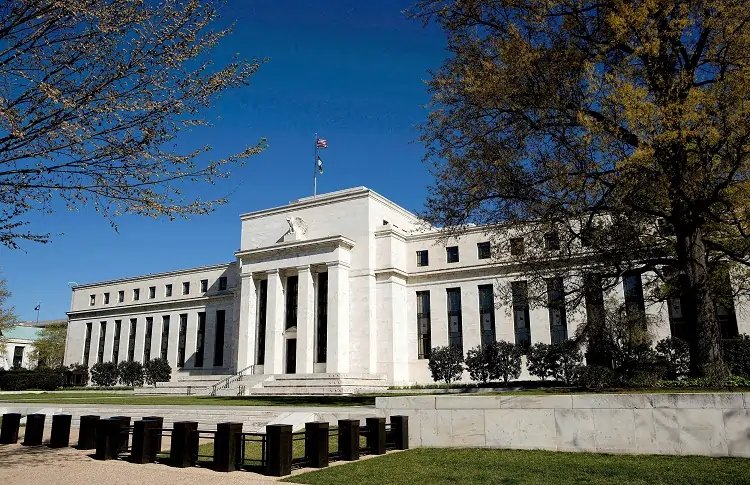
    Featured image for article about Banking

    By Howard Schneider

    WASHINGTON (Reuters) – The Federal Reserve on Wednesday almost certainly will lower interest rates for the first time in more than four years as the U.S. central bank starts to reverse the restrictive conditions it imposed to beat back inflation, but whether policymakers opt for a half-percentage-point cut or smaller move remains up in the air.

    Their choice on how they want to kick off a new easing cycle – less than two months before what is expected to be a close U.S. presidential election – likely hinges more on what signal they want to send as they pivot from the highest interest rates in a quarter of a century than about expectations for near-term macroeconomic impact, even as their worries about the job market grow.

    A half-percentage-point cut – now given more than a 60% probability in rate futures markets – would signal a commitment to sustaining the current economic expansion and the job growth that goes along with it, something Fed Chair Jerome Powell has said is the top priority now that inflation is approaching the central bank’s 2% target.

    A quarter-percentage-point reduction in borrowing costs would be more consistent with how the Fed has begun prior easing cycles outside of any brewing crisis. It would align with the cautious approach policymakers said they were taking towards rate cuts, and track economic data that has shown the economy slowing but not, seemingly, about to crack.

    Recent job growth has come down from the high levels of the COVID-19 era, but remains positive; retail sales and industrial production data released on Tuesday beat expectations; and an Atlanta Fed model that tracks estimates of economic growth based on incoming data shows the economy is expanding at a 3.0% annual rate so far in the third quarter, above the central bank’s estimates of U.S. potential.

    We have never come close to a major tipping point on interest rates without more certainty” about how it would start, Diane Swonk, the chief economist at KPMG, wrote on Monday ahead of the start of the Fed’s latest two-day policy meeting. But while a 50-basis-point cut “will no doubt be discussed,” Swonk said, “Powell is unlikely to have the votes.”

    Others argued that after the Fed’s last meeting in July, at which several policymakers were open to cutting rates at that time, and with investors flocking towards bets on a half-percentage-point cut, doing less would be seen as failing to deliver on Powell’s statement last month that he did not want the labor market to weaken any further.

    “The Fed will deliver a 50-basis-point cut to jump-start the easing cycle and will seek … to reassure that it is not behind the curve and strengthen confidence” that the expansion will continue as inflation eases further, Evercore ISI Vice Chairman Krishna Guha wrote, while noting that there could be as many as three dissents, an unusual fracture of Powell’s efforts to operate by consensus.

    INFLATION BATTLE

    The Fed’s rate decision and new policy statement are scheduled to be released at 2 p.m. EDT (1800 GMT) along with updated economic projections that will show how much lower policymakers anticipate rates will fall over this year and in 2025. Officials will also update their outlooks for inflation, unemployment and economic growth.

    The Fed’s benchmark policy rate has been held in the current 5.25%-5.50% range for 14 months. That is longer than three of the last-six Fed “hold” periods but is short of the 15 months that rates sat unchanged before the 2007-2009 financial crisis and even further shy of the 18-month pause during the “Great Moderation” of the late 1990s.

    While the rate decision itself is critical, how Powell describes that choice and the outlook for borrowing costs during his post-meeting press conference may be more so. He is due to begin his remarks half an hour after the release of the policy statement and projections.

    The Fed’s decision, the tenor of the statement and Powell’s press conference, and the market’s reaction to it, will come roughly seven weeks before the end of a U.S. presidential election campaign that may turn at least partly on voter perceptions about pocketbook issues like food and housing costs.

    In the aftermath of the pandemic, a combination of goods scarcity, massive spending, labor shortages, large government deficits, and aggressive corporate pricing drove inflation to a 40-year high in 2022.

    While wage growth was also strong and for many workers exceeded the pace of price increases, sentiment was dour for much of the time as the Fed ratcheted up interest rates to try to slow the economy, home mortgage rates rose in response, and banks curbed credit for many types of loans and borrowers.

    Inflation by the Fed’s most watched measure is now about a half a percentage point away from the central bank’s target, and expected to come down gradually through the rest of 2024 and next year.

    The economy by almost all measures has fared better than expected through it all, with the Fed now expected to shift gears and offer its first clues on Wednesday about how fast and how far it plans to pivot.

    (Reporting by Howard Schneider; Editing by Dan Burns and Paul Simao)

    Related Posts
    DeFi and banking are converging. Here’s what banks can do.
    DeFi and banking are converging. Here’s what banks can do.
    Are Neo Banks Offering Better Metal Debit Cards Than Traditional Banks?
    Are Neo Banks Offering Better Metal Debit Cards Than Traditional Banks?
    Banking at the Intersection: From Nashville to Cannes, A Strategic Call to Action
    Banking at the Intersection: From Nashville to Cannes, A Strategic Call to Action
    Driving Efficiency and Profit Through Customer-Centric Banking
    Driving Efficiency and Profit Through Customer-Centric Banking
    How Ecosystem Partnerships Are Redefining Deposit Products
    How Ecosystem Partnerships Are Redefining Deposit Products
    CIBC Private Banking wins four 2025 Global Banking & Finance Awards
    CIBC Private Banking wins four 2025 Global Banking & Finance Awards
    How Banks Can Put AI to Work Now and Prove ROI in 90 Days
    How Banks Can Put AI to Work Now and Prove ROI in 90 Days
    Top 5 AI quality assurance framework providers for Banks and Financial Services firms.
    Top 5 AI quality assurance framework providers for Banks and Financial Services firms.
    The Unbanked Paradox: How Banking Access Creates Economic Resilience
    The Unbanked Paradox: How Banking Access Creates Economic Resilience
    Hyper-Personalised Banking - Shaping the Future of Finance
    Hyper-Personalised Banking - Shaping the Future of Finance
    The End of Voice Trust: How AI Deepfakes Are Forcing Banks to Rethink Authentication
    The End of Voice Trust: How AI Deepfakes Are Forcing Banks to Rethink Authentication
    Predicting and Preventing Customer Churn in Retail Banking
    Predicting and Preventing Customer Churn in Retail Banking

    Why waste money on news and opinions when you can access them for free?

    Take advantage of our newsletter subscription and stay informed on the go!

    Subscribe

    Previous Banking PostFed’s Powell: Central bank forecasts don’t point to urgent action
    Next Banking PostFrench central bank sees consumer gains easing budget pains

    More from Banking

    Explore more articles in the Banking category
    Growth and Impact: Banreservas Leads Dominican Republic Economic Expansion

    Growth and Impact: Banreservas Leads Dominican Republic Economic Expansion

    Turning Insight into Impact: Making AI and Analytics Work in Retail Banking

    Turning Insight into Impact: Making AI and Analytics Work in Retail Banking

    KeyBank Embraces Next-Generation AI Platform to Transform Fraud and Financial Crime Prevention

    KeyBank Embraces Next-Generation AI Platform to Transform Fraud and Financial Crime Prevention

    Understanding Association Banking: Financial Solutions for Community Success

    Understanding Association Banking: Financial Solutions for Community Success

    Applying Symbiosis for advantage in APAC banking

    Applying Symbiosis for advantage in APAC banking

    AmBank Islamic Berhad Earns Triple Recognition for Excellence in Islamic Banking

    AmBank Islamic Berhad Earns Triple Recognition for Excellence in Islamic Banking

    FinTok Strategy: How Banks Are Reaching Gen Z Through Social Media

    FinTok Strategy: How Banks Are Reaching Gen Z Through Social Media

    Rethinking Retail Banking Sustainability: Why the ATM is an Asset in the Sustainable Transition

    Rethinking Retail Banking Sustainability: Why the ATM is an Asset in the Sustainable Transition

    How private banks can survive the neo-broker revolution

    How private banks can survive the neo-broker revolution

    Next-Gen Bank Branches: The Evolution from Transaction Hubs to Experience Centers

    Next-Gen Bank Branches: The Evolution from Transaction Hubs to Experience Centers

    The Banking Talent Crunch: How Financial Institutions Are Competing for Digital-Native Skills

    The Banking Talent Crunch: How Financial Institutions Are Competing for Digital-Native Skills

    Beyond Interest: How Banks Are Reimagining Revenue in the Digital Age

    Beyond Interest: How Banks Are Reimagining Revenue in the Digital Age

    View All Banking Posts