Search
00
GBAF Logo
trophy
Top StoriesInterviewsBusinessFinanceBankingTechnologyInvestingTradingVideosAwardsMagazinesHeadlinesTrends

Subscribe to our newsletter

Get the latest news and updates from our team.

Global Banking and Finance Review

Global Banking & Finance Review

Company

    GBAF Logo
    • About Us
    • Profile
    • Privacy & Cookie Policy
    • Terms of Use
    • Contact Us
    • Advertising
    • Submit Post
    • Latest News
    • Research Reports
    • Press Release
    • Awards▾
      • About the Awards
      • Awards TimeTable
      • Submit Nominations
      • Testimonials
      • Media Room
      • Award Winners
      • FAQ
    • Magazines▾
      • Global Banking & Finance Review Magazine Issue 79
      • Global Banking & Finance Review Magazine Issue 78
      • Global Banking & Finance Review Magazine Issue 77
      • Global Banking & Finance Review Magazine Issue 76
      • Global Banking & Finance Review Magazine Issue 75
      • Global Banking & Finance Review Magazine Issue 73
      • Global Banking & Finance Review Magazine Issue 71
      • Global Banking & Finance Review Magazine Issue 70
      • Global Banking & Finance Review Magazine Issue 69
      • Global Banking & Finance Review Magazine Issue 66
    Top StoriesInterviewsBusinessFinanceBankingTechnologyInvestingTradingVideosAwardsMagazinesHeadlinesTrends

    Global Banking & Finance Review® is a leading financial portal and online magazine offering News, Analysis, Opinion, Reviews, Interviews & Videos from the world of Banking, Finance, Business, Trading, Technology, Investing, Brokerage, Foreign Exchange, Tax & Legal, Islamic Finance, Asset & Wealth Management.
    Copyright © 2010-2025 GBAF Publications Ltd - All Rights Reserved.

    Editorial & Advertiser disclosure

    Global Banking and Finance Review is an online platform offering news, analysis, and opinion on the latest trends, developments, and innovations in the banking and finance industry worldwide. The platform covers a diverse range of topics, including banking, insurance, investment, wealth management, fintech, and regulatory issues. The website publishes news, press releases, opinion and advertorials on various financial organizations, products and services which are commissioned from various Companies, Organizations, PR agencies, Bloggers etc. These commissioned articles are commercial in nature. This is not to be considered as financial advice and should be considered only for information purposes. It does not reflect the views or opinion of our website and is not to be considered an endorsement or a recommendation. We cannot guarantee the accuracy or applicability of any information provided with respect to your individual or personal circumstances. Please seek Professional advice from a qualified professional before making any financial decisions. We link to various third-party websites, affiliate sales networks, and to our advertising partners websites. When you view or click on certain links available on our articles, our partners may compensate us for displaying the content to you or make a purchase or fill a form. This will not incur any additional charges to you. To make things simpler for you to identity or distinguish advertised or sponsored articles or links, you may consider all articles or links hosted on our site as a commercial article placement. We will not be responsible for any loss you may suffer as a result of any omission or inaccuracy on the website.

    Home > Business > Why businesses must get ready for mandatory e-Invoicing
    Business

    Why businesses must get ready for mandatory e-Invoicing

    Why businesses must get ready for mandatory e-Invoicing

    Published by Jessica Weisman-Pitts

    Posted on November 14, 2023

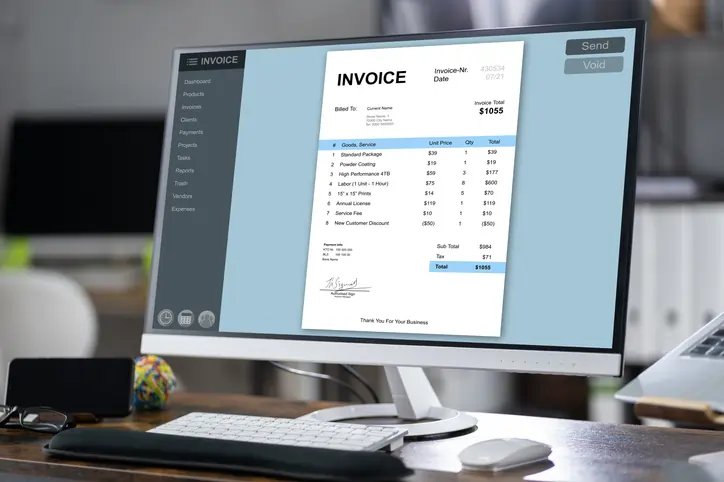
    Featured image for article about Business

    Why businesses must get ready for mandatory e-Invoicing

    By Ken Clark, Director, Product Marketing, Business Network Cloud

    In a world where almost every business process is now driven by digital technology, it’s perhaps surprising that something as fundamental as invoicing has proven to be resistant to change and improvement.

    It’s true that some companies have been moving towards some form of digital invoicing for a while, often adopting PDFs which resemble the paper invoices we’re used to. But PDFs offer few of the benefits that a fully electronic, automated invoicing approach can deliver.

    So why is there still a lag?

    Part of the reason for the slow transition is that e-Invoicing remains optional as opposed to mandatory in most countries. In the UK, for example, there is no overarching e-Invoicing mandate. And while some 80 countries around the world do have some form of e-Invoicing mandate in place, with South American countries leading the way, the majority don’t.

    However, change is coming fast. In a December 2022 publication, the European Commission proposed to make e-Invoicing mandatory by 2028, and another 50 countries have put the wheels in motion on compulsory e-Invoicing too.

    So, with those mandates on the horizon, the transition to e-Invoicing is going to go from ‘nice-to-have’ to ‘must have’ in the medium to long term anyway. But there are many good reasons why companies should consider moving more quickly.

    5 reasons companies should move to e-Invoicing now

    1. It simplifies tax audits

    No matter how you send and receive your invoices – electronic, paper, or fax – there is still a legal obligation in tax law to do so within an auditable and robust process. Part of that means archiving tax invoices in case of long-term audits. Depending on the region, the retention period can be between four to eleven years from the initial transaction date.

    That’s where we begin to see the flaws in an otherwise tried and trusted paper-based system. Paper can easily get lost or damaged. An e-Invoicing process, however, sees each step logged and traceable to verify best practices, and sees invoices stored in a secure digital archive that ensures integrity, authenticity, and longevity. These can then be made easily available to tax auditors from an intuitive web interface, simplifying the entire tax audit process.

    1. It offers proven return on investment

    Gartner’s ‘Top Priorities for Finance Leaders in 2022’ saw e-Invoicing playing a significant role in 5 of 8 key areas in digital business optimisation: reducing costs through automation, improving employee productivity, reducing sales & general admin costs, and optimising cashflow.

    With CFOs and finance directors keen to justify the outlay on any technological investments, these benefits more than validate the move to a fully automated B2B e-Invoicing approach. As an example, Billentis has estimated that the total cost of a manual invoicing process in Accounts payable comes to around €17.60 per invoice, while true e-Invoicing can offer cost savings of up to 64% – hard to turn down in good times, let alone in a strained economy when every little helps.

    1. It unlocks bottom line cashflow

    Automated invoicing is inherently more scalable, prone to fewer errors thereby reducing time-consuming exceptions. Some studies have shown that the average error rate for manual data entry is about 2%. That might seem small, but it compounds over time, with the potential to lead to significant financial losses.

    The upshot is that fully automated electronic invoicing means companies can get paid earlier and can also pay their suppliers more quickly – avoiding late payment penalties and potentially benefitting from early payment discounts, too. This generally means more working capital and a reduced dependence on credit, unlocking bottom line cashflow and the ability to invest in growth opportunities elsewhere in the business.

    1. It’s already in play

    While many countries are only now beginning to embrace e-Invoicing, don’t mistake this for an experimental or untested technology. More than a decade ago, Chile, Mexico and Brazil began to experiment with alternative approaches to electronic invoices to overcome significant tax fraud challenges. This led to Mexico becoming the first country to mandate e-Invoicing in 2011, reducing their VAT gap by 6% within two years.

    Today countries around the world are beginning to do the same – but markets as varied as the EU, Egypt, and Saudi Arabia will take very different paths to placing this requirement into law.

    Beginning the work of building an e-Invoicing workflow today puts you on a stable footing to operate more seamlessly across borders, regardless of how and when new regulations are introduced. With these new mandates fast approaching, companies that implement a consistent process now will be able to focus on growth instead of adaptation.

    1. It’s easier than it seems

    Despite the number of perceived challenges holding leaders back from implementing e-Invoicing – data security, integration with existing systems, and perceived complexity of technology – there are global e-Invoicing solutions out there that remove those concerns about technical complexity while also providing access to any expertise that is lacking internally. Also, solutions with a comprehensive multi-pronged approach to data security can enable companies to act confidently in the knowledge that security regulations are complied with as standard.

    This kind of outsourced approach makes the switch to e-Invoicing much easier than it seems and can help companies get their transition off the ground immediately.

    Get ready for global mandates

    The regulatory landscape around e-Invoicing may be a patchwork now, but all signs point to more global mandates ahead. Even so, e-Invoicing offers a number of both direct and indirect benefits that represent a real opportunity for businesses that can make the transition now, rather than later.

    By streamlining the invoicing process and reducing various operational costs, as well as improving cash flow generally, e-Invoicing can provide a competitive edge in a tough economic climate, and set the foundations for long-term growth.

    Related Posts
    Why Email Deliverability is a Business Risk Your Company Can’t Afford to Ignore
    Why Email Deliverability is a Business Risk Your Company Can’t Afford to Ignore
    Five questions to ask before stepping into Employee Ownership
    Five questions to ask before stepping into Employee Ownership
    Cybersecurity as a Profit Engine: Turning Financial Services Security into Measurable Business Value
    Cybersecurity as a Profit Engine: Turning Financial Services Security into Measurable Business Value
    How Investability Helps Companies Navigate Transformational Times
    How Investability Helps Companies Navigate Transformational Times
    88% of UK and US organisations concerned about state-sponsored cyber attacks as national threat levels surge, IO research reveals
    88% of UK and US organisations concerned about state-sponsored cyber attacks as national threat levels surge, IO research reveals
    One in three SME leaders do not fully understand cash flow, despite 82% facing cash flow problems
    One in three SME leaders do not fully understand cash flow, despite 82% facing cash flow problems
    Inside the Company that Predicted the Remote Work Mega-Trend Before It Became Mainstream
    Inside the Company that Predicted the Remote Work Mega-Trend Before It Became Mainstream
    SEO Consultant Adrian Czarnoleski on How to Increase Business Value Before Exit
    SEO Consultant Adrian Czarnoleski on How to Increase Business Value Before Exit
    No SOC 2, No Deal: Why You’re Already Losing Clients - and What You Can Do About It
    No SOC 2, No Deal: Why You’re Already Losing Clients - and What You Can Do About It
    Jose Tolosa Guides Organizations Forward with Clarity, Purpose, and Integrity
    Jose Tolosa Guides Organizations Forward with Clarity, Purpose, and Integrity
    Reducing Freight Costs to Drive Global Trade Expansion
    Reducing Freight Costs to Drive Global Trade Expansion
    The Psychology of Music in the Modern Workplace
    The Psychology of Music in the Modern Workplace

    Why waste money on news and opinions when you can access them for free?

    Take advantage of our newsletter subscription and stay informed on the go!

    Subscribe

    Previous Business PostBalancing automation and human touch in HR and recruitment
    Next Business PostValutico and Eden Exchange Team Up to Make Company Valuation More Accessible for SMEs

    More from Business

    Explore more articles in the Business category

    Revealed: Low-Cost/No-Cost Marketing Hacks For Results Oriented Businesses

    Revealed: Low-Cost/No-Cost Marketing Hacks For Results Oriented Businesses

    Finance teams still stuck in spreadsheets as manual processes stall digital transformation

    Finance teams still stuck in spreadsheets as manual processes stall digital transformation

    The Future of Remote & Hybrid Leadership: Leading With Data-Driven Foresight

    The Future of Remote & Hybrid Leadership: Leading With Data-Driven Foresight

    2025-2030: The Next Technological Innovations for Business

    2025-2030: The Next Technological Innovations for Business

    The CFO’s New Playbook: 5 Ways AI Is Redefining Finance with Insights from Rishi Oberoi

    The CFO’s New Playbook: 5 Ways AI Is Redefining Finance with Insights from Rishi Oberoi

    Revolutionizing Payments: Secure, Scalable, Sovereign

    Revolutionizing Payments: Secure, Scalable, Sovereign

    Why Trademark Abuse in Paid Search Is a Growing Risk for Financial Institutions

    Why Trademark Abuse in Paid Search Is a Growing Risk for Financial Institutions

    E-commerce Customer Service: Tips

    E-commerce Customer Service: Tips

    When to Automate Your Warehouse: The Tipping Point for Operations Growth

    When to Automate Your Warehouse: The Tipping Point for Operations Growth

    Hurt at Work? 5 Financial Facts You Need to Know

    Hurt at Work? 5 Financial Facts You Need to Know

    Against the Odds: Resilience in Consumer Subsectors Offers Prime Opportunities for Investors

    Against the Odds: Resilience in Consumer Subsectors Offers Prime Opportunities for Investors

    Empower Your Workforce With Financial Wellness This Labor Day

    Empower Your Workforce With Financial Wellness This Labor Day

    View All Business Posts