Search
00
GBAF Logo
trophy
Top StoriesInterviewsBusinessFinanceBankingTechnologyInvestingTradingVideosAwardsMagazinesHeadlinesTrends

Subscribe to our newsletter

Get the latest news and updates from our team.

Global Banking and Finance Review

Global Banking and Finance Review - Subscribe to our newsletter

Company

    GBAF Logo
    • About Us
    • Profile
    • Privacy & Cookie Policy
    • Terms of Use
    • Contact Us
    • Advertising
    • Submit Post
    • Latest News
    • Research Reports
    • Press Release
    • Awards▾
      • About the Awards
      • Awards TimeTable
      • Submit Nominations
      • Testimonials
      • Media Room
      • Award Winners
      • FAQ
    • Magazines▾
      • Global Banking & Finance Review Magazine Issue 79
      • Global Banking & Finance Review Magazine Issue 78
      • Global Banking & Finance Review Magazine Issue 77
      • Global Banking & Finance Review Magazine Issue 76
      • Global Banking & Finance Review Magazine Issue 75
      • Global Banking & Finance Review Magazine Issue 73
      • Global Banking & Finance Review Magazine Issue 71
      • Global Banking & Finance Review Magazine Issue 70
      • Global Banking & Finance Review Magazine Issue 69
      • Global Banking & Finance Review Magazine Issue 66
    Top StoriesInterviewsBusinessFinanceBankingTechnologyInvestingTradingVideosAwardsMagazinesHeadlinesTrends

    Global Banking & Finance Review® is a leading financial portal and online magazine offering News, Analysis, Opinion, Reviews, Interviews & Videos from the world of Banking, Finance, Business, Trading, Technology, Investing, Brokerage, Foreign Exchange, Tax & Legal, Islamic Finance, Asset & Wealth Management.
    Copyright © 2010-2026 GBAF Publications Ltd - All Rights Reserved. | Sitemap | Tags | Developed By eCorpIT

    Editorial & Advertiser disclosure

    Global Banking and Finance Review is an online platform offering news, analysis, and opinion on the latest trends, developments, and innovations in the banking and finance industry worldwide. The platform covers a diverse range of topics, including banking, insurance, investment, wealth management, fintech, and regulatory issues. The website publishes news, press releases, opinion and advertorials on various financial organizations, products and services which are commissioned from various Companies, Organizations, PR agencies, Bloggers etc. These commissioned articles are commercial in nature. This is not to be considered as financial advice and should be considered only for information purposes. It does not reflect the views or opinion of our website and is not to be considered an endorsement or a recommendation. We cannot guarantee the accuracy or applicability of any information provided with respect to your individual or personal circumstances. Please seek Professional advice from a qualified professional before making any financial decisions. We link to various third-party websites, affiliate sales networks, and to our advertising partners websites. When you view or click on certain links available on our articles, our partners may compensate us for displaying the content to you or make a purchase or fill a form. This will not incur any additional charges to you. To make things simpler for you to identity or distinguish advertised or sponsored articles or links, you may consider all articles or links hosted on our site as a commercial article placement. We will not be responsible for any loss you may suffer as a result of any omission or inaccuracy on the website.

    Home > Business > UK’s meat industry warns CO2 shortage could hit food supplies
    Business

    UK’s meat industry warns CO2 shortage could hit food supplies

    Published by maria gbaf

    Posted on September 20, 2021

    4 min read

    Last updated: January 20, 2026

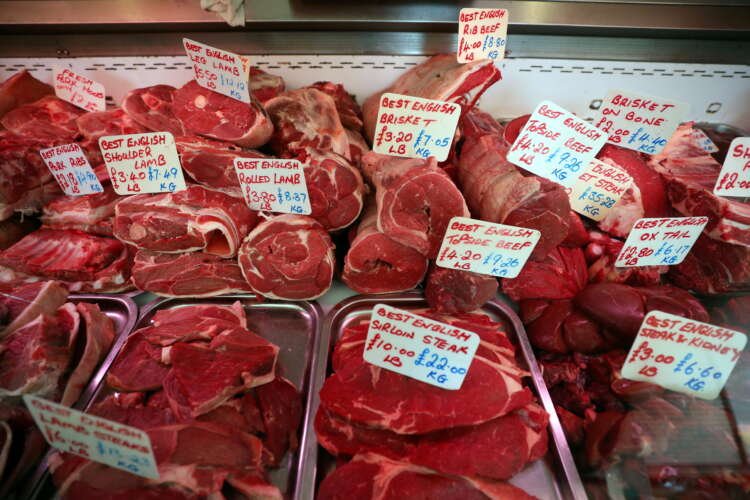
    Featured image illustrating the UK's meat industry concerns over a CO2 shortage that threatens food supplies, as highlighted in the article. The shortage could disrupt animal processing and lead to a backlog on farms.
    Warning about CO2 shortage affecting UK's meat industry supplies - Global Banking & Finance Review
    Why waste money on news and opinion when you can access them for free?

    Take advantage of our newsletter subscription and stay informed on the go!

    Subscribe

    LONDON (Reuters) – Britain’s meat industry on Friday warned that an impending shortage of carbon dioxide (CO2) could cause massive disruption to food supplies within two weeks.

    The gas is used to stun animals before slaughter, in the vacuum packing of food products to extend their shelf life, and to put the fizz into beer, cider and soft drinks.

    It is also required for some medical procedures and used in the nuclear and semi-conductor industries.

    Britain’s food supply chain, already creaking from an acute shortage of heavy goods vehicles (HGV) drivers and the impact of Brexit and COVID-19, is heavily reliant on fertiliser producers for CO2 which is a by-product of their production process.

    However, two of the largest fertiliser producers, Norway’s Yara and rival CF Industries Holdings, have curbed production due to a surge in natural gas prices, which has in turn started to dry up CO2 supplies.

    Nick Allen, chief executive of the British Meat Processors Association (BMPA), said that once current stocks of the gas run out some meat companies will have to stop taking animals and close production lines, leading to a logjam of animals back to the farms.

    “We already have this situation in the pig industry which is now facing the imminent prospect of a humane cull on farms,” he said.

    The BMPA is lobbying Business Minister Kwasi Kwarteng to help prop up UK CO2 production in the short-term.

    “We are monitoring this situation closely and are in regular contact with the food and farming organisations and industry, to help them manage the current situation,” said a UK government spokesperson.

    “The UK benefits from having access to highly diverse sources of gas supply to ensure households, businesses and heavy industry get the energy they need at a fair price.”

    Britain last suffered a major CO2 shortage in 2018, leading to some drinks wholesalers to ration sales.

    (Reporting by James Davey; Editing by Aurora Ellis)

    LONDON (Reuters) – Britain’s meat industry on Friday warned that an impending shortage of carbon dioxide (CO2) could cause massive disruption to food supplies within two weeks.

    The gas is used to stun animals before slaughter, in the vacuum packing of food products to extend their shelf life, and to put the fizz into beer, cider and soft drinks.

    It is also required for some medical procedures and used in the nuclear and semi-conductor industries.

    Britain’s food supply chain, already creaking from an acute shortage of heavy goods vehicles (HGV) drivers and the impact of Brexit and COVID-19, is heavily reliant on fertiliser producers for CO2 which is a by-product of their production process.

    However, two of the largest fertiliser producers, Norway’s Yara and rival CF Industries Holdings, have curbed production due to a surge in natural gas prices, which has in turn started to dry up CO2 supplies.

    Nick Allen, chief executive of the British Meat Processors Association (BMPA), said that once current stocks of the gas run out some meat companies will have to stop taking animals and close production lines, leading to a logjam of animals back to the farms.

    “We already have this situation in the pig industry which is now facing the imminent prospect of a humane cull on farms,” he said.

    The BMPA is lobbying Business Minister Kwasi Kwarteng to help prop up UK CO2 production in the short-term.

    “We are monitoring this situation closely and are in regular contact with the food and farming organisations and industry, to help them manage the current situation,” said a UK government spokesperson.

    “The UK benefits from having access to highly diverse sources of gas supply to ensure households, businesses and heavy industry get the energy they need at a fair price.”

    Britain last suffered a major CO2 shortage in 2018, leading to some drinks wholesalers to ration sales.

    (Reporting by James Davey; Editing by Aurora Ellis)

    More from Business

    Explore more articles in the Business category

    Image for How Commercial Lending Software Platforms Are Structured and Utilized
    How Commercial Lending Software Platforms Are Structured and Utilized
    Image for Oil Traders vs. Tech Startups: Surprising Lessons from Two High-Stakes Worlds | Said Addi
    Oil Traders vs. Tech Startups: Surprising Lessons from Two High-Stakes Worlds | Said Addi
    Image for Why More Mortgage Brokers Are Choosing to Join a Network
    Why More Mortgage Brokers Are Choosing to Join a Network
    Image for From Recession Survivor to Industry Pioneer: Ed Lewis's Data Revolution
    From Recession Survivor to Industry Pioneer: Ed Lewis's Data Revolution
    Image for From Optometry to Soul Vision: The Doctor Helping Entrepreneurs Lead With Purpose
    From Optometry to Soul Vision: The Doctor Helping Entrepreneurs Lead With Purpose
    Image for Global Rankings Revealed: Top PMO Certifications Worldwide
    Global Rankings Revealed: Top PMO Certifications Worldwide
    Image for World Premiere of Midnight in the War Room to be Hosted at Black Hat Vegas
    World Premiere of Midnight in the War Room to be Hosted at Black Hat Vegas
    Image for Role of Personal Accident Cover in 2-Wheeler Insurance for Owners and Riders
    Role of Personal Accident Cover in 2-Wheeler Insurance for Owners and Riders
    Image for The Young Rich Lister Who Also Teaches: How Aaron Sansoni Built a Brand Around Execution
    The Young Rich Lister Who Also Teaches: How Aaron Sansoni Built a Brand Around Execution
    Image for Q3 2025 Priority Leadership: Tom Priore and Tim O'Leary Balance Near-Term Challenges with Long-Term Strategic Wins
    Q3 2025 Priority Leadership: Tom Priore and Tim O'Leary Balance Near-Term Challenges with Long-Term Strategic Wins
    Image for Using Modern Team Management Methods to Improve Collaboration in Hybrid Work Models
    Using Modern Team Management Methods to Improve Collaboration in Hybrid Work Models
    Image for Why Email Deliverability is a Business Risk Your Company Can’t Afford to Ignore
    Why Email Deliverability is a Business Risk Your Company Can’t Afford to Ignore
    View All Business Posts
    Previous Business PostContext is King: Why Context Has Always Been — And Will Always Be — The Answer for Advertisers
    Next Business PostHong Kong’s first ‘patriots-only’ election kicks off