
Business
Top 6 Electricity Hungry Appliances in Your Business
Published by Jessica Weisman-Pitts
Posted on March 28, 2022
4 min readLast updated: February 8, 2026
Add as preferred source on Google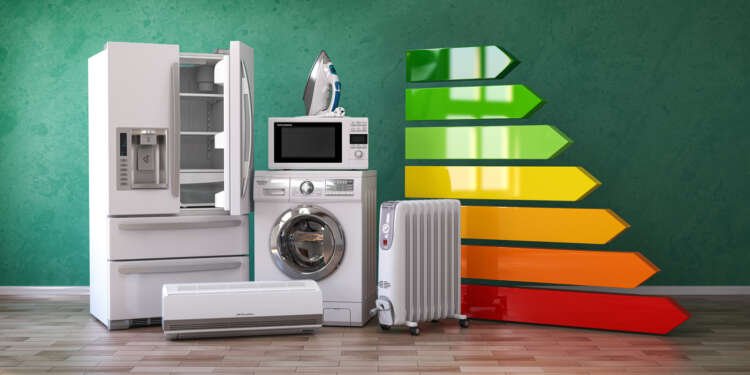
Published by Jessica Weisman-Pitts
Posted on March 28, 2022
4 min readLast updated: February 8, 2026
Add as preferred source on GoogleEnergy rates have risen over the past decade, and many businesses are shocked when they receive their energy bill.
Energy rates have risen over the past decade, and many businesses are shocked when they receive their energy bill.
Although energy suppliers have increased their rates over the past few years, businesses can do their bit to save energy and money.
The first step in reducing your electricity bill is to understand what appliances use the most energy in your office. Business owners can mitigate electric use with Utility Bidder.
Below is a list of energy-hungry appliances that are found in most offices. By monitoring the electricity usage of these items, you will be able to use less energy at work and cut your annual energy costs.
If you have a larger business, then your servers may be contributing the most to your energy bill.
A single server can use between 500 and 1,200 watts per hour. Servers usually run 24 hours a day, and if you take an average of 850 watts per hour, that equals 20.4 kilowatts a day.
The size of the server will determine the energy consumption, with those with four hard disk drivers consuming more.
Printer, copier, scanner, workplace. Small printer for use and printing at home, filled with only black paint.
A business is incomplete without a printer and photocopier, and these appliances have very low energy efficiency. Because printers and photocopiers are almost always switched on, they are experts at wasting energy in standby mode.
Commercial ink-jet printers and photocopiers that are commonly used in an office will use about 300 to 500 watts while printing and copying and use 30 to 50 watts on standby.
Other types of printers, like laser printers, will contribute even more to your energy bills.
You may not think that leaving your phone or laptop plugged in when it is fully charged will use any energy. That is where you are wrong.
Fully charged technology that remains plugged in still wastes power, as they are using electricity without actually benefiting you or your device.
You can slightly reduce your annual energy bills by unplugging devices once they are fully charged.
A kettle is one of those household appliances that no office can go without. Despite its small size, it is one of the most energy-hungry appliances in the office (and home).
When you overfill the kettle – meaning when you boil more water than needed – you will be using a lot more electricity. Repeated boiling with a full kettle will add up.
You can invest in a kettle with a more efficient heating unit, or ask employees to not overfill the kettle and make tea and coffee at the same time to prevent constant use.
Air Conditioner And Heat Pump. Split HVAC System Unit
A cooling system uses a lot more energy than a heating system, and that is why air conditioners are one of the least energy-efficient appliances in an office.
Large offices depend on their air conditioner during long, hot summer days, but there are other ways that the office can be kept cool.
Invest in curtains, open windows, and use desk fans. Although these fans still consume electricity, it will be way less than an air conditioner that is constantly running.
Your air conditioner should be checked and air filters cleaned regularly to ensure your air conditioning system is running as smoothly as possible.
Fridges are always running and therefore contribute a fair amount to monthly energy bills. How much electricity your fridge uses will depend on the fridge you get, as modern fridges use less energy.
Fridges typically consume between 100 and 400 watts, depending on the size and age of the fridge.
It is impossible to escape electric consumption in a business, as there are crucial appliances in most offices that require electricity.
A business owner must invest how much energy the office appliances use, and try to conserve energy where possible. This will help save money in the long run.
By opting for low-energy appliances and switching off devices when not in use, a business owner can save electricity and money.
This is a Sponsored Feature
Energy consumption refers to the amount of energy used by appliances and systems in a business or household, impacting both costs and environmental sustainability.
Standby mode is a low-power state that electronic devices enter when not in active use, but they still consume energy, contributing to overall electricity costs.
An air conditioning unit is a system used to cool indoor spaces by removing heat and humidity, often consuming significant energy during operation.
A server is a powerful computer that provides data, resources, or services to other computers over a network, often running continuously and consuming substantial energy.
Energy efficiency refers to using less energy to perform the same task, which can lead to lower energy bills and reduced environmental impact.
Explore more articles in the Business category









