Search
00
GBAF Logo
trophy
Top StoriesInterviewsBusinessFinanceBankingTechnologyInvestingTradingVideosAwardsMagazinesHeadlinesTrends

Subscribe to our newsletter

Get the latest news and updates from our team.

Global Banking and Finance Review

Global Banking & Finance Review

Company

    GBAF Logo
    • About Us
    • Profile
    • Privacy & Cookie Policy
    • Terms of Use
    • Contact Us
    • Advertising
    • Submit Post
    • Latest News
    • Research Reports
    • Press Release
    • Awards▾
      • About the Awards
      • Awards TimeTable
      • Submit Nominations
      • Testimonials
      • Media Room
      • Award Winners
      • FAQ
    • Magazines▾
      • Global Banking & Finance Review Magazine Issue 79
      • Global Banking & Finance Review Magazine Issue 78
      • Global Banking & Finance Review Magazine Issue 77
      • Global Banking & Finance Review Magazine Issue 76
      • Global Banking & Finance Review Magazine Issue 75
      • Global Banking & Finance Review Magazine Issue 73
      • Global Banking & Finance Review Magazine Issue 71
      • Global Banking & Finance Review Magazine Issue 70
      • Global Banking & Finance Review Magazine Issue 69
      • Global Banking & Finance Review Magazine Issue 66
    Top StoriesInterviewsBusinessFinanceBankingTechnologyInvestingTradingVideosAwardsMagazinesHeadlinesTrends

    Global Banking & Finance Review® is a leading financial portal and online magazine offering News, Analysis, Opinion, Reviews, Interviews & Videos from the world of Banking, Finance, Business, Trading, Technology, Investing, Brokerage, Foreign Exchange, Tax & Legal, Islamic Finance, Asset & Wealth Management.
    Copyright © 2010-2025 GBAF Publications Ltd - All Rights Reserved.

    ;
    Editorial & Advertiser disclosure

    Global Banking and Finance Review is an online platform offering news, analysis, and opinion on the latest trends, developments, and innovations in the banking and finance industry worldwide. The platform covers a diverse range of topics, including banking, insurance, investment, wealth management, fintech, and regulatory issues. The website publishes news, press releases, opinion and advertorials on various financial organizations, products and services which are commissioned from various Companies, Organizations, PR agencies, Bloggers etc. These commissioned articles are commercial in nature. This is not to be considered as financial advice and should be considered only for information purposes. It does not reflect the views or opinion of our website and is not to be considered an endorsement or a recommendation. We cannot guarantee the accuracy or applicability of any information provided with respect to your individual or personal circumstances. Please seek Professional advice from a qualified professional before making any financial decisions. We link to various third-party websites, affiliate sales networks, and to our advertising partners websites. When you view or click on certain links available on our articles, our partners may compensate us for displaying the content to you or make a purchase or fill a form. This will not incur any additional charges to you. To make things simpler for you to identity or distinguish advertised or sponsored articles or links, you may consider all articles or links hosted on our site as a commercial article placement. We will not be responsible for any loss you may suffer as a result of any omission or inaccuracy on the website.

    Home > Business > The Stress cycle: How to avoid by managing stress in the crunch times
    Business

    The Stress cycle: How to avoid by managing stress in the crunch times

    The Stress cycle: How to avoid by managing stress in the crunch times

    Published by Gbaf News

    Posted on February 12, 2013

    Featured image for article about Business

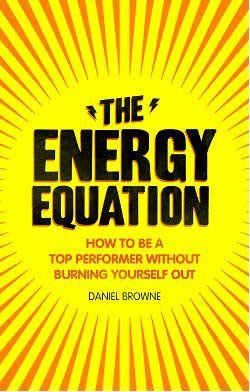
    In recent times, the healthiness of the banking profession is increasingly being raised as an issue. From traders who are at more risk of heart problems in their younger years, to investment bankers burning out or even committing suicide.Book-cover---Daniel

    In banking there will always be times where your stress levels are turned up high. When you’re in the midst of a transaction, long hours and stress are part of the deal and there seems to be little choice but just to get on with it. However by understanding how stress works, it is possible to minimize the short and long term effects of these ‘crunch’ times.

    Daniel Browne, author of The Energy Equation – how to be a top performer without burning yourself out – spent 10 years researching on how to improve performance at work without impacting wellbeing after he narrowly avoiding burnout in banking and finance. Here are some tips from his book:

    The body’s stress response is a natural and useful phenomenon. Its purpose is to ensure that we automatically react to danger quickly. To fight or to flee. For the prehistoric man these crucial moments were few and far and happened for short periods of time.

    However with modern work habits, our stress response can often be over stimulated for longer than required without any real danger. A perceived threat or danger still triggers our stress response.These periods of stress can be quite long whereas the body was only meant to be stressed for short periods of time. Over the long term, the activities of essential body functions are reduced. In stress mode vital functions are turned down; blood flow is diverted away from functions such as digestion and the immune system, making you susceptible to indigestion and illness.

    In addition frontal lobe activity necessary for critical thinking and creativity is reduced, and our reptilian brain which is more aggressive and reactive kicks in, causing us to be stressed and snappy.

    In heavy workload periods, we can become trapped in a stress cycle. Stress builds up throughout the day and is not released at the end of the day. The stress chemicals of cortisal and adrenaline in our bloodstream make it difficult to sleep and keeping us awake with worries and anxiety.

    Having a poor night of sleep then makes it even more difficult to concentrate the next day reducing productivity and further adding to the stress of the day. Repeating the cycle of poor sleep, poor productivity, stress and frustration. Kept unchecked this stress cycle can lead to health problems and eventually burnout.

    Interrupting the stress cycle can ensure that we are not overstressed, even in heavy work periods.

    To counter the stress response we need to engage the parasympathetic response, the antidote to the stress response (the sympathetic response). This takes the body to its resting state. Simply put this calms the body down and has all systems functioning normally. There are a few simple methods we can use:

    • Breathing – deep slow breathing encourages the body to relax and takes the body out of the stress response to a resting state. Breathe deeply into the abdominals so that your stomach rises when you breath rather than your chest
    • Tuning into the body. When we get used to living in a stressed state we are less sensitive to tension and pain. By paying more attention to our bodies using mindfulness or meditation we can tell when we are in a heightened stressed state and need to start to calm our bodies down.
    • One of the easiest ways to do this is to notice your heart rate. If it appears to be faster than normal this is a clear sign of stress and anxietyDaniel-Browne

    Eating
    • Avoid caffeine, sugar and artificial sweeteners, generally coffee, coke and diet coke. These will send you into energy highs and energy slumps.
    • When you are under time pressure it seems easier to grab the nearest sugary snack. But it is even more important to take care of your body. Remember you are putting yourself in a position where you are having reduced sleep and are at a high risk of stress. Your body is likely to be functioning optimally. You will need to avoid overtaxing the body. Like a high performance car you need to give yourself the best possible fuel.
    • Eat plenty of fresh vegetables and fruits. Slow release carbohydrates and lean meats. organic as much as possible is advisable. Also take a quality nutritional supplement.

    In the morning
    • Incorporate gentle physical exercise to get the body moving and your circulation going. Anything from 10 mins of stretching, simple yoga, or light exercise to a morning gym session will put you in good stead for the rest of the day.
    • Have breakfast. Have a quality breakfast which contains protein and or whole grains. Avoid sugary cereals which will make your energy levels spike.

    During the day
    • Take breaks. Often when we are busy we believe we should be saving as much time as possible. However this is a false time saving. The body needs recovery periods in the day. The body has a natural cycle of 1-2 hours so if you are finding it hard to concentrate, get up and have a break
    • Take your lunch break. When in a state of stress your digestion is impacted. Eating while stressed reduces the intake of nutrients from your food. Lunch is an opportunity to not only take in some vital fuel but also to relax.

    After work
    • Switch off after work. Let your brain recover. Clear your mind. When in a busy period your mind will be racing with things to do. The brain as an organ needs to rest as well. De-stressing by doing physical exercise shifts you out of the mind and into the body. It is a great way to de-stress.
    • A good way to switch off is to write down all the things that are on your mind and set them as actions for the next day.
    • This is especially important before bed. The brain needs to be in a state of alpha its activity is in a calm state. High brain activity makes it difficult to sleep.
    • Switch off the phone after hours or turn it down if possible. If you need to be switched on resolve to check no more than once an hour
    • Sleep hygiene. Going to bed in a heightened state makes it difficult to sleep. By relaxing before bed you ensure a better night’s sleep.
    • Aim to have 7 hours sleep a night. Studies show people who sleep 6-7 hours a night live longer. Make sure you go to bed relaxed to maximize the recovery period during your sleep.
    • If you get tired during the day incorporate a nap of 20 mins this is a great way to revitalise yourself and improve your productivity in the afternoon.

    Related Posts
    Cybersecurity as a Profit Engine: Turning Financial Services Security into Measurable Business Value
    Cybersecurity as a Profit Engine: Turning Financial Services Security into Measurable Business Value
    How Investability Helps Companies Navigate Transformational Times
    How Investability Helps Companies Navigate Transformational Times
    88% of UK and US organisations concerned about state-sponsored cyber attacks as national threat levels surge, IO research reveals
    88% of UK and US organisations concerned about state-sponsored cyber attacks as national threat levels surge, IO research reveals
    One in three SME leaders do not fully understand cash flow, despite 82% facing cash flow problems
    One in three SME leaders do not fully understand cash flow, despite 82% facing cash flow problems
    Inside the Company that Predicted the Remote Work Mega-Trend Before It Became Mainstream
    Inside the Company that Predicted the Remote Work Mega-Trend Before It Became Mainstream
    SEO Consultant Adrian Czarnoleski on How to Increase Business Value Before Exit
    SEO Consultant Adrian Czarnoleski on How to Increase Business Value Before Exit
    No SOC 2, No Deal: Why You’re Already Losing Clients - and What You Can Do About It
    No SOC 2, No Deal: Why You’re Already Losing Clients - and What You Can Do About It
    Jose Tolosa Guides Organizations Forward with Clarity, Purpose, and Integrity
    Jose Tolosa Guides Organizations Forward with Clarity, Purpose, and Integrity
    Reducing Freight Costs to Drive Global Trade Expansion
    Reducing Freight Costs to Drive Global Trade Expansion
    The Psychology of Music in the Modern Workplace
    The Psychology of Music in the Modern Workplace
    Revealed: Low-Cost/No-Cost Marketing Hacks For Results Oriented Businesses
    Revealed: Low-Cost/No-Cost Marketing Hacks For Results Oriented Businesses
    Finance teams still stuck in spreadsheets as manual processes stall digital transformation
    Finance teams still stuck in spreadsheets as manual processes stall digital transformation

    Why waste money on news and opinions when you can access them for free?

    Take advantage of our newsletter subscription and stay informed on the go!

    Subscribe

    Previous Business PostAccor Hotels research on business travellers
    Next Business PostSecurity in the private cloud – what every business needs to know

    More from Business

    Explore more articles in the Business category

    The Future of Remote & Hybrid Leadership: Leading With Data-Driven Foresight

    The Future of Remote & Hybrid Leadership: Leading With Data-Driven Foresight

    2025-2030: The Next Technological Innovations for Business

    2025-2030: The Next Technological Innovations for Business

    The CFO’s New Playbook: 5 Ways AI Is Redefining Finance with Insights from Rishi Oberoi

    The CFO’s New Playbook: 5 Ways AI Is Redefining Finance with Insights from Rishi Oberoi

    Revolutionizing Payments: Secure, Scalable, Sovereign

    Revolutionizing Payments: Secure, Scalable, Sovereign

    Why Trademark Abuse in Paid Search Is a Growing Risk for Financial Institutions

    Why Trademark Abuse in Paid Search Is a Growing Risk for Financial Institutions

    E-commerce Customer Service: Tips

    E-commerce Customer Service: Tips

    When to Automate Your Warehouse: The Tipping Point for Operations Growth

    When to Automate Your Warehouse: The Tipping Point for Operations Growth

    Hurt at Work? 5 Financial Facts You Need to Know

    Hurt at Work? 5 Financial Facts You Need to Know

    Against the Odds: Resilience in Consumer Subsectors Offers Prime Opportunities for Investors

    Against the Odds: Resilience in Consumer Subsectors Offers Prime Opportunities for Investors

    Empower Your Workforce With Financial Wellness This Labor Day

    Empower Your Workforce With Financial Wellness This Labor Day

    Build a brand that stands out with five simple strategies, from defining your UVP to using storytelling and building loyalty. Find out more.

    Build a brand that stands out with five simple strategies, from defining your UVP to using storytelling and building loyalty. Find out more.

    The Hybrid Office Playbook for Financial Services: How to Design Hybrid Offices to Optimize People and Spaces

    The Hybrid Office Playbook for Financial Services: How to Design Hybrid Offices to Optimize People and Spaces

    View All Business Posts