Search
00
GBAF Logo
trophy
Top StoriesInterviewsBusinessFinanceBankingTechnologyInvestingTradingVideosAwardsMagazinesHeadlinesTrends

Subscribe to our newsletter

Get the latest news and updates from our team.

Global Banking and Finance Review

Global Banking & Finance Review

Company

    GBAF Logo
    • About Us
    • Profile
    • Privacy & Cookie Policy
    • Terms of Use
    • Contact Us
    • Advertising
    • Submit Post
    • Latest News
    • Research Reports
    • Press Release
    • Awards▾
      • About the Awards
      • Awards TimeTable
      • Submit Nominations
      • Testimonials
      • Media Room
      • Award Winners
      • FAQ
    • Magazines▾
      • Global Banking & Finance Review Magazine Issue 79
      • Global Banking & Finance Review Magazine Issue 78
      • Global Banking & Finance Review Magazine Issue 77
      • Global Banking & Finance Review Magazine Issue 76
      • Global Banking & Finance Review Magazine Issue 75
      • Global Banking & Finance Review Magazine Issue 73
      • Global Banking & Finance Review Magazine Issue 71
      • Global Banking & Finance Review Magazine Issue 70
      • Global Banking & Finance Review Magazine Issue 69
      • Global Banking & Finance Review Magazine Issue 66
    Top StoriesInterviewsBusinessFinanceBankingTechnologyInvestingTradingVideosAwardsMagazinesHeadlinesTrends

    Global Banking & Finance Review® is a leading financial portal and online magazine offering News, Analysis, Opinion, Reviews, Interviews & Videos from the world of Banking, Finance, Business, Trading, Technology, Investing, Brokerage, Foreign Exchange, Tax & Legal, Islamic Finance, Asset & Wealth Management.
    Copyright © 2010-2025 GBAF Publications Ltd - All Rights Reserved.

    ;
    Editorial & Advertiser disclosure

    Global Banking and Finance Review is an online platform offering news, analysis, and opinion on the latest trends, developments, and innovations in the banking and finance industry worldwide. The platform covers a diverse range of topics, including banking, insurance, investment, wealth management, fintech, and regulatory issues. The website publishes news, press releases, opinion and advertorials on various financial organizations, products and services which are commissioned from various Companies, Organizations, PR agencies, Bloggers etc. These commissioned articles are commercial in nature. This is not to be considered as financial advice and should be considered only for information purposes. It does not reflect the views or opinion of our website and is not to be considered an endorsement or a recommendation. We cannot guarantee the accuracy or applicability of any information provided with respect to your individual or personal circumstances. Please seek Professional advice from a qualified professional before making any financial decisions. We link to various third-party websites, affiliate sales networks, and to our advertising partners websites. When you view or click on certain links available on our articles, our partners may compensate us for displaying the content to you or make a purchase or fill a form. This will not incur any additional charges to you. To make things simpler for you to identity or distinguish advertised or sponsored articles or links, you may consider all articles or links hosted on our site as a commercial article placement. We will not be responsible for any loss you may suffer as a result of any omission or inaccuracy on the website.

    Home > Technology > The human cost: why the financial sector is still rife with social engineering fraud
    Technology

    The human cost: why the financial sector is still rife with social engineering fraud

    The human cost: why the financial sector is still rife with social engineering fraud

    Published by Jessica Weisman-Pitts

    Posted on July 15, 2022

    Featured image for article about Technology

    By Iain Swaine,Head of Cyber Strategy EMEA, BioCatch

    Every year, there is a greater likelihood of becoming a victim of cybercrime. In the first half of 2021 in the UK, criminals stole a total of £753.9 million through fraud, an increase of over a quarter (30 per cent) compared to the first half 2020. Criminals are increasingly focusing on banks and other financial organisations with social engineering fraud.

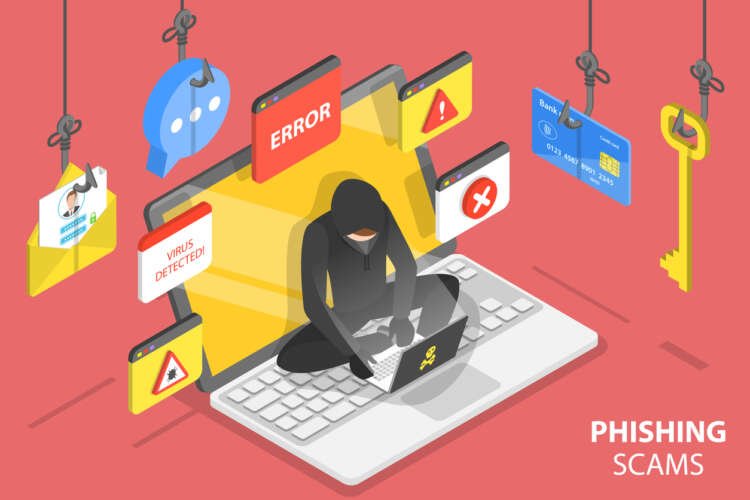
    Cybercriminals continue to take advantage of the weakest link in the security chain – people. People are error prone and make the same mistake multiple times. The inability of financial institutions from preventing us from making mistakes, makes us the weakest link in the chain. While social engineering fraud has been implemented for years, mostly in the form of phishing and vishing (voice phishing), it is growing continually.

    To combat this, behavioural biometrics-based technology can be used to confirm a person’s identity during a banking transaction without the need for additional security layers in order to detect this type of fraud.

    What is real-time fraud detection?

    Real-time fraud, also known as authorised push payment (APP) fraud, is a form of social engineering that can cause considerable financial harm. To establish the necessary authenticity, cybercriminals utilise their victims’ personal data obtained through data breaches on the dark web or captured from social media profiles. The more information available to the perpetrators, the more authentic they can appear. In doing so, they contact their victims via telephone and pretend to be a representative of a government agency, an employee of the bank or another official organisation. In this way, they can persuade the person called to transfer a certain amount of money to another account. The banks’ security processes can be bypassed because a real account holder triggers the transfer. Multi-factor authentication (MFA) thus offers no protection either.

    It is challenging to identify the fraud because it involves a real person who logs in from an authorised place and completes the authentication process using their own end device. This is because the usual checks – for example, identifying the location, the end device, or the IP – are no longer sufficient. Even out-of-band methods such as authentication with a one-time password (OTP) via SMS can be circumvented. Cybercriminals who carry out such attacks also usually have a sophisticated script and are familiar with a bank’s security practices and procedures. To make matters worse, cyber criminals use social engineering methods to elicit emotional response from their victim. Criminals will try to extract feelings of sympathy, guilt, or companionship from their victims. They will use a sense of urgency, flattery, an aura of authority or trusting dispositions. These popular methods elicit feelings such as fear, anxiety, or ease, causing victims to behave hastily or without judgement, resulting in the attacker’s desired outcome.

    How can you use Behavioural Biometrics to detect Authorized Push Payment (APP) Fraud?

    In the UK, APP fraud is on the rise, with victims losing a combined £479 million, or more than £7,000 per person. However, technologies based on behavioural biometrics can detect this type of fraud; it can be used to verify a person’s identity during the entire banking transaction. BioCatch uses data-based insights to distinguish behaviours of “real” and manipulated users. In collaboration with its customers, BioCatch has developed risk models that can be used to identify a variety of threats, as this collaborative effort is deemed essential in empowering clients and keeping consumers safe. In addition, there are clear behavioural patterns that can distinguish “real” from “fraudulent” activity during an online session and reveal manipulation by a cybercriminal:

    • Unusual duration of the session: the session lasts considerably longer than usual, and the account holder shows noticeable behaviour patterns, such as aimless mouse movements. This may indicate that the person is nervous or under pressure while waiting for instructions from a criminal.
    • Segmented keystrokes: If there are interruptions in typing, this may be a sign that the account number is being read aloud by the perpetrator, preventing routine typing.
    • Hesitation: The time required to perform simple, intuitive actions such as confirming an entry increases significantly.
    • Unusual handling of the terminal device: The orientation of the device changes frequently. This may indicate that the logged-in user repeatedly puts down or picks up his smartphone to accept the criminal’s instructions.

    Regardless of how complicated a bank’s systems and procedures are, cybercriminals who utilise social engineering to defraud organisations are highly motivated and skilled. After a successful social engineering fraud, the victim’s money is typically impossible to locate. Therefore, to protect customers from financial loss, it is imperative to detect fraud the moment it occurs. The use of behavioural biometrics can prevent significant losses, while comprehensively protecting customers and company assets. It must form the bedrock of any financial institution’s anti-fraud protection.

    Related Posts
    Financial services: a human-centric approach to managing risk
    Financial services: a human-centric approach to managing risk
    LakeFusion Secures Seed Funding to Advance AI-Native Master Data Management
    LakeFusion Secures Seed Funding to Advance AI-Native Master Data Management
    Clarity, Context, Confidence: Explainable AI and the New Era of Investor Trust
    Clarity, Context, Confidence: Explainable AI and the New Era of Investor Trust
    Data Intelligence Transforms the Future of Credit Risk Strategy
    Data Intelligence Transforms the Future of Credit Risk Strategy
    Architect of Integration Ushers in a New Era for AI in Regulated Industries
    Architect of Integration Ushers in a New Era for AI in Regulated Industries
    How One Technologist is Building Self-Healing AI Systems that Could Transform Financial Regulation
    How One Technologist is Building Self-Healing AI Systems that Could Transform Financial Regulation
    SBS is Doubling Down on SaaS to Power the Next Wave of Bank Modernization
    SBS is Doubling Down on SaaS to Power the Next Wave of Bank Modernization
    Trust Embedding: Integrating Governance into Next-Generation Data Platforms
    Trust Embedding: Integrating Governance into Next-Generation Data Platforms
    The Guardian of Connectivity: How Rohith Kumar Punithavel Is Redefining Trust in Private Networks
    The Guardian of Connectivity: How Rohith Kumar Punithavel Is Redefining Trust in Private Networks
    BNY Partners With HID and SwiftConnect to Provide Mobile Access to its Offices Around the Globe With Employee Badge in Apple Wallet
    BNY Partners With HID and SwiftConnect to Provide Mobile Access to its Offices Around the Globe With Employee Badge in Apple Wallet
    How Integral’s CTO Chidambaram Bhat is helping to solve  transfer pricing problems through cutting edge AI.
    How Integral’s CTO Chidambaram Bhat is helping to solve transfer pricing problems through cutting edge AI.
    Why Physical Infrastructure Still Matters in a Digital Economy
    Why Physical Infrastructure Still Matters in a Digital Economy

    Why waste money on news and opinions when you can access them for free?

    Take advantage of our newsletter subscription and stay informed on the go!

    Subscribe

    More from Technology

    Explore more articles in the Technology category

    Why Compliance Has Become an Engineering Problem

    Why Compliance Has Become an Engineering Problem

    Can AI-Powered Security Prevent $4.2 Billion in Banking Fraud?

    Can AI-Powered Security Prevent $4.2 Billion in Banking Fraud?

    Reimagining Human-Technology Interaction: Sagar Kesarpu’s Mission to Humanize Automation

    Reimagining Human-Technology Interaction: Sagar Kesarpu’s Mission to Humanize Automation

    LeapXpert: How financial institutions can turn shadow messaging from a risk into an opportunity

    LeapXpert: How financial institutions can turn shadow messaging from a risk into an opportunity

    Intelligence in Motion: Building Predictive Systems for Global Operations

    Intelligence in Motion: Building Predictive Systems for Global Operations

    Predictive Analytics and Strategic Operations: Strengthening Supply Chain Resilience

    Predictive Analytics and Strategic Operations: Strengthening Supply Chain Resilience

    How Nclude.ai   turned broken portals into completed applications

    How Nclude.ai turned broken portals into completed applications

    The Silent Shift: Rethinking Services for a Digital World?

    The Silent Shift: Rethinking Services for a Digital World?

    Culture as Capital: How Woxa Corporation Is Redefining Fintech Sustainability

    Culture as Capital: How Woxa Corporation Is Redefining Fintech Sustainability

    Securing the Future: We're Fixing Cyber Resilience by Finally Making Compliance Cool

    Securing the Future: We're Fixing Cyber Resilience by Finally Making Compliance Cool

    Supply chain security risks now innumerable and unmanageable for majority of cybersecurity leaders, IO research reveals

    Supply chain security risks now innumerable and unmanageable for majority of cybersecurity leaders, IO research reveals

    Why AI's Promise of Efficiency May Break Tomorrow's Workforce

    Why AI's Promise of Efficiency May Break Tomorrow's Workforce

    View All Technology Posts
    Previous Technology PostBeware the invisible enemy
    Next Technology PostHow To Combat The Growing Problem Of Synthetic Identity Fraud