Trading
The Evolution of Trading Apps: What to Expect in the Future
Published by Wanda Rich
Posted on April 2, 2025
6 min readLast updated: February 26, 2026
Add as preferred source on Google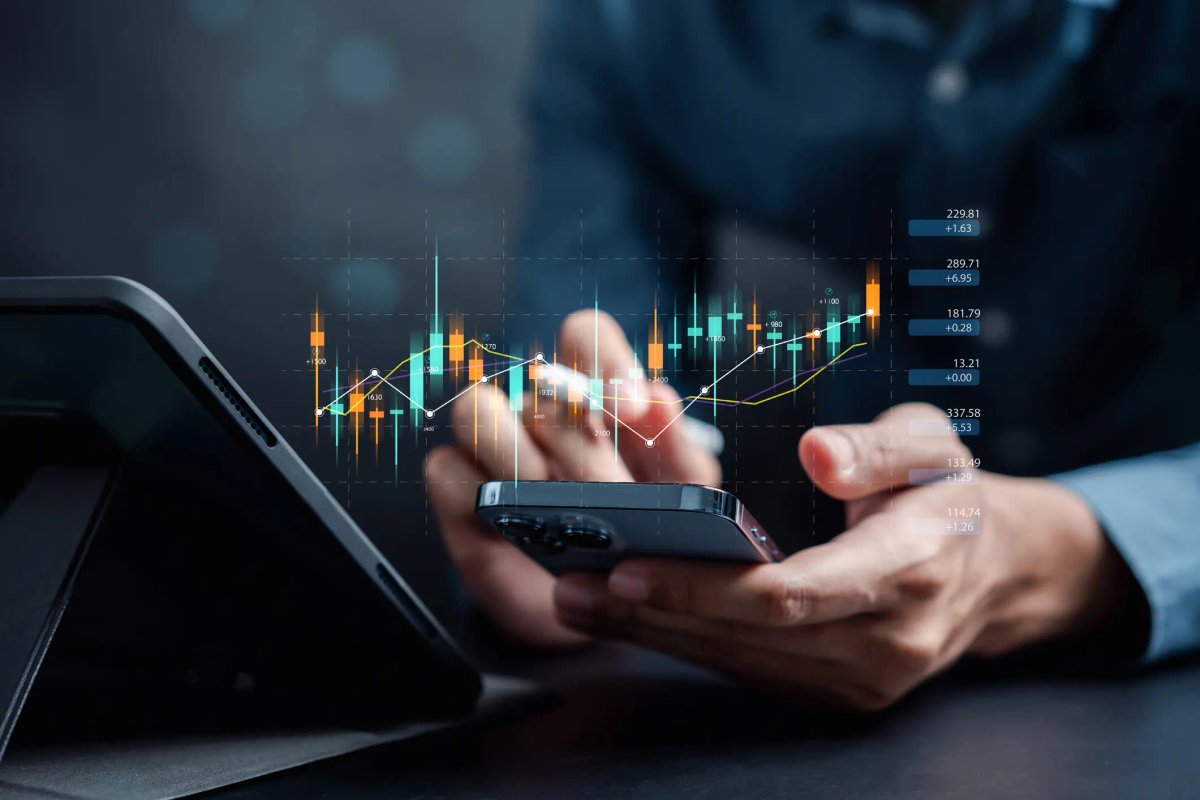
Published by Wanda Rich
Posted on April 2, 2025
6 min readLast updated: February 26, 2026
Add as preferred source on GoogleThanks to the explosion of mobile trading apps, the financial trading scene has changed dramatically in recent years. By democratizing access to financial markets, these apps enable anyone to trade stocks, FX, cryptocurrencies, and other assets from the palm of their hand.
Thanks to the explosion of mobile trading apps, the financial trading scene has changed dramatically in recent years. By democratizing access to financial markets, these apps enable anyone to trade stocks, FX, cryptocurrencies, and other assets from the palm of their hand.
From the first days of simple platforms to the advanced tools we know today, trading apps have evolved in amazing ways. Now, there is widespread use of platforms like the MT4 app from Exness, marking a significant turning point in how people manage their finances.
In this article, we will examine the past, present, and future of trading apps, exploring the main ideas that have shaped their evolution and discussing what to expect in the next few years.
Simple, feature-limited apps meant mostly as extensions of desktop systems defined the first foray into mobile trading. Early apps offered real-time market data, simple graphing tools, and order execution features. They lacked, however, the sophisticated tools and easy-to-use interfaces traders have grown to demand today.
The trading sector was transformed by the arrival of cell phones and fast mobile internet, which also helped increasingly complex and feature-rich trading apps to flourish. Accessing markets anywhere at any time greatly raised trading activity and drew in a new generation of traders.
Trading applications became ever more complex as technology developed. Advanced charting tools, technical indicators, and configurable interfaces let traders execute complicated trading plans and do thorough market analysis. Integration of real-time news feeds and economic calendars gave traders instant access to vital market data.
Traders from every corner of the world depend on these platforms, which are well-known for their strong charting ability, automated trading tools and large collections of technical indicators. These platforms have easy-to-use designs and all-encompassing capabilities, allowing both new and seasoned traders to utilize them.
Supplied by Exness, the MT4 app is the perfect example of an advanced trading platform. It’s perfect for traders looking for a consistent platform and an accessible trading experience by combining data streams straight into the mobile interface with the necessary tools.
Once its predecessor proved successful, the MT5 app became a more sophisticated and flexible trading tool. It provided improved charting capabilities, a larger spectrum of technical indicators, and support for several asset classes—stocks and futures among others. Professional traders choose the MT5 software mostly because of its enhanced performance and capacity to manage complicated trading techniques.
Artificial intelligence (AI) and machine learning (ML) have combined to change the trading app scene. Real-time analysis of enormous volumes of market data enabled by AI-powered algorithms can find intricate trends and patterns invisible to human notice. This helps traders to seize fresh possibilities and make better judgments.
Additionally, these technologies offer tailored trade suggestions, automated trading techniques, and more efficient risk management. By learning from prior market data and adjusting to evolving market conditions, ML systems help to increase the accuracy of suggestions and predictions for more accurate results.
Blockchain technology combined with decentralized finance (DeFi) is creating fresh trading software opportunities. When compared to conventional centralized exchanges, blockchain-based trading systems provide more security, openness, and efficiency. By automating transaction execution depending on pre-defined parameters, smart contracts help to lower counterparty default risk and enhance settlement times.
Applications for DeFi trading let users access lending, borrowing, and yield farming among other distributed financial services. DeFi elements should be included in conventional trading apps to further democratize access to financial markets and provide traders with additional opportunities.
In the future, trading apps will focus on offering an even more customized and user-friendly interface. Standard tools will be customizable dashboards, tailored news feeds, and AI-powered trade assistants. Natural language processing and voice recognition will help traders to more effectively and intuitively engage with their apps.
With their immersive trading experiences and improved market data visualization, augmented reality (AR) and virtual reality (VR) technologies could also be relevant in the future of trading apps.
Security and dependability will take the front stage as trading apps get more complex and interlinked. Advanced security features including biometric authentication, multi-factor authentication, and blockchain-based security protocols will be included in future apps to guard user information and money.
Dependability is also incredibly important, particularly in times of high market volatility. To guarantee that traders can carry out their transactions without interruption, trading apps ought to be able to manage growing traffic and provide consistent performance.
Among traders, social trading and community aspects are becoming increasingly popular. More strong social networking features will probably be included in future trading apps so traders may interact, exchange ideas, and forge relationships with one another.
By adding social trading features to trading apps, users would be able to quickly replicate the trades of successful, established traders. A cooperative and encouraging trade environment will also depend much on community-driven elements such as forums, chat rooms, and instructional materials.
Trading applications are only getting bigger and better, and the sector looks set to be changed by shifting user expectations and technology developments. With applications providing customized investing plans and predictive analytics, thereby addressing individual risk profiles and financial goals, we should see a boom in AI-driven personalization.
Improved AR and VR connections will likely lead to immersive trading experiences whereby users may interact with financial instruments and view market data in unique ways. Blockchain technology will enhance safety and security, building confidence in distributed trading systems. Social trading characteristics should be given more importance since they promote community-driven investment ideas and group decision-making.
Furthermore, the flawless merging of several data sources—such as sentiment analysis and news feeds—will give traders a more complete awareness of market dynamics. Finally, trading applications will have to give compliance and security first priority as regulatory environments change, therefore guaranteeing user confidence and supporting a viable future for digital trading. Accessibility, customisation, and flawless integration will define trading apps going forward so that users may confidently and efficiently negotiate the complexity of financial markets.
Explore more articles in the Trading category