Search
00
GBAF Logo
trophy
Top StoriesInterviewsBusinessFinanceBankingTechnologyInvestingTradingVideosAwardsMagazinesHeadlinesTrends

Subscribe to our newsletter

Get the latest news and updates from our team.

Global Banking & Finance Review®

Global Banking & Finance Review® - Subscribe to our newsletter

Company

    GBAF Logo
    • About Us
    • Profile
    • Privacy & Cookie Policy
    • Terms of Use
    • Contact Us
    • Advertising
    • Submit Post
    • Latest News
    • Research Reports
    • Press Release
    • Awards▾
      • About the Awards
      • Awards TimeTable
      • Submit Nominations
      • Testimonials
      • Media Room
      • Award Winners
      • FAQ
    • Magazines▾
      • Global Banking & Finance Review Magazine Issue 79
      • Global Banking & Finance Review Magazine Issue 78
      • Global Banking & Finance Review Magazine Issue 77
      • Global Banking & Finance Review Magazine Issue 76
      • Global Banking & Finance Review Magazine Issue 75
      • Global Banking & Finance Review Magazine Issue 73
      • Global Banking & Finance Review Magazine Issue 71
      • Global Banking & Finance Review Magazine Issue 70
      • Global Banking & Finance Review Magazine Issue 69
      • Global Banking & Finance Review Magazine Issue 66
    Top StoriesInterviewsBusinessFinanceBankingTechnologyInvestingTradingVideosAwardsMagazinesHeadlinesTrends

    Global Banking & Finance Review® is a leading financial portal and online magazine offering News, Analysis, Opinion, Reviews, Interviews & Videos from the world of Banking, Finance, Business, Trading, Technology, Investing, Brokerage, Foreign Exchange, Tax & Legal, Islamic Finance, Asset & Wealth Management.
    Copyright © 2010-2026 GBAF Publications Ltd - All Rights Reserved. | Sitemap | Tags | Developed By eCorpIT

    Editorial & Advertiser disclosure

    Global Banking & Finance Review® is an online platform offering news, analysis, and opinion on the latest trends, developments, and innovations in the banking and finance industry worldwide. The platform covers a diverse range of topics, including banking, insurance, investment, wealth management, fintech, and regulatory issues. The website publishes news, press releases, opinion and advertorials on various financial organizations, products and services which are commissioned from various Companies, Organizations, PR agencies, Bloggers etc. These commissioned articles are commercial in nature. This is not to be considered as financial advice and should be considered only for information purposes. It does not reflect the views or opinion of our website and is not to be considered an endorsement or a recommendation. We cannot guarantee the accuracy or applicability of any information provided with respect to your individual or personal circumstances. Please seek Professional advice from a qualified professional before making any financial decisions. We link to various third-party websites, affiliate sales networks, and to our advertising partners websites. When you view or click on certain links available on our articles, our partners may compensate us for displaying the content to you or make a purchase or fill a form. This will not incur any additional charges to you. To make things simpler for you to identity or distinguish advertised or sponsored articles or links, you may consider all articles or links hosted on our site as a commercial article placement. We will not be responsible for any loss you may suffer as a result of any omission or inaccuracy on the website.

    Home > Business > Robinhood sees retail traders taking a breather in third quarter
    Business

    Robinhood sees retail traders taking a breather in third quarter

    Published by maria gbaf

    Posted on August 19, 2021

    8 min read

    Last updated: January 21, 2026

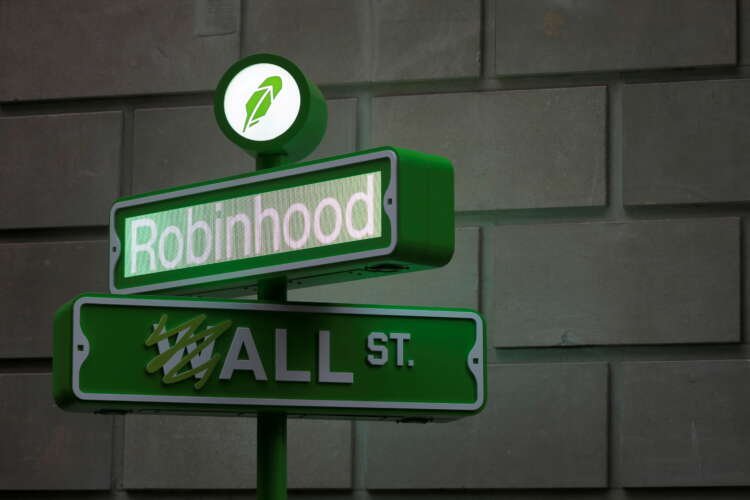
    An overview of the Robinhood trading app interface reflecting stock prices, symbolizing the retail trading dynamics discussed in the article about third-quarter trends in trading activity.
    Robinhood trading app interface showing stock prices - Global Banking & Finance Review
    Why waste money on news and opinion when you can access them for free?

    Take advantage of our newsletter subscription and stay informed on the go!

    Subscribe

    By Sohini Podder, John McCrank and Sinéad Carew

    (Reuters) – Robinhood Markets Inc expects retail investors to become less active in the third quarter, after frantic trading in crypto currencies helped more than double its revenue, the online brokerage said in its first earnings report as a public company.

    A slowdown in retail trading, which has been one of the standout phenomena of the pandemic-era, comes as the U.S. eased some coronavirus restrictions in recent weeks. One analyst said the resumption of sports and other activities likely took some of the retail interest.

    “We aren’t talking about people who are investors at all but gamblers and now that we’ve got sports back? Betting on sports is a lot more fun than betting on the stock market,” said David Trainer, chief executive officer of investment research firm New Constructs.

    The earnings report from Robinhood, owner of the trading app that emerged as the gateway for investors seeking to get in on this year’s mania for so-called meme stocks, offered a glimpse into the trajectory of a trading boom that helped spark breathtaking moves in the shares of companies such as GameStop Corp and AMC Entertainment Holdings and helped make retail investors a force to be reckoned with.

    Some analysts expressed concern about whether retail investors will continue to trade at a breakneck pace as the economy continues to reopen, or if the Federal Reserve begins to unwind the easy money policies that helped the S&P 500 double from its March 2020 lows. Another potential area of concern may be the hefty chunk of Robinhood’s revenue that comes from investors trading often volatile cryptocurrencies.

    Shares of Robinhood, which went public late last month, were recently down 8.73% in aftermarket trading.

    “For the three months ended September 30, 2021, we expect seasonal headwinds and lower trading activity across the industry to result in lower revenue and considerably fewer new funded accounts than in the prior quarter,” the company said.

    Robinhood posted net revenue of $565 million for the quarter ended June 30 compared with $244 million a year earlier. That 131% gain is above the mean analyst estimate of $521.8 million, according to Refinitive IBES.

    Monthly active users increased 109% to 21.3 million, compared to 10.2 million in the second quarter of 2020, while assets under custody increased 205% to $102 billion, compared with $33 billion a year before.

    Transactions based revenue in the quarter came to $451.2 million, with crypto transactions contributing $233.1 million, options transactions $164.6 million, and equities $52 million. Crypto trading revenue was only $5 million a year ago.

    Of the cryptocurrency transaction volume, Robinhood said trading in dogecoin – a meme-inspired cryptocurrency whose price has shot up by around 9,000% in the past year – made up 62%.

    Robinhood’s platform allows users to make unlimited commission-free trades in stocks, exchange-traded funds, options and cryptocurrencies. Its simple interface made it popular with investors trading from home during the COVID-19 pandemic and contributed to wild rides in shares of companies like GameStop, which skyrocketed by more than 1,600% in January before paring those gains, only to surge again later in the year.

    Retail stock trading levels in the current quarter remain below the peaks seen at the beginning of this year during the GameStop frenzy, according to Vanda Research.

    Some analysts believe retail investors will be less eager to take risks in a down market, potentially hurting Robinhood’s bottomline.

    Many of Robinhood’s investors “have not dealt with anything but up-markets but those markets have the realistic possibility to change as the Fed (who caused this launch) is apparently reversing,” wrote Chaim Siegel, analyst at Elazar Advisors.

    Robinhood enraged some investors and U.S. lawmakers earlier this year when it restricted trading in some popular stocks following a 10-fold rise in deposit requirements at its clearinghouse. It has been at the center of many regulatory probes.

    The bulk of Robinhood’s revenue, its transactional revenue, comes from a practice called payment for order flow (PFOF), in which retail brokers send customer orders to wholesale brokers rather than exchanges, for a slightly better execution price, along with payments from the wholesalers in return.

    The U.S. Securities and Exchange Commission is scrutinizing PFOF over concerns it might incentivize brokers to send customer orders to the places that maximize their own profit, rather than to the places that would get their customers the best execution, and other potential conflicts of interest.

    Robinhood said it does not expect PFOF to be banned, but if it is, it can find other ways to generate revenue, possibly by executing client orders internally.

    (Reporting by Sohini Podder in Bengaluru; John McCrank and Sinead Carew in New York; Additional reporting by Medha Singh; Editing by Steve Orlofsky and Stephen Coates)

    By Sohini Podder, John McCrank and Sinéad Carew

    (Reuters) – Robinhood Markets Inc expects retail investors to become less active in the third quarter, after frantic trading in crypto currencies helped more than double its revenue, the online brokerage said in its first earnings report as a public company.

    A slowdown in retail trading, which has been one of the standout phenomena of the pandemic-era, comes as the U.S. eased some coronavirus restrictions in recent weeks. One analyst said the resumption of sports and other activities likely took some of the retail interest.

    “We aren’t talking about people who are investors at all but gamblers and now that we’ve got sports back? Betting on sports is a lot more fun than betting on the stock market,” said David Trainer, chief executive officer of investment research firm New Constructs.

    The earnings report from Robinhood, owner of the trading app that emerged as the gateway for investors seeking to get in on this year’s mania for so-called meme stocks, offered a glimpse into the trajectory of a trading boom that helped spark breathtaking moves in the shares of companies such as GameStop Corp and AMC Entertainment Holdings and helped make retail investors a force to be reckoned with.

    Some analysts expressed concern about whether retail investors will continue to trade at a breakneck pace as the economy continues to reopen, or if the Federal Reserve begins to unwind the easy money policies that helped the S&P 500 double from its March 2020 lows. Another potential area of concern may be the hefty chunk of Robinhood’s revenue that comes from investors trading often volatile cryptocurrencies.

    Shares of Robinhood, which went public late last month, were recently down 8.73% in aftermarket trading.

    “For the three months ended September 30, 2021, we expect seasonal headwinds and lower trading activity across the industry to result in lower revenue and considerably fewer new funded accounts than in the prior quarter,” the company said.

    Robinhood posted net revenue of $565 million for the quarter ended June 30 compared with $244 million a year earlier. That 131% gain is above the mean analyst estimate of $521.8 million, according to Refinitive IBES.

    Monthly active users increased 109% to 21.3 million, compared to 10.2 million in the second quarter of 2020, while assets under custody increased 205% to $102 billion, compared with $33 billion a year before.

    Transactions based revenue in the quarter came to $451.2 million, with crypto transactions contributing $233.1 million, options transactions $164.6 million, and equities $52 million. Crypto trading revenue was only $5 million a year ago.

    Of the cryptocurrency transaction volume, Robinhood said trading in dogecoin – a meme-inspired cryptocurrency whose price has shot up by around 9,000% in the past year – made up 62%.

    Robinhood’s platform allows users to make unlimited commission-free trades in stocks, exchange-traded funds, options and cryptocurrencies. Its simple interface made it popular with investors trading from home during the COVID-19 pandemic and contributed to wild rides in shares of companies like GameStop, which skyrocketed by more than 1,600% in January before paring those gains, only to surge again later in the year.

    Retail stock trading levels in the current quarter remain below the peaks seen at the beginning of this year during the GameStop frenzy, according to Vanda Research.

    Some analysts believe retail investors will be less eager to take risks in a down market, potentially hurting Robinhood’s bottomline.

    Many of Robinhood’s investors “have not dealt with anything but up-markets but those markets have the realistic possibility to change as the Fed (who caused this launch) is apparently reversing,” wrote Chaim Siegel, analyst at Elazar Advisors.

    Robinhood enraged some investors and U.S. lawmakers earlier this year when it restricted trading in some popular stocks following a 10-fold rise in deposit requirements at its clearinghouse. It has been at the center of many regulatory probes.

    The bulk of Robinhood’s revenue, its transactional revenue, comes from a practice called payment for order flow (PFOF), in which retail brokers send customer orders to wholesale brokers rather than exchanges, for a slightly better execution price, along with payments from the wholesalers in return.

    The U.S. Securities and Exchange Commission is scrutinizing PFOF over concerns it might incentivize brokers to send customer orders to the places that maximize their own profit, rather than to the places that would get their customers the best execution, and other potential conflicts of interest.

    Robinhood said it does not expect PFOF to be banned, but if it is, it can find other ways to generate revenue, possibly by executing client orders internally.

    (Reporting by Sohini Podder in Bengaluru; John McCrank and Sinead Carew in New York; Additional reporting by Medha Singh; Editing by Steve Orlofsky and Stephen Coates)

    More from Business

    Explore more articles in the Business category

    Image for Empire Lending helps SMEs secure capital faster, without bank delays
    Empire Lending helps SMEs secure capital faster, without bank delays
    Image for Why Leen Kawas is Prioritizing Strategic Leadership at Propel Bio Partners
    Why Leen Kawas is Prioritizing Strategic Leadership at Propel Bio Partners
    Image for How Commercial Lending Software Platforms Are Structured and Utilized
    How Commercial Lending Software Platforms Are Structured and Utilized
    Image for Oil Traders vs. Tech Startups: Surprising Lessons from Two High-Stakes Worlds | Said Addi
    Oil Traders vs. Tech Startups: Surprising Lessons from Two High-Stakes Worlds | Said Addi
    Image for Why More Mortgage Brokers Are Choosing to Join a Network
    Why More Mortgage Brokers Are Choosing to Join a Network
    Image for From Recession Survivor to Industry Pioneer: Ed Lewis's Data Revolution
    From Recession Survivor to Industry Pioneer: Ed Lewis's Data Revolution
    Image for From Optometry to Soul Vision: The Doctor Helping Entrepreneurs Lead With Purpose
    From Optometry to Soul Vision: The Doctor Helping Entrepreneurs Lead With Purpose
    Image for Global Rankings Revealed: Top PMO Certifications Worldwide
    Global Rankings Revealed: Top PMO Certifications Worldwide
    Image for World Premiere of Midnight in the War Room to be Hosted at Black Hat Vegas
    World Premiere of Midnight in the War Room to be Hosted at Black Hat Vegas
    Image for Role of Personal Accident Cover in 2-Wheeler Insurance for Owners and Riders
    Role of Personal Accident Cover in 2-Wheeler Insurance for Owners and Riders
    Image for The Young Rich Lister Who Also Teaches: How Aaron Sansoni Built a Brand Around Execution
    The Young Rich Lister Who Also Teaches: How Aaron Sansoni Built a Brand Around Execution
    Image for Q3 2025 Priority Leadership: Tom Priore and Tim O'Leary Balance Near-Term Challenges with Long-Term Strategic Wins
    Q3 2025 Priority Leadership: Tom Priore and Tim O'Leary Balance Near-Term Challenges with Long-Term Strategic Wins
    View All Business Posts
    Previous Business PostTencent says more regulations set to come as quarterly profit jumps
    Next Business PostThe Japanese collectibles craze: how optimized ecommerce platforms are meeting global demand