
Business
Performing Under Pressure
Published by Gbaf News
Posted on August 23, 2013
8 min readLast updated: January 22, 2026
Add as preferred source on Google
Published by Gbaf News
Posted on August 23, 2013
8 min readLast updated: January 22, 2026
Add as preferred source on GoogleGary Miles, Director of International Operations and Associate Relations at Roffey Park Institute.
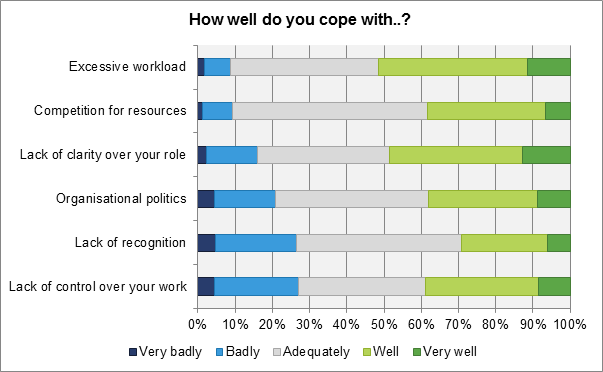
According to our recent Management Agenda 2013, managers reported that they cope at least adequately with most workplace and organisational challenges. However, nearly a quarter say that they cope badly or very badly with lack of control over their work and a lack of recognition although most report they cope adequately with an excessive workload , see figure
business-chart
In financial services, the environment is highly pressurised and for many employees who realise that pressure is a vital part of their job – they thrive on the demands of the workplace in order to perform. However there is a fine balance between thriving and struggling which needs to be paid attention to and there are some simple steps that can be taken to ensure that pressure doesn’t become overwhelming.
Of course there is no doubt that the tough economic climate and relentless pace of change will have an impact on stress levels, but there are some simple things that can be done to handle the pressure at work more efficiently.
Pull out box Top Ten Tips
1. Learn to manage your time more effectively
We waste a lot of time doing unimportant tasks, especially when pressured, so prioritise your day to leave you time to do other things. Also, don’t put off the unpleasant tasks – avoidance causes a great deal of unnecessary angst. Give unpleasant tasks a high priority and do them first.
2. Adopt a healthy lifestyle
If we eat a healthy diet, exercise regularly and ensure we get adequate sleep and rest our body is better able to cope with whatever added pressure occurs. If any of these areas are not happening for you it is usually a warning sign, don’t ignore it, ask for some help.
3. Know your limitations – don’t take on too much
We cause ourselves problems because we like people to like us and don’t want to let people down. We then end up doing more than we should. Learn to delegate effectively and be assertive so that you can say no without upsetting or offending.
4. Find out what causes you anxiety
Take time to discover what is worrying you and try to change your thoughts and behaviour to reduce it. A health assessment can help you to fully understand the causes, implications for your health and how to manage, cope and make those necessary changes.

Gary-Miles
5. Avoid unnecessary conflict
Do not be too argumentative. Look for win – win situations. Look for a resolution to a dispute where both parties can achieve a positive outcome. Find out what the real cause of the problem is and deal with it.
6. Accept the things you cannot change
Changing a difficult situation is not always possible. If this proves to be the case, recognise and accept things as they are and concentrate on all that you do have control over. Managing change effectively is essential or else performance will be reduced.
7. Take time out to relax and recharge your batteries
Alongside holidays, with at least one break of 10-14 continuous days recommended, you will perform more effectively during work after even a short 10/15 minute break, easily making up the time you used relaxing.
8. Find time to meet friends
Friends can ease work troubles and help us see things in a different way. The activities we engage in with friends help us relax and we will often have a good laugh. It boosts the immune system that is often depleted during extreme pressure. Engage in some form of physical activity. It works off the biochemical and physical changes that occur within your body. Relaxation also helps your body return to its normal healthy state. Good relaxation techniques include breathing exercises, massage and a variety of complimentary therapies.
9. Try to see things differently, develop a positive thinking style
If something is concerning you, try to see it differently. Talk over your problem with somebody before it gets out of proportion. Often, talking to a friend/colleague/tutor/family member will help you see things from a different and perspective. You may also need to consider professional help in order to achieve the desired outcome and prevent ill health or burnout.
10. Avoid alcohol, nicotine and caffeine as coping mechanisms
Long term, these faulty coping mechanisms will just add to the problem. For example, caffeine and nicotine are stimulants, too much and the body reacts to this with the response increasing or even causing anxiety symptoms. Alcohol is a depressant!
To download a free copy of The Management Agenda 2013 or a new whitepaper called “Equipping leaders to drive change in Financial Services”, please visit www.roffeypark.com
Gary Miles, Director of International Operations and Associate Relations at Roffey Park Institute.
According to our recent Management Agenda 2013, managers reported that they cope at least adequately with most workplace and organisational challenges. However, nearly a quarter say that they cope badly or very badly with lack of control over their work and a lack of recognition although most report they cope adequately with an excessive workload , see figure
business-chart
In financial services, the environment is highly pressurised and for many employees who realise that pressure is a vital part of their job – they thrive on the demands of the workplace in order to perform. However there is a fine balance between thriving and struggling which needs to be paid attention to and there are some simple steps that can be taken to ensure that pressure doesn’t become overwhelming.
Of course there is no doubt that the tough economic climate and relentless pace of change will have an impact on stress levels, but there are some simple things that can be done to handle the pressure at work more efficiently.
Pull out box Top Ten Tips
1. Learn to manage your time more effectively
We waste a lot of time doing unimportant tasks, especially when pressured, so prioritise your day to leave you time to do other things. Also, don’t put off the unpleasant tasks – avoidance causes a great deal of unnecessary angst. Give unpleasant tasks a high priority and do them first.
2. Adopt a healthy lifestyle
If we eat a healthy diet, exercise regularly and ensure we get adequate sleep and rest our body is better able to cope with whatever added pressure occurs. If any of these areas are not happening for you it is usually a warning sign, don’t ignore it, ask for some help.
3. Know your limitations – don’t take on too much
We cause ourselves problems because we like people to like us and don’t want to let people down. We then end up doing more than we should. Learn to delegate effectively and be assertive so that you can say no without upsetting or offending.
4. Find out what causes you anxiety
Take time to discover what is worrying you and try to change your thoughts and behaviour to reduce it. A health assessment can help you to fully understand the causes, implications for your health and how to manage, cope and make those necessary changes.
Gary-Miles
5. Avoid unnecessary conflict
Do not be too argumentative. Look for win – win situations. Look for a resolution to a dispute where both parties can achieve a positive outcome. Find out what the real cause of the problem is and deal with it.
6. Accept the things you cannot change
Changing a difficult situation is not always possible. If this proves to be the case, recognise and accept things as they are and concentrate on all that you do have control over. Managing change effectively is essential or else performance will be reduced.
7. Take time out to relax and recharge your batteries
Alongside holidays, with at least one break of 10-14 continuous days recommended, you will perform more effectively during work after even a short 10/15 minute break, easily making up the time you used relaxing.
8. Find time to meet friends
Friends can ease work troubles and help us see things in a different way. The activities we engage in with friends help us relax and we will often have a good laugh. It boosts the immune system that is often depleted during extreme pressure. Engage in some form of physical activity. It works off the biochemical and physical changes that occur within your body. Relaxation also helps your body return to its normal healthy state. Good relaxation techniques include breathing exercises, massage and a variety of complimentary therapies.
9. Try to see things differently, develop a positive thinking style
If something is concerning you, try to see it differently. Talk over your problem with somebody before it gets out of proportion. Often, talking to a friend/colleague/tutor/family member will help you see things from a different and perspective. You may also need to consider professional help in order to achieve the desired outcome and prevent ill health or burnout.
10. Avoid alcohol, nicotine and caffeine as coping mechanisms
Long term, these faulty coping mechanisms will just add to the problem. For example, caffeine and nicotine are stimulants, too much and the body reacts to this with the response increasing or even causing anxiety symptoms. Alcohol is a depressant!
To download a free copy of The Management Agenda 2013 or a new whitepaper called “Equipping leaders to drive change in Financial Services”, please visit www.roffeypark.com
Explore more articles in the Business category









