Search
00
GBAF Logo
trophy
Top StoriesInterviewsBusinessFinanceBankingTechnologyInvestingTradingVideosAwardsMagazinesHeadlinesTrends

Subscribe to our newsletter

Get the latest news and updates from our team.

Global Banking & Finance Review®

Global Banking & Finance Review® - Subscribe to our newsletter

Company

    GBAF Logo
    • About Us
    • Profile
    • Privacy & Cookie Policy
    • Terms of Use
    • Contact Us
    • Advertising
    • Submit Post
    • Latest News
    • Research Reports
    • Press Release
    • Awards▾
      • About the Awards
      • Awards TimeTable
      • Submit Nominations
      • Testimonials
      • Media Room
      • Award Winners
      • FAQ
    • Magazines▾
      • Global Banking & Finance Review Magazine Issue 79
      • Global Banking & Finance Review Magazine Issue 78
      • Global Banking & Finance Review Magazine Issue 77
      • Global Banking & Finance Review Magazine Issue 76
      • Global Banking & Finance Review Magazine Issue 75
      • Global Banking & Finance Review Magazine Issue 73
      • Global Banking & Finance Review Magazine Issue 71
      • Global Banking & Finance Review Magazine Issue 70
      • Global Banking & Finance Review Magazine Issue 69
      • Global Banking & Finance Review Magazine Issue 66
    Top StoriesInterviewsBusinessFinanceBankingTechnologyInvestingTradingVideosAwardsMagazinesHeadlinesTrends

    Global Banking & Finance Review® is a leading financial portal and online magazine offering News, Analysis, Opinion, Reviews, Interviews & Videos from the world of Banking, Finance, Business, Trading, Technology, Investing, Brokerage, Foreign Exchange, Tax & Legal, Islamic Finance, Asset & Wealth Management.
    Copyright © 2010-2026 GBAF Publications Ltd - All Rights Reserved. | Sitemap | Tags | Developed By eCorpIT

    Editorial & Advertiser disclosure

    Global Banking & Finance Review® is an online platform offering news, analysis, and opinion on the latest trends, developments, and innovations in the banking and finance industry worldwide. The platform covers a diverse range of topics, including banking, insurance, investment, wealth management, fintech, and regulatory issues. The website publishes news, press releases, opinion and advertorials on various financial organizations, products and services which are commissioned from various Companies, Organizations, PR agencies, Bloggers etc. These commissioned articles are commercial in nature. This is not to be considered as financial advice and should be considered only for information purposes. It does not reflect the views or opinion of our website and is not to be considered an endorsement or a recommendation. We cannot guarantee the accuracy or applicability of any information provided with respect to your individual or personal circumstances. Please seek Professional advice from a qualified professional before making any financial decisions. We link to various third-party websites, affiliate sales networks, and to our advertising partners websites. When you view or click on certain links available on our articles, our partners may compensate us for displaying the content to you or make a purchase or fill a form. This will not incur any additional charges to you. To make things simpler for you to identity or distinguish advertised or sponsored articles or links, you may consider all articles or links hosted on our site as a commercial article placement. We will not be responsible for any loss you may suffer as a result of any omission or inaccuracy on the website.

    Home > Business > Never underestimate the five-year business plan – here’s why
    Business

    Never underestimate the five-year business plan – here’s why

    Published by Jessica Weisman-Pitts

    Posted on June 20, 2022

    5 min read

    Last updated: February 6, 2026

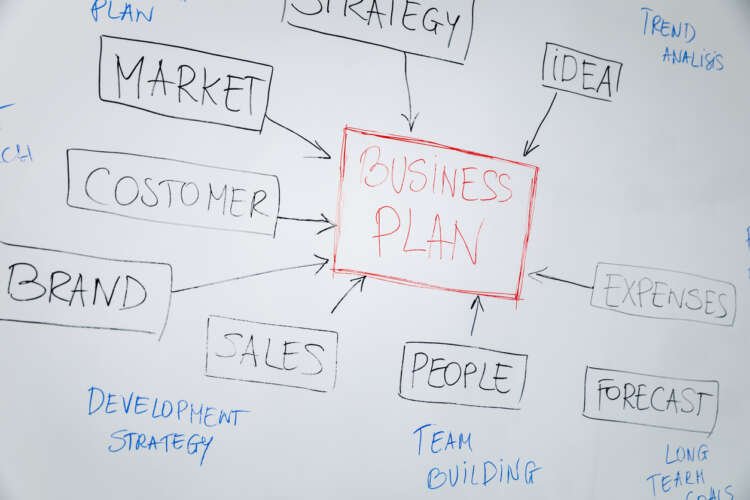
    A block diagram on a whiteboard showcasing a five-year business plan strategy, emphasizing investor confidence and growth projections. This visual aids in understanding the importance of a solid business plan in attracting investment.
    Business plan block diagram illustrating strategic growth for investors - Global Banking & Finance Review
    Why waste money on news and opinion when you can access them for free?

    Take advantage of our newsletter subscription and stay informed on the go!

    Subscribe

    Tags:venture capitalinvestmentfinancial managementgrowth opportunities

    By Anthony Rose, CEO and co-founder of SeedLegals explains the power of a business plan and why you need one

    Investors will have dozens or even hundreds of founders all pitching to them, competing for their time and investment. A 2021 survey suggested that for each deal a VC closes, they consider on average 101 opportunities.

    One impactful way to stand out is to create a strong, bullet-proof five-year business plan that investors will find hard to turn down. Both you and the potential investor know your plan is a work of fiction and the predictions you make are estimated. So what’s the point, if your plan – and that of every other founder – is just made up? How can an investor get anything of value from your five-year plan?

    Investors can extract more from a five-year plan than you might imagine – here’s what your plan needs to show to make the difference between securing investment or investors walking away.

    You’re rational and realistic

    Investors thrive off confidence. Show that you’re self-assured and optimistic about the growth of your business. Investors will be impressed with your ambition and be more inclined to put their money behind you, as long as it’s justified. You can’t just create a plan that predicts your new startup is going to make millions in a very short time – that would be unrealistic and an instant turn-off for investors.

    But you don’t have to be too modest with your future valuations. Your plan still needs to show confidence and a strategy to reach an amount that makes investing worthwhile. Your investors want to see the potential for a x10 return on investment (for angel investors) or x50 return (for VCs) to be worth their while. Investors use the predictions in your plan to determine how ambitious and motivated you are.

    The path to a unicorn is often thought of as ‘triple, triple, triple, double, double’ in five years. For example, if you start with revenue of £1 million a year, if you can triple that year-on-year three times, and then double it twice for the next two years, after five years, you’d have over £100 million a year in revenue… and that equates to a billion Pound valuation.. If you can keep your sights on that, it’s a good starting point. This model means that your business plan might show growth of 3x year-on-year for the first few years and then 2x year-on-year after that, because for all businesses, growth starts to slow after you’ve reached a certain level. If your growth shows 1.5x growth year-on-year then that sounds good but lacks ambition.

    You know what you’re talking about

    Your pitch and business plan help investors decide whether they want in or not. When you present your pitch deck, you want a page with a graph perhaps that clearly shows your ambition and goals. An astute investor is likely to ask ‘how did you get those numbers?’ This is where you need a separate spreadsheet that shows your five-year plan including: team costs, office costs and all the other costs of running your business, together with your revenue projections, market sizes, how you expect revenue to grow year-on-year, the cost of acquiring customers, lifetime value of a customer, and everything that underpins the graph in your pitch.

    It’s unlikely you’ll present this much depth to an investor to begin with, but this doesn’t mean you can cut corners. Investors who are interested in your projections are likely to ask for these details so be prepared or you might come across as embarrassingly amateur.

    Although your projections are estimations and you want to appear ambitious, you need to be careful. A few years later, if you’re not delivering the numbers you predicted, then you can bet that your investor will pull out the first pitch deck you sent them and hold you to account. If your projections are realistic, then you’ll avoid that difficult conversation.

    You’re a charismatic and numerate leader

    There’s one thing that brings everything in your pitch, plan and proposal together – you. Of course, your potential investors are analysing your documents – they’re also analysing you. While the promise of untold riches can be alluring to anyone, investors won’t invest if they can’t visualise you as the charismatic person who can deliver that promise.

    If your numbers don’t add up or the figures show that you’re losing money, then the investors will believe that you’re not ready for investment. They expect you to know how to manage the numbers.

    Do you have a clear and balanced vision? Make sure that’s clear to investors. They’ll only invest if they’re convinced your vision will lead to success. An investable proposal must strike the right balance between ambitious and realistic – and that’s what you need to show in your five-year business plan.

    Frequently Asked Questions about Never underestimate the five-year business plan – here’s why

    1What is a business plan?

    A business plan is a formal document that outlines a company's goals, the strategy to achieve them, and the resources required. It serves as a roadmap for the business and is often used to attract investors.

    2What is venture capital?

    Venture capital is a form of private equity financing that is provided by venture capital firms to startups and small businesses with long-term growth potential. It typically involves high risk but can yield high returns.

    3What is investment return?

    Investment return refers to the gain or loss made on an investment relative to the amount invested. It is usually expressed as a percentage and can include income from dividends, interest, or capital gains.

    4What is revenue projection?

    Revenue projection is an estimate of the amount of money a business expects to earn over a specific period. It is based on historical data, market analysis, and anticipated sales growth.

    More from Business

    Explore more articles in the Business category

    Image for Empire Lending helps SMEs secure capital faster, without bank delays
    Empire Lending helps SMEs secure capital faster, without bank delays
    Image for Why Leen Kawas is Prioritizing Strategic Leadership at Propel Bio Partners
    Why Leen Kawas is Prioritizing Strategic Leadership at Propel Bio Partners
    Image for How Commercial Lending Software Platforms Are Structured and Utilized
    How Commercial Lending Software Platforms Are Structured and Utilized
    Image for Oil Traders vs. Tech Startups: Surprising Lessons from Two High-Stakes Worlds | Said Addi
    Oil Traders vs. Tech Startups: Surprising Lessons from Two High-Stakes Worlds | Said Addi
    Image for Why More Mortgage Brokers Are Choosing to Join a Network
    Why More Mortgage Brokers Are Choosing to Join a Network
    Image for From Recession Survivor to Industry Pioneer: Ed Lewis's Data Revolution
    From Recession Survivor to Industry Pioneer: Ed Lewis's Data Revolution
    Image for From Optometry to Soul Vision: The Doctor Helping Entrepreneurs Lead With Purpose
    From Optometry to Soul Vision: The Doctor Helping Entrepreneurs Lead With Purpose
    Image for Global Rankings Revealed: Top PMO Certifications Worldwide
    Global Rankings Revealed: Top PMO Certifications Worldwide
    Image for World Premiere of Midnight in the War Room to be Hosted at Black Hat Vegas
    World Premiere of Midnight in the War Room to be Hosted at Black Hat Vegas
    Image for Role of Personal Accident Cover in 2-Wheeler Insurance for Owners and Riders
    Role of Personal Accident Cover in 2-Wheeler Insurance for Owners and Riders
    Image for The Young Rich Lister Who Also Teaches: How Aaron Sansoni Built a Brand Around Execution
    The Young Rich Lister Who Also Teaches: How Aaron Sansoni Built a Brand Around Execution
    Image for Q3 2025 Priority Leadership: Tom Priore and Tim O'Leary Balance Near-Term Challenges with Long-Term Strategic Wins
    Q3 2025 Priority Leadership: Tom Priore and Tim O'Leary Balance Near-Term Challenges with Long-Term Strategic Wins
    View All Business Posts
    Previous Business PostWhy customer-centric strategies are the future of Building Societies
    Next Business PostLooking beyond profit: Why a more human and environment-centric approach to banking can be expected in 10 years