Search
00
GBAF Logo
trophy
Top StoriesInterviewsBusinessFinanceBankingTechnologyInvestingTradingVideosAwardsMagazinesHeadlinesTrends

Subscribe to our newsletter

Get the latest news and updates from our team.

Global Banking and Finance Review

Global Banking & Finance Review

Company

    GBAF Logo
    • About Us
    • Profile
    • Privacy & Cookie Policy
    • Terms of Use
    • Contact Us
    • Advertising
    • Submit Post
    • Latest News
    • Research Reports
    • Press Release
    • Awards▾
      • About the Awards
      • Awards TimeTable
      • Submit Nominations
      • Testimonials
      • Media Room
      • Award Winners
      • FAQ
    • Magazines▾
      • Global Banking & Finance Review Magazine Issue 79
      • Global Banking & Finance Review Magazine Issue 78
      • Global Banking & Finance Review Magazine Issue 77
      • Global Banking & Finance Review Magazine Issue 76
      • Global Banking & Finance Review Magazine Issue 75
      • Global Banking & Finance Review Magazine Issue 73
      • Global Banking & Finance Review Magazine Issue 71
      • Global Banking & Finance Review Magazine Issue 70
      • Global Banking & Finance Review Magazine Issue 69
      • Global Banking & Finance Review Magazine Issue 66
    Top StoriesInterviewsBusinessFinanceBankingTechnologyInvestingTradingVideosAwardsMagazinesHeadlinesTrends

    Global Banking & Finance Review® is a leading financial portal and online magazine offering News, Analysis, Opinion, Reviews, Interviews & Videos from the world of Banking, Finance, Business, Trading, Technology, Investing, Brokerage, Foreign Exchange, Tax & Legal, Islamic Finance, Asset & Wealth Management.
    Copyright © 2010-2025 GBAF Publications Ltd - All Rights Reserved.

    ;
    Editorial & Advertiser disclosure

    Global Banking and Finance Review is an online platform offering news, analysis, and opinion on the latest trends, developments, and innovations in the banking and finance industry worldwide. The platform covers a diverse range of topics, including banking, insurance, investment, wealth management, fintech, and regulatory issues. The website publishes news, press releases, opinion and advertorials on various financial organizations, products and services which are commissioned from various Companies, Organizations, PR agencies, Bloggers etc. These commissioned articles are commercial in nature. This is not to be considered as financial advice and should be considered only for information purposes. It does not reflect the views or opinion of our website and is not to be considered an endorsement or a recommendation. We cannot guarantee the accuracy or applicability of any information provided with respect to your individual or personal circumstances. Please seek Professional advice from a qualified professional before making any financial decisions. We link to various third-party websites, affiliate sales networks, and to our advertising partners websites. When you view or click on certain links available on our articles, our partners may compensate us for displaying the content to you or make a purchase or fill a form. This will not incur any additional charges to you. To make things simpler for you to identity or distinguish advertised or sponsored articles or links, you may consider all articles or links hosted on our site as a commercial article placement. We will not be responsible for any loss you may suffer as a result of any omission or inaccuracy on the website.

    Home > Business > Indian auto-parts makers face job losses as EVs rev up
    Business

    Indian auto-parts makers face job losses as EVs rev up

    Indian auto-parts makers face job losses as EVs rev up

    Published by Jessica Weisman-Pitts

    Posted on November 7, 2022

    Featured image for article about Business

    By Anuradha Nagaraj

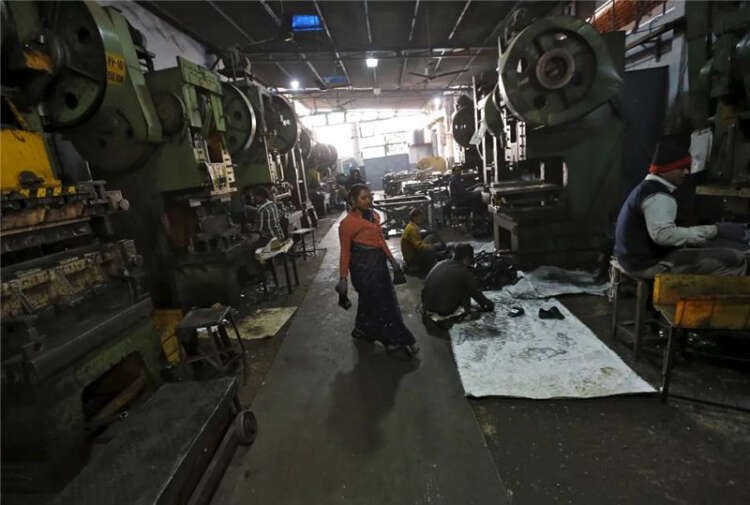
    CHENNAI, India (Thomson Reuters Foundation) – In Coimbatore, a city that manufactured one of India’s first homemade diesel engines, K. Rajesh finds himself at a crossroads as automakers rush to produce more electric vehicles (EVs).

    The boss of a local auto-component manufacturing firm in southern Tamil Nadu state, Rajesh is part of a supply chain that industry experts say will be shaken up as India accelerates its transition to EVs, to help meet its climate goals.

    “For small players like me, the rise of EVs means business will go down,” said Rajesh, who runs Autotech Engineers, a factory that makes parts for two-wheelers.

    “We are aware that the business will change, but right now I am sticking to what I know and have been doing for the last 20 years – replicating design drawings sent by companies into perfect parts. The future, however, is uncertain,” he added.

    His voice echoes the concerns of others in India’s small and medium-sized auto-component industry, whose workforce is estimated at about 5 million. Millions more are employed in informal repairs and maintenance.

    In a first, the Tamil Nadu state government initiated a mapping of this supply chain last month, in an effort to understand the impacts on companies and their workers of the transition to making cleaner cars and scooters.

    “We know for a fact that there will be a serious loss of business,” said V. Arun Roy, secretary of the Tamil Nadu department for medium, small and micro enterprises, adding that they will have to be prepared for the hit.

    “At present, there is not enough information on who and how many will be impacted. Mapping this data is essential to plan for the EV transition, which is inevitable,” he told the Thomson Reuters Foundation.

    India sees clean auto technology as central to its plans to curb its dependence on petroleum products and ease debilitating air pollution in its cities, while meeting its national commitment to cut planet-heating emissions from fossil fuel use to net-zero by 2070.

    The government is aiming for 30% of total car sales to be electric by 2030, up from EVs being just half a percent of all vehicles on Indian roads today, according to official data.

    It is offering companies billions of dollars in incentives to build clean cars and their components.

    A September study by McKinsey and Company, in collaboration with the Automotive Component Manufacturers Association (ACMA), states that about 75% of the inventory for EVs will consist of components requiring new design and manufacturing processes.

    The consultancy estimates that a transition to EVs could impact up to half of internal combustion engine (ICE) vehicle-parts suppliers – from those producing components from plastic and rubber or engine parts, to electronics makers.

    Ashwini Hingne, a senior manager in the climate programme at the World Resources Institute (WRI) India, said conversations about a “just transition” to a low-carbon economy often focus on the shift away from fossil fuels like coal but should be wider.

    “The reality is that everyone in the value chain will have to make the switch and there are many high-risk category clusters like the auto sector and the many small manufacturers in its supply chain,” said Hingne, whose research organisation is working with Tamil Nadu’s government on supply-chain mapping.

    FEWER JOBS

    Rajesh, 45, employs eight people at his manufacturing unit. Like him, many in Coimbatore run hole-in-the-wall businesses that are essential to automotive production in India.

    “The common saying is that every car in India will have at least one nut or bolt that has been manufactured here in Coimbatore,” said S Balakrishnan, who makes brake components.

    “If every street has 10 homes, then there will be 10 links to small manufacturing units. There are a lot of skilled people in these by-lanes that depend on the auto industry.”

    India is the world’s fourth-largest car market.

    Both foreign and Indian original equipment manufacturers (OEMs) rely on local auto-component makers in hubs like Coimbatore, researchers say, also pointing to the large network of garages and scrap dealers linked to the industry.

    Depending on the level of local manufacturing, a scenario with 30% electric cars by 2030 may support around 20-25% fewer jobs than the ICE industry now as EVs rely more on software and electronics, according to a 2019 report on India’s transition.

    The report by two nonprofits – the Council on Energy, Environment and Water and Shakti Sustainable Energy Foundation – said catering to the new EV jobs would require re-skilling and vocational training for the workforce.

    At a webinar earlier this year on achieving a “just transition” in the sector, hosted by government think-tank Niti Aayog and WRI India, panelists estimated that 20-40% of existing jobs would become obsolete.

    Those affected would include manufacturers, auto dealers, after-sales professionals and roadside mechanics, as EVs have fewer mechanical parts and repairs require sophisticated electronics expertise, they said.

    The “writing is on the wall” for India’s auto-component industry, which is worth more than $50 billion, said Vinnie Mehta, director general of the ACMA.

    “Manufacturers will have to diversify,” Mehta said, noting that the supply chains for two and three-wheeler vehicles would be affected first.

    “Small players need to have a vision and look at the new opportunities emerging,” he added.

    SKILLS NEEDED

    K. Dhurgairaj started GravitoTech Auto Components just a year ago, with a clear focus on tapping into the EV market.

    After spending years in the sector doing quality checks, the Coimbatore-based entrepreneur said it was the right time to start research and development on EV manufacturing components.

    His company will also need to obtain third-party certification and meet mandatory standards for EV components.

    “I want to be ready with everything when the boom happens,” he said.

    Industry experts said auto-parts makers will get government incentives to produce components for clean cars as well as to invest in advanced technologies like sensors, automatic transmission, cruise control and other electronics.

    Mehta of the ACMA said companies are already tying up with colleges to look at skills-building for the EV sector, besides exploring opportunities to train up today’s workforce.

    Dhurgairaj said investing in EVs “is a sure bet”.

    “Everyone knows this but it will not be easy for all to make the switch. It will take time, money and new skills,” he said. “We have to slowly equip ourselves for the future.”

    Originally published at:

    (Reporting by Anuradha Nagaraj; Editing by Megan Rowling. The Thomson Reuters Foundation is the charitable arm of Thomson Reuters. Visit https://www.context.news/)

    Related Posts
    Cybersecurity as a Profit Engine: Turning Financial Services Security into Measurable Business Value
    Cybersecurity as a Profit Engine: Turning Financial Services Security into Measurable Business Value
    How Investability Helps Companies Navigate Transformational Times
    How Investability Helps Companies Navigate Transformational Times
    88% of UK and US organisations concerned about state-sponsored cyber attacks as national threat levels surge, IO research reveals
    88% of UK and US organisations concerned about state-sponsored cyber attacks as national threat levels surge, IO research reveals
    One in three SME leaders do not fully understand cash flow, despite 82% facing cash flow problems
    One in three SME leaders do not fully understand cash flow, despite 82% facing cash flow problems
    Inside the Company that Predicted the Remote Work Mega-Trend Before It Became Mainstream
    Inside the Company that Predicted the Remote Work Mega-Trend Before It Became Mainstream
    SEO Consultant Adrian Czarnoleski on How to Increase Business Value Before Exit
    SEO Consultant Adrian Czarnoleski on How to Increase Business Value Before Exit
    No SOC 2, No Deal: Why You’re Already Losing Clients - and What You Can Do About It
    No SOC 2, No Deal: Why You’re Already Losing Clients - and What You Can Do About It
    Jose Tolosa Guides Organizations Forward with Clarity, Purpose, and Integrity
    Jose Tolosa Guides Organizations Forward with Clarity, Purpose, and Integrity
    Reducing Freight Costs to Drive Global Trade Expansion
    Reducing Freight Costs to Drive Global Trade Expansion
    The Psychology of Music in the Modern Workplace
    The Psychology of Music in the Modern Workplace
    Revealed: Low-Cost/No-Cost Marketing Hacks For Results Oriented Businesses
    Revealed: Low-Cost/No-Cost Marketing Hacks For Results Oriented Businesses
    Finance teams still stuck in spreadsheets as manual processes stall digital transformation
    Finance teams still stuck in spreadsheets as manual processes stall digital transformation

    Why waste money on news and opinions when you can access them for free?

    Take advantage of our newsletter subscription and stay informed on the go!

    Subscribe

    Previous Business PostEU wants Airbnb, rivals to share bookings data with authorities
    Next Business PostRenault’s talks with Geely complicated by Nissan concerns -sources

    More from Business

    Explore more articles in the Business category

    The Future of Remote & Hybrid Leadership: Leading With Data-Driven Foresight

    The Future of Remote & Hybrid Leadership: Leading With Data-Driven Foresight

    2025-2030: The Next Technological Innovations for Business

    2025-2030: The Next Technological Innovations for Business

    The CFO’s New Playbook: 5 Ways AI Is Redefining Finance with Insights from Rishi Oberoi

    The CFO’s New Playbook: 5 Ways AI Is Redefining Finance with Insights from Rishi Oberoi

    Revolutionizing Payments: Secure, Scalable, Sovereign

    Revolutionizing Payments: Secure, Scalable, Sovereign

    Why Trademark Abuse in Paid Search Is a Growing Risk for Financial Institutions

    Why Trademark Abuse in Paid Search Is a Growing Risk for Financial Institutions

    E-commerce Customer Service: Tips

    E-commerce Customer Service: Tips

    When to Automate Your Warehouse: The Tipping Point for Operations Growth

    When to Automate Your Warehouse: The Tipping Point for Operations Growth

    Hurt at Work? 5 Financial Facts You Need to Know

    Hurt at Work? 5 Financial Facts You Need to Know

    Against the Odds: Resilience in Consumer Subsectors Offers Prime Opportunities for Investors

    Against the Odds: Resilience in Consumer Subsectors Offers Prime Opportunities for Investors

    Empower Your Workforce With Financial Wellness This Labor Day

    Empower Your Workforce With Financial Wellness This Labor Day

    Build a brand that stands out with five simple strategies, from defining your UVP to using storytelling and building loyalty. Find out more.

    Build a brand that stands out with five simple strategies, from defining your UVP to using storytelling and building loyalty. Find out more.

    The Hybrid Office Playbook for Financial Services: How to Design Hybrid Offices to Optimize People and Spaces

    The Hybrid Office Playbook for Financial Services: How to Design Hybrid Offices to Optimize People and Spaces

    View All Business Posts