Search
00
GBAF Logo
trophy
Top StoriesInterviewsBusinessFinanceBankingTechnologyInvestingTradingVideosAwardsMagazinesHeadlinesTrends

Subscribe to our newsletter

Get the latest news and updates from our team.

Global Banking and Finance Review

Global Banking and Finance Review - Subscribe to our newsletter

Company

    GBAF Logo
    • About Us
    • Profile
    • Privacy & Cookie Policy
    • Terms of Use
    • Contact Us
    • Advertising
    • Submit Post
    • Latest News
    • Research Reports
    • Press Release
    • Awards▾
      • About the Awards
      • Awards TimeTable
      • Submit Nominations
      • Testimonials
      • Media Room
      • Award Winners
      • FAQ
    • Magazines▾
      • Global Banking & Finance Review Magazine Issue 79
      • Global Banking & Finance Review Magazine Issue 78
      • Global Banking & Finance Review Magazine Issue 77
      • Global Banking & Finance Review Magazine Issue 76
      • Global Banking & Finance Review Magazine Issue 75
      • Global Banking & Finance Review Magazine Issue 73
      • Global Banking & Finance Review Magazine Issue 71
      • Global Banking & Finance Review Magazine Issue 70
      • Global Banking & Finance Review Magazine Issue 69
      • Global Banking & Finance Review Magazine Issue 66
    Top StoriesInterviewsBusinessFinanceBankingTechnologyInvestingTradingVideosAwardsMagazinesHeadlinesTrends

    Global Banking & Finance Review® is a leading financial portal and online magazine offering News, Analysis, Opinion, Reviews, Interviews & Videos from the world of Banking, Finance, Business, Trading, Technology, Investing, Brokerage, Foreign Exchange, Tax & Legal, Islamic Finance, Asset & Wealth Management.
    Copyright © 2010-2026 GBAF Publications Ltd - All Rights Reserved. | Sitemap | Tags | Developed By eCorpIT

    Editorial & Advertiser disclosure

    Global Banking and Finance Review is an online platform offering news, analysis, and opinion on the latest trends, developments, and innovations in the banking and finance industry worldwide. The platform covers a diverse range of topics, including banking, insurance, investment, wealth management, fintech, and regulatory issues. The website publishes news, press releases, opinion and advertorials on various financial organizations, products and services which are commissioned from various Companies, Organizations, PR agencies, Bloggers etc. These commissioned articles are commercial in nature. This is not to be considered as financial advice and should be considered only for information purposes. It does not reflect the views or opinion of our website and is not to be considered an endorsement or a recommendation. We cannot guarantee the accuracy or applicability of any information provided with respect to your individual or personal circumstances. Please seek Professional advice from a qualified professional before making any financial decisions. We link to various third-party websites, affiliate sales networks, and to our advertising partners websites. When you view or click on certain links available on our articles, our partners may compensate us for displaying the content to you or make a purchase or fill a form. This will not incur any additional charges to you. To make things simpler for you to identity or distinguish advertised or sponsored articles or links, you may consider all articles or links hosted on our site as a commercial article placement. We will not be responsible for any loss you may suffer as a result of any omission or inaccuracy on the website.

    Home > How To > How To Find Partial Pressure?
    How To

    How To Find Partial Pressure?

    Published by Gbaf News

    Posted on January 3, 2018

    4 min read

    Last updated: January 21, 2026

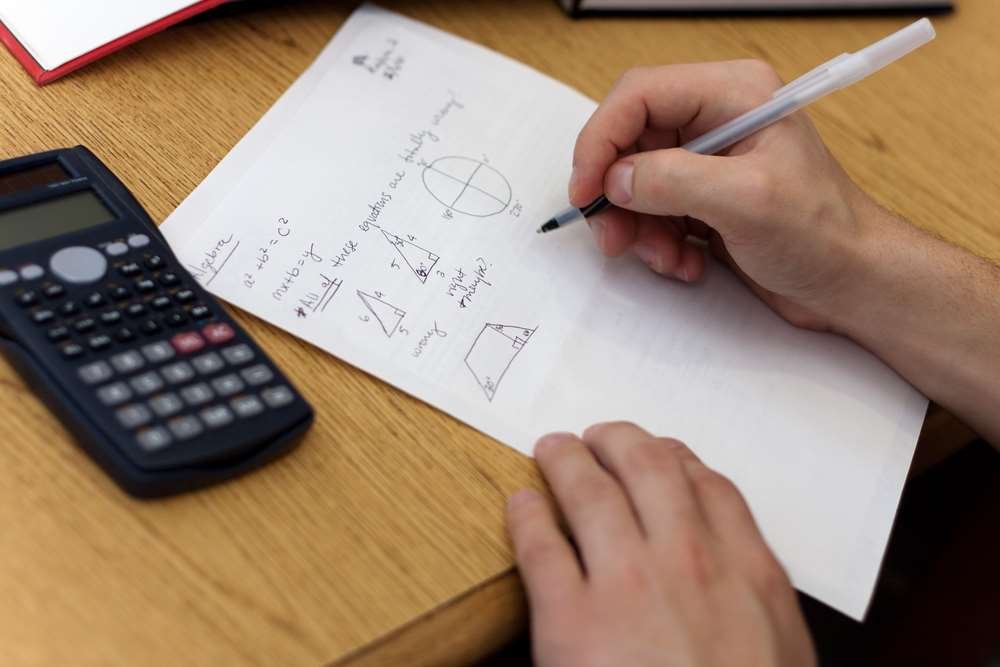
    An informative diagram demonstrating the concept of partial pressure in gas mixtures. This image relates to the article's exploration of calculating partial pressure, showcasing key principles like Boyle's Law and Charles's Law.
    Diagram illustrating partial pressure principles in gas mixtures - Global Banking & Finance Review
    Why waste money on news and opinion when you can access them for free?

    Take advantage of our newsletter subscription and stay informed on the go!

    Subscribe

    Tags:constant relationshipGas lawPartial Pressurevolume and temperature

    Partial Pressure is a chemical term referring to the pressure given by each particle inside gas mixture against its surroundings. If you know the amount of gas present in the container, you can count partial pressure being exerted on the surface. You can find each force by each particle and add them to see the whole weight of the gas mixture. Or else you can also find the total weight and then divide it to get the pressure exerted by per particle.

    Let’s explore these methods to know the way to find Partial Pressure.

    The Properties Of Gas:

    In chemistry, an ideal gas is that type of gas which interacts with other particles without reacting to their molecules. These noble gases can collide with each other and bounce off like billiard balls without being deformed in any way.

    The pressure of ideal gas is inversely proportional to the space they are given into. If an area is small, then the force exerted by the gas-particle will be high and in the same manner, if space is ample, then the weight will be less. This property of Ideal gas is also known as the Boyle’s Law. The naming is done after the philosopher, Robert Boyle.

    The temperature of an ideal gas is directly proportional to their volume as in, the temperature increases when the volume of the gas increases. In the same manner, the temperature decreases upon the decrease of Volume. This property of Gas is known as the Charle’s Law, After the French scientist Jacques Charles.

    The pressure of the gas is given by the unit of Pascal (Pa) or atmosphere (atm) whereas the group of degrees Kelvin provides the temperature.

    If you write Robert’s law in the mathematical term, it’ll be like this: k = P x V

    Or you can say, k = PV where k represents the constant relationship, P represents pressure and V represents volume.

    If you write Charle’s Law in the mathematical term, then it’ll be k = V / T where k is the constant relationship between the volume and temperature, V is the volume, and T is temperature.

    If you write combining both of the law, it’ll be k = PV / T, which can also be written as PV = kT (The gas Equation).

    If we try to understand the volume and mass of the gas, per particle their weight and amount will be so small to calculate. So to avoid confusions, the mass of gas is calculated by molecular mass and the volume by moles. Now, we can rewrite the gas equation by replacing the constant k with the product of n, the number of moles (mol), and a new constant R. The new equation will look like,

    nR=PV/T or PV = nRT.

    The units used to measure the gases’ pressures, volumes, and temperatures define the R in the equation.

    To calculate Partial Pressure we also need to know the Dalton’s Law. If we write Dalton’s Law in equation form it will be Ptotal = P1 + P2 + P3 … as per the no. of particles. Chemist and physicist John Dalton developed this law. It states that the total pressure of a gas mixture is the sum of the pressures of each of the gases in the mixture. If we substitute each P by the gas law, then it’ll be, Ptotal =(nRT/V)1 + (nRT/V)2 + (nRT/V)3 … {*The Final Law}

    As we discussed earlier, we can find each pressure by each particle and add them to see the whole weight of the gas mixture. Or else you can also find the total weight and then divide it to get the pressure exerted by per particle. You can input the values of each particle in the final law and then calculate the total weight.

    More from How To

    Explore more articles in the How To category

    Image for GradesFixer’s Guide to Effective Memoir Essay
    GradesFixer’s Guide to Effective Memoir Essay
    Image for How to apply for a personal loan online
    How to apply for a personal loan online
    Image for Identity theft: how to protect yourself from financial fraud and scams
    Identity theft: how to protect yourself from financial fraud and scams
    Image for Frugal living: tips and strategies for living on a tight budget
    Frugal living: tips and strategies for living on a tight budget
    Image for The Benefits of Building an Emergency Fund and How to Build an Emergency Fund
    The Benefits of Building an Emergency Fund and How to Build an Emergency Fund
    Image for How to Negotiate a Better Salary and Benefits Package: A Comprehensive Guide
    How to Negotiate a Better Salary and Benefits Package: A Comprehensive Guide
    Image for How to Manage Financial Stress and Anxiety
    How to Manage Financial Stress and Anxiety
    Image for Real estate: First time home buyer tips
    Real estate: First time home buyer tips
    Image for Credit Repair: How to improve your credit score
    Credit Repair: How to improve your credit score
    Image for How to find the right location for your warehouse space
    How to find the right location for your warehouse space
    Image for How To Make The Perfect IT Resume To Stand Out
    How To Make The Perfect IT Resume To Stand Out
    Image for What does the interest rate hike mean for businesses – and how are they coping?
    What does the interest rate hike mean for businesses – and how are they coping?
    View All How To Posts
    Previous How To PostHow to send a letter
    Next How To PostHow To Find The Volume Of A Triangular Prism