Search
00
GBAF Logo
trophy
Top StoriesInterviewsBusinessFinanceBankingTechnologyInvestingTradingVideosAwardsMagazinesHeadlinesTrends

Subscribe to our newsletter

Get the latest news and updates from our team.

Global Banking and Finance Review

Global Banking & Finance Review

Company

    GBAF Logo
    • About Us
    • Profile
    • Privacy & Cookie Policy
    • Terms of Use
    • Contact Us
    • Advertising
    • Submit Post
    • Latest News
    • Research Reports
    • Press Release
    • Awards▾
      • About the Awards
      • Awards TimeTable
      • Submit Nominations
      • Testimonials
      • Media Room
      • Award Winners
      • FAQ
    • Magazines▾
      • Global Banking & Finance Review Magazine Issue 79
      • Global Banking & Finance Review Magazine Issue 78
      • Global Banking & Finance Review Magazine Issue 77
      • Global Banking & Finance Review Magazine Issue 76
      • Global Banking & Finance Review Magazine Issue 75
      • Global Banking & Finance Review Magazine Issue 73
      • Global Banking & Finance Review Magazine Issue 71
      • Global Banking & Finance Review Magazine Issue 70
      • Global Banking & Finance Review Magazine Issue 69
      • Global Banking & Finance Review Magazine Issue 66
    Top StoriesInterviewsBusinessFinanceBankingTechnologyInvestingTradingVideosAwardsMagazinesHeadlinesTrends

    Global Banking & Finance Review® is a leading financial portal and online magazine offering News, Analysis, Opinion, Reviews, Interviews & Videos from the world of Banking, Finance, Business, Trading, Technology, Investing, Brokerage, Foreign Exchange, Tax & Legal, Islamic Finance, Asset & Wealth Management.
    Copyright © 2010-2025 GBAF Publications Ltd - All Rights Reserved.

    ;
    Editorial & Advertiser disclosure

    Global Banking and Finance Review is an online platform offering news, analysis, and opinion on the latest trends, developments, and innovations in the banking and finance industry worldwide. The platform covers a diverse range of topics, including banking, insurance, investment, wealth management, fintech, and regulatory issues. The website publishes news, press releases, opinion and advertorials on various financial organizations, products and services which are commissioned from various Companies, Organizations, PR agencies, Bloggers etc. These commissioned articles are commercial in nature. This is not to be considered as financial advice and should be considered only for information purposes. It does not reflect the views or opinion of our website and is not to be considered an endorsement or a recommendation. We cannot guarantee the accuracy or applicability of any information provided with respect to your individual or personal circumstances. Please seek Professional advice from a qualified professional before making any financial decisions. We link to various third-party websites, affiliate sales networks, and to our advertising partners websites. When you view or click on certain links available on our articles, our partners may compensate us for displaying the content to you or make a purchase or fill a form. This will not incur any additional charges to you. To make things simpler for you to identity or distinguish advertised or sponsored articles or links, you may consider all articles or links hosted on our site as a commercial article placement. We will not be responsible for any loss you may suffer as a result of any omission or inaccuracy on the website.

    Home > Business > How payment solutions have closed the technology gap
    Business

    How payment solutions have closed the technology gap

    How payment solutions have closed the technology gap

    Published by Gbaf News

    Posted on February 19, 2020

    Featured image for article about Business

    By Steve Villegas, VP Payment Partnerships, North America at PPRO

    Over the last decade, we have seen an explosion in FinTech usher in a new era of commerce. Payment innovations and new solutions have closed the technology gap and have connected consumers all around the world — even those without bank accounts — to the digital marketplace. Many fast-emerging markets across Asia and Latin America have seen breakthroughs in delivering pragmatic payment solutions to meet the needs of their region’s consumers.

    These local payment methods – formerly known as alternative payment methods until they ceased to be the alternative – have adapted to the cultural and economic factors of these geographies to offer a seamless and catered payment experience. FinTech innovations have enabled shortcuts in building infrastructure, allowing many countries to achieve fast results. Some regions have altogether leapfrogged certain legacy financial systems. And digital progress across the globe isn’t slowing down.

    The Importance of Cash-Based Payment Solutions 

    The transformation of payment technologies provides solutions for those regions missing what was once considered fundamental infrastructure. But these solutions still have to apply to the needs of specific consumers.

     For example, research shows that 38.3% of the population of Latin America, is unbanked. This makes it essential to source payment solutions that aren’t tied to banking institutions or credit cards. Further, 17% of online transactions in Latin America are cash-based. The region has adopted many cash-voucher payment methods to give unbanked and cash-dependent consumers access to global e-commerce. These solutions, like RapiPago in Argentina and BoletoBancario in Brazil, are a product of the leapfrog effect. Because of this and many other factors, the region has seen a 22.9% increase in B2C e-commerce growth in the last year.

    Mobile Device Penetration Has Transformed E-commerce

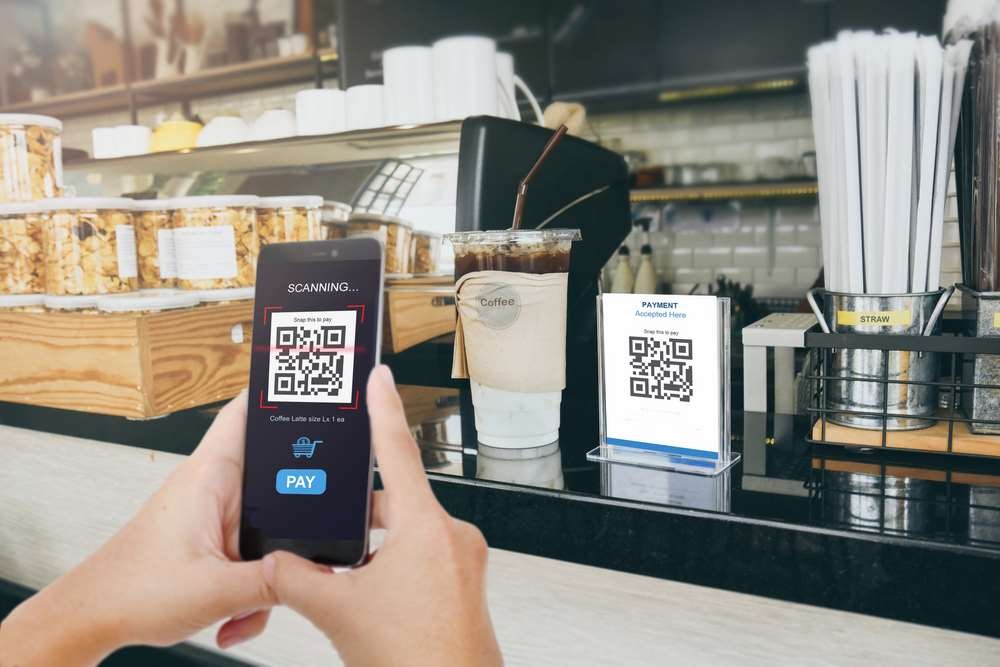
     This phenomenon is not just limited to the LATAM region. In China, credit card usage for online transactions is fairly low at 22%, compared to mobile e-wallets at 55.7%. Chinese consumers went directly from paying with cash to using mobile payments, skipping over the widespread adoption of credit cards in the process. The creation of QR codes and payment platforms like WeChat Pay and Alipay were developed in direct response to consumer needs and preferences.

    Further, across the APAC region, there is a 50.1% internet penetration and 51.4% smartphone penetration, which jumps much higher in markets like Hong Kong (89.4% and 76%) and South Korea (95.1% and 94%). Consumers across APAC have embraced mobile technologies faster than many other regions. 57.5% of e-commerce transactions in APAC are completed on a mobile device.

    Payment Adoption is Inherently Tied to Consumer Needs

    A key reason many countries like China were able to leapfrog card-based payments was the mobile phone. There is a low barrier to financial entry now, as anyone with a mobile device is able to participate in the exchange of funds. A smartphone is essentially a virtual bank account. A great example of this is Southeastern Asia’s payment method GrabPay. What started out as food delivery and on-demand taxi app has now become a payment method ingrained in the lives of 115 million consumers in that region.

    Similarly, in China, WeChat Pay, Alipay and UnionPay dominate the market share as they have become a part of many consumers’ daily routines. While in Mexico, Oxxo is a widely used cash-voucher system that gives consumers access to e-commerce through their local convenience store.

    Unbanked, underbanked and cash-preferring consumers face challenges buying online. But instead of the intensive process of developing nation-wide banking infrastructure with the uphill battle of adoption, these regions have created payment solutions that leapfrog this step to give consumers a viable payment method for their needs today.

    Local payment methods were born out of the needs of consumers, and are specific to the economic and cultural factors of their region. On the global stage, card-based payments will not be effective. Around the world, local payment methods comprise 77% of total e-commerce spend, and that number will only continue to rise.

    Related Posts
    Cybersecurity as a Profit Engine: Turning Financial Services Security into Measurable Business Value
    Cybersecurity as a Profit Engine: Turning Financial Services Security into Measurable Business Value
    How Investability Helps Companies Navigate Transformational Times
    How Investability Helps Companies Navigate Transformational Times
    88% of UK and US organisations concerned about state-sponsored cyber attacks as national threat levels surge, IO research reveals
    88% of UK and US organisations concerned about state-sponsored cyber attacks as national threat levels surge, IO research reveals
    One in three SME leaders do not fully understand cash flow, despite 82% facing cash flow problems
    One in three SME leaders do not fully understand cash flow, despite 82% facing cash flow problems
    Inside the Company that Predicted the Remote Work Mega-Trend Before It Became Mainstream
    Inside the Company that Predicted the Remote Work Mega-Trend Before It Became Mainstream
    SEO Consultant Adrian Czarnoleski on How to Increase Business Value Before Exit
    SEO Consultant Adrian Czarnoleski on How to Increase Business Value Before Exit
    No SOC 2, No Deal: Why You’re Already Losing Clients - and What You Can Do About It
    No SOC 2, No Deal: Why You’re Already Losing Clients - and What You Can Do About It
    Jose Tolosa Guides Organizations Forward with Clarity, Purpose, and Integrity
    Jose Tolosa Guides Organizations Forward with Clarity, Purpose, and Integrity
    Reducing Freight Costs to Drive Global Trade Expansion
    Reducing Freight Costs to Drive Global Trade Expansion
    The Psychology of Music in the Modern Workplace
    The Psychology of Music in the Modern Workplace
    Revealed: Low-Cost/No-Cost Marketing Hacks For Results Oriented Businesses
    Revealed: Low-Cost/No-Cost Marketing Hacks For Results Oriented Businesses
    Finance teams still stuck in spreadsheets as manual processes stall digital transformation
    Finance teams still stuck in spreadsheets as manual processes stall digital transformation

    Why waste money on news and opinions when you can access them for free?

    Take advantage of our newsletter subscription and stay informed on the go!

    Subscribe

    More from Business

    Explore more articles in the Business category

    The Future of Remote & Hybrid Leadership: Leading With Data-Driven Foresight

    The Future of Remote & Hybrid Leadership: Leading With Data-Driven Foresight

    2025-2030: The Next Technological Innovations for Business

    2025-2030: The Next Technological Innovations for Business

    The CFO’s New Playbook: 5 Ways AI Is Redefining Finance with Insights from Rishi Oberoi

    The CFO’s New Playbook: 5 Ways AI Is Redefining Finance with Insights from Rishi Oberoi

    Revolutionizing Payments: Secure, Scalable, Sovereign

    Revolutionizing Payments: Secure, Scalable, Sovereign

    Why Trademark Abuse in Paid Search Is a Growing Risk for Financial Institutions

    Why Trademark Abuse in Paid Search Is a Growing Risk for Financial Institutions

    E-commerce Customer Service: Tips

    E-commerce Customer Service: Tips

    When to Automate Your Warehouse: The Tipping Point for Operations Growth

    When to Automate Your Warehouse: The Tipping Point for Operations Growth

    Hurt at Work? 5 Financial Facts You Need to Know

    Hurt at Work? 5 Financial Facts You Need to Know

    Against the Odds: Resilience in Consumer Subsectors Offers Prime Opportunities for Investors

    Against the Odds: Resilience in Consumer Subsectors Offers Prime Opportunities for Investors

    Empower Your Workforce With Financial Wellness This Labor Day

    Empower Your Workforce With Financial Wellness This Labor Day

    Build a brand that stands out with five simple strategies, from defining your UVP to using storytelling and building loyalty. Find out more.

    Build a brand that stands out with five simple strategies, from defining your UVP to using storytelling and building loyalty. Find out more.

    The Hybrid Office Playbook for Financial Services: How to Design Hybrid Offices to Optimize People and Spaces

    The Hybrid Office Playbook for Financial Services: How to Design Hybrid Offices to Optimize People and Spaces

    View All Business Posts
    Previous Business PostFive steps to boost your purchase-to-pay effectiveness
    Next Business PostDoes the coronavirus constitute force majeure for shipping businesses