Search
00
GBAF Logo
trophy
Top StoriesInterviewsBusinessFinanceBankingTechnologyInvestingTradingVideosAwardsMagazinesHeadlinesTrends

Subscribe to our newsletter

Get the latest news and updates from our team.

Global Banking & Finance Review®

Global Banking & Finance Review® - Subscribe to our newsletter

Company

    GBAF Logo
    • About Us
    • Profile
    • Privacy & Cookie Policy
    • Terms of Use
    • Contact Us
    • Advertising
    • Submit Post
    • Latest News
    • Research Reports
    • Press Release
    • Awards▾
      • About the Awards
      • Awards TimeTable
      • Submit Nominations
      • Testimonials
      • Media Room
      • Award Winners
      • FAQ
    • Magazines▾
      • Global Banking & Finance Review Magazine Issue 79
      • Global Banking & Finance Review Magazine Issue 78
      • Global Banking & Finance Review Magazine Issue 77
      • Global Banking & Finance Review Magazine Issue 76
      • Global Banking & Finance Review Magazine Issue 75
      • Global Banking & Finance Review Magazine Issue 73
      • Global Banking & Finance Review Magazine Issue 71
      • Global Banking & Finance Review Magazine Issue 70
      • Global Banking & Finance Review Magazine Issue 69
      • Global Banking & Finance Review Magazine Issue 66
    Top StoriesInterviewsBusinessFinanceBankingTechnologyInvestingTradingVideosAwardsMagazinesHeadlinesTrends

    Global Banking & Finance Review® is a leading financial portal and online magazine offering News, Analysis, Opinion, Reviews, Interviews & Videos from the world of Banking, Finance, Business, Trading, Technology, Investing, Brokerage, Foreign Exchange, Tax & Legal, Islamic Finance, Asset & Wealth Management.
    Copyright © 2010-2026 GBAF Publications Ltd - All Rights Reserved. | Sitemap | Tags | Developed By eCorpIT

    Editorial & Advertiser disclosure

    Global Banking & Finance Review® is an online platform offering news, analysis, and opinion on the latest trends, developments, and innovations in the banking and finance industry worldwide. The platform covers a diverse range of topics, including banking, insurance, investment, wealth management, fintech, and regulatory issues. The website publishes news, press releases, opinion and advertorials on various financial organizations, products and services which are commissioned from various Companies, Organizations, PR agencies, Bloggers etc. These commissioned articles are commercial in nature. This is not to be considered as financial advice and should be considered only for information purposes. It does not reflect the views or opinion of our website and is not to be considered an endorsement or a recommendation. We cannot guarantee the accuracy or applicability of any information provided with respect to your individual or personal circumstances. Please seek Professional advice from a qualified professional before making any financial decisions. We link to various third-party websites, affiliate sales networks, and to our advertising partners websites. When you view or click on certain links available on our articles, our partners may compensate us for displaying the content to you or make a purchase or fill a form. This will not incur any additional charges to you. To make things simpler for you to identity or distinguish advertised or sponsored articles or links, you may consider all articles or links hosted on our site as a commercial article placement. We will not be responsible for any loss you may suffer as a result of any omission or inaccuracy on the website.

    Home > Business > How Germany’s parties say they will revive its anaemic economy
    Business

    How Germany’s parties say they will revive its anaemic economy

    Published by Uma Rajagopal

    Posted on December 17, 2024

    4 min read

    Last updated: January 28, 2026

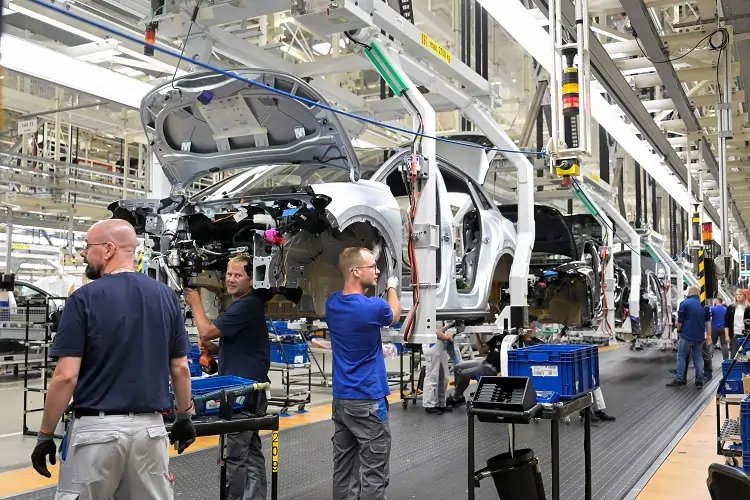
    Image depicting key German political leaders as they unveil their economic strategies to revive Germany's struggling economy amidst a looming snap election. This relates to the article's focus on party proposals to stimulate growth and investment.
    Political leaders discussing economic revival strategies in Germany - Global Banking & Finance Review
    Why waste money on news and opinion when you can access them for free?

    Take advantage of our newsletter subscription and stay informed on the go!

    Subscribe

    Tags:GDPeconomic growthfinancial marketscorporate taxinvestment portfolios

    Table of Contents

    • SPD
    • CDU/CSU
    • GREENS
    • FDP
    • AfD

    By Maria Martinez

    BERLIN (Reuters) -Germany’s main political parties will present their election programmes on Tuesday, a day after parliament backed a no-confidence motion in Chancellor Olaf Scholz’s government, paving the way for a snap election on Feb. 23.

    Disagreements over how to save Europe’s largest economy had been the main factor behind the collapse of Scholz’s fractious three-party coalition last month, and the economy is the top concern of German voters.

    Germany has gone from being Europe’s economic powerhouse to underperforming its major euro zone peers. The economy is expected to contract in 2024 for the second consecutive year.

    Here is what is known so far about the parties’ key economic proposals and their stance on a potential reform of the constitutionally enshrined debt brake:

    SPD

    Scholz’s centre-left Social Democrats (SPD) propose incentivising private investment and modernising infrastructure with an off-budget 100 billion euro ($104.90 billion) fund.

    The party also plans to introduce a “Made in Germany” premium to boost investment. The plan includes a direct tax refund of 10% on equipment investments by businesses.

    To incentivise purchases of German-made electric cars, the SPD proposes to offer buyers a temporary tax deduction.

    Scholz calls for a “moderate reform” of the debt brake – which limits government borrowing to 0.35% of gross domestic product – in order to increase investments in defence, but he has not indicated how he would do that.

    CDU/CSU

    The opposition conservatives, an alliance of the Christian Democrats (CDU) and their Bavarian sister party the Christian Social Union (CSU), propose extensive financial relief for companies and citizens, including income and corporate tax cuts, and lower electricity charges. They have not said how these would be financed, a point criticised by other parties.

    Conservative leader Friedrich Merz, who according to opinion polls is set to become Germany’s next chancellor, has signalled some openness to a moderate reform of the debt brake but his party’s manifesto has pledged to retain it.

    GREENS

    Economy Minister Robert Habeck, the Greens’ candidate for chancellor, has called for reform of the debt brake to allow for higher public spending.

    The Greens want to invest in capital markets to generate more funds for the statutory pension scheme, creating what they call a “citizens’ fund” with loans and government resources. The fund should take sustainability criteria into account and be aligned with the 1.5 degree Celsius target of the Paris Climate Agreement.

    The election programme includes a tax incentive for “small and medium incomes” for the purchase of electric cars, an example of their focus on targeting subsidy programmes towards lower earners. The programme also includes raising the minimum wage to 15 euros per hour in 2025. It is currently 12.41 euros.

    FDP

    The neoliberal Free Democrats present themselves as the biggest defender of the debt brake. It was the refusal of former Finance Minister Christian Lindner, the FDP leader, to suspend the cap on borrowing that prompted the collapse of Scholz’s coalition.

    Although the party programme has not been presented yet, an 18-page policy paper which raised coalition tensions at the start of November gives an idea of the party’s economic lines.

    The FDP advocates tax cuts to spur the economy, proposing in the paper an immediate end to a “solidarity” surcharge, paid on top of income and corporation tax and introduced following German reunification to boost the poorer eastern states.

    The party also proposed an immediate halt to all new regulations and criticised over-ambitious climate goals.

    AfD

    The far-right Alternative for Germany (AfD), currently in second place after the conservatives according to opinion polls, seeks Germany’s departure from the EU – or “Dexit” – following a referendum like the one that took place in the U.K. in 2016. The party wants the country to ditch the euro and reintroduce the Deutsche Mark. AfD is committed to the debt brake and proposes cutting spending on climate protection and contributions to international institutions.

    The other parties have refused to include the anti-immigration AfD in any future coalition government talks.

    The AfD has already presented a draft of its own election programme.

    ($1 = 0.9533 euros)

    (Reporting by Maria MartinezEditing by Gareth Jones and Jon Boyle)

    Frequently Asked Questions about How Germany’s parties say they will revive its anaemic economy

    1What is GDP?

    Gross Domestic Product (GDP) measures the total economic output of a country, representing the value of all goods and services produced over a specific time period.

    2What is corporate tax?

    Corporate tax is a tax imposed on the income or profit of corporations. The rate and regulations can vary by country and jurisdiction.

    3What is economic growth?

    Economic growth refers to the increase in the production of goods and services in an economy over time, typically measured by GDP.

    4What are investment portfolios?

    Investment portfolios are collections of financial assets such as stocks, bonds, and cash equivalents held by an investor to achieve specific financial goals.

    More from Business

    Explore more articles in the Business category

    Image for Empire Lending helps SMEs secure capital faster, without bank delays
    Empire Lending helps SMEs secure capital faster, without bank delays
    Image for Why Leen Kawas is Prioritizing Strategic Leadership at Propel Bio Partners
    Why Leen Kawas is Prioritizing Strategic Leadership at Propel Bio Partners
    Image for How Commercial Lending Software Platforms Are Structured and Utilized
    How Commercial Lending Software Platforms Are Structured and Utilized
    Image for Oil Traders vs. Tech Startups: Surprising Lessons from Two High-Stakes Worlds | Said Addi
    Oil Traders vs. Tech Startups: Surprising Lessons from Two High-Stakes Worlds | Said Addi
    Image for Why More Mortgage Brokers Are Choosing to Join a Network
    Why More Mortgage Brokers Are Choosing to Join a Network
    Image for From Recession Survivor to Industry Pioneer: Ed Lewis's Data Revolution
    From Recession Survivor to Industry Pioneer: Ed Lewis's Data Revolution
    Image for From Optometry to Soul Vision: The Doctor Helping Entrepreneurs Lead With Purpose
    From Optometry to Soul Vision: The Doctor Helping Entrepreneurs Lead With Purpose
    Image for Global Rankings Revealed: Top PMO Certifications Worldwide
    Global Rankings Revealed: Top PMO Certifications Worldwide
    Image for World Premiere of Midnight in the War Room to be Hosted at Black Hat Vegas
    World Premiere of Midnight in the War Room to be Hosted at Black Hat Vegas
    Image for Role of Personal Accident Cover in 2-Wheeler Insurance for Owners and Riders
    Role of Personal Accident Cover in 2-Wheeler Insurance for Owners and Riders
    Image for The Young Rich Lister Who Also Teaches: How Aaron Sansoni Built a Brand Around Execution
    The Young Rich Lister Who Also Teaches: How Aaron Sansoni Built a Brand Around Execution
    Image for Q3 2025 Priority Leadership: Tom Priore and Tim O'Leary Balance Near-Term Challenges with Long-Term Strategic Wins
    Q3 2025 Priority Leadership: Tom Priore and Tim O'Leary Balance Near-Term Challenges with Long-Term Strategic Wins
    View All Business Posts
    Previous Business PostUK's Land Securities acquires 92% stake in Liverpool ONE for $622 million
    Next Business PostUK's Capita flags up to 140 million pound cash outflow in 2024