Search
00
GBAF Logo
trophy
Top StoriesInterviewsBusinessFinanceBankingTechnologyInvestingTradingVideosAwardsMagazinesHeadlinesTrends

Subscribe to our newsletter

Get the latest news and updates from our team.

Global Banking & Finance Review®

Global Banking & Finance Review® - Subscribe to our newsletter

Company

    GBAF Logo
    • About Us
    • Profile
    • Privacy & Cookie Policy
    • Terms of Use
    • Contact Us
    • Advertising
    • Submit Post
    • Latest News
    • Research Reports
    • Press Release
    • Awards▾
      • About the Awards
      • Awards TimeTable
      • Submit Nominations
      • Testimonials
      • Media Room
      • Award Winners
      • FAQ
    • Magazines▾
      • Global Banking & Finance Review Magazine Issue 79
      • Global Banking & Finance Review Magazine Issue 78
      • Global Banking & Finance Review Magazine Issue 77
      • Global Banking & Finance Review Magazine Issue 76
      • Global Banking & Finance Review Magazine Issue 75
      • Global Banking & Finance Review Magazine Issue 73
      • Global Banking & Finance Review Magazine Issue 71
      • Global Banking & Finance Review Magazine Issue 70
      • Global Banking & Finance Review Magazine Issue 69
      • Global Banking & Finance Review Magazine Issue 66
    Top StoriesInterviewsBusinessFinanceBankingTechnologyInvestingTradingVideosAwardsMagazinesHeadlinesTrends

    Global Banking & Finance Review® is a leading financial portal and online magazine offering News, Analysis, Opinion, Reviews, Interviews & Videos from the world of Banking, Finance, Business, Trading, Technology, Investing, Brokerage, Foreign Exchange, Tax & Legal, Islamic Finance, Asset & Wealth Management.
    Copyright © 2010-2026 GBAF Publications Ltd - All Rights Reserved. | Sitemap | Tags | Developed By eCorpIT

    Editorial & Advertiser disclosure

    Global Banking & Finance Review® is an online platform offering news, analysis, and opinion on the latest trends, developments, and innovations in the banking and finance industry worldwide. The platform covers a diverse range of topics, including banking, insurance, investment, wealth management, fintech, and regulatory issues. The website publishes news, press releases, opinion and advertorials on various financial organizations, products and services which are commissioned from various Companies, Organizations, PR agencies, Bloggers etc. These commissioned articles are commercial in nature. This is not to be considered as financial advice and should be considered only for information purposes. It does not reflect the views or opinion of our website and is not to be considered an endorsement or a recommendation. We cannot guarantee the accuracy or applicability of any information provided with respect to your individual or personal circumstances. Please seek Professional advice from a qualified professional before making any financial decisions. We link to various third-party websites, affiliate sales networks, and to our advertising partners websites. When you view or click on certain links available on our articles, our partners may compensate us for displaying the content to you or make a purchase or fill a form. This will not incur any additional charges to you. To make things simpler for you to identity or distinguish advertised or sponsored articles or links, you may consider all articles or links hosted on our site as a commercial article placement. We will not be responsible for any loss you may suffer as a result of any omission or inaccuracy on the website.

    Home > Business > How Can Small Businesses Avoid Customer and Fraudulent Chargebacks
    Business

    How Can Small Businesses Avoid Customer and Fraudulent Chargebacks

    Published by Jessica Weisman-Pitts

    Posted on August 18, 2022

    4 min read

    Last updated: February 4, 2026

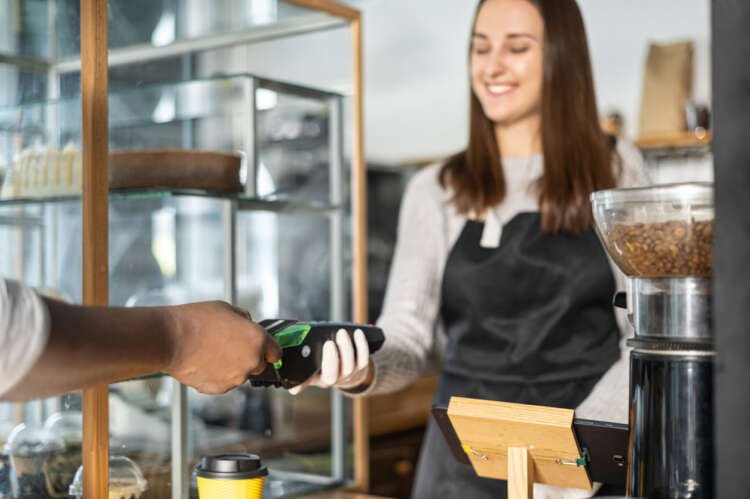
    An image depicting a small business owner reviewing financial documents to manage chargebacks, relevant to strategies for avoiding fraudulent transactions and improving financial health.
    A small business owner managing chargebacks to prevent fraud - Global Banking & Finance Review
    Why waste money on news and opinion when you can access them for free?

    Take advantage of our newsletter subscription and stay informed on the go!

    Subscribe

    Tags:paymentscustomersFraudbusiness servicesfinancial management

    By Gary Prince, SimplyPayMe’s Chief Strategy Officer.

    For many small businesses, figuring out how to manage chargebacks effectively can be challenging. Chargebacks can lead to fees imposed on your business, weaken your financial health, and lower your credibility with your payment processor.

    Here are a few tips to dramatically reduce your number of chargebacks and a few preventative measures to help shield your business.

    First, it’s essential to understand what a chargeback is and why it occurs. As the name implies, a chargeback is a sum of money spent initially on your product or service that is “charged back” to the customer.

    Why do chargebacks occur?

    The reasons for a chargeback can differ, though the most common reasons are:

    The customer experiences’ “buyers remorse”

    The customer isn’t patient enough to wait for a refund

    The customer committed fraud

    The customer forgot about or didn’t recognise the transaction

    Please note that your payment processor should communicate the reason behind the customer’s chargeback.

    How can it happen?

    Chargebacks can only occur for customers purchasing credit and debit cards for amounts over £100 or alternative payment methods such as Pay by Bank App.

    However, chargebacks are not as simple as they seem. Long-term complications can arise when customers abuse a business with multiple chargebacks. For example, a potential risk is for your payment processor to strike your enterprise with a separate chargeback fee ranging from $10 to $100.

    The most apparent consequence of chargebacks is the weakening of your financial health (particularly when hit with hefty chargeback fees for every dispute) or losing business credibility.

    Moreover, your payment processor may deem your business high risk leading them to freeze your account, block transactions, impose higher fees or – in the worst case scenario – suspend your account for good.

    “Chargebacks cost merchants more than 3.5 times the initial loss, which represents $360 for every $100 they lost in terms of direct fraud costs”.

    How can you prevent chargebacks?

    Knowing just how frequently credit and debit transaction frauds occur is essential. Whilst online payment has many consumer benefits, it also allows for cardless transactions (also known as “card not present” or CNP transactions).

    1 – Be aware

    Online payments allow for cardless transactions (also known as “card not present” or CNP transactions). Meaning, merchants should be vigilant to prevent inconsistent or unauthorised transactions. Knowing how frequently credit and debit transaction frauds occur is essential.

    Be vigilant with:

    Differences in billing and shipping addresses

    A shipping address to an empty property or P.O. box

    Identical shipping addresses for different customer orders

    Fake or bogus email addresses

    Incorrect security codes

    Next day deliveries for big orders

    Rely on your instinct – If something doesn’t feel right, it usually isn’t!

    2 – Create a strong refund policy

    For these reasons, it is vital to have a strong refund policy stating your terms and conditions: how, when, and why a customer can return a product or opt out of a service, with strict terms on when a customer should be eligible for a refund.

    This refund policy is one of the best ways to combat chargebacks. It encourages banks and card issuers to advise customers to settle disputes before the chargeback is requested. It also means that the customer is less likely to go to a card issuer if they know a firm policy is in place.

    To do so:

    Write an easy-to-understand policy using precise language

    Be flexible by offering a 30-day return policy, which decreases the number of cashbacks compared to a 14-day window

    Add free shipping to your policy, with a payable return, as customers will less likely send the product back if they have to pay the shipping cost

    To summarise, customers resort to chargebacks as they are quick and easy. However, the key for any business is to enforce a strong refund policy, keep an eye on suspicious data movements and to maintain top-quality customer service.

    Author Bio:

    SimplyPayMe is an award-winning global payments company whose mobile-based payment and business management solution is specifically designed to meet the growing demands of the SME underserved community.

    Frequently Asked Questions about How Can Small Businesses Avoid Customer and Fraudulent Chargebacks

    1What is a chargeback?

    A chargeback is a reversal of a credit or debit card transaction, initiated by the cardholder's bank, usually due to disputes or fraud.

    2What is a refund policy?

    A refund policy outlines the terms under which customers can return products or services and receive their money back.

    3What is fraud in financial transactions?

    Fraud in financial transactions refers to deceptive practices aimed at securing an unfair or unlawful financial gain.

    4What are customers' rights regarding chargebacks?

    Customers have the right to dispute transactions and request chargebacks if they believe the transaction was unauthorized or if the service/product was not delivered as promised.

    More from Business

    Explore more articles in the Business category

    Image for Empire Lending helps SMEs secure capital faster, without bank delays
    Empire Lending helps SMEs secure capital faster, without bank delays
    Image for Why Leen Kawas is Prioritizing Strategic Leadership at Propel Bio Partners
    Why Leen Kawas is Prioritizing Strategic Leadership at Propel Bio Partners
    Image for How Commercial Lending Software Platforms Are Structured and Utilized
    How Commercial Lending Software Platforms Are Structured and Utilized
    Image for Oil Traders vs. Tech Startups: Surprising Lessons from Two High-Stakes Worlds | Said Addi
    Oil Traders vs. Tech Startups: Surprising Lessons from Two High-Stakes Worlds | Said Addi
    Image for Why More Mortgage Brokers Are Choosing to Join a Network
    Why More Mortgage Brokers Are Choosing to Join a Network
    Image for From Recession Survivor to Industry Pioneer: Ed Lewis's Data Revolution
    From Recession Survivor to Industry Pioneer: Ed Lewis's Data Revolution
    Image for From Optometry to Soul Vision: The Doctor Helping Entrepreneurs Lead With Purpose
    From Optometry to Soul Vision: The Doctor Helping Entrepreneurs Lead With Purpose
    Image for Global Rankings Revealed: Top PMO Certifications Worldwide
    Global Rankings Revealed: Top PMO Certifications Worldwide
    Image for World Premiere of Midnight in the War Room to be Hosted at Black Hat Vegas
    World Premiere of Midnight in the War Room to be Hosted at Black Hat Vegas
    Image for Role of Personal Accident Cover in 2-Wheeler Insurance for Owners and Riders
    Role of Personal Accident Cover in 2-Wheeler Insurance for Owners and Riders
    Image for The Young Rich Lister Who Also Teaches: How Aaron Sansoni Built a Brand Around Execution
    The Young Rich Lister Who Also Teaches: How Aaron Sansoni Built a Brand Around Execution
    Image for Q3 2025 Priority Leadership: Tom Priore and Tim O'Leary Balance Near-Term Challenges with Long-Term Strategic Wins
    Q3 2025 Priority Leadership: Tom Priore and Tim O'Leary Balance Near-Term Challenges with Long-Term Strategic Wins
    View All Business Posts
    Previous Business PostHow to successfully implement a currency hedging strategy
    Next Business PostCULTURE CHANGE: WHY WE MUST VIEW REGULATIONS AS AN ENABLER, NOT A BLOCKER