Search
00
GBAF Logo
trophy
Top StoriesInterviewsBusinessFinanceBankingTechnologyInvestingTradingVideosAwardsMagazinesHeadlinesTrends

Subscribe to our newsletter

Get the latest news and updates from our team.

Global Banking and Finance Review

Global Banking & Finance Review

Company

    GBAF Logo
    • About Us
    • Profile
    • Privacy & Cookie Policy
    • Terms of Use
    • Contact Us
    • Advertising
    • Submit Post
    • Latest News
    • Research Reports
    • Press Release
    • Awards▾
      • About the Awards
      • Awards TimeTable
      • Submit Nominations
      • Testimonials
      • Media Room
      • Award Winners
      • FAQ
    • Magazines▾
      • Global Banking & Finance Review Magazine Issue 79
      • Global Banking & Finance Review Magazine Issue 78
      • Global Banking & Finance Review Magazine Issue 77
      • Global Banking & Finance Review Magazine Issue 76
      • Global Banking & Finance Review Magazine Issue 75
      • Global Banking & Finance Review Magazine Issue 73
      • Global Banking & Finance Review Magazine Issue 71
      • Global Banking & Finance Review Magazine Issue 70
      • Global Banking & Finance Review Magazine Issue 69
      • Global Banking & Finance Review Magazine Issue 66
    Top StoriesInterviewsBusinessFinanceBankingTechnologyInvestingTradingVideosAwardsMagazinesHeadlinesTrends

    Global Banking & Finance Review® is a leading financial portal and online magazine offering News, Analysis, Opinion, Reviews, Interviews & Videos from the world of Banking, Finance, Business, Trading, Technology, Investing, Brokerage, Foreign Exchange, Tax & Legal, Islamic Finance, Asset & Wealth Management.
    Copyright © 2010-2025 GBAF Publications Ltd - All Rights Reserved.

    Editorial & Advertiser disclosure

    Global Banking and Finance Review is an online platform offering news, analysis, and opinion on the latest trends, developments, and innovations in the banking and finance industry worldwide. The platform covers a diverse range of topics, including banking, insurance, investment, wealth management, fintech, and regulatory issues. The website publishes news, press releases, opinion and advertorials on various financial organizations, products and services which are commissioned from various Companies, Organizations, PR agencies, Bloggers etc. These commissioned articles are commercial in nature. This is not to be considered as financial advice and should be considered only for information purposes. It does not reflect the views or opinion of our website and is not to be considered an endorsement or a recommendation. We cannot guarantee the accuracy or applicability of any information provided with respect to your individual or personal circumstances. Please seek Professional advice from a qualified professional before making any financial decisions. We link to various third-party websites, affiliate sales networks, and to our advertising partners websites. When you view or click on certain links available on our articles, our partners may compensate us for displaying the content to you or make a purchase or fill a form. This will not incur any additional charges to you. To make things simpler for you to identity or distinguish advertised or sponsored articles or links, you may consider all articles or links hosted on our site as a commercial article placement. We will not be responsible for any loss you may suffer as a result of any omission or inaccuracy on the website.

    Home > Investing > HAVE THE YEARS OF PLENTY GONE? FOR SOME ASSET CLASSES THEY CERTAINLY HAVE.
    Investing

    HAVE THE YEARS OF PLENTY GONE? FOR SOME ASSET CLASSES THEY CERTAINLY HAVE.

    HAVE THE YEARS OF PLENTY GONE? FOR SOME ASSET CLASSES THEY CERTAINLY HAVE.

    Published by Gbaf News

    Posted on September 24, 2014

    Featured image for article about Investing

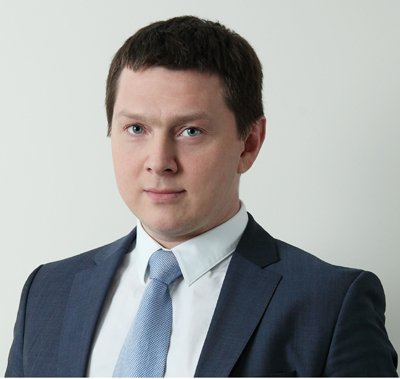
    By Alexander Varyushkin

    Partner, Head of Asset Management at Third Rome Group (strategic partner of Oracle Capital Group)

    In 2015, it will be exactly seven years since the U.S. Federal Reserve (followed duly by other leading central banks) went on an unprecedented free money policy spree in an attempt to lend momentum to the faltering global economy. Most market participants expect the Fed in 2015 to start normalising rates (in the sense that today they are abnormally low). Interest rate futures point towards a 0.5% rise to 0.75% by the end of 2015, moving further up by another 1% to reach 1.75% in late 2016. Economists envisage a somewhat more aggressive scenario with interest rates reaching 1% by the end of 2015 to climb to 2.5% by the end of 2016 and to 3.5% by the end of 2017. Still, while market participants ostensibly expect interest rates to go up, yields on long-term debt securities seem to belie this forecast. Yields on 10-year U.S. Treasuries currently stand at about 2.5%. Supposing short-term yields reach 3.5% by the end of 2017, the current fair yield should be hovering within the 2.8-3.6% range (with lots of reservations regarding the shape of the yield curve). What is the reason for the prices to ignore economic forecasts, and do they really? In our view, there are two possible explanations:

    Alexander Varyushkin

    Alexander Varyushkin

    1) The mismatch between investment horizons of most investors and the terms of the securities they invest in. We mean that several years up until early 2013 were extremely successful for investments in high-quality long-term bonds and some investors have «grown used to» low volatility and excellent yields while others cannot afford to invest in short-term securities due to the near-zero returns they offer.

    The famous words by Chuck Prince, the former Citigroup CEO, on the mortgage bond market are extremely appropriate here: “When the music stops, in terms of liquidity, things will be complicated. But as long as the music is playing, you’ve got to get up and dance. We’re still dancing.”

    2) The market does not support the economists’ view and expects the global economy to post slow growth which will prompt monetary authorities to keep in place their lose money policies for longer. Which is essentially sticking to the “Japanese” scenario as far as interest rates are concerned (because on the stock market performance and economic growth fronts it has already proved a failure). Yields on 10-year Japanese sovereign bonds are at 0.52% while inflation over the last 10 years has stuck at near-zero levels. The market for Japan’s bonds has even earned itself the nickname «Widow Maker» as many investors who in the last 10 years bet on higher interest rates and went short have since gone bust. To some extent, this view draws support from the major central banks with the exception of the U.S. Federal Reserve (the European Central Bank and the Bank of Japan), which are moving in the opposite direction and keep loosening their purse strings.

    Another explanation could be that on the debt market «lean» years had begun as early as the start of 2013 and it is just that the adaptation to market expectations regarding future monetary policies does not happen instantly. At the beginning of 2013, we knew that over the next 7-10 years yields on investments in U.S. Treasuries (benchmark long-term quality debt securities) would not exceed 1.2-1.5%, translating into near-zero nominal and negative real returns.

    Since the start of 2013 investments in long-term U.S. Treasuries have brought investor NIL in the way of return. Slightly riskier investments in quality corporate instruments have yielded about 3% over the last 18 months, which is exactly what one would expect in a «lean-year» period.

    We tend to think that the secular bear bond market is already here, that in all likelihood it will not be overaggressive and that the U.S. Federal Reserve will not be aggressive either in tightening its monetary policy. Which means that beta returns are a thing of the past and for the next few years assiduous selection of maturities along with thorough credit analysis should become second nature for investors operating on the debt market.

    About Third Rome Group

    Third Rome Group (strategic partner of Oracle Capital Group) is an international group of companies, established in 2009. The company provides a broad range of services including asset management, investment consulting, trading, corporate finance, asset and deal structuring services, as well as other solutions based on the concept “Investment bank for private clients”. Third Rome’s top managers are well known to the market due to many years of experience in asset management and financial services. They have earned a reputation as top-notch professionals with impeccable business ethics. They also have experience at leading investment institutions and a proven track record of successful transactions, many of which were ground-breaking in the development of the Russian market. Over the past 5 years, the company has received recognition and 6 prestigious awards for exemplary contribution in the field of investment banking and asset management. Third Rome is in the 2012 Russia’s top 20 Money Managers ranking by Institutional Investor.
    http://third-rome.com

    Related Posts
     Millennials Aren’t Ignoring Retirement. They’re Rebuilding It.
    Millennials Aren’t Ignoring Retirement. They’re Rebuilding It.
    BridgeWise Launches FixedWise, the First AI Solution Bringing Granular Bond Intelligence to the European Market
    BridgeWise Launches FixedWise, the First AI Solution Bringing Granular Bond Intelligence to the European Market
    Why Financial Advisors Are Rethinking Gold Allocations
    Why Financial Advisors Are Rethinking Gold Allocations
    From Opaque to Investable: Yaniv Bertele's Blueprint for Transparent Alternatives
    From Opaque to Investable: Yaniv Bertele's Blueprint for Transparent Alternatives
    Private Equity Needs AI Advocates
    Private Equity Needs AI Advocates
    Understanding the Global Impact of Rising Medical Insurance Premiums on the Middle Class
    Understanding the Global Impact of Rising Medical Insurance Premiums on the Middle Class
    The New Model Driving Creative Investment in University Innovation
    The New Model Driving Creative Investment in University Innovation
    The return of tangible assets in modern portfolios
    The return of tangible assets in modern portfolios
    Retro Bikes And Insurance: What You Should Know?
    Retro Bikes And Insurance: What You Should Know?
    Top Stocks Powering the AI Boom in 2025
    Top Stocks Powering the AI Boom in 2025
    How often should you update your estate plan? The events that demand a refresh
    How often should you update your estate plan? The events that demand a refresh
    Top 5 Mutual Funds in the UAE: Performance, Features, and How to Invest
    Top 5 Mutual Funds in the UAE: Performance, Features, and How to Invest

    Why waste money on news and opinions when you can access them for free?

    Take advantage of our newsletter subscription and stay informed on the go!

    Subscribe

    Previous Investing PostMITIGATING THE IMPACT OF A REGULATORY INVESTIGATION
    Next Investing PostTHE CULTURE OF SHARING – FROM CAR POOLS TO BUYING YOUR DREAM HOME

    More from Investing

    Explore more articles in the Investing category

    How One Investor Learned to Find Value Through a Wider Lens

    How One Investor Learned to Find Value Through a Wider Lens

    Freedom Holding Corp’s Global Rise: Why Institutional Investors Are Betting Big

    Freedom Holding Corp’s Global Rise: Why Institutional Investors Are Betting Big

    Pro Visionary Helps Australians Strengthen Their Financial Resilience Through Licensed Wealth Strategies

    Pro Visionary Helps Australians Strengthen Their Financial Resilience Through Licensed Wealth Strategies

    How ZenInvestor Is Breaking Down Barriers to Financial Literacy and Empowering Everyday Investors Nationwide

    How ZenInvestor Is Breaking Down Barriers to Financial Literacy and Empowering Everyday Investors Nationwide

    Edward L. Shugrue III on Returning to the Office: A Cultural Shift and Investment Opportunity

    Edward L. Shugrue III on Returning to the Office: A Cultural Shift and Investment Opportunity

    How Private Capital Can Build Public Good

    How Private Capital Can Build Public Good

    Private Equity Has a Major Speed and Capacity Problem

    Private Equity Has a Major Speed and Capacity Problem

    Navigating AI Investing Tools: Wealth Management Disruption Ahead

    Navigating AI Investing Tools: Wealth Management Disruption Ahead

    MTF Trading Explained: What It Is, How It Works, and Key Benefits

    MTF Trading Explained: What It Is, How It Works, and Key Benefits

    Private Equity Has Trust Issues With AI

    Private Equity Has Trust Issues With AI

    Merifund Capital Management on FTSE 100 Gains

    Merifund Capital Management on FTSE 100 Gains

    Sycamine Capital Management sets outlook on Japan equities

    Sycamine Capital Management sets outlook on Japan equities

    View All Investing Posts