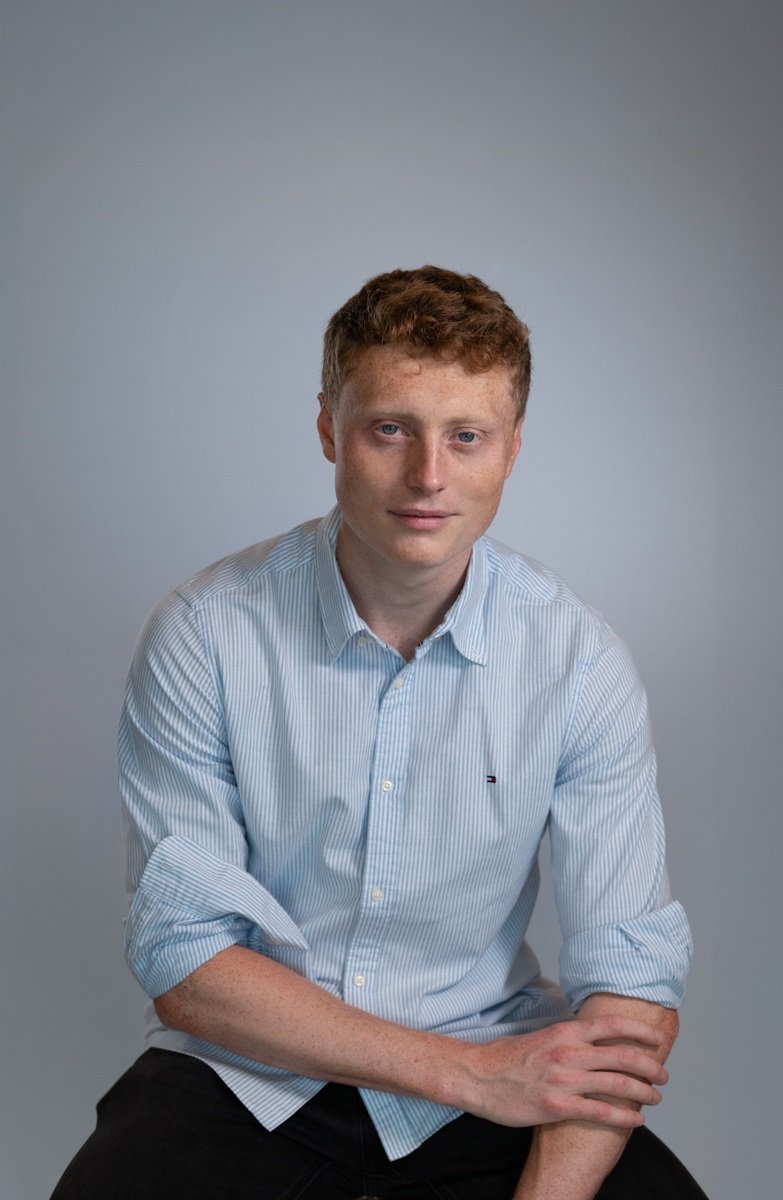
Global Banking & Finance Review in conversation with Jacob Wedderburn-Day, Co-Founder and CEO of Stasher
How would you describe the personal journey that led you into entrepreneurship, and what early experiences shaped the way you approach building a business?
I never assumed entrepreneurship would be my path. At Oxford studying economics, the expected route was management consulting - and I was following it. I got through to the final round at McKinsey, then got rejected. That rejection was the best intervention I could have had.
My co-founder Ant was more naturally contrarian, but he saw that rejection as my chance to do something interesting instead of following expectations. So I applied for a master's at UCL, Ant took a job at a marketing agency, and we both wound up in London thinking, "Let's try to start something."
The origin actually came from Ant's place near King's Cross - people kept asking to store bags at his brother's flat while they went out. When someone asked again, Ant joked, "Sure, but I'm charging you for it." That became our lightbulb moment. We entered a startup accelerator at UCL with the concept - essentially Airbnb but for storage - came second in the competition, and we immediately decided to launch it properly. Within a fewweeks, customers started booking. By late 2016, we'd closed our first investment round led by James Gibson, CEO of Yellow Storage, and by 2017 we'd gone full-time.
When you look back at the origins of Stasher, what moments or realisations convinced you that this idea could grow into something meaningful, and how did that belief develop over time?
We knew from the start that the global market for luggage storage would be worth billions. But in the very beginning, the home-storage model had problems that meant it couldn’t scale - I remember leaving a lecture early to meet a customer, then waiting around when he said he’d stayed for one more drink at the pub. I thought, "Regular people won't put up with this."
The real turning point was pivoting from people's homes to working with shops, lockers and hotels.
When we started signing up newsagents and small businesses, I went to collect money and saw customers dropping bags there - seeing that exchange was magical. I remember thinking, "If this works in a little newsagent in Euston, this can happen in businesses globally." That was the "this is going to scale" moment.
Then we got our first Premier Inn contract - 10 locations came online and we suddenly realised that we could work with major brands. Today we work with dozens of well-known brands like Premier Inn, Marriott, and Accor across our network of nearly 10,000+ locations in over 1,000 cities across 75 countries. Our host churn is less than 1% - the revenue share and simplicity of the partnership means our host NPS is always high. More recently, partnerships like the OVO Arena at Wembley validated that we're solving real pain: on busy event days, hundreds of bags get stored in businesses around the stadium because of baggage restrictions. Our locations fill up immediately when venues start referring customers.
We crossed three million bags stored recently, and last year alone we hit a million bags - more in a single year than our entire company history before that. The category awareness has exploded. When I tell people what we do now, they don't just say "that's clever," they say "oh yeah, I've used you" or "I know Stasher." We want luggage storage to become a travel standard, where planning a trip means thinking, "We'll Stash our bags to get extra time in the city" or "We'll Stash our bags so we can get to the gig." We want ‘stashing your bags’ to be as natural as ‘googling something’ - the verb that defines the category.
Every founder faces difficult periods—how did you experience and navigate the major challenges in your journey, what were they, and what helped you push through them?
We had two major challenges: our third co-founder leaving and COVID.
The co-founder situation was difficult. We'd started as three Oxford mates on a project, building it alongside our studies and jobs. When it became a real business after raising our first VC round, the cracks showed. Three co-founders with similar skillsets, constant tension over decisions, and a buggy product launch meant that we soon hit breaking point.
We'd just raised money and felt pressure to look professional - but we ultimately had a conversation about our third co-founder leaving. It was tough but something positive came out of it: Ant and I’s relationship got so much stronger. We’d always assumed 3 cofounders was the perfect number because you could settle anything by vote. But when it was just Ant and I, making decisions became faster and easier. We'd defer to whoever felt more strongly; we'd disagree and commit. There was no resentment and that rapid maturity made everything better.
COVID brought different challenges, particularly the restart. I really struggled with remote work initially - I missed that office energy, and I didn’t know how to manage people remotely properly.
What eventually worked was getting super clear on targets and trusting people: "You'll be scored on outcomes, not on being online at 9am." It took until 2023 to properly nail that high-trust, high-ownership culture remotely. Now we have rituals: Wednesday all-hands, annual team summits etc. that keep relationships and camaraderie alive. And we came out of COVID stronger, scaling from about 1,000 to 10,000 locations by helping traditional retailers discover they could earn £200-£3,500 monthly from unused back rooms. That was an unexpected benefit - the businesses we work with also got much more comfortable with being online and the sales cycles to sign them up became much faster.
Who were the people, mentors, or partners who played a decisive role in supporting you, and how did their involvement shape the direction of the business?
Ricky Wilkes was one of our first ten employees - he was hired as a sales guy, but he became the adult in the room. We had a very young team, all in our 20s, and Ricky was in his early 40s. He gave us so many processes we still use: how to do performance reviews, how to keep people developing.
Most memorably, he taught us how to fire people. The first time, Ant and I were very nervous, apologising profusely. Ricky just said, "You can apologise once, but give clear reasons, be fair and direct." He explained that keeping an underperformer saps morale worse than making the tough decision. He was completely right. His advice helped us grow into much better managers.
Sean Worker has been a trusted advisor to me since COVID. I met him by chance at a conference, and when the pandemic hit and I needed advice on investor communications, he gave me several very practical tips: be proactive, communicate clearly, hit the key concerns upfront. Our investors said we'd managed the comms in the first lockdown better than any other startup they'd worked with. Since then, he's been invaluable on board prep and general communications - helping me craft messages that hit the right points.
James Gibson, the CEO of Yellow Storage, has been an angel investor from the start, always giving us practical, grounded advice. And our lead investors—Venture Friends and Howzat Partners—were incredibly supportive through COVID when we needed it most.
As Stasher evolved from a student idea into a global operation, how did your own leadership and decision-making adapt to the pressures and responsibilities that came with growth?
The biggest shift was COVID forcing us into remote work. Before that, we ran on tight team culture - problems surfaced quickly because you could see it in the office and pull someone aside. Remote work changed everything. You miss those spontaneous moments, so you have to be more proactive.
What I learned is that clear structure beats motivation. You can't rely on people to just "be motivated” - including yourself! You need regular meetings, clear goals, structured accountability. That regularity forces you to stay on top of what matters. The structure does the work for you—you get consistent improvements week after week. Some businesses are overnight successes - but most build success by grinding out 1% improvements week after week over many years.
We've grown more organised while maintaining what matters: we still want people to take initiative, act, and learn. Even with a team of over 50, we're fundamentally a startup where people should feel empowered to make decisions. That's how we've been able to scale globally while maintaining 4.8 stars on Trustpilot - which we’re really proud of.
Reflecting on your experience, what broader lessons do you think your story offers about building a British business from scratch, and what would you want aspiring founders to take away from it?
For me, the biggest lesson for founders is: conviction often follows action rather than the other way around. It's tempting to wait for the perfect business plan, the perfect timing, but so much of Stasher's success came from spotting a problem and just doing something. We didn't always get it right, but it's better to act, learn, and iterate.
As for Britain, we have a massive opportunity in travel tech that we’re not fully capitalising on. The UK is a world-leader in hospitality and one of the best tourism markets globally, not just London but Edinburgh, the Cotswolds, everywhere. The talent's here, the market's here, the opportunities are enormous. But the reality is that although we should be building the global champions in hospitality, we are watching them get acquired by Silicon Valley before they scale.
What we need is more ambition across the board. American investors back their companies bigger and earlier because they believe they can win globally - and we should adopt that same conviction here in Britain. We’ve had brilliant support from our British investors - but to make Britain the undisputed leader, we need that global ambition to become the norm, not the exception.
The government talks about growth - well, this is how you get it. Back British tech champions early and ambitiously in areas like travel where we have inherent advantages. Not through protectionism, but through belief in what British innovation can achieve. We've got everything we need to dominate this space globally. We just need to back ourselves to do it.