
Search
00
GBAF Logo
trophy
Top StoriesInterviewsBusinessFinanceBankingTechnologyInvestingTradingVideosAwardsMagazinesHeadlinesTrends

Subscribe to our newsletter

Get the latest news and updates from our team.

Global Banking and Finance Review

Global Banking & Finance Review

Company

    GBAF Logo
    • About Us
    • Profile
    • Privacy & Cookie Policy
    • Terms of Use
    • Contact Us
    • Advertising
    • Submit Post
    • Latest News
    • Research Reports
    • Press Release
    • Awards▾
      • About the Awards
      • Awards TimeTable
      • Submit Nominations
      • Testimonials
      • Media Room
      • Award Winners
      • FAQ
    • Magazines▾
      • Global Banking & Finance Review Magazine Issue 79
      • Global Banking & Finance Review Magazine Issue 78
      • Global Banking & Finance Review Magazine Issue 77
      • Global Banking & Finance Review Magazine Issue 76
      • Global Banking & Finance Review Magazine Issue 75
      • Global Banking & Finance Review Magazine Issue 73
      • Global Banking & Finance Review Magazine Issue 71
      • Global Banking & Finance Review Magazine Issue 70
      • Global Banking & Finance Review Magazine Issue 69
      • Global Banking & Finance Review Magazine Issue 66
    Top StoriesInterviewsBusinessFinanceBankingTechnologyInvestingTradingVideosAwardsMagazinesHeadlinesTrends

    Global Banking & Finance Review® is a leading financial portal and online magazine offering News, Analysis, Opinion, Reviews, Interviews & Videos from the world of Banking, Finance, Business, Trading, Technology, Investing, Brokerage, Foreign Exchange, Tax & Legal, Islamic Finance, Asset & Wealth Management.
    Copyright © 2010-2025 GBAF Publications Ltd - All Rights Reserved.

    Editorial & Advertiser disclosure

    Global Banking and Finance Review is an online platform offering news, analysis, and opinion on the latest trends, developments, and innovations in the banking and finance industry worldwide. The platform covers a diverse range of topics, including banking, insurance, investment, wealth management, fintech, and regulatory issues. The website publishes news, press releases, opinion and advertorials on various financial organizations, products and services which are commissioned from various Companies, Organizations, PR agencies, Bloggers etc. These commissioned articles are commercial in nature. This is not to be considered as financial advice and should be considered only for information purposes. It does not reflect the views or opinion of our website and is not to be considered an endorsement or a recommendation. We cannot guarantee the accuracy or applicability of any information provided with respect to your individual or personal circumstances. Please seek Professional advice from a qualified professional before making any financial decisions. We link to various third-party websites, affiliate sales networks, and to our advertising partners websites. When you view or click on certain links available on our articles, our partners may compensate us for displaying the content to you or make a purchase or fill a form. This will not incur any additional charges to you. To make things simpler for you to identity or distinguish advertised or sponsored articles or links, you may consider all articles or links hosted on our site as a commercial article placement. We will not be responsible for any loss you may suffer as a result of any omission or inaccuracy on the website.

    Home > Business > Friction-free payment boosts efficiency for consumers and businesses alike
    Business

    Friction-free payment boosts efficiency for consumers and businesses alike
    Friction-free payment boosts efficiency for consumers and businesses alike

    Published by Jessica Weisman-Pitts

    Posted on March 11, 2022

    Featured image for article about Business

    By Ralf Gladis, CEO, Computop

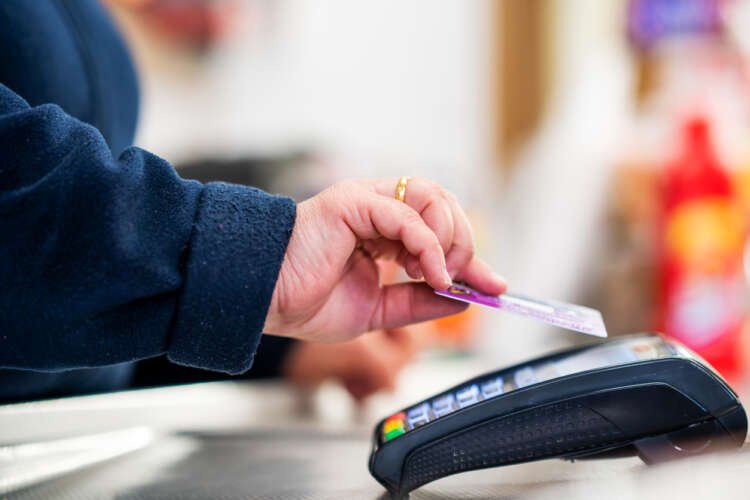
    When the spending limit of a contactless card was raised last autumn from £45 to £100 customers were frustrated if a retailer failed to accept the new threshold immediately. There were often valid reasons for it, including the retailer’s ability to update its payment terminals quickly, but such is the UK consumer’s preference for contactless, any delay was bound to be treated with irritation.

    The introduction of contactless payments, which started in 2007 with a limit of just £10, has been gradual, but as the limit has increased over the years, so too has the public’s propensity to use this friction-free method of payment.

    There are a number of reasons for the exponential rise in contactless purchases. Convenience is one; the security that is in-built with the process, whether using a debit card or a mobile device to tap-and-go, is another. However it was concerns about the spread of the COVID-19 virus that pushed many consumers away from using cash, instead adopting contactless wherever possible.

    Now that the concept is so well established, we are beginning to see other ways in which contactless is making our lives easier. The Internet of Things (IoT) means that as well as payments on smartphones, other devices such as smartwatches and key-fobs, are also becoming payment-enabled. We can order items, including groceries or tickets to events, using Alexa or Google Assistant and pay for them with a simple voice command

    Myriad of benefits

    Service providers of all kinds, from retailers to petrol stations are adopting IoT enabled payment mechanisms because they recognise the positive impact on customer satisfaction. But the benefits go far beyond that because the automation of payment also improves operational efficiency, lowers costs and increases revenue.

    In consumer scenarios, the use of contactless is enabled by saving debit card details as ‘tokens’ into devices whether that’s an iPhone, a smart speaker or a smart printer. Tokenisation replaces the number and all the relevant data from the customer’s card with a unique identification symbol which ensures credentials are untraceable and secure.

    In the future, however, it is likely that the payment process will become even less contact-driven and even more silent and invisible. Biometric data from a fingerprint to a facial scan will be all that is needed to buy groceries in shops with no checkouts or a cup of coffee from a robotic barista. Recent research found that 51% of UK consumers would even consider making payments using a chip implanted in their hand provided it met medical safety and privacy protection.

    Automation improves payments in B2B scenarios

    But what about contactless in commercial and industrial settings? Here the demise of traditional payment methods such as cheques and cash, has been accelerated by digital transformation. Organisations not only want payment processing to be contactless, but they also demand improvements in efficiency and speed and automated processes that reduce systemic risk.

    Once again, the IoT has a large part to play in delivering this level of payment transformation for B2B transactions. At a very basic level, automation allows an order for stock to be replenished and paid for when inventory reaches a pre-determined level, and this is already actively used in retail, manufacturing and warehouse scenarios. Mastercard predicts that the near future will bring an even more connected payments environment. In a recent report they see fundamental cash cycle functions communicating and exchanging transaction information in real time; systemically driven intelligent payment choices that align with the best interests of buyers and suppliers in any given situation; the growth of real-time payments; and the establishment of full, ongoing adaptability to technology and the latest payment types.

    But there are signs that even more ingenious methods of contactless or automated payment are being developed. In the automotive industry, for example, smart cars will be able to pay for fuel or toll charges automatically. And in 2019 Commerzbank launched a project which tested ‘cash on ledger’ machine-to-machine payment processes between an electric charging point and Daimler Trucks. The bank issued Euros on a blockchain and provided Daimler Trucks with ‘cash on ledger’ to process the payment. Both of these examples show that payment can be carried out successfully without any human interaction.

    Setting new standards

    Contactless payments, which so often are referred to only in the context of consumer transactions are clearly driving transformation at all levels and in multiple different industries. Fundamentally, payment service providers, like Computop, and banks are working hard behind the scenes to facilitate faster, frictionless payments that not only improve the consumer experience on a day-to-day basis but also enhance logistical efficiency and set new transactional standards for businesses.

    Related Posts
    Why Email Deliverability is a Business Risk Your Company Can’t Afford to Ignore
    Why Email Deliverability is a Business Risk Your Company Can’t Afford to Ignore
    Five questions to ask before stepping into Employee Ownership
    Five questions to ask before stepping into Employee Ownership
    Cybersecurity as a Profit Engine: Turning Financial Services Security into Measurable Business Value
    Cybersecurity as a Profit Engine: Turning Financial Services Security into Measurable Business Value
    How Investability Helps Companies Navigate Transformational Times
    How Investability Helps Companies Navigate Transformational Times
    88% of UK and US organisations concerned about state-sponsored cyber attacks as national threat levels surge, IO research reveals
    88% of UK and US organisations concerned about state-sponsored cyber attacks as national threat levels surge, IO research reveals
    One in three SME leaders do not fully understand cash flow, despite 82% facing cash flow problems
    One in three SME leaders do not fully understand cash flow, despite 82% facing cash flow problems
    Inside the Company that Predicted the Remote Work Mega-Trend Before It Became Mainstream
    Inside the Company that Predicted the Remote Work Mega-Trend Before It Became Mainstream
    SEO Consultant Adrian Czarnoleski on How to Increase Business Value Before Exit
    SEO Consultant Adrian Czarnoleski on How to Increase Business Value Before Exit
    No SOC 2, No Deal: Why You’re Already Losing Clients - and What You Can Do About It
    No SOC 2, No Deal: Why You’re Already Losing Clients - and What You Can Do About It
    Jose Tolosa Guides Organizations Forward with Clarity, Purpose, and Integrity
    Jose Tolosa Guides Organizations Forward with Clarity, Purpose, and Integrity
    Reducing Freight Costs to Drive Global Trade Expansion
    Reducing Freight Costs to Drive Global Trade Expansion
    The Psychology of Music in the Modern Workplace
    The Psychology of Music in the Modern Workplace

    Why waste money on news and opinions when you can access them for free?

    Take advantage of our newsletter subscription and stay informed on the go!

    Subscribe

    Previous Business PostGreat Resignation can stay Stateside if UK employers focus on employee needs
    Next Business PostThe Digital Operational Resilience Act (DORA) is on the way, but what does that mean for businesses?

    More from Business

    Explore more articles in the Business category

    Revealed: Low-Cost/No-Cost Marketing Hacks For Results Oriented Businesses

    Revealed: Low-Cost/No-Cost Marketing Hacks For Results Oriented Businesses

    Finance teams still stuck in spreadsheets as manual processes stall digital transformation

    Finance teams still stuck in spreadsheets as manual processes stall digital transformation

    The Future of Remote & Hybrid Leadership: Leading With Data-Driven Foresight

    The Future of Remote & Hybrid Leadership: Leading With Data-Driven Foresight

    2025-2030: The Next Technological Innovations for Business

    2025-2030: The Next Technological Innovations for Business

    The CFO’s New Playbook: 5 Ways AI Is Redefining Finance with Insights from Rishi Oberoi

    The CFO’s New Playbook: 5 Ways AI Is Redefining Finance with Insights from Rishi Oberoi

    Revolutionizing Payments: Secure, Scalable, Sovereign

    Revolutionizing Payments: Secure, Scalable, Sovereign

    Why Trademark Abuse in Paid Search Is a Growing Risk for Financial Institutions

    Why Trademark Abuse in Paid Search Is a Growing Risk for Financial Institutions

    E-commerce Customer Service: Tips

    E-commerce Customer Service: Tips

    When to Automate Your Warehouse: The Tipping Point for Operations Growth

    When to Automate Your Warehouse: The Tipping Point for Operations Growth

    Hurt at Work? 5 Financial Facts You Need to Know

    Hurt at Work? 5 Financial Facts You Need to Know

    Against the Odds: Resilience in Consumer Subsectors Offers Prime Opportunities for Investors

    Against the Odds: Resilience in Consumer Subsectors Offers Prime Opportunities for Investors

    Empower Your Workforce With Financial Wellness This Labor Day

    Empower Your Workforce With Financial Wellness This Labor Day

    View All Business Posts