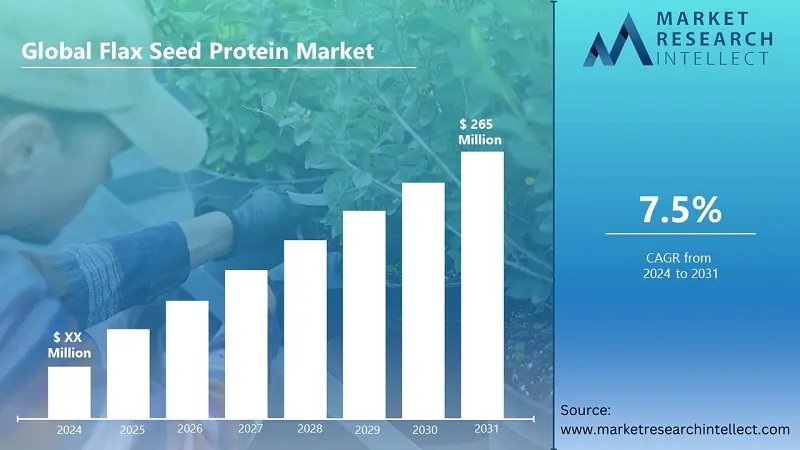
The Flax Seed Protein Market Size is expected to grow steadily at a CAGR of 7.5% from 2024 to 2031, reaching a value of USD 265 million by 2031. This growth is driven by the rising demand for plant-based protein sources and increasing health consciousness among consumers. Flax seed protein is gaining popularity due to its high nutritional content, versatility, and environment-friendly profile.
Flax seed protein, derived from the seeds of the flax plant (Linum usitatissimum), has garnered significant attention in recent years due to its numerous health benefits and applications in various industries. Flax seeds are rich in high-quality proteins, which are essential for human health, containing a well-balanced amino acid profile. These proteins play a critical role in maintaining muscle mass, supporting immune function, and promoting overall health. Flax seed protein is particularly valued for its digestibility and bioavailability, making it an excellent alternative to animal-based proteins.
The extraction process of flax seed protein involves mechanical and chemical methods to ensure the preservation of its nutritional properties. The protein content in flax seeds is typically around 20-25%, with the remaining composition consisting of fiber, omega-3 fatty acids, and lignans, which offer additional health benefits. The growing consumer inclination towards plant-based diets has propelled the demand for flax seed protein as it is a sustainable and ethical source of nutrition.
Flax seed protein is utilized across various sectors including food and beverages, nutraceuticals, and animal feed. In the food industry, it is incorporated into protein bars, smoothies, baked goods, and dietary supplements. Its hypoallergenic properties make it suitable for individuals with food sensitivities, further enhancing its market appeal. The nutraceutical sector leverages the anti-inflammatory and antioxidant properties of flax seed protein, positioning it as a functional ingredient in health supplements.
Flax Seed Protein Market Drivers & Restraints
Drivers
- Rising Health Consciousness: Increasing awareness about health and wellness drives the demand for plant-based proteins, including flax seed protein, as consumers seek healthier dietary options.
- Growing Vegan Population: The shift towards veganism and vegetarianism boosts the demand for plant-based protein sources, positioning flax seed protein as a preferred alternative.
- Sustainability Concerns: Flax seed protein production is environmentally friendly, appealing to eco-conscious consumers and industries.
- Nutritional Benefits: High nutritional value and the presence of essential amino acids make flax seed protein an attractive ingredient for health-focused products.
- Allergen-Free: Flax seed protein is hypoallergenic, making it suitable for people with common food allergies, thus expanding its consumer base.
- Functional Foods Trend: The rising trend of functional foods and beverages incorporating flax seed protein to enhance nutritional profiles drives market growth.
- Innovation in Food Processing: Advancements in food processing technologies enhance the quality and application range of flax seed protein.
- Increased Fitness and Sports Nutrition Demand: Growing fitness trends and the demand for sports nutrition products bolster the use of flax seed protein in protein shakes and bars.
- Regulatory Support: Favorable regulations and endorsements from health organizations support the use of flax seed protein in food and nutraceuticals.
- Consumer Preference for Natural Ingredients: Increasing preference for natural and clean label products encourages manufacturers to use flax seed protein.
Restraints
- High Production Costs: The extraction and processing of flax seed protein can be expensive, impacting its overall market price.
- Taste and Texture Issues: Flax seed protein may have a distinctive taste and texture that might not be appealing to all consumers.
- Limited Awareness: Despite its benefits, consumer awareness about flax seed protein remains relatively low compared to other plant-based proteins.
- Supply Chain Challenges: Fluctuations in the availability of raw materials can affect the consistent supply of flax seed protein.
- Competition from Other Plant Proteins: The market faces stiff competition from more established plant proteins like soy, pea, and rice protein.
- Regulatory Hurdles: Navigating different regulatory requirements across regions can be challenging for manufacturers.
- Allergenic Cross-Contamination: Potential cross-contamination with allergens during processing can be a concern.
- Short Shelf Life: Flax seed protein products may have a shorter shelf life, posing a challenge for manufacturers and retailers.
- Market Penetration: Entering new markets can be difficult due to established competitors and consumer loyalty to existing products.
- Consumer Skepticism: Skepticism about the efficacy and benefits of new protein sources can hinder market growth.
Key Players in Flax Seed Protein Market
- Archer Daniels Midland Company
- Cargill, Incorporated
- Glanbia plc
- Kerry Group plc
- Ingredion Incorporated
- Roquette Frères
- Batory Foods
- Axiom Foods, Inc.
- Shandong Yuwang Industrial Co., Ltd.
- Omega Protein Corporation
Flax Seed Protein Market Segmentations
The flax seed protein market can be segmented based on several criteria:
By Product Type:
- Isolate
- Concentrate
- Hydrolysate
By Application:
- Food and Beverages
- Nutraceuticals
- Animal Feed
- Personal Care
By Form:
By Distribution Channel:
- Online Retail
- Supermarkets/Hypermarkets
- Specialty Stores
- Convenience Stores
By Geography:
- North America
- Europe
- Asia-Pacific
- Latin America
- Middle East & Africa
Agricultural Biologicals
Agricultural biologicals are a vital segment of modern agriculture, focusing on sustainable and environmentally friendly farming practices. This category includes a wide range of products derived from natural sources such as microorganisms, plant extracts, and beneficial insects, aimed at improving crop health, yield, and resilience. Agricultural biologicals offer an alternative to traditional chemical inputs, addressing growing concerns about environmental impact, soil health, and food safety.
In the context of the flax seed protein market, agricultural biologicals play a crucial role in ensuring the sustainable production of flax crops. Biofertilizers, biopesticides, and biostimulants are used to enhance soil fertility, protect crops from pests and diseases, and promote plant growth. The adoption of these biological products helps in reducing the reliance on synthetic chemicals, minimizing the risk of soil and water contamination, and fostering biodiversity.
The integration of agricultural biologicals in flax farming can lead to improved crop quality and yield, directly impacting the availability and quality of flax seeds for protein extraction. Biofertilizers, for instance, enrich the soil with essential nutrients, ensuring that flax plants receive adequate nutrition throughout their growth cycle. Biopesticides offer a natural means of protecting flax crops from pests and diseases, reducing crop losses and ensuring a consistent supply of high-quality seeds.
Moreover, biostimulants enhance the overall health and resilience of flax plants, enabling them to withstand environmental stressors such as drought, extreme temperatures, and soil salinity. This resilience is particularly important in regions prone to climate variability, ensuring stable production levels despite adverse conditions.
The use of agricultural biologicals aligns with the growing consumer demand for sustainably produced food products. Consumers are increasingly concerned about the environmental impact of their food choices, driving the demand for products that are grown using sustainable practices. By incorporating agricultural biologicals into flax farming, producers can cater to this demand, positioning flax seed protein as a premium, eco-friendly product in the market.
In conclusion, the flax seed protein market is poised for significant growth, driven by rising health consciousness, the shift towards plant-based diets, and the sustainability benefits associated with flax cultivation. However, challenges such as high production costs and competition from other plant proteins must be addressed to fully realize the market’s potential. The integration of agricultural biologicals in flax farming represents a critical strategy for ensuring sustainable production and meeting the evolving demands of health-conscious and environmentally aware consumers.
About Us: Market Research Intellect
Market Research Intellect is a leading Global Research and Consulting firm servicing over 5000+ global clients. We provide advanced analytical research solutions while offering information-enriched research studies. We also offer insights into strategic and growth analyses and data necessary to achieve corporate goals and critical revenue decisions.
Our 250 Analysts and SMEs offer a high level of expertise in data collection and governance using industrial techniques to collect and analyze data on more than 25,000 high-impact and niche markets. Our analysts are trained to combine modern data collection techniques, superior research methodology, expertise, and years of collective experience to produce informative and accurate research.
Our research spans a multitude of industries including Energy, Technology, Manufacturing and Construction, Chemicals and Materials, Food and Beverages, etc. Having serviced many Fortune 2000 organizations, we bring a rich and reliable experience that covers all kinds of research needs.
For inquiries, Contact us at:
Mr. Edwyne Fernandes
Market Research Intellect
APAC: +61 485 860 968
EU: +44 788 886 6344
US: +1 743 222 5439