Search
00
GBAF Logo
trophy
Top StoriesInterviewsBusinessFinanceBankingTechnologyInvestingTradingVideosAwardsMagazinesHeadlinesTrends

Subscribe to our newsletter

Get the latest news and updates from our team.

Global Banking and Finance Review

Global Banking & Finance Review

Company

    GBAF Logo
    • About Us
    • Profile
    • Privacy & Cookie Policy
    • Terms of Use
    • Contact Us
    • Advertising
    • Submit Post
    • Latest News
    • Research Reports
    • Press Release
    • Awards▾
      • About the Awards
      • Awards TimeTable
      • Submit Nominations
      • Testimonials
      • Media Room
      • Award Winners
      • FAQ
    • Magazines▾
      • Global Banking & Finance Review Magazine Issue 79
      • Global Banking & Finance Review Magazine Issue 78
      • Global Banking & Finance Review Magazine Issue 77
      • Global Banking & Finance Review Magazine Issue 76
      • Global Banking & Finance Review Magazine Issue 75
      • Global Banking & Finance Review Magazine Issue 73
      • Global Banking & Finance Review Magazine Issue 71
      • Global Banking & Finance Review Magazine Issue 70
      • Global Banking & Finance Review Magazine Issue 69
      • Global Banking & Finance Review Magazine Issue 66
    Top StoriesInterviewsBusinessFinanceBankingTechnologyInvestingTradingVideosAwardsMagazinesHeadlinesTrends

    Global Banking & Finance Review® is a leading financial portal and online magazine offering News, Analysis, Opinion, Reviews, Interviews & Videos from the world of Banking, Finance, Business, Trading, Technology, Investing, Brokerage, Foreign Exchange, Tax & Legal, Islamic Finance, Asset & Wealth Management.
    Copyright © 2010-2025 GBAF Publications Ltd - All Rights Reserved.

    Editorial & Advertiser disclosure

    Global Banking and Finance Review is an online platform offering news, analysis, and opinion on the latest trends, developments, and innovations in the banking and finance industry worldwide. The platform covers a diverse range of topics, including banking, insurance, investment, wealth management, fintech, and regulatory issues. The website publishes news, press releases, opinion and advertorials on various financial organizations, products and services which are commissioned from various Companies, Organizations, PR agencies, Bloggers etc. These commissioned articles are commercial in nature. This is not to be considered as financial advice and should be considered only for information purposes. It does not reflect the views or opinion of our website and is not to be considered an endorsement or a recommendation. We cannot guarantee the accuracy or applicability of any information provided with respect to your individual or personal circumstances. Please seek Professional advice from a qualified professional before making any financial decisions. We link to various third-party websites, affiliate sales networks, and to our advertising partners websites. When you view or click on certain links available on our articles, our partners may compensate us for displaying the content to you or make a purchase or fill a form. This will not incur any additional charges to you. To make things simpler for you to identity or distinguish advertised or sponsored articles or links, you may consider all articles or links hosted on our site as a commercial article placement. We will not be responsible for any loss you may suffer as a result of any omission or inaccuracy on the website.

    Home > Finance > FINANCIAL THREATS IN 2016: EVERY SECOND PHISHING ATTACK AIMS TO STEAL YOUR MONEY
    Finance

    FINANCIAL THREATS IN 2016: EVERY SECOND PHISHING ATTACK AIMS TO STEAL YOUR MONEY

    FINANCIAL THREATS IN 2016: EVERY SECOND PHISHING ATTACK AIMS TO STEAL YOUR MONEY

    Published by Gbaf News

    Posted on February 24, 2017

    Featured image for article about Finance

    Almost half of all phishing attacks (fraudulent email messages or copycat websites that appear legitimate) registered in 2016 by Kaspersky Lab’s heuristic detection technologies were aimed at stealing their victim’s money, according to an analysis of the financial threat landscape by the company’s experts. Compared to 2015, the amount of financial phishing attacks increased 13.14 percentage points in 2016 to comprise 47.48 per cent of all phishing attacks blocked by heuristic detection technologies.

    In 2016 Kaspersky Lab’s anti-phishing technologies detected almost 155 million user attempts to visit different kinds of phishing pages. Of those, almost half of heuristic detections were attempts to visit a financial phishing page, i.e. where the aim was to obtain valuable personal information from users — such as their account numbers for banking, credit accounts, social security numbers, and the login and passwords they use to access online banking. The cybercriminals intended to use this information to steal money from their victims. This is the highest share of financial phishing registered to date by Kaspersky Lab.

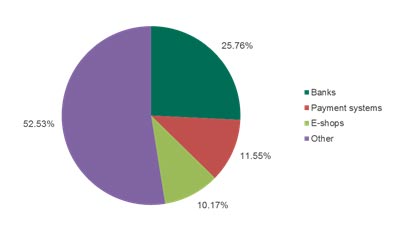
    Banking phishing schemes are the absolute leaders among all types of financial phishing. Every fourth (25.76 per cent) attack used fake online banking information, or other content related to banks – a result that is 8.31 percentage points up on 2015. The share of phishing related to payment systems and e-shops accounted for 11.55 per cent and 10.14 per cent respectively, an increase of 3.75 p.p. and 1.09 p.p. compared to 2015. The share of financial phishing detected on MacOS computers was 31.38 per cent.
    chart

    The distribution of different types of financial phishing in 2016

    Financial phishers are particularly keen to use data related to top multi-national banks, popular payment systems and Internet shops and auctions from the US, China and Brazil in their scams. The list of brands used stays the same from year to year, as their popularity remains high and they are therefore a lucrative target for cybercriminals.

    “Financial phishing has always been one of the easiest ways for cybercriminals to earn illegal money. You don’t have to be a skilled programmer, and you don’t have to invest lots of money into supporting infrastructure. Of course, most phishing schemes are easy to recognise and avoid, but judging by what we see in our statistics, lots of people are still not cautious enough when it comes to dealing with financial data online. Otherwise, we wouldn’t have seen so many attacks in 2016,” said Nadezhda Demidova, senior web content analyst at Kaspersky Lab.

    In order to protect themselves from phishing, Kaspersky Lab experts advise users to take the following measures:

    • When paying online always check the legitimacy of the website. The connection should be protected with Https, and the domain should belong to the same organisation that you’re going to pay.
    • Always check the legitimacy of emails that you’re receiving from famous brands. Even if it urges you to do something urgently, like change your password etc. First, make sure that it was sent by a legitimate party – contact your bank or payment system representative to find out if the email really has been sent by them to you.
    • Don’t click the links in emails or web-pages if you have doubts about their legitimacy;
    • Use a proven security solution with behavior-based anti-phishing technologies. This will make it possible to identify even the most recent phishing scams which haven’t yet been added to anti-phishing databases.

    To learn more about financial phishing and the other findings in the Financial Cyberthreats in 2016 report, read our blogpost on Securelist.com

    Almost half of all phishing attacks (fraudulent email messages or copycat websites that appear legitimate) registered in 2016 by Kaspersky Lab’s heuristic detection technologies were aimed at stealing their victim’s money, according to an analysis of the financial threat landscape by the company’s experts. Compared to 2015, the amount of financial phishing attacks increased 13.14 percentage points in 2016 to comprise 47.48 per cent of all phishing attacks blocked by heuristic detection technologies.

    In 2016 Kaspersky Lab’s anti-phishing technologies detected almost 155 million user attempts to visit different kinds of phishing pages. Of those, almost half of heuristic detections were attempts to visit a financial phishing page, i.e. where the aim was to obtain valuable personal information from users — such as their account numbers for banking, credit accounts, social security numbers, and the login and passwords they use to access online banking. The cybercriminals intended to use this information to steal money from their victims. This is the highest share of financial phishing registered to date by Kaspersky Lab.

    Banking phishing schemes are the absolute leaders among all types of financial phishing. Every fourth (25.76 per cent) attack used fake online banking information, or other content related to banks – a result that is 8.31 percentage points up on 2015. The share of phishing related to payment systems and e-shops accounted for 11.55 per cent and 10.14 per cent respectively, an increase of 3.75 p.p. and 1.09 p.p. compared to 2015. The share of financial phishing detected on MacOS computers was 31.38 per cent.

    chart

    The distribution of different types of financial phishing in 2016

    Financial phishers are particularly keen to use data related to top multi-national banks, popular payment systems and Internet shops and auctions from the US, China and Brazil in their scams. The list of brands used stays the same from year to year, as their popularity remains high and they are therefore a lucrative target for cybercriminals.

    “Financial phishing has always been one of the easiest ways for cybercriminals to earn illegal money. You don’t have to be a skilled programmer, and you don’t have to invest lots of money into supporting infrastructure. Of course, most phishing schemes are easy to recognise and avoid, but judging by what we see in our statistics, lots of people are still not cautious enough when it comes to dealing with financial data online. Otherwise, we wouldn’t have seen so many attacks in 2016,” said Nadezhda Demidova, senior web content analyst at Kaspersky Lab.

    In order to protect themselves from phishing, Kaspersky Lab experts advise users to take the following measures:

    • When paying online always check the legitimacy of the website. The connection should be protected with Https, and the domain should belong to the same organisation that you’re going to pay.
    • Always check the legitimacy of emails that you’re receiving from famous brands. Even if it urges you to do something urgently, like change your password etc. First, make sure that it was sent by a legitimate party – contact your bank or payment system representative to find out if the email really has been sent by them to you.
    • Don’t click the links in emails or web-pages if you have doubts about their legitimacy;
    • Use a proven security solution with behavior-based anti-phishing technologies. This will make it possible to identify even the most recent phishing scams which haven’t yet been added to anti-phishing databases.

    To learn more about financial phishing and the other findings in the Financial Cyberthreats in 2016 report, read our blogpost on Securelist.com

    Related Posts
    Stonepeak, CPPIB look to buy Castrol India shares at premium following BP deal
    Stonepeak, CPPIB look to buy Castrol India shares at premium following BP deal
    Swiss prosecutors drop probe into banking blog
    Swiss prosecutors drop probe into banking blog
    Louis Dreyfus' finance chief Patrick Treuer dies
    Louis Dreyfus' finance chief Patrick Treuer dies
    Gold Price Trends in India: What Current Signals Indicate for 2025
    Gold Price Trends in India: What Current Signals Indicate for 2025
    UK government says it backs free speech after US visa bans
    UK government says it backs free speech after US visa bans
    Russia extends deadline for sale of Exxon's Sakhalin-1 stake to 2027
    Russia extends deadline for sale of Exxon's Sakhalin-1 stake to 2027
    UK's Secure Trust to sell motor finance business for $619 million
    UK's Secure Trust to sell motor finance business for $619 million
    Exclusive-Kazakhstan's December crude exports sink to 14-month low after Ukraine drone strikes
    Exclusive-Kazakhstan's December crude exports sink to 14-month low after Ukraine drone strikes
    Ukraine completes GPD warrant deal, eliminating 'significant' liability
    Ukraine completes GPD warrant deal, eliminating 'significant' liability
    S&P 500, Dow hit all-time closing highs; gold, silver touch records
    S&P 500, Dow hit all-time closing highs; gold, silver touch records
    London's FTSE 100 closes lower in shortened Christmas Eve session
    London's FTSE 100 closes lower in shortened Christmas Eve session
    Analysis - Chinese tariffs on EU dairy to help 'bleeding' domestic industry, send message abroad
    Analysis - Chinese tariffs on EU dairy to help 'bleeding' domestic industry, send message abroad

    Why waste money on news and opinions when you can access them for free?

    Take advantage of our newsletter subscription and stay informed on the go!

    Subscribe

    More from Finance

    Explore more articles in the Finance category

    Sterling steady near multi-month highs, BoE caution still top of mind

    Sterling steady near multi-month highs, BoE caution still top of mind

    Russian attacks on Ukrainian ports cause drop in food exports

    Russian attacks on Ukrainian ports cause drop in food exports

    French President Macron slams U.S. visa ban on Thierry Breton and others

    French President Macron slams U.S. visa ban on Thierry Breton and others

    EU says it strongly condemns U.S. visa ban on European individuals

    EU says it strongly condemns U.S. visa ban on European individuals

    Zelenskiy seeks meeting with Trump to hammer out issue of territory

    Zelenskiy seeks meeting with Trump to hammer out issue of territory

    Italy watchdog orders Meta to halt WhatsApp terms barring rival AI chatbots

    Italy watchdog orders Meta to halt WhatsApp terms barring rival AI chatbots

    Russia plans a nuclear power plant on the moon within a decade

    Russia plans a nuclear power plant on the moon within a decade

    Europe slams visa bans after US takes fresh swing at allies over 'censorship'

    Europe slams visa bans after US takes fresh swing at allies over 'censorship'

    Libya army chief of staff killed in jet crash near Ankara after fault reported, Turkish official says

    Libya army chief of staff killed in jet crash near Ankara after fault reported, Turkish official says

    Russian air defence downs 25 Moscow-bound Ukrainian drones, mayor says

    Russian air defence downs 25 Moscow-bound Ukrainian drones, mayor says

    BP to sell 65% stake in Castrol to Stonepeak for $6 billion

    BP to sell 65% stake in Castrol to Stonepeak for $6 billion

    Gold, silver and platinum take a breather after record rally

    Gold, silver and platinum take a breather after record rally

    View All Finance Posts
    Previous Finance PostREMEMBER THESE TIPS WHEN FILING YOUR 2016 TAX RETURN, AICPA TAX VICE PRESIDENT SAYS
    Next Finance PostQUICKBOOKS CONNECT TO PUT ACCOUNTANTS ON FAST-TRACK TO GROWTH