Search
00
GBAF Logo
trophy
Top StoriesInterviewsBusinessFinanceBankingTechnologyInvestingTradingVideosAwardsMagazinesHeadlinesTrends

Subscribe to our newsletter

Get the latest news and updates from our team.

Global Banking and Finance Review

Global Banking & Finance Review

Company

    GBAF Logo
    • About Us
    • Profile
    • Privacy & Cookie Policy
    • Terms of Use
    • Contact Us
    • Advertising
    • Submit Post
    • Latest News
    • Research Reports
    • Press Release
    • Awards▾
      • About the Awards
      • Awards TimeTable
      • Submit Nominations
      • Testimonials
      • Media Room
      • Award Winners
      • FAQ
    • Magazines▾
      • Global Banking & Finance Review Magazine Issue 79
      • Global Banking & Finance Review Magazine Issue 78
      • Global Banking & Finance Review Magazine Issue 77
      • Global Banking & Finance Review Magazine Issue 76
      • Global Banking & Finance Review Magazine Issue 75
      • Global Banking & Finance Review Magazine Issue 73
      • Global Banking & Finance Review Magazine Issue 71
      • Global Banking & Finance Review Magazine Issue 70
      • Global Banking & Finance Review Magazine Issue 69
      • Global Banking & Finance Review Magazine Issue 66
    Top StoriesInterviewsBusinessFinanceBankingTechnologyInvestingTradingVideosAwardsMagazinesHeadlinesTrends

    Global Banking & Finance Review® is a leading financial portal and online magazine offering News, Analysis, Opinion, Reviews, Interviews & Videos from the world of Banking, Finance, Business, Trading, Technology, Investing, Brokerage, Foreign Exchange, Tax & Legal, Islamic Finance, Asset & Wealth Management.
    Copyright © 2010-2025 GBAF Publications Ltd - All Rights Reserved.

    Editorial & Advertiser disclosure

    Global Banking and Finance Review is an online platform offering news, analysis, and opinion on the latest trends, developments, and innovations in the banking and finance industry worldwide. The platform covers a diverse range of topics, including banking, insurance, investment, wealth management, fintech, and regulatory issues. The website publishes news, press releases, opinion and advertorials on various financial organizations, products and services which are commissioned from various Companies, Organizations, PR agencies, Bloggers etc. These commissioned articles are commercial in nature. This is not to be considered as financial advice and should be considered only for information purposes. It does not reflect the views or opinion of our website and is not to be considered an endorsement or a recommendation. We cannot guarantee the accuracy or applicability of any information provided with respect to your individual or personal circumstances. Please seek Professional advice from a qualified professional before making any financial decisions. We link to various third-party websites, affiliate sales networks, and to our advertising partners websites. When you view or click on certain links available on our articles, our partners may compensate us for displaying the content to you or make a purchase or fill a form. This will not incur any additional charges to you. To make things simpler for you to identity or distinguish advertised or sponsored articles or links, you may consider all articles or links hosted on our site as a commercial article placement. We will not be responsible for any loss you may suffer as a result of any omission or inaccuracy on the website.

    Home > Business > Exclusive-U.S. approves licenses for Huawei to buy auto chips – sources
    Business

    Exclusive-U.S. approves licenses for Huawei to buy auto chips – sources

    Exclusive-U.S. approves licenses for Huawei to buy auto chips – sources

    Published by maria gbaf

    Posted on August 25, 2021

    Featured image for article about Business

    By Karen Freifeld

    (Reuters) – U.S. officials have approved license applications worth hundreds of millions of dollars for China’s blacklisted telecom company Huawei to buy chips for its growing auto component business, two people familiar with the matter said.

    Huawei, the world’s largest telecommunications equipment maker, has been hobbled by trade restrictions https://www.reuters.com/world/china/exclusive-trump-admin-slams-chinas-huawei-halting-shipments-intel-others-sources-2021-01-17 imposed by the Trump administration on the sale of chips and other components used in its network gear and smartphones businesses. The Biden administration has been reinforcing the hard line https://www.reuters.com/technology/biden-administration-adds-new-limits-huaweis-suppliers-2021-03-11 on exports to Huawei, denying licenses to sell chips to Huawei for use in or with 5g devices.

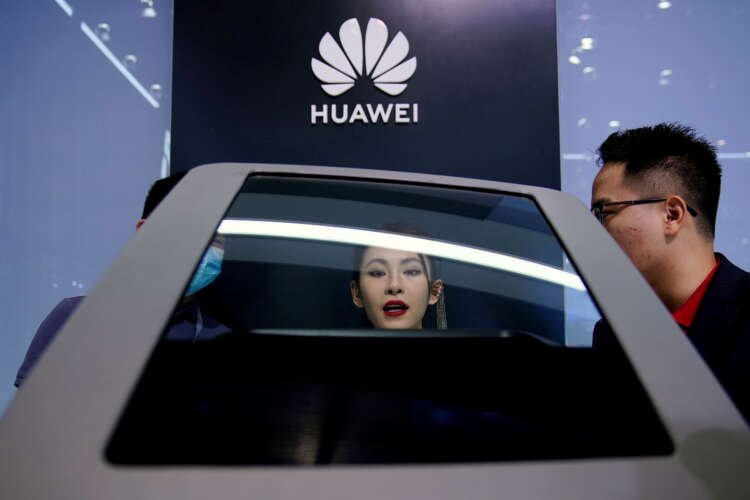
    But in recent weeks and months, people familiar with the application process told Reuters the U.S. has granted licenses authorizing suppliers to sell chips to Huawei for such vehicle components as video screens and sensors. The approvals come as Huawei pivots its business toward items that are less susceptible to U.S. trade bans.

    Auto chips are generally not considered sophisticated, lowering the bar for approval. One person close to the license approvals said the government is granting licenses for chips in vehicles that may have other components with 5g capability.

    Asked about the automotive licenses, a U.S. Department of Commerce spokesperson said the government continues to consistently apply licensing policies “to restrict Huawei’s access to commodities, software, or technology for activities that could harm U.S. national security and foreign policy interests.”

    The Commerce Department is prohibited from disclosing license approvals or denials, the person added.

    A Huawei spokeswoman declined to comment on the licenses, but said: “We are positioning ourselves as a new component provider for intelligent connected vehicles, and our aim is to help car OEMs (manufacturers) build better vehicles.”

    Citing threats to U.S. national security and foreign policy interests, the U.S. has gone to great lengths to slow the growth of Huawei’s key communications-related business.

    After placing Huawei on a U.S. Commerce Department trade blacklist in 2019, which banned sales of U.S. goods and technology to the company without special licenses, the U.S. last year ratcheted up restrictions to limit the sale of chips made abroad with U.S. equipment. It also campaigned to get allies to exclude Huawei from their 5G networks over spying concerns. Huawei has denied the allegations.

    Huawei reported its biggest ever revenue drop in the first half of 2021, after the U.S. restrictions drove it to sell a chunk of its once-dominant handset business and before new growth areas have fully matured.

    Underscoring the shift into smart cars, the company’s rotating chairman Eric Xu announced pacts with three state-owned Chinese carmakers, including BAIC Group, to supply “Huawei Inside”, a smart vehicle operating system, at the Shanghai Auto Show earlier this year.

    In another sign of Huawei’s ambition in the space, after suppliers have received licenses authorizing the sale of tens of millions of dollars of chips to Huawei, the company has requested they apply again and request higher values such as one or two billion, one source said. Licenses are generally good for four years.

    Richard Barnett, chief marketing officer at a global electronics consultancy called Supply Frame, said Huawei is in the “early innings” of trying to invest in the $5 trillion automotive market that has large potential growth both inside and outside of China.

    “Cars and trucks are now computers on wheels,” said Barnett, “That convergence is what’s driving Huawei’s strategic focus to be a bigger player in that area.”

    (Editing by Chris Sanders and Edward Tobin)

    By Karen Freifeld

    (Reuters) – U.S. officials have approved license applications worth hundreds of millions of dollars for China’s blacklisted telecom company Huawei to buy chips for its growing auto component business, two people familiar with the matter said.

    Huawei, the world’s largest telecommunications equipment maker, has been hobbled by trade restrictions https://www.reuters.com/world/china/exclusive-trump-admin-slams-chinas-huawei-halting-shipments-intel-others-sources-2021-01-17 imposed by the Trump administration on the sale of chips and other components used in its network gear and smartphones businesses. The Biden administration has been reinforcing the hard line https://www.reuters.com/technology/biden-administration-adds-new-limits-huaweis-suppliers-2021-03-11 on exports to Huawei, denying licenses to sell chips to Huawei for use in or with 5g devices.

    But in recent weeks and months, people familiar with the application process told Reuters the U.S. has granted licenses authorizing suppliers to sell chips to Huawei for such vehicle components as video screens and sensors. The approvals come as Huawei pivots its business toward items that are less susceptible to U.S. trade bans.

    Auto chips are generally not considered sophisticated, lowering the bar for approval. One person close to the license approvals said the government is granting licenses for chips in vehicles that may have other components with 5g capability.

    Asked about the automotive licenses, a U.S. Department of Commerce spokesperson said the government continues to consistently apply licensing policies “to restrict Huawei’s access to commodities, software, or technology for activities that could harm U.S. national security and foreign policy interests.”

    The Commerce Department is prohibited from disclosing license approvals or denials, the person added.

    A Huawei spokeswoman declined to comment on the licenses, but said: “We are positioning ourselves as a new component provider for intelligent connected vehicles, and our aim is to help car OEMs (manufacturers) build better vehicles.”

    Citing threats to U.S. national security and foreign policy interests, the U.S. has gone to great lengths to slow the growth of Huawei’s key communications-related business.

    After placing Huawei on a U.S. Commerce Department trade blacklist in 2019, which banned sales of U.S. goods and technology to the company without special licenses, the U.S. last year ratcheted up restrictions to limit the sale of chips made abroad with U.S. equipment. It also campaigned to get allies to exclude Huawei from their 5G networks over spying concerns. Huawei has denied the allegations.

    Huawei reported its biggest ever revenue drop in the first half of 2021, after the U.S. restrictions drove it to sell a chunk of its once-dominant handset business and before new growth areas have fully matured.

    Underscoring the shift into smart cars, the company’s rotating chairman Eric Xu announced pacts with three state-owned Chinese carmakers, including BAIC Group, to supply “Huawei Inside”, a smart vehicle operating system, at the Shanghai Auto Show earlier this year.

    In another sign of Huawei’s ambition in the space, after suppliers have received licenses authorizing the sale of tens of millions of dollars of chips to Huawei, the company has requested they apply again and request higher values such as one or two billion, one source said. Licenses are generally good for four years.

    Richard Barnett, chief marketing officer at a global electronics consultancy called Supply Frame, said Huawei is in the “early innings” of trying to invest in the $5 trillion automotive market that has large potential growth both inside and outside of China.

    “Cars and trucks are now computers on wheels,” said Barnett, “That convergence is what’s driving Huawei’s strategic focus to be a bigger player in that area.”

    (Editing by Chris Sanders and Edward Tobin)

    Related Posts
    Why Email Deliverability is a Business Risk Your Company Can’t Afford to Ignore
    Why Email Deliverability is a Business Risk Your Company Can’t Afford to Ignore
    Five questions to ask before stepping into Employee Ownership
    Five questions to ask before stepping into Employee Ownership
    Cybersecurity as a Profit Engine: Turning Financial Services Security into Measurable Business Value
    Cybersecurity as a Profit Engine: Turning Financial Services Security into Measurable Business Value
    How Investability Helps Companies Navigate Transformational Times
    How Investability Helps Companies Navigate Transformational Times
    88% of UK and US organisations concerned about state-sponsored cyber attacks as national threat levels surge, IO research reveals
    88% of UK and US organisations concerned about state-sponsored cyber attacks as national threat levels surge, IO research reveals
    One in three SME leaders do not fully understand cash flow, despite 82% facing cash flow problems
    One in three SME leaders do not fully understand cash flow, despite 82% facing cash flow problems
    Inside the Company that Predicted the Remote Work Mega-Trend Before It Became Mainstream
    Inside the Company that Predicted the Remote Work Mega-Trend Before It Became Mainstream
    SEO Consultant Adrian Czarnoleski on How to Increase Business Value Before Exit
    SEO Consultant Adrian Czarnoleski on How to Increase Business Value Before Exit
    No SOC 2, No Deal: Why You’re Already Losing Clients - and What You Can Do About It
    No SOC 2, No Deal: Why You’re Already Losing Clients - and What You Can Do About It
    Jose Tolosa Guides Organizations Forward with Clarity, Purpose, and Integrity
    Jose Tolosa Guides Organizations Forward with Clarity, Purpose, and Integrity
    Reducing Freight Costs to Drive Global Trade Expansion
    Reducing Freight Costs to Drive Global Trade Expansion
    The Psychology of Music in the Modern Workplace
    The Psychology of Music in the Modern Workplace

    Why waste money on news and opinions when you can access them for free?

    Take advantage of our newsletter subscription and stay informed on the go!

    Subscribe

    More from Business

    Explore more articles in the Business category

    Revealed: Low-Cost/No-Cost Marketing Hacks For Results Oriented Businesses

    Revealed: Low-Cost/No-Cost Marketing Hacks For Results Oriented Businesses

    Finance teams still stuck in spreadsheets as manual processes stall digital transformation

    Finance teams still stuck in spreadsheets as manual processes stall digital transformation

    The Future of Remote & Hybrid Leadership: Leading With Data-Driven Foresight

    The Future of Remote & Hybrid Leadership: Leading With Data-Driven Foresight

    2025-2030: The Next Technological Innovations for Business

    2025-2030: The Next Technological Innovations for Business

    The CFO’s New Playbook: 5 Ways AI Is Redefining Finance with Insights from Rishi Oberoi

    The CFO’s New Playbook: 5 Ways AI Is Redefining Finance with Insights from Rishi Oberoi

    Revolutionizing Payments: Secure, Scalable, Sovereign

    Revolutionizing Payments: Secure, Scalable, Sovereign

    Why Trademark Abuse in Paid Search Is a Growing Risk for Financial Institutions

    Why Trademark Abuse in Paid Search Is a Growing Risk for Financial Institutions

    E-commerce Customer Service: Tips

    E-commerce Customer Service: Tips

    When to Automate Your Warehouse: The Tipping Point for Operations Growth

    When to Automate Your Warehouse: The Tipping Point for Operations Growth

    Hurt at Work? 5 Financial Facts You Need to Know

    Hurt at Work? 5 Financial Facts You Need to Know

    Against the Odds: Resilience in Consumer Subsectors Offers Prime Opportunities for Investors

    Against the Odds: Resilience in Consumer Subsectors Offers Prime Opportunities for Investors

    Empower Your Workforce With Financial Wellness This Labor Day

    Empower Your Workforce With Financial Wellness This Labor Day

    View All Business Posts
    Previous Business PostShopify, TikTok team up to let users shop from app
    Next Business PostMichael Kors owner names former Coach head Schulman as next CEO