Search
00
GBAF Logo
trophy
Top StoriesInterviewsBusinessFinanceBankingTechnologyInvestingTradingVideosAwardsMagazinesHeadlinesTrends

Subscribe to our newsletter

Get the latest news and updates from our team.

Global Banking and Finance Review

Global Banking & Finance Review

Company

    GBAF Logo
    • About Us
    • Profile
    • Privacy & Cookie Policy
    • Terms of Use
    • Contact Us
    • Advertising
    • Submit Post
    • Latest News
    • Research Reports
    • Press Release
    • Awards▾
      • About the Awards
      • Awards TimeTable
      • Submit Nominations
      • Testimonials
      • Media Room
      • Award Winners
      • FAQ
    • Magazines▾
      • Global Banking & Finance Review Magazine Issue 79
      • Global Banking & Finance Review Magazine Issue 78
      • Global Banking & Finance Review Magazine Issue 77
      • Global Banking & Finance Review Magazine Issue 76
      • Global Banking & Finance Review Magazine Issue 75
      • Global Banking & Finance Review Magazine Issue 73
      • Global Banking & Finance Review Magazine Issue 71
      • Global Banking & Finance Review Magazine Issue 70
      • Global Banking & Finance Review Magazine Issue 69
      • Global Banking & Finance Review Magazine Issue 66
    Top StoriesInterviewsBusinessFinanceBankingTechnologyInvestingTradingVideosAwardsMagazinesHeadlinesTrends

    Global Banking & Finance Review® is a leading financial portal and online magazine offering News, Analysis, Opinion, Reviews, Interviews & Videos from the world of Banking, Finance, Business, Trading, Technology, Investing, Brokerage, Foreign Exchange, Tax & Legal, Islamic Finance, Asset & Wealth Management.
    Copyright © 2010-2025 GBAF Publications Ltd - All Rights Reserved.

    Editorial & Advertiser disclosure

    Global Banking and Finance Review is an online platform offering news, analysis, and opinion on the latest trends, developments, and innovations in the banking and finance industry worldwide. The platform covers a diverse range of topics, including banking, insurance, investment, wealth management, fintech, and regulatory issues. The website publishes news, press releases, opinion and advertorials on various financial organizations, products and services which are commissioned from various Companies, Organizations, PR agencies, Bloggers etc. These commissioned articles are commercial in nature. This is not to be considered as financial advice and should be considered only for information purposes. It does not reflect the views or opinion of our website and is not to be considered an endorsement or a recommendation. We cannot guarantee the accuracy or applicability of any information provided with respect to your individual or personal circumstances. Please seek Professional advice from a qualified professional before making any financial decisions. We link to various third-party websites, affiliate sales networks, and to our advertising partners websites. When you view or click on certain links available on our articles, our partners may compensate us for displaying the content to you or make a purchase or fill a form. This will not incur any additional charges to you. To make things simpler for you to identity or distinguish advertised or sponsored articles or links, you may consider all articles or links hosted on our site as a commercial article placement. We will not be responsible for any loss you may suffer as a result of any omission or inaccuracy on the website.

    Home > Trading > Exclusive: Tougher EU airport slot rules trigger Asia retaliation threat, risk industry trade war
    Trading

    Exclusive: Tougher EU airport slot rules trigger Asia retaliation threat, risk industry trade war

    Exclusive: Tougher EU airport slot rules trigger Asia retaliation threat, risk industry trade war

    Published by maria gbaf

    Posted on September 20, 2021

    Featured image for article about Trading

    By Jamie Freed

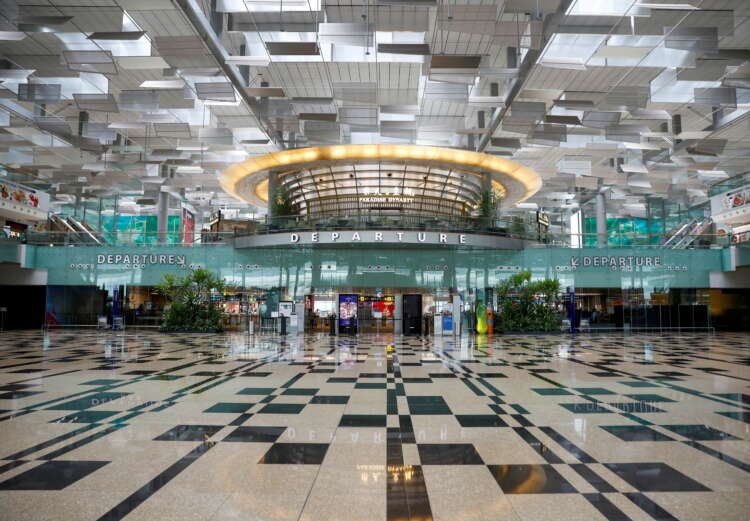
    (Reuters) – Regulators in Asian hubs like Singapore and Hong Kong have threatened to retaliate against European Union plans to force airlines to start using take-off and landing slots frozen during the coronavirus pandemic, a move that could oblige Europe’s carriers to fly empty seats for thousands of miles at a loss.

    Authorities controlling slots at major Asian airports are ready to slap similar ‘use it or lose it’ conditions on European carriers flying to Asia’s cities – raising the prospect of an industry trade war over the uneven impact of COVID-19.

    After rare unity during the pandemic, when carriers were being bailed out or trying to stay afloat, industry leaders say the dispute has rekindled fundamental differences across a fragmented sector as the world stages a multi-speed recovery.

    “Is it a trade war? Certainly the germ of one,” said former Australian aviation negotiator Peter Harbison, chairman emeritus of the Sydney-based CAPA Centre for Aviation consultancy.

    “And it will be accentuated as more airlines collapse and international markets remain closed, or at best, uncertain.”

    Tensions have grown since July, when the EU announced plans to force airlines to use 50% of their rights or lose them to rivals from next month. That move partially reinstated competition rules that had been waived as airlines struggled to survive the pandemic.

    But while the EU decision reflects a traffic recovery that is well under way in Europe’s mainly short-haul market, Asian carriers are protesting they will be unfairly penalised because their long-haul networks will take much longer to recover.

    Some Asian regulators have already put European airlines on notice that they will need to fly at least 50% of the time, industry sources said, risking political fights over the future of transport links that are important for global trade.

    ‘RECIPROCITY’

    Singapore, one of several Asian jurisdictions to line up previously unreported ‘reciprocity’ rules, has included the provisions to ensure fair treatment, said Daniel Ng, director air transport at Civil Aviation Authority of Singapore.

    In Asia, long quarantines remain the norm for travellers and airlines operated just 14% of their 2019 international capacity in July, well below the 46% of 2019 levels seen in Europe and 48% in North America, International Air Transport Association (IATA) data shows.

    Cathay Pacific last month warned publicly that the slower recovery in Hong Kong meant it risked losing prized overseas airport slots and harming the city’s hub status.

    Taiwan’s China Airlines and Korean Air Lines expressed concern about the EU rules in statements to Reuters, while Singapore Airlines declined to comment.

    In Europe, Lufthansa – the EU carrier with the most flights to Asia – said the tough EU rules could ultimately harm the climate as well as airlines, if they are forced to fly empty planes to keep slots. Air France and KLM said their decisions to fly were not based on airport slots.

    ‘SHOCK PHASE’ OVER

    The EU broke with a global industry recommendation and tightened rules for the winter schedule season, which runs from October to March, after heavy lobbying by low-cost carriers like Ryanair, with big short-haul networks, and European airports, many of which are privatised and trying to produce returns.

    “We’re no longer in immediate shock phase,” said Aidan Flanagan, safety and capacity manager at Airports Council International Europe. “We are now in a situation where the market is stable with much lower levels than what we were in 2019, but it’s stable.”

    The European Commission said in July the 50% use rate – down from 80% in normal times – was chosen to ensure good use of airport capacity and to benefit consumers. It also granted exceptions so that airlines do not need to reach 50% while strict measures like quarantine that make it hard to travel remain in place.

    The Commission did not respond immediately to a request for comment.

    SIX WEEKS TO RESPOND

    Once travel restrictions are lifted, Asian carriers will have to boost flying to the European Union within six weeks or risk losing slots even if demand is slow to return.

    “When the demand is not there it is unreasonable to expect people to operate,” IATA Head of Worldwide Airport Slots Lara Maughan said. “It is a really short window they have once restrictions are removed to sort of recalibrate that whole operation back.”

    René Maysokolua, managing director of German airport slot manager FLUKO, said his organisation had been informed that some Asian countries were telling European airlines they would need to fly 50% of the time or risk losing their slots in retaliation for the EU rules.

    Singapore, Hong Kong and South Korea are among those taking a harder line against European carriers, said an industry source who was not authorised to comment publicly on the matter.

    Authorities in Singapore and Hong Kong confirmed reciprocity provisions are in place but declined to comment on specific cases.

    Korea Airport Schedules Office did not respond to a request for comment, but Korean Air, a member of the country’s slot working group, confirmed the provisions.

    Meanwhile, even as the potential for conflict brews between Asia and Europe, the United States on Thursday announced more lenient winter season rules for international carriers than the European Union.

    (Reporting by Jamie Freed in Sydney; Editing by Kenneth Maxwell)

    By Jamie Freed

    (Reuters) – Regulators in Asian hubs like Singapore and Hong Kong have threatened to retaliate against European Union plans to force airlines to start using take-off and landing slots frozen during the coronavirus pandemic, a move that could oblige Europe’s carriers to fly empty seats for thousands of miles at a loss.

    Authorities controlling slots at major Asian airports are ready to slap similar ‘use it or lose it’ conditions on European carriers flying to Asia’s cities – raising the prospect of an industry trade war over the uneven impact of COVID-19.

    After rare unity during the pandemic, when carriers were being bailed out or trying to stay afloat, industry leaders say the dispute has rekindled fundamental differences across a fragmented sector as the world stages a multi-speed recovery.

    “Is it a trade war? Certainly the germ of one,” said former Australian aviation negotiator Peter Harbison, chairman emeritus of the Sydney-based CAPA Centre for Aviation consultancy.

    “And it will be accentuated as more airlines collapse and international markets remain closed, or at best, uncertain.”

    Tensions have grown since July, when the EU announced plans to force airlines to use 50% of their rights or lose them to rivals from next month. That move partially reinstated competition rules that had been waived as airlines struggled to survive the pandemic.

    But while the EU decision reflects a traffic recovery that is well under way in Europe’s mainly short-haul market, Asian carriers are protesting they will be unfairly penalised because their long-haul networks will take much longer to recover.

    Some Asian regulators have already put European airlines on notice that they will need to fly at least 50% of the time, industry sources said, risking political fights over the future of transport links that are important for global trade.

    ‘RECIPROCITY’

    Singapore, one of several Asian jurisdictions to line up previously unreported ‘reciprocity’ rules, has included the provisions to ensure fair treatment, said Daniel Ng, director air transport at Civil Aviation Authority of Singapore.

    In Asia, long quarantines remain the norm for travellers and airlines operated just 14% of their 2019 international capacity in July, well below the 46% of 2019 levels seen in Europe and 48% in North America, International Air Transport Association (IATA) data shows.

    Cathay Pacific last month warned publicly that the slower recovery in Hong Kong meant it risked losing prized overseas airport slots and harming the city’s hub status.

    Taiwan’s China Airlines and Korean Air Lines expressed concern about the EU rules in statements to Reuters, while Singapore Airlines declined to comment.

    In Europe, Lufthansa – the EU carrier with the most flights to Asia – said the tough EU rules could ultimately harm the climate as well as airlines, if they are forced to fly empty planes to keep slots. Air France and KLM said their decisions to fly were not based on airport slots.

    ‘SHOCK PHASE’ OVER

    The EU broke with a global industry recommendation and tightened rules for the winter schedule season, which runs from October to March, after heavy lobbying by low-cost carriers like Ryanair, with big short-haul networks, and European airports, many of which are privatised and trying to produce returns.

    “We’re no longer in immediate shock phase,” said Aidan Flanagan, safety and capacity manager at Airports Council International Europe. “We are now in a situation where the market is stable with much lower levels than what we were in 2019, but it’s stable.”

    The European Commission said in July the 50% use rate – down from 80% in normal times – was chosen to ensure good use of airport capacity and to benefit consumers. It also granted exceptions so that airlines do not need to reach 50% while strict measures like quarantine that make it hard to travel remain in place.

    The Commission did not respond immediately to a request for comment.

    SIX WEEKS TO RESPOND

    Once travel restrictions are lifted, Asian carriers will have to boost flying to the European Union within six weeks or risk losing slots even if demand is slow to return.

    “When the demand is not there it is unreasonable to expect people to operate,” IATA Head of Worldwide Airport Slots Lara Maughan said. “It is a really short window they have once restrictions are removed to sort of recalibrate that whole operation back.”

    René Maysokolua, managing director of German airport slot manager FLUKO, said his organisation had been informed that some Asian countries were telling European airlines they would need to fly 50% of the time or risk losing their slots in retaliation for the EU rules.

    Singapore, Hong Kong and South Korea are among those taking a harder line against European carriers, said an industry source who was not authorised to comment publicly on the matter.

    Authorities in Singapore and Hong Kong confirmed reciprocity provisions are in place but declined to comment on specific cases.

    Korea Airport Schedules Office did not respond to a request for comment, but Korean Air, a member of the country’s slot working group, confirmed the provisions.

    Meanwhile, even as the potential for conflict brews between Asia and Europe, the United States on Thursday announced more lenient winter season rules for international carriers than the European Union.

    (Reporting by Jamie Freed in Sydney; Editing by Kenneth Maxwell)

    Related Posts
    What Is a Liquidity Provider – And Why Modern Brokers Can’t Function Without One
    What Is a Liquidity Provider – And Why Modern Brokers Can’t Function Without One
    OneFunded: Prop Firm Overview and Program Structure
    OneFunded: Prop Firm Overview and Program Structure
    What if You Can Actually Chat with Your Crypto Wallet?
    What if You Can Actually Chat with Your Crypto Wallet?
    The Growing Importance of Choosing the Right Crypto Broker in 2025
    The Growing Importance of Choosing the Right Crypto Broker in 2025
    The Rise of Algorithmic Trading Among Retail Investors in the UK
    The Rise of Algorithmic Trading Among Retail Investors in the UK
    Forex Trading for the 9-to-5er: A Realistic Path to a Second Income
    Forex Trading for the 9-to-5er: A Realistic Path to a Second Income
    Quality Matters: ZiNRai’s Focus on Empowering Traders with Precision and Purpose
    Quality Matters: ZiNRai’s Focus on Empowering Traders with Precision and Purpose
    MiCA Regulations and the Legal Requirements for Crypto Presales and Token Offerings in the European Union
    MiCA Regulations and the Legal Requirements for Crypto Presales and Token Offerings in the European Union
    Top Ways Forex Traders Benefit From Peer-to-Peer Learning
    Top Ways Forex Traders Benefit From Peer-to-Peer Learning
    Why High Leverage Remains Attractive to Forex Traders Worldwide
    Why High Leverage Remains Attractive to Forex Traders Worldwide
    XDC Network’s ETP Listing Signals the Maturing Convergence of Blockchain and Trade Finance
    XDC Network’s ETP Listing Signals the Maturing Convergence of Blockchain and Trade Finance
    Inside the Perp DEX Landscape: How Platforms Like Grvt and Hyperliquid Are Shaping Their Long-Term Vision
    Inside the Perp DEX Landscape: How Platforms Like Grvt and Hyperliquid Are Shaping Their Long-Term Vision

    Why waste money on news and opinions when you can access them for free?

    Take advantage of our newsletter subscription and stay informed on the go!

    Subscribe

    Previous Trading PostEvergrande jitters pull risk currencies lower, dollar gains on safety bid
    Next Trading PostHong Kong opposition trade union group to disband

    More from Trading

    Explore more articles in the Trading category

    Blending Theory and Practice: Building Stronger Forex Strategies

    Blending Theory and Practice: Building Stronger Forex Strategies

    Strategies for Professional CFD Traders: Tools and Company Support

    Strategies for Professional CFD Traders: Tools and Company Support

    Trust as the Cornerstone of Capital Markets

    Trust as the Cornerstone of Capital Markets

    UK Investors Reassess Trading Venues as Liquidity Shifts

    UK Investors Reassess Trading Venues as Liquidity Shifts

    Bitcoin Price Live: What Factors Influence Its Value?

    Bitcoin Price Live: What Factors Influence Its Value?

    Offshore Forex Brokers vs. U.S.-Regulated Brokers: A Risk Assessment

    Offshore Forex Brokers vs. U.S.-Regulated Brokers: A Risk Assessment

    The Broker Expo, Its Role in the Small Business World, and Everest Business Funding’s Role as Sponsor

    The Broker Expo, Its Role in the Small Business World, and Everest Business Funding’s Role as Sponsor

    Finding Your Edge with a Crypto-First Prop Firm

    Finding Your Edge with a Crypto-First Prop Firm

    Evaluating the Most Reliable Tools for Tracking Real-Time Cryptocurrency Prices

    Evaluating the Most Reliable Tools for Tracking Real-Time Cryptocurrency Prices

    MT5 vs MT4: Why More Brokers Are Moving to MetaTrader 5

    MT5 vs MT4: Why More Brokers Are Moving to MetaTrader 5

    From Central Banks to Retail Traders: Who Drives the Forex Market?

    From Central Banks to Retail Traders: Who Drives the Forex Market?

    Building a Winning Forex Portfolio: Tools and Resources You Can’t Ignore

    Building a Winning Forex Portfolio: Tools and Resources You Can’t Ignore

    View All Trading Posts