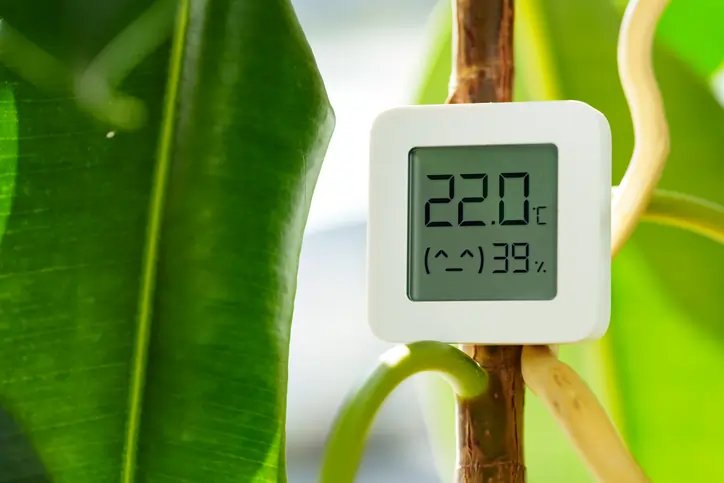
Widespread Use of Digital Temperature and Humidity Sensors for Maintaining Ambient Conditions for IoT Devices Operation: Fact.MR Report
Fact.MR, a market research and competitive intelligence provider, in its newly published study, stated that revenue from the digital temperature and humidity sensor market is evaluated to reach US$ 3.89 billion in 2024. Further, the market is projected to expand at a 6.8% CAGR through 2034.
Due to the rising integration of the Internet of Things (IoT) in several industries such as industrial automation, smart homes, and healthcare, there is a sharp rise in demand for digital temperature and humidity sensors. These sensors are crucial for maintaining the perfect environmental conditions needed for Internet of Things devices to function as intended. For instance, they enhance comfort and energy efficiency in smart homes by offering automated temperature control. The fact that IoT in industries such as manufacturing relies on real-time environmental monitoring for efficient operations further stimulates the need for these sensors.
Key Takeaways from the Market Study
- The global market for digital temperature and humidity sensors is analyzed to reach a value of US$ 7.48 billion by the end of 2034.
- Demand for these sensors in the United States is evaluated to reach a market valuation of US$ 2.02 billion by the end of 2034.
- China is evaluated to capture a revenue share of 73.9% in East Asia in 2024.
- The market in Japan is analyzed to reach a valuation of US$ 140.8 million in 2024.
- The market in the East Asia region is approximated to advance at 7% CAGR through 2034.
- Demand for humidity sensors is forecasted to reach US$ 3.58 billion by the end of 2034.
“One of the primary drivers of the market for digital temperature and humidity sensors is the Internet of Things ecosystem's explosive expansion,” says a Fact.MR analyst.
Leading Players Driving Innovation in the Digital Temperature and Humidity Sensor Market
Honeywell International Inc.; TE Connectivity; Amphenol Corporation; WIKA Alexander Wiegand SE & Co. KG; Microchip Technology Inc.; Texas Instruments Incorporated; Endress+Hauser Group Services AG; Siemens; Emerson Electric Co.; Analog Devices.
Preference for Digital Temperature and Humidity Sensors as Vital Components of Smart Devices and Systems Employed in Several Industries
The market for digital temperature and humidity sensors is driven in large part by the expansion of the Internet of Things environment. These sensors are essential parts of smart systems and gadgets used in several industries, including industrial automation, smart homes, and healthcare. HVAC systems, smart thermostats in smart homes, and environmental monitoring equipment all use temperature and humidity sensors. Users keep their homes comfortable and energy-efficient with the use of these sensors. To improve workflow and increase output, industrial IoT devices are using these sensors to monitor environmental factors.
Get Customization on this Report for Specific Research Solutions-https://www.factmr.com/connectus/sample?flag=S&rep_id=10432
Digital Temperature and Humidity Sensor Industry News:
- In June 2021, Texas Instruments declared that HDC3020 and HDC3020-Q1 would be available. Low power consumption and high precision data output are features of the new line of humidity sensors.
- In July 2022, Apple added temperature sensors to the Apple Watch to warn consumers of the potential for fevers caused by elevated body temperatures. This integration emphasises the growing demand for digital temperature sensors in wearables and enhances the ability of wearable technologies to monitor health.
- In November 2022, Sciosense introduced the ENS21x series of high-quality digital temperature and humidity sensors. This introduction shows how digital temperature sensor technology is developing and satisfies the growing demand for accurate environmental monitoring solutions across industries.
More Valuable Insights on Offer:
Fact.MR, in its new offering, presents an unbiased analysis of the digital temperature and humidity sensor market for 2019 to 2023 and forecast statistics for 2024 to 2034.
The study divulges the digital temperature and humidity sensor market based on type (temperature sensor, humidity sensor), technology (micro electromechanical systems, complementary metal oxide semiconductors, thin-film polymer technology), packaging type (surface mount technology, pin type packaging), and application (power train, body electronics), across seven major regions of the world (North America, Latin America, Western Europe, Eastern Europe, East Asia, South Asia & Pacific, and MEA).
Check out More Related Studies Published by Fact.MR:
The global microgrid as a service market is analyzed to reach a worth of US$ 2.62 billion in 2025 and further expand at a CAGR of 9.7% through 2035 to touch a size of US$ 6.6 billion by the end of 2035.
The global signal head market was valued at US$ 6,080 million in 2023 and is estimated to expand at a noteworthy CAGR of 5.5% to end up at US$ 10,957 million by 2034.
The global magnetic field sensor market is set to reach US$ 5.82 billion in 2024 and grow at a 7.7% CAGR to US$ 12.2 billion by 2034.
The global keyless entry system market is expected to grow at a 12.5% CAGR, reaching US$ 4.85 billion in 2024 and US$ 15.72 billion by 2034.
The global LED chip market is set to reach US$ 24.61 billion in 2024 and grow at an 8% CAGR to US$ 53.12 billion by 2034.
The global low power next-generation display market is expected to reach US$ 133.34 billion in 2024 and grow at a 6% CAGR to US$ 239.73 billion by 2034.
The global IoT managed services market is set to grow at a 7.7% CAGR, reaching US$ 92.26 billion in 2024 and US$ 193.2 billion by 2034.
The global IoT sensors in healthcare market is currently valued at US$ 5 billion and is forecasted to expand at a CAGR of 11.6% to reach US$ 14.96 billion by 2034.