Search
00
GBAF Logo
trophy
Top StoriesInterviewsBusinessFinanceBankingTechnologyInvestingTradingVideosAwardsMagazinesHeadlinesTrends

Subscribe to our newsletter

Get the latest news and updates from our team.

Global Banking and Finance Review

Global Banking & Finance Review

Company

    GBAF Logo
    • About Us
    • Profile
    • Privacy & Cookie Policy
    • Terms of Use
    • Contact Us
    • Advertising
    • Submit Post
    • Latest News
    • Research Reports
    • Press Release
    • Awards▾
      • About the Awards
      • Awards TimeTable
      • Submit Nominations
      • Testimonials
      • Media Room
      • Award Winners
      • FAQ
    • Magazines▾
      • Global Banking & Finance Review Magazine Issue 79
      • Global Banking & Finance Review Magazine Issue 78
      • Global Banking & Finance Review Magazine Issue 77
      • Global Banking & Finance Review Magazine Issue 76
      • Global Banking & Finance Review Magazine Issue 75
      • Global Banking & Finance Review Magazine Issue 73
      • Global Banking & Finance Review Magazine Issue 71
      • Global Banking & Finance Review Magazine Issue 70
      • Global Banking & Finance Review Magazine Issue 69
      • Global Banking & Finance Review Magazine Issue 66
    Top StoriesInterviewsBusinessFinanceBankingTechnologyInvestingTradingVideosAwardsMagazinesHeadlinesTrends

    Global Banking & Finance Review® is a leading financial portal and online magazine offering News, Analysis, Opinion, Reviews, Interviews & Videos from the world of Banking, Finance, Business, Trading, Technology, Investing, Brokerage, Foreign Exchange, Tax & Legal, Islamic Finance, Asset & Wealth Management.
    Copyright © 2010-2025 GBAF Publications Ltd - All Rights Reserved.

    Editorial & Advertiser disclosure

    Global Banking and Finance Review is an online platform offering news, analysis, and opinion on the latest trends, developments, and innovations in the banking and finance industry worldwide. The platform covers a diverse range of topics, including banking, insurance, investment, wealth management, fintech, and regulatory issues. The website publishes news, press releases, opinion and advertorials on various financial organizations, products and services which are commissioned from various Companies, Organizations, PR agencies, Bloggers etc. These commissioned articles are commercial in nature. This is not to be considered as financial advice and should be considered only for information purposes. It does not reflect the views or opinion of our website and is not to be considered an endorsement or a recommendation. We cannot guarantee the accuracy or applicability of any information provided with respect to your individual or personal circumstances. Please seek Professional advice from a qualified professional before making any financial decisions. We link to various third-party websites, affiliate sales networks, and to our advertising partners websites. When you view or click on certain links available on our articles, our partners may compensate us for displaying the content to you or make a purchase or fill a form. This will not incur any additional charges to you. To make things simpler for you to identity or distinguish advertised or sponsored articles or links, you may consider all articles or links hosted on our site as a commercial article placement. We will not be responsible for any loss you may suffer as a result of any omission or inaccuracy on the website.

    Home > Trading > DELIVERING THE NEXT WAVE OF CAPITAL EFFICIENCIES
    Trading

    DELIVERING THE NEXT WAVE OF CAPITAL EFFICIENCIES

    DELIVERING THE NEXT WAVE OF CAPITAL EFFICIENCIES

    Published by Gbaf News

    Posted on May 30, 2015

    Featured image for article about Trading

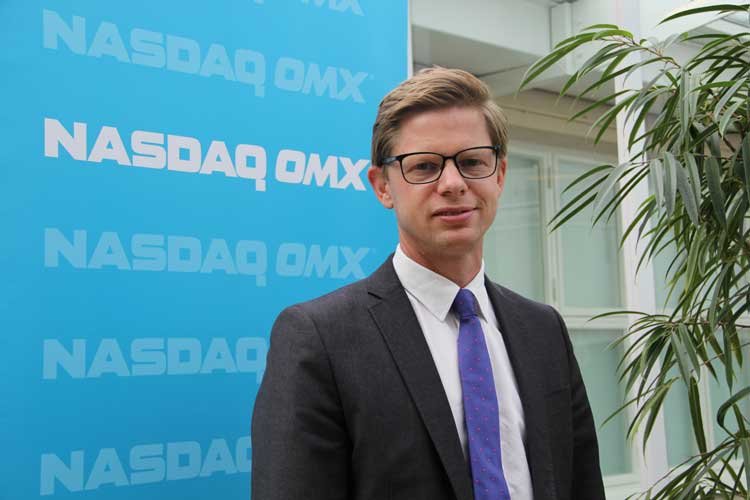
    Fredrik Ekström, President, Nasdaq Clearing

    Regulations – and particularly the OTC derivatives reform – have heightened the need for efficient use of capital. Central clearing for derivatives means that many buy-side firms are facing new collateral challenges and, as a result, portfolio margining has emerged as an important solution. However, regulations will harmonise margin levels so portfolio margining will cease to be a differentiator. To stay competitive, firms are already beginning to search for new and innovative ways to do more with less.

    Collateral will continue to play a crucial role in this. As regulations drive demand for high quality assets, firms need to optimise these in ways not related to margin. Therefore, while the concept of collateral management is nothing new, firms are tackling it with greater sophistication. Increasingly, this is going to involve managing the flow of collateral and balance sheet usage more intelligently.

    The industry must also contend with collateral bottlenecks resulting from weaknesses in financial market infrastructure. Clearing houses have an important role in mitigating these weaknesses and can do so through delivering a number of enhancements to participants. These include direct access to market infrastructure providers, real-time information, straight through processing (STP) and the auto allocation of funds on a client level.

    Getting the management of collateral right, and removing the bottlenecks,means firms can improve the overall management of supply and demand. It also facilitates more accurate forecasting, deeper insights into collateral shortfalls and more efficient allocation between bilateral and cleared trades. Furthermore, by avoiding over-collateralisation, they can free up valuation liquidity.

    Fredrik Ekstrom

    Fredrik Ekstrom

    Cash optimisation

    Brokers are helping clients make better use of their assets but both are also turning to CCPs for other opportunities. This includes cash optimisation, with total netting across all cash flows and full STP. This applies to the entire cash flow, from instruction and confirmation to reconciliation of individual transactions.

    Cash optimisation involves moving all monies, including initial and variation margin, fees and premiums, into a single cash transaction.Firms can then perform calculations that take into account all cash transactions and all posted collateral. This allows them to make smart decisions about how to apply those funds,such as using any excesses in one area to offset a deficit in another. For example, excess initial margin could be reallocated to cover a deficit in variation margin.

    For all of this to work, a set of key principles has emerged to help define some of the more technical aspects. One of these is ensuring there is no double funding in respect of initial margin, variation margin and cash settlement. Another is that the same day value applies for automated cash call backs and direct debit functionality, on both house and individual client account levels, regardless of currency.

    These and other technical details will likely evolve as cash optimisation techniques become more widely adopted. However, this is just the beginning. After cash, there are further opportunities such as security optimisation and improving the use of collateral in tri-party arrangements. Tri-party arrangements will be an important tool to optimise the allocation of collateral between CCPs but also between bilateral and CCP margin requirements.

    Paving the way for innovation

    Making these and other forms of collateral management a reality is going to depend on several factors. Perhaps the most significant is technology. Automation, standardisation and anything that improves efficiency will be vital to enabling greater innovation. This includes developments in connectivity and the continual drive for STP, such as T+2. If firms can’t move collateral efficiently, any level of sophistication applied to optimise it will have a limited impact.

    Reducing and even eliminating manual interventions of flows between participant, client and clearing house is going to benefit the whole market. This impetus could well push through the standardisation of FIXML, FPML and Swift-based messaging. Greater automation would also pave the way for other offerings. These include direct debit or credit transactions that automate the paying back of any cash surplus on a member’s account.

    In a more competitive clearing landscape, where market participants have greater choice, innovation in all forms will play a major role. Participants will be looking for the best ways to make efficient use of collateral as well as the firms best equipped to deliver them. What’s important though is there can’t be a one-size-fits-all approach – participants will need tools that meet their specific needs. Above all, they will want access to new innovations and developments – whether that’s tri-party offerings, security optimisation or something else entirely – that will continually keep them one step ahead.

    Related Posts
    What Is a Liquidity Provider – And Why Modern Brokers Can’t Function Without One
    What Is a Liquidity Provider – And Why Modern Brokers Can’t Function Without One
    OneFunded: Prop Firm Overview and Program Structure
    OneFunded: Prop Firm Overview and Program Structure
    What if You Can Actually Chat with Your Crypto Wallet?
    What if You Can Actually Chat with Your Crypto Wallet?
    The Growing Importance of Choosing the Right Crypto Broker in 2025
    The Growing Importance of Choosing the Right Crypto Broker in 2025
    The Rise of Algorithmic Trading Among Retail Investors in the UK
    The Rise of Algorithmic Trading Among Retail Investors in the UK
    Forex Trading for the 9-to-5er: A Realistic Path to a Second Income
    Forex Trading for the 9-to-5er: A Realistic Path to a Second Income
    Quality Matters: ZiNRai’s Focus on Empowering Traders with Precision and Purpose
    Quality Matters: ZiNRai’s Focus on Empowering Traders with Precision and Purpose
    MiCA Regulations and the Legal Requirements for Crypto Presales and Token Offerings in the European Union
    MiCA Regulations and the Legal Requirements for Crypto Presales and Token Offerings in the European Union
    Top Ways Forex Traders Benefit From Peer-to-Peer Learning
    Top Ways Forex Traders Benefit From Peer-to-Peer Learning
    Why High Leverage Remains Attractive to Forex Traders Worldwide
    Why High Leverage Remains Attractive to Forex Traders Worldwide
    XDC Network’s ETP Listing Signals the Maturing Convergence of Blockchain and Trade Finance
    XDC Network’s ETP Listing Signals the Maturing Convergence of Blockchain and Trade Finance
    Inside the Perp DEX Landscape: How Platforms Like Grvt and Hyperliquid Are Shaping Their Long-Term Vision
    Inside the Perp DEX Landscape: How Platforms Like Grvt and Hyperliquid Are Shaping Their Long-Term Vision

    Why waste money on news and opinions when you can access them for free?

    Take advantage of our newsletter subscription and stay informed on the go!

    Subscribe

    Previous Trading PostHOW TO USE FIBONACCI IN FOREX TRADING
    Next Trading PostCAUTION IS THE ORDER OF THE DAY WITH GOLD LIQUIDITY

    More from Trading

    Explore more articles in the Trading category

    Blending Theory and Practice: Building Stronger Forex Strategies

    Blending Theory and Practice: Building Stronger Forex Strategies

    Strategies for Professional CFD Traders: Tools and Company Support

    Strategies for Professional CFD Traders: Tools and Company Support

    Trust as the Cornerstone of Capital Markets

    Trust as the Cornerstone of Capital Markets

    UK Investors Reassess Trading Venues as Liquidity Shifts

    UK Investors Reassess Trading Venues as Liquidity Shifts

    Bitcoin Price Live: What Factors Influence Its Value?

    Bitcoin Price Live: What Factors Influence Its Value?

    Offshore Forex Brokers vs. U.S.-Regulated Brokers: A Risk Assessment

    Offshore Forex Brokers vs. U.S.-Regulated Brokers: A Risk Assessment

    The Broker Expo, Its Role in the Small Business World, and Everest Business Funding’s Role as Sponsor

    The Broker Expo, Its Role in the Small Business World, and Everest Business Funding’s Role as Sponsor

    Finding Your Edge with a Crypto-First Prop Firm

    Finding Your Edge with a Crypto-First Prop Firm

    Evaluating the Most Reliable Tools for Tracking Real-Time Cryptocurrency Prices

    Evaluating the Most Reliable Tools for Tracking Real-Time Cryptocurrency Prices

    MT5 vs MT4: Why More Brokers Are Moving to MetaTrader 5

    MT5 vs MT4: Why More Brokers Are Moving to MetaTrader 5

    From Central Banks to Retail Traders: Who Drives the Forex Market?

    From Central Banks to Retail Traders: Who Drives the Forex Market?

    Building a Winning Forex Portfolio: Tools and Resources You Can’t Ignore

    Building a Winning Forex Portfolio: Tools and Resources You Can’t Ignore

    View All Trading Posts