Search
00
GBAF Logo
trophy
Top StoriesInterviewsBusinessFinanceBankingTechnologyInvestingTradingVideosAwardsMagazinesHeadlinesTrends

Subscribe to our newsletter

Get the latest news and updates from our team.

Global Banking & Finance Review®

Global Banking & Finance Review® - Subscribe to our newsletter

Company

    GBAF Logo
    • About Us
    • Profile
    • Privacy & Cookie Policy
    • Terms of Use
    • Contact Us
    • Advertising
    • Submit Post
    • Latest News
    • Research Reports
    • Press Release
    • Awards▾
      • About the Awards
      • Awards TimeTable
      • Submit Nominations
      • Testimonials
      • Media Room
      • Award Winners
      • FAQ
    • Magazines▾
      • Global Banking & Finance Review Magazine Issue 79
      • Global Banking & Finance Review Magazine Issue 78
      • Global Banking & Finance Review Magazine Issue 77
      • Global Banking & Finance Review Magazine Issue 76
      • Global Banking & Finance Review Magazine Issue 75
      • Global Banking & Finance Review Magazine Issue 73
      • Global Banking & Finance Review Magazine Issue 71
      • Global Banking & Finance Review Magazine Issue 70
      • Global Banking & Finance Review Magazine Issue 69
      • Global Banking & Finance Review Magazine Issue 66
    Top StoriesInterviewsBusinessFinanceBankingTechnologyInvestingTradingVideosAwardsMagazinesHeadlinesTrends

    Global Banking & Finance Review® is a leading financial portal and online magazine offering News, Analysis, Opinion, Reviews, Interviews & Videos from the world of Banking, Finance, Business, Trading, Technology, Investing, Brokerage, Foreign Exchange, Tax & Legal, Islamic Finance, Asset & Wealth Management.
    Copyright © 2010-2026 GBAF Publications Ltd - All Rights Reserved. | Sitemap | Tags | Developed By eCorpIT

    Editorial & Advertiser disclosure

    Global Banking & Finance Review® is an online platform offering news, analysis, and opinion on the latest trends, developments, and innovations in the banking and finance industry worldwide. The platform covers a diverse range of topics, including banking, insurance, investment, wealth management, fintech, and regulatory issues. The website publishes news, press releases, opinion and advertorials on various financial organizations, products and services which are commissioned from various Companies, Organizations, PR agencies, Bloggers etc. These commissioned articles are commercial in nature. This is not to be considered as financial advice and should be considered only for information purposes. It does not reflect the views or opinion of our website and is not to be considered an endorsement or a recommendation. We cannot guarantee the accuracy or applicability of any information provided with respect to your individual or personal circumstances. Please seek Professional advice from a qualified professional before making any financial decisions. We link to various third-party websites, affiliate sales networks, and to our advertising partners websites. When you view or click on certain links available on our articles, our partners may compensate us for displaying the content to you or make a purchase or fill a form. This will not incur any additional charges to you. To make things simpler for you to identity or distinguish advertised or sponsored articles or links, you may consider all articles or links hosted on our site as a commercial article placement. We will not be responsible for any loss you may suffer as a result of any omission or inaccuracy on the website.

    Home > Finance > Consumer payments trends 2022: a spotlight on Peru
    Finance

    Consumer payments trends 2022: a spotlight on Peru

    Published by Jessica Weisman-Pitts

    Posted on July 11, 2022

    5 min read

    Last updated: February 5, 2026

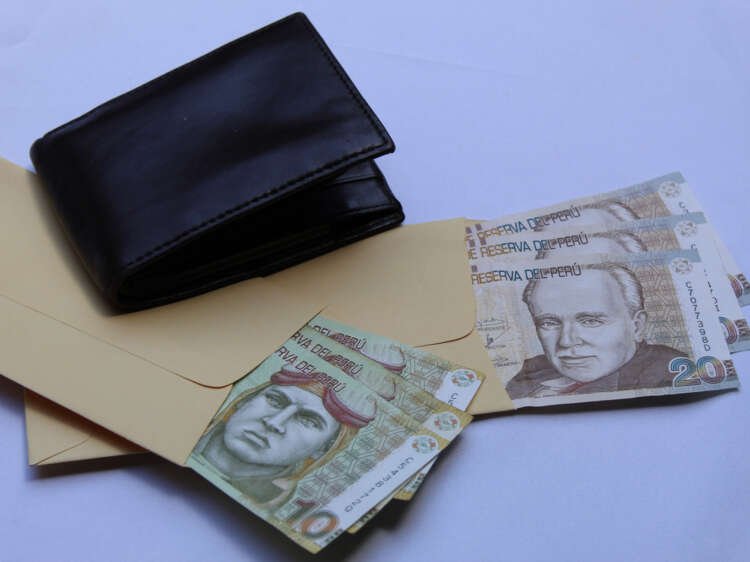
    An illustration featuring Peruvian currency notes alongside digital payment symbols, highlighting the growing adoption of alternative payment methods in Peru as discussed in the article on consumer payment trends.
    Peruvian currency notes and digital payment symbols - Consumer payments trends in Peru - Global Banking & Finance Review
    Why waste money on news and opinion when you can access them for free?

    Take advantage of our newsletter subscription and stay informed on the go!

    Subscribe

    Tags:paymentse-commercefinancial inclusiondigital payments

    Quick Summary

    Why Peru has seen such high adoption of alternative payment methods (APMs) among consumers, and the opportunity this presents for

    Why Peru has seen such high adoption of alternative payment methods (APMs) among consumers, and the opportunity this presents for businesses.

    Gustavo Ruiz Moya, CEO of eCash for Latin America and Global Head of Open Banking, Paysafe

    With a population of 33.8 million people, Peru is a largely cash-driven society with a relatively high unbanked population compared to some other regions in Latin America – 57% unbanked compared to Brazil’s 30% and Chile’s 26%. Smartphone adoption, now at 62%, is growing and expected to reach 70% by 2025.

    Peru has a traditionally low rate of credit card adoption, and as a country it is advanced in terms of digital payments. As online shopping has risen – 28% in 2021 according to industry figures – alternative payment method (APM) uptake has accelerated, and consumers are aware of and comfortable with the different APMs available to them.

    APMs have been around for some time. Peru has had peer-to-peer (P2P) payments in the form of Yape from Banco de Crédito del Perú (BCP), the largest bank in Peru, since 2016 – and subsequently opened up to unbanked individuals in 2020. Consumers are also used to to QR code services, which have been encouraged by the Peruvian Central Bank, and eCash and bank transfers are popular, with appetite for greater use, as reported in our survey of 1,000 consumers in Peru in April 2022.

    An ongoing reliance on cash

    Our Lost in Transaction data shows that many people in Peru still rely on cash: 66% of consumers think that cash is the most reliable form of payment, and 76% would be worried if they could no longer access cash. This trend is likely related to the levels of financial inclusion in the country and consumers’ access to financial products and services through traditional banks.

    22% of people said they used eCash in the past month when paying for online purchases, almost double those that have used a mobile wallet (12%). Our survey – which also gathered responses from consumers across North America and Europe – shows that this number is double the eCash usage recorded among North American consumers (11%), and more than double compared to respondents in Europe (9%).

    Further, 42% indicate that they use eCash more frequently or about the same amount as a year ago – and 67% say that if it were easy, they’d prefer to pay for online transactions in cash. Most notably, 67% reckon they’d make online transactions more often if they could easily pay in cash, which suggests merchants making eCash options more widely available would be welcomed by consumers and potentially drive greater uptake of eCommerce.

    Peruvians are also increasingly using bank transfer as a payment method, thanks to its speed, security, and affordability. In our survey, 56% say they use bank transfers more frequently or about as much as they did a year ago. And, of the 67% of consumers who have changed their choice of payment method for online purchases due to the rising cost of living, 43% are using direct bank transfers more often for payments – second only to debit cards, which 54% are using more often. This could in part be related to avoiding transaction fees, as well as increased availability of bank transfer options from merchants.

    An eye on security

    However, the security of payments does play on people’s minds: 46% of consumers consider security the most important factor when choosing how to pay for an online purchase. And they don’t mind having to go through extra steps to ensure their transactions are secure – 76% feel anxious when they’re not asked to provide any security information, like a password, when making an online payment.

    But there’s some hesitation around disclosing financial information: 43% prefer using payment methods that don’t require them to share their details online and 69% don’t feel comfortable entering their financial data online. A significant 82% feel more comfortable using a payment method that doesn’t require them to share their financial details with merchants when they shop online.

    Peruvians’ stance when it comes to security is clearly reflected in their increasing use of eCash and bank transfers. These payment methods directly address consumers’ concerns around safety and don’t require sensitive financial information to be shared online or with third parties.

    Market maturity with potential

    As our Lost in Transaction survey results indicate, the market for APMs is relatively mature in Peru, even in comparison to the rest of Latin America. Consumers find digital payment methods attractive for several reasons, not least their security and accessibility. There’s also scope for growth as mobile adoption rises, and because of consumers’ appetite to use options such as eCash if it were more widely available.

    In a nutshell, Peru presents interesting country dynamics with a significant opportunity for merchants that have the right local infrastructure and payment methods in place.

    Frequently Asked Questions about Consumer payments trends 2022: a spotlight on Peru

    1What is an alternative payment method?

    An alternative payment method (APM) refers to any payment option that is not a traditional credit or debit card, including digital wallets, bank transfers, and cryptocurrencies.

    2What is financial inclusion?

    Financial inclusion is the process of ensuring access to financial services for all individuals, particularly those who are underserved or unbanked, allowing them to participate in the economy.

    3What are peer-to-peer payments?

    Peer-to-peer payments are transactions that allow individuals to send money directly to one another without the need for a traditional financial intermediary, often facilitated by mobile apps.

    4What is a QR code payment?

    A QR code payment is a method of payment that uses a Quick Response (QR) code to facilitate transactions, allowing consumers to pay by scanning the code with their mobile devices.

    5What is eCash?

    eCash is a digital payment system that allows users to make transactions electronically, often without the need for a bank account, providing a convenient option for online purchases.

    More from Finance

    Explore more articles in the Finance category

    Image for French miner Eramet's finance chief steps aside temporarily, days after CEO ouster
    French miner Eramet's finance chief steps aside temporarily, days after CEO ouster
    Image for Ukraine's Zelenskiy calls for faster action on air defence, repairs to grid
    Ukraine's Zelenskiy calls for faster action on air defence, repairs to grid
    Image for Goldman Sachs teams up with Anthropic to automate banking tasks with AI agents, CNBC reports
    Goldman Sachs teams up with Anthropic to automate banking tasks with AI agents, CNBC reports
    Image for Analysis-Hims' $49 weight-loss pill rattles investor case for cash-pay obesity market
    Analysis-Hims' $49 weight-loss pill rattles investor case for cash-pay obesity market
    Image for Analysis-Glencore to focus on short-term disposals as Rio deal remains elusive
    Analysis-Glencore to focus on short-term disposals as Rio deal remains elusive
    Image for Belgium's Agomab Therapeutics valued at $716 million as shares fall in Nasdaq debut
    Belgium's Agomab Therapeutics valued at $716 million as shares fall in Nasdaq debut
    Image for Big Tech's quarter in four charts: AI splurge and cloud growth
    Big Tech's quarter in four charts: AI splurge and cloud growth
    Image for EU hikes tariffs on Chinese ceramics to 79% to counter dumping 
    EU hikes tariffs on Chinese ceramics to 79% to counter dumping 
    Image for AI trade splinters as investors get more selective
    AI trade splinters as investors get more selective
    Image for EU extends tariff suspension on $109.8 billion of US imports for six months
    EU extends tariff suspension on $109.8 billion of US imports for six months
    Image for Dog food maker Ollie acquired by Spain’s Agrolimen
    Dog food maker Ollie acquired by Spain’s Agrolimen
    Image for Salzgitter to take over HKM steel joint venture, end clash with Thyssenkrupp
    Salzgitter to take over HKM steel joint venture, end clash with Thyssenkrupp
    View All Finance Posts
    Previous Finance PostWeekly economic update: Economics Trumps Politics
    Next Finance PostHow did the great gen-wealth shift become so important?