Search
00
GBAF Logo
trophy
Top StoriesInterviewsBusinessFinanceBankingTechnologyInvestingTradingVideosAwardsMagazinesHeadlinesTrends

Subscribe to our newsletter

Get the latest news and updates from our team.

Global Banking & Finance Review®

Global Banking & Finance Review® - Subscribe to our newsletter

Company

    GBAF Logo
    • About Us
    • Profile
    • Privacy & Cookie Policy
    • Terms of Use
    • Contact Us
    • Advertising
    • Submit Post
    • Latest News
    • Research Reports
    • Press Release
    • Awards▾
      • About the Awards
      • Awards TimeTable
      • Submit Nominations
      • Testimonials
      • Media Room
      • Award Winners
      • FAQ
    • Magazines▾
      • Global Banking & Finance Review Magazine Issue 79
      • Global Banking & Finance Review Magazine Issue 78
      • Global Banking & Finance Review Magazine Issue 77
      • Global Banking & Finance Review Magazine Issue 76
      • Global Banking & Finance Review Magazine Issue 75
      • Global Banking & Finance Review Magazine Issue 73
      • Global Banking & Finance Review Magazine Issue 71
      • Global Banking & Finance Review Magazine Issue 70
      • Global Banking & Finance Review Magazine Issue 69
      • Global Banking & Finance Review Magazine Issue 66
    Top StoriesInterviewsBusinessFinanceBankingTechnologyInvestingTradingVideosAwardsMagazinesHeadlinesTrends

    Global Banking & Finance Review® is a leading financial portal and online magazine offering News, Analysis, Opinion, Reviews, Interviews & Videos from the world of Banking, Finance, Business, Trading, Technology, Investing, Brokerage, Foreign Exchange, Tax & Legal, Islamic Finance, Asset & Wealth Management.
    Copyright © 2010-2026 GBAF Publications Ltd - All Rights Reserved. | Sitemap | Tags | Developed By eCorpIT

    Editorial & Advertiser disclosure

    Global Banking & Finance Review® is an online platform offering news, analysis, and opinion on the latest trends, developments, and innovations in the banking and finance industry worldwide. The platform covers a diverse range of topics, including banking, insurance, investment, wealth management, fintech, and regulatory issues. The website publishes news, press releases, opinion and advertorials on various financial organizations, products and services which are commissioned from various Companies, Organizations, PR agencies, Bloggers etc. These commissioned articles are commercial in nature. This is not to be considered as financial advice and should be considered only for information purposes. It does not reflect the views or opinion of our website and is not to be considered an endorsement or a recommendation. We cannot guarantee the accuracy or applicability of any information provided with respect to your individual or personal circumstances. Please seek Professional advice from a qualified professional before making any financial decisions. We link to various third-party websites, affiliate sales networks, and to our advertising partners websites. When you view or click on certain links available on our articles, our partners may compensate us for displaying the content to you or make a purchase or fill a form. This will not incur any additional charges to you. To make things simpler for you to identity or distinguish advertised or sponsored articles or links, you may consider all articles or links hosted on our site as a commercial article placement. We will not be responsible for any loss you may suffer as a result of any omission or inaccuracy on the website.

    Home > Trading > China’s ‘quant’ traders fend off regulatory flak
    Trading

    China’s ‘quant’ traders fend off regulatory flak

    Published by maria gbaf

    Posted on September 10, 2021

    6 min read

    Last updated: January 21, 2026

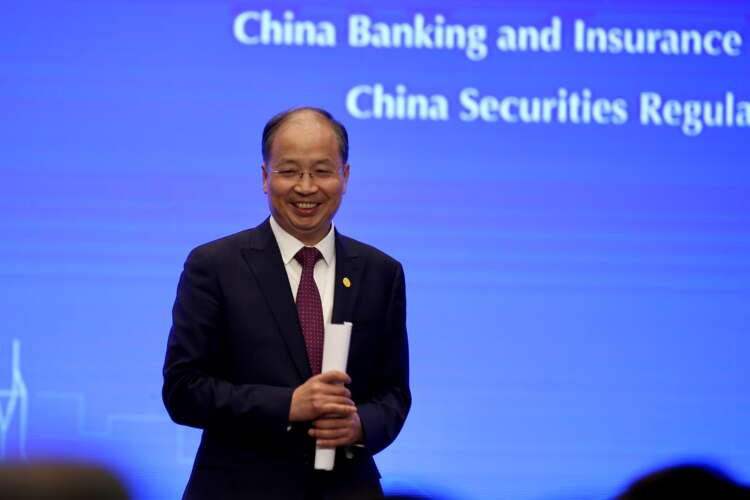
    Image depicting Chinese hedge fund managers discussing quantitative trading strategies amidst regulatory scrutiny. Highlights the growing influence of quants in China's financial markets.
    Chinese quant traders navigating regulatory challenges in financial markets - Global Banking & Finance Review
    Why waste money on news and opinion when you can access them for free?

    Take advantage of our newsletter subscription and stay informed on the go!

    Subscribe

    SHANGHAI (Reuters) – Chinese hedge fund managers parried criticism of their trading techniques and market impact on Tuesday, a day after the country’s top securities regulator said the rapidly growing number of “quants” was a challenge to stock exchanges.

    Yi Huiman, chairman of the China Securities Regulatory Commission (CSRC), said on Monday bourses should be paying attention to a surge in quantitative trading on the mainland. Quants, as traders and funds that engage in such trading are known, employ fast computers that use mathematical and statistical analyses to trade.

    In mature markets, such quantitative and high-frequency trading had led to better liquidity, but also spawned herd behaviours, greater volatility and unfairness, Yi said.

    Fund managers were quick to deflect that criticism, which comes at a time of heightened market concerns as China launches a series of regulations against sectors ranging from technology to private tutoring.

    Yi’s remarks also come as analysts debate the role of China’s ‘flash boys’ — the data-driven, fast-paced hedge fund traders — in a thriving stock market.

    “You cannot just blame quants, without blaming long-only funds” for causing market problems, said Yuan Yuwei, a hedge fund manager at Water Wisdom Asset Management.

    “Actually, long-only funds do more harm to markets” in China, where short selling of shares is restricted, he said.

    Xueming Zhang, head of Antifragile Investment at China iFund Asset Management Co Ltd, distanced his company from the type of funds potentially being targeted by regulators.

    “Our quantitative strategy is different from the mainstream these days, which is high-frequency trading,” Zhang said.

    “It’s understandable that regulators don’t want to see barbaric growth of the sector triggering excessive volatility.”

    China’s quantitative private funds totalled nearly 1 trillion yuan ($154.6 billion) at the end of June, according to Citic Securities. That’s almost ten times their size in 2017.

    The chief executive of a major high-frequency hedge fund in China said the asset manager had been in constant contact with regulators, who are studying the business.

    “High-frequency trading under China’s stock trading mechanism is different from that in U.S. and European markets,” said the executive, who declined to be identified due to sensitivity of the topic. Under China’s system, stocks cannot be sold on the same day of purchase.

    “But it’s a trend for regulators to set up an effective management framework, which we support.”

    The spotlight on ‘flash boys’ coincides with an explosion in China’s stock trading volumes. Daily turnover has exceeded 1 trillion yuan for over 30 consecutive sessions.

    Estimates of how much quant funds contribute to this turnover vary. Citic Securities puts the figure between 10%-15%, while Guosen Securities estimates it’s over 20%.

    Some of the biggest players include High-Flyer Quant, Ubiquant Investment and Shanghai Minghong Investment Management Co. The market has also attracted global hedge fund houses such as Winton Group and Man Group, as China presses on with opening its capital markets.

    Instead of imposing tighter regulations on hedge funds, China should improve its shorting mechanism and allow intraday trading of stocks, said Yuan of Water Wisdom.

    “It’s time to reform the trading mechanism of A-shares,” he said.

    (Reporting by Samuel Shen and Andrew Galbraith; Editing by Vidya Ranganathan and Bernadette Baum)

    SHANGHAI (Reuters) – Chinese hedge fund managers parried criticism of their trading techniques and market impact on Tuesday, a day after the country’s top securities regulator said the rapidly growing number of “quants” was a challenge to stock exchanges.

    Yi Huiman, chairman of the China Securities Regulatory Commission (CSRC), said on Monday bourses should be paying attention to a surge in quantitative trading on the mainland. Quants, as traders and funds that engage in such trading are known, employ fast computers that use mathematical and statistical analyses to trade.

    In mature markets, such quantitative and high-frequency trading had led to better liquidity, but also spawned herd behaviours, greater volatility and unfairness, Yi said.

    Fund managers were quick to deflect that criticism, which comes at a time of heightened market concerns as China launches a series of regulations against sectors ranging from technology to private tutoring.

    Yi’s remarks also come as analysts debate the role of China’s ‘flash boys’ — the data-driven, fast-paced hedge fund traders — in a thriving stock market.

    “You cannot just blame quants, without blaming long-only funds” for causing market problems, said Yuan Yuwei, a hedge fund manager at Water Wisdom Asset Management.

    “Actually, long-only funds do more harm to markets” in China, where short selling of shares is restricted, he said.

    Xueming Zhang, head of Antifragile Investment at China iFund Asset Management Co Ltd, distanced his company from the type of funds potentially being targeted by regulators.

    “Our quantitative strategy is different from the mainstream these days, which is high-frequency trading,” Zhang said.

    “It’s understandable that regulators don’t want to see barbaric growth of the sector triggering excessive volatility.”

    China’s quantitative private funds totalled nearly 1 trillion yuan ($154.6 billion) at the end of June, according to Citic Securities. That’s almost ten times their size in 2017.

    The chief executive of a major high-frequency hedge fund in China said the asset manager had been in constant contact with regulators, who are studying the business.

    “High-frequency trading under China’s stock trading mechanism is different from that in U.S. and European markets,” said the executive, who declined to be identified due to sensitivity of the topic. Under China’s system, stocks cannot be sold on the same day of purchase.

    “But it’s a trend for regulators to set up an effective management framework, which we support.”

    The spotlight on ‘flash boys’ coincides with an explosion in China’s stock trading volumes. Daily turnover has exceeded 1 trillion yuan for over 30 consecutive sessions.

    Estimates of how much quant funds contribute to this turnover vary. Citic Securities puts the figure between 10%-15%, while Guosen Securities estimates it’s over 20%.

    Some of the biggest players include High-Flyer Quant, Ubiquant Investment and Shanghai Minghong Investment Management Co. The market has also attracted global hedge fund houses such as Winton Group and Man Group, as China presses on with opening its capital markets.

    Instead of imposing tighter regulations on hedge funds, China should improve its shorting mechanism and allow intraday trading of stocks, said Yuan of Water Wisdom.

    “It’s time to reform the trading mechanism of A-shares,” he said.

    (Reporting by Samuel Shen and Andrew Galbraith; Editing by Vidya Ranganathan and Bernadette Baum)

    More from Trading

    Explore more articles in the Trading category

    Image for Navigating Currency Volatility in an Uncertain Global Economy
    Navigating Currency Volatility in an Uncertain Global Economy
    Image for What Is a Liquidity Provider – And Why Modern Brokers Can’t Function Without One
    What Is a Liquidity Provider – And Why Modern Brokers Can’t Function Without One
    Image for OneFunded: Prop Firm Overview and Program Structure
    OneFunded: Prop Firm Overview and Program Structure
    Image for What if You Can Actually Chat with Your Crypto Wallet?
    What if You Can Actually Chat with Your Crypto Wallet?
    Image for The Growing Importance of Choosing the Right Crypto Broker in 2025
    The Growing Importance of Choosing the Right Crypto Broker in 2025
    Image for The Rise of Algorithmic Trading Among Retail Investors in the UK
    The Rise of Algorithmic Trading Among Retail Investors in the UK
    Image for Forex Trading for the 9-to-5er: A Realistic Path to a Second Income
    Forex Trading for the 9-to-5er: A Realistic Path to a Second Income
    Image for Quality Matters: ZiNRai’s Focus on Empowering Traders with Precision and Purpose
    Quality Matters: ZiNRai’s Focus on Empowering Traders with Precision and Purpose
    Image for MiCA Regulations and the Legal Requirements for Crypto Presales and Token Offerings in the European Union
    MiCA Regulations and the Legal Requirements for Crypto Presales and Token Offerings in the European Union
    Image for Top Ways Forex Traders Benefit From Peer-to-Peer Learning
    Top Ways Forex Traders Benefit From Peer-to-Peer Learning
    Image for Why High Leverage Remains Attractive to Forex Traders Worldwide
    Why High Leverage Remains Attractive to Forex Traders Worldwide
    Image for XDC Network’s ETP Listing Signals the Maturing Convergence of Blockchain and Trade Finance
    XDC Network’s ETP Listing Signals the Maturing Convergence of Blockchain and Trade Finance
    View All Trading Posts
    Previous Trading PostOver two-thirds of offshore oil output remains shut in U.S. Gulf -regulator
    Next Trading PostOil dives late, hit by China supply plan, U.S. bond auction