Search
00
GBAF Logo
trophy
Top StoriesInterviewsBusinessFinanceBankingTechnologyInvestingTradingVideosAwardsMagazinesHeadlinesTrends

Subscribe to our newsletter

Get the latest news and updates from our team.

Global Banking & Finance Review®

Global Banking & Finance Review® - Subscribe to our newsletter

Company

    GBAF Logo
    • About Us
    • Profile
    • Privacy & Cookie Policy
    • Terms of Use
    • Contact Us
    • Advertising
    • Submit Post
    • Latest News
    • Research Reports
    • Press Release
    • Awards▾
      • About the Awards
      • Awards TimeTable
      • Submit Nominations
      • Testimonials
      • Media Room
      • Award Winners
      • FAQ
    • Magazines▾
      • Global Banking & Finance Review Magazine Issue 79
      • Global Banking & Finance Review Magazine Issue 78
      • Global Banking & Finance Review Magazine Issue 77
      • Global Banking & Finance Review Magazine Issue 76
      • Global Banking & Finance Review Magazine Issue 75
      • Global Banking & Finance Review Magazine Issue 73
      • Global Banking & Finance Review Magazine Issue 71
      • Global Banking & Finance Review Magazine Issue 70
      • Global Banking & Finance Review Magazine Issue 69
      • Global Banking & Finance Review Magazine Issue 66
    Top StoriesInterviewsBusinessFinanceBankingTechnologyInvestingTradingVideosAwardsMagazinesHeadlinesTrends

    Global Banking & Finance Review® is a leading financial portal and online magazine offering News, Analysis, Opinion, Reviews, Interviews & Videos from the world of Banking, Finance, Business, Trading, Technology, Investing, Brokerage, Foreign Exchange, Tax & Legal, Islamic Finance, Asset & Wealth Management.
    Copyright © 2010-2026 GBAF Publications Ltd - All Rights Reserved. | Sitemap | Tags | Developed By eCorpIT

    Editorial & Advertiser disclosure

    Global Banking & Finance Review® is an online platform offering news, analysis, and opinion on the latest trends, developments, and innovations in the banking and finance industry worldwide. The platform covers a diverse range of topics, including banking, insurance, investment, wealth management, fintech, and regulatory issues. The website publishes news, press releases, opinion and advertorials on various financial organizations, products and services which are commissioned from various Companies, Organizations, PR agencies, Bloggers etc. These commissioned articles are commercial in nature. This is not to be considered as financial advice and should be considered only for information purposes. It does not reflect the views or opinion of our website and is not to be considered an endorsement or a recommendation. We cannot guarantee the accuracy or applicability of any information provided with respect to your individual or personal circumstances. Please seek Professional advice from a qualified professional before making any financial decisions. We link to various third-party websites, affiliate sales networks, and to our advertising partners websites. When you view or click on certain links available on our articles, our partners may compensate us for displaying the content to you or make a purchase or fill a form. This will not incur any additional charges to you. To make things simpler for you to identity or distinguish advertised or sponsored articles or links, you may consider all articles or links hosted on our site as a commercial article placement. We will not be responsible for any loss you may suffer as a result of any omission or inaccuracy on the website.

    Home > Business > Behind a potential Honda and Nissan tie-up, the existential threat posed by Chinese EVs
    Business

    Behind a potential Honda and Nissan tie-up, the existential threat posed by Chinese EVs

    Published by Uma Rajagopal

    Posted on December 19, 2024

    4 min read

    Last updated: January 28, 2026

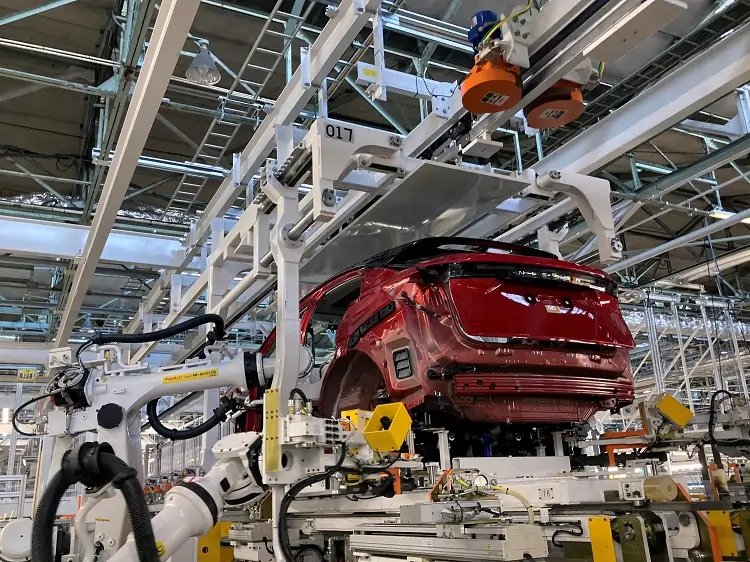
    This image represents the potential merger talks between Honda and Nissan as they face competition from Chinese EV manufacturers. The collaboration aims to strengthen their position in the automotive market and counter the advancements of Chinese electric vehicle technology.
    Illustration of Honda and Nissan's potential merger amid Chinese EV competition - Global Banking & Finance Review
    Why waste money on news and opinion when you can access them for free?

    Take advantage of our newsletter subscription and stay informed on the go!

    Subscribe

    Tags:innovationAutomotive industryfinancial managementGDPemployment opportunities

    By Kantaro Komiya, Yoshifumi Takemoto

    TOKYO (Reuters) -Some unions are born of necessity, others from convenience. In the case of Honda and Nissan’s potential merger, it is mostly defensive as Chinese rivals take the world by storm.

    While the challenge from China’s seemingly boundless EV expertise looms large for all traditional automakers, for Japan it represents a threat to the vast car-manufacturing supply chain that has been the country’s economic engine for years.

    Honda, Japan’s second-largest car company, and Nissan, its third-largest, are in talks to deepen ties, including the possibility of setting up a holding company, two people familiar with the matter said on Wednesday. The automakers are discussing a potential merger, one of the people said.

    Like other foreign carmakers, both Honda and Nissan have lost ground in China, the world’s biggest auto market, as BYD and other domestic brands win over consumers with EVs and hybrids loaded with innovative software.

    Honda reported a 15% drop in quarterly profit last month, hit by the decline in China and has been scaling back its workforce there. Nissan – a long-struggling company – plans to cut 9,000 jobs globally and manufacturing capacity by 20% due to slumping sales in China and the United States.

    Sanshiro Fukao, an executive fellow at the Itochu Research Institute in Tokyo, warns that the speed at which Chinese EV makers have been able to innovate means that Honda and Nissan have “no time” to pursue business as usual.

    “We’re no longer in the age where carmakers would join together, churn out profits through economies of scale and then reinvest them in a five-year restructuring plan.”

    Others note that any steep decline for Japan’s auto industry would be particularly painful. It’s the strongest sector in the world’s fourth-largest economy and Japan’s position in other key industries such as consumer electronics and chips has waned over the years.

    “For Japan, it’s ultimately all about cars. If the auto industry doesn’t improve, then the whole of Japanese manufacturing will not get better,” said Takumi Tsunoda, a senior economist at Shinkin Central Bank Research Institute.

    THE DIGITAL SHIFT

    Japan’s automotive supply chain totalled around 60,000 companies as of May this year, according to a survey by research firm Teikoku Databank. Total business transactions were estimated at 42 trillion yen ($270 billion), equivalent to 7% of nominal GDP in the 2023 fiscal year.

    Broadly, the industry employs more than 5 million people, representing 8% of the entire workforce, according to the Japan Automobile Manufacturers Association.

    Consolidation through mergers can help by slashing costs and pooling resources but it remains to be seen whether Japan’s auto industry – like the U.S. or German auto industry – can sufficiently compete in EVs.

    Japan’s automakers have been steeped in the country’s traditions of “monozukuri” or manufacturing craftmanship, and have been influenced by market leader Toyota which revolutionised modern manufacturing with its system of lean production and just-in-time delivery of components.

    Those methods helped develop a culture of incremental improvement and production-line efficiency that powered the Japanese auto industry’s rise from the late 1970s.

    However, the shift to battery-powered smart cars has seen much of the consumer’s interest focus on software-reliant self-driving features and their digital experience inside the vehicle – areas where the Chinese excel.

    Among Japan’s automakers, Toyota has been the most vocal about the potential harm from a dramatic shift to EVs, with Chairman Akio Toyoda warning in October that an EV-only future would lead to many job losses in the industry, especially at suppliers and those working on engines.

    Toyota has long championed what it calls a “multi-pathway” strategy that includes producing hybrids, hydrogen cars as well as EVs.

    Eikei Suzuki, a lawmaker from the ruling Liberal Democratic Party who represents Mie prefecture – home to a Honda plant and its Suzuka Circuit race course – said he hoped if Honda and Nissan were to integrate, it would increase their global competitiveness.

    But he added that if the merger were to adversely impact local manufacturing and employment, that would go against the policies of Prime Minister Shigeru Ishiba, who has pledged to revitalise Japan’s provincial economies.

    “We hope that consideration will be given to regional employment in Japan,” he said.

    ($1 = 155.3600 yen)

    (Reporting by Kantaro Komiya and Yoshifumi Takemoto; Additional reporting by Ritsuko Shimizu; Writing by David Dolan; Editing by Edwina Gibbs)

    Frequently Asked Questions about Behind a potential Honda and Nissan tie-up, the existential threat posed by Chinese EVs

    1What is a merger?

    A merger is a business strategy where two companies combine to form a single entity, often to enhance competitiveness and market share.

    2What is an electric vehicle (EV)?

    An electric vehicle (EV) is a type of vehicle that is powered by electric motors, using energy stored in batteries, instead of traditional internal combustion engines.

    3What is the automotive supply chain?

    The automotive supply chain encompasses all processes involved in the production and distribution of vehicles, including suppliers of parts, manufacturers, and dealerships.

    More from Business

    Explore more articles in the Business category

    Image for Empire Lending helps SMEs secure capital faster, without bank delays
    Empire Lending helps SMEs secure capital faster, without bank delays
    Image for Why Leen Kawas is Prioritizing Strategic Leadership at Propel Bio Partners
    Why Leen Kawas is Prioritizing Strategic Leadership at Propel Bio Partners
    Image for How Commercial Lending Software Platforms Are Structured and Utilized
    How Commercial Lending Software Platforms Are Structured and Utilized
    Image for Oil Traders vs. Tech Startups: Surprising Lessons from Two High-Stakes Worlds | Said Addi
    Oil Traders vs. Tech Startups: Surprising Lessons from Two High-Stakes Worlds | Said Addi
    Image for Why More Mortgage Brokers Are Choosing to Join a Network
    Why More Mortgage Brokers Are Choosing to Join a Network
    Image for From Recession Survivor to Industry Pioneer: Ed Lewis's Data Revolution
    From Recession Survivor to Industry Pioneer: Ed Lewis's Data Revolution
    Image for From Optometry to Soul Vision: The Doctor Helping Entrepreneurs Lead With Purpose
    From Optometry to Soul Vision: The Doctor Helping Entrepreneurs Lead With Purpose
    Image for Global Rankings Revealed: Top PMO Certifications Worldwide
    Global Rankings Revealed: Top PMO Certifications Worldwide
    Image for World Premiere of Midnight in the War Room to be Hosted at Black Hat Vegas
    World Premiere of Midnight in the War Room to be Hosted at Black Hat Vegas
    Image for Role of Personal Accident Cover in 2-Wheeler Insurance for Owners and Riders
    Role of Personal Accident Cover in 2-Wheeler Insurance for Owners and Riders
    Image for The Young Rich Lister Who Also Teaches: How Aaron Sansoni Built a Brand Around Execution
    The Young Rich Lister Who Also Teaches: How Aaron Sansoni Built a Brand Around Execution
    Image for Q3 2025 Priority Leadership: Tom Priore and Tim O'Leary Balance Near-Term Challenges with Long-Term Strategic Wins
    Q3 2025 Priority Leadership: Tom Priore and Tim O'Leary Balance Near-Term Challenges with Long-Term Strategic Wins
    View All Business Posts
    Previous Business PostMercuria sets up jointly-owned metals trading unit with Zambia's IDC
    Next Business PostTata Steel's Dutch plant gets year to clean up coke oven