Search
00
GBAF Logo
trophy
Top StoriesInterviewsBusinessFinanceBankingTechnologyInvestingTradingVideosAwardsMagazinesHeadlinesTrends

Subscribe to our newsletter

Get the latest news and updates from our team.

Global Banking & Finance Review®

Global Banking & Finance Review® - Subscribe to our newsletter

Company

    GBAF Logo
    • About Us
    • Profile
    • Privacy & Cookie Policy
    • Terms of Use
    • Contact Us
    • Advertising
    • Submit Post
    • Latest News
    • Research Reports
    • Press Release
    • Awards▾
      • About the Awards
      • Awards TimeTable
      • Submit Nominations
      • Testimonials
      • Media Room
      • Award Winners
      • FAQ
    • Magazines▾
      • Global Banking & Finance Review Magazine Issue 79
      • Global Banking & Finance Review Magazine Issue 78
      • Global Banking & Finance Review Magazine Issue 77
      • Global Banking & Finance Review Magazine Issue 76
      • Global Banking & Finance Review Magazine Issue 75
      • Global Banking & Finance Review Magazine Issue 73
      • Global Banking & Finance Review Magazine Issue 71
      • Global Banking & Finance Review Magazine Issue 70
      • Global Banking & Finance Review Magazine Issue 69
      • Global Banking & Finance Review Magazine Issue 66
    Top StoriesInterviewsBusinessFinanceBankingTechnologyInvestingTradingVideosAwardsMagazinesHeadlinesTrends

    Global Banking & Finance Review® is a leading financial portal and online magazine offering News, Analysis, Opinion, Reviews, Interviews & Videos from the world of Banking, Finance, Business, Trading, Technology, Investing, Brokerage, Foreign Exchange, Tax & Legal, Islamic Finance, Asset & Wealth Management.
    Copyright © 2010-2026 GBAF Publications Ltd - All Rights Reserved. | Sitemap | Tags | Developed By eCorpIT

    Editorial & Advertiser disclosure

    Global Banking & Finance Review® is an online platform offering news, analysis, and opinion on the latest trends, developments, and innovations in the banking and finance industry worldwide. The platform covers a diverse range of topics, including banking, insurance, investment, wealth management, fintech, and regulatory issues. The website publishes news, press releases, opinion and advertorials on various financial organizations, products and services which are commissioned from various Companies, Organizations, PR agencies, Bloggers etc. These commissioned articles are commercial in nature. This is not to be considered as financial advice and should be considered only for information purposes. It does not reflect the views or opinion of our website and is not to be considered an endorsement or a recommendation. We cannot guarantee the accuracy or applicability of any information provided with respect to your individual or personal circumstances. Please seek Professional advice from a qualified professional before making any financial decisions. We link to various third-party websites, affiliate sales networks, and to our advertising partners websites. When you view or click on certain links available on our articles, our partners may compensate us for displaying the content to you or make a purchase or fill a form. This will not incur any additional charges to you. To make things simpler for you to identity or distinguish advertised or sponsored articles or links, you may consider all articles or links hosted on our site as a commercial article placement. We will not be responsible for any loss you may suffer as a result of any omission or inaccuracy on the website.

    Home > Business > Asian airlines offer perks to keep grounded elite flyers on board
    Business

    Asian airlines offer perks to keep grounded elite flyers on board

    Published by maria gbaf

    Posted on August 10, 2021

    8 min read

    Last updated: January 21, 2026

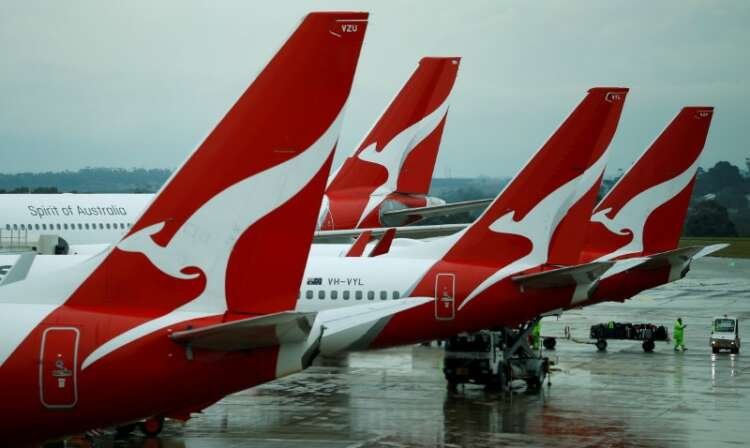
    This image highlights the innovative strategies Asian airlines are using to retain elite flyers during the pandemic, including perks like wellness workshops and exclusive events, as international travel remains significantly low.
    Asian airlines adapt loyalty programs to retain elite flyers during travel restrictions - Global Banking & Finance Review
    Why waste money on news and opinion when you can access them for free?

    Take advantage of our newsletter subscription and stay informed on the go!

    Subscribe

    By Jamie Freed

    SYDNEY (Reuters) – From wellness workshops to dinner with a celebrity chef and flights to nowhere, Asia’s big international airlines are working hard to keep their most lucrative customers engaged as the pandemic-related travel halt stretches beyond 18 months.

    While flights are starting to rebound in the United States and Europe, international travel is still down 96% in Asia due to tough travel restrictions, making it harder to maintain a relationship with grounded premium clients.

    Elite frequent flyers, many of them business travellers, are coveted by full-service carriers like Australia’s Qantas Airways Ltd, Singapore Airlines Ltd and Hong Kong’s Cathay Pacific Airways Ltd, and the airlines want them back when travel resumes.

    Before the pandemic, around 5% of international passengers globally flew in premium classes, but they accounted for 30% of international revenue, data from airline industry group IATA shows.

    Asian airlines have given status extensions of at least two years to elite tier customers who have earned access to airport lounges and other perks such as priority access to seats and upgrades to higher flight classes.

    Qantas Loyalty CEO Olivia Wirth said customers had made clear to the airline that such extensions were important.

    “They work in many cases for years to achieve these high statuses and high tiers, so it was really important for us that we were going to continue to be loyal to them just as they had been loyal to us in the years gone by,” she said.

    For airlines, the extensions come at relatively little cost given the potential future reward.

    Grounded elite members are not accessing airport lounges stocked with fine wines, made-to-order meals and day spas, although Qantas did host a dinner in Sydney for a few of them with celebrity chef Neil Perry and CEO Alan Joyce in June.

    Singapore Airlines, which lacks a domestic market, said it has hosted virtual wine tastings, wellness workshops and online courses such as miniature clay art and coffee-brewing and offered a first class dine-at-home experience.

    Some other engagement initiatives are paid for by the flyer. Michael Dean, a Qantas Platinum One flyer, said his status enabled him to secure his preferred business class seats on a 747 joyflight from Brisbane last year – for A$747 ($550) a seat – just before Qantas retired the jumbo jet.

    “It was not cheap, but great fun,” he said.

    HEY BIG SPENDER

    With flights grounded, airlines globally have also boosted engagement with another lucrative group – customers who fly less often but spend large amounts on co-branded credit cards that earn users air miles they can redeem for flights.

    Airlines earn money from such cards by selling the frequent flyer miles to credit card issuers to use as rewards for cardholders.

    Consumers have kept spending on co-branded cards at a similar rate to the broader credit card market during the pandemic, Qantas data and American Express Co data on its co-branded Delta Air Lines Inc cards shows.

    Evert de Boer, Singapore-based managing partner at consultancy On Point Loyalty said there were industry concerns earlier in the pandemic that consumers would switch from airline co-branded cards to cards that offer cash-back or other incentives, due to the halt in travel.

    “But that hasn’t happened at all,” he said. “You can actually see that people want to travel.”

    During the pandemic, Singapore Airlines and Cathay Pacific have developed their loyalty programmes into broader lifestyle brands, adding more miles-earning opportunities through e-commerce, dining and hotel stays, as Qantas has long done.

    These highly engaged members could become increasingly important to airlines amid industry forecasts that business travel will take a long-term hit from video-conferencing and environmental concerns.

    Fiona Downes, a Qantas Platinum One flyer, said it could take two to three years after borders reopened for her work travel to return to pre-COVID levels. Her points balance has grown through credit card spending, but she is also hoping the airline will allow her to retain elite status.

    “I certainly would like to know that when I do start flying again – even at a small scale, but as things are starting to ramp up – that I am not disadvantaged in any way or I am not starting from scratch again,” she said.

    ($1 = 1.3602 Australian dollars)

    (Reporting by Jamie Freed; editing by Richard Pullin)

    By Jamie Freed

    SYDNEY (Reuters) – From wellness workshops to dinner with a celebrity chef and flights to nowhere, Asia’s big international airlines are working hard to keep their most lucrative customers engaged as the pandemic-related travel halt stretches beyond 18 months.

    While flights are starting to rebound in the United States and Europe, international travel is still down 96% in Asia due to tough travel restrictions, making it harder to maintain a relationship with grounded premium clients.

    Elite frequent flyers, many of them business travellers, are coveted by full-service carriers like Australia’s Qantas Airways Ltd, Singapore Airlines Ltd and Hong Kong’s Cathay Pacific Airways Ltd, and the airlines want them back when travel resumes.

    Before the pandemic, around 5% of international passengers globally flew in premium classes, but they accounted for 30% of international revenue, data from airline industry group IATA shows.

    Asian airlines have given status extensions of at least two years to elite tier customers who have earned access to airport lounges and other perks such as priority access to seats and upgrades to higher flight classes.

    Qantas Loyalty CEO Olivia Wirth said customers had made clear to the airline that such extensions were important.

    “They work in many cases for years to achieve these high statuses and high tiers, so it was really important for us that we were going to continue to be loyal to them just as they had been loyal to us in the years gone by,” she said.

    For airlines, the extensions come at relatively little cost given the potential future reward.

    Grounded elite members are not accessing airport lounges stocked with fine wines, made-to-order meals and day spas, although Qantas did host a dinner in Sydney for a few of them with celebrity chef Neil Perry and CEO Alan Joyce in June.

    Singapore Airlines, which lacks a domestic market, said it has hosted virtual wine tastings, wellness workshops and online courses such as miniature clay art and coffee-brewing and offered a first class dine-at-home experience.

    Some other engagement initiatives are paid for by the flyer. Michael Dean, a Qantas Platinum One flyer, said his status enabled him to secure his preferred business class seats on a 747 joyflight from Brisbane last year – for A$747 ($550) a seat – just before Qantas retired the jumbo jet.

    “It was not cheap, but great fun,” he said.

    HEY BIG SPENDER

    With flights grounded, airlines globally have also boosted engagement with another lucrative group – customers who fly less often but spend large amounts on co-branded credit cards that earn users air miles they can redeem for flights.

    Airlines earn money from such cards by selling the frequent flyer miles to credit card issuers to use as rewards for cardholders.

    Consumers have kept spending on co-branded cards at a similar rate to the broader credit card market during the pandemic, Qantas data and American Express Co data on its co-branded Delta Air Lines Inc cards shows.

    Evert de Boer, Singapore-based managing partner at consultancy On Point Loyalty said there were industry concerns earlier in the pandemic that consumers would switch from airline co-branded cards to cards that offer cash-back or other incentives, due to the halt in travel.

    “But that hasn’t happened at all,” he said. “You can actually see that people want to travel.”

    During the pandemic, Singapore Airlines and Cathay Pacific have developed their loyalty programmes into broader lifestyle brands, adding more miles-earning opportunities through e-commerce, dining and hotel stays, as Qantas has long done.

    These highly engaged members could become increasingly important to airlines amid industry forecasts that business travel will take a long-term hit from video-conferencing and environmental concerns.

    Fiona Downes, a Qantas Platinum One flyer, said it could take two to three years after borders reopened for her work travel to return to pre-COVID levels. Her points balance has grown through credit card spending, but she is also hoping the airline will allow her to retain elite status.

    “I certainly would like to know that when I do start flying again – even at a small scale, but as things are starting to ramp up – that I am not disadvantaged in any way or I am not starting from scratch again,” she said.

    ($1 = 1.3602 Australian dollars)

    (Reporting by Jamie Freed; editing by Richard Pullin)

    More from Business

    Explore more articles in the Business category

    Image for Empire Lending helps SMEs secure capital faster, without bank delays
    Empire Lending helps SMEs secure capital faster, without bank delays
    Image for Why Leen Kawas is Prioritizing Strategic Leadership at Propel Bio Partners
    Why Leen Kawas is Prioritizing Strategic Leadership at Propel Bio Partners
    Image for How Commercial Lending Software Platforms Are Structured and Utilized
    How Commercial Lending Software Platforms Are Structured and Utilized
    Image for Oil Traders vs. Tech Startups: Surprising Lessons from Two High-Stakes Worlds | Said Addi
    Oil Traders vs. Tech Startups: Surprising Lessons from Two High-Stakes Worlds | Said Addi
    Image for Why More Mortgage Brokers Are Choosing to Join a Network
    Why More Mortgage Brokers Are Choosing to Join a Network
    Image for From Recession Survivor to Industry Pioneer: Ed Lewis's Data Revolution
    From Recession Survivor to Industry Pioneer: Ed Lewis's Data Revolution
    Image for From Optometry to Soul Vision: The Doctor Helping Entrepreneurs Lead With Purpose
    From Optometry to Soul Vision: The Doctor Helping Entrepreneurs Lead With Purpose
    Image for Global Rankings Revealed: Top PMO Certifications Worldwide
    Global Rankings Revealed: Top PMO Certifications Worldwide
    Image for World Premiere of Midnight in the War Room to be Hosted at Black Hat Vegas
    World Premiere of Midnight in the War Room to be Hosted at Black Hat Vegas
    Image for Role of Personal Accident Cover in 2-Wheeler Insurance for Owners and Riders
    Role of Personal Accident Cover in 2-Wheeler Insurance for Owners and Riders
    Image for The Young Rich Lister Who Also Teaches: How Aaron Sansoni Built a Brand Around Execution
    The Young Rich Lister Who Also Teaches: How Aaron Sansoni Built a Brand Around Execution
    Image for Q3 2025 Priority Leadership: Tom Priore and Tim O'Leary Balance Near-Term Challenges with Long-Term Strategic Wins
    Q3 2025 Priority Leadership: Tom Priore and Tim O'Leary Balance Near-Term Challenges with Long-Term Strategic Wins
    View All Business Posts
    Previous Business PostVodafone to bring back roaming charges for UK customers in January
    Next Business PostOne Click From Cyber Chaos