Search
00
GBAF Logo
trophy
Top StoriesInterviewsBusinessFinanceBankingTechnologyInvestingTradingVideosAwardsMagazinesHeadlinesTrends

Subscribe to our newsletter

Get the latest news and updates from our team.

Global Banking & Finance Review®

Global Banking & Finance Review® - Subscribe to our newsletter

Company

    GBAF Logo
    • About Us
    • Profile
    • Privacy & Cookie Policy
    • Terms of Use
    • Contact Us
    • Advertising
    • Submit Post
    • Latest News
    • Research Reports
    • Press Release
    • Awards▾
      • About the Awards
      • Awards TimeTable
      • Submit Nominations
      • Testimonials
      • Media Room
      • Award Winners
      • FAQ
    • Magazines▾
      • Global Banking & Finance Review Magazine Issue 79
      • Global Banking & Finance Review Magazine Issue 78
      • Global Banking & Finance Review Magazine Issue 77
      • Global Banking & Finance Review Magazine Issue 76
      • Global Banking & Finance Review Magazine Issue 75
      • Global Banking & Finance Review Magazine Issue 73
      • Global Banking & Finance Review Magazine Issue 71
      • Global Banking & Finance Review Magazine Issue 70
      • Global Banking & Finance Review Magazine Issue 69
      • Global Banking & Finance Review Magazine Issue 66
    Top StoriesInterviewsBusinessFinanceBankingTechnologyInvestingTradingVideosAwardsMagazinesHeadlinesTrends

    Global Banking & Finance Review® is a leading financial portal and online magazine offering News, Analysis, Opinion, Reviews, Interviews & Videos from the world of Banking, Finance, Business, Trading, Technology, Investing, Brokerage, Foreign Exchange, Tax & Legal, Islamic Finance, Asset & Wealth Management.
    Copyright © 2010-2026 GBAF Publications Ltd - All Rights Reserved. | Sitemap | Tags | Developed By eCorpIT

    Editorial & Advertiser disclosure

    Global Banking & Finance Review® is an online platform offering news, analysis, and opinion on the latest trends, developments, and innovations in the banking and finance industry worldwide. The platform covers a diverse range of topics, including banking, insurance, investment, wealth management, fintech, and regulatory issues. The website publishes news, press releases, opinion and advertorials on various financial organizations, products and services which are commissioned from various Companies, Organizations, PR agencies, Bloggers etc. These commissioned articles are commercial in nature. This is not to be considered as financial advice and should be considered only for information purposes. It does not reflect the views or opinion of our website and is not to be considered an endorsement or a recommendation. We cannot guarantee the accuracy or applicability of any information provided with respect to your individual or personal circumstances. Please seek Professional advice from a qualified professional before making any financial decisions. We link to various third-party websites, affiliate sales networks, and to our advertising partners websites. When you view or click on certain links available on our articles, our partners may compensate us for displaying the content to you or make a purchase or fill a form. This will not incur any additional charges to you. To make things simpler for you to identity or distinguish advertised or sponsored articles or links, you may consider all articles or links hosted on our site as a commercial article placement. We will not be responsible for any loss you may suffer as a result of any omission or inaccuracy on the website.

    Home > Business > Analysis-Wells Fargo’s long road to repair extends with prospect of more penalties
    Business

    Analysis-Wells Fargo’s long road to repair extends with prospect of more penalties

    Published by maria gbaf

    Posted on September 2, 2021

    7 min read

    Last updated: January 21, 2026

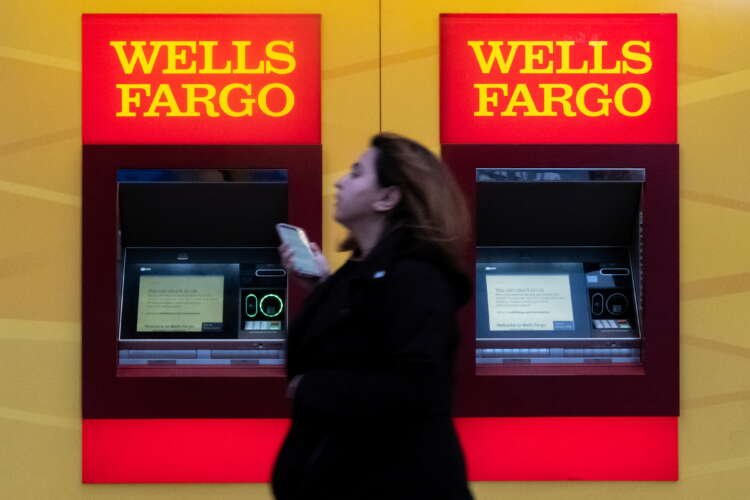
    This image depicts the Wells Fargo building, highlighting the bank's ongoing struggles with regulatory penalties and management changes. It reflects the challenges faced by Wells Fargo as it attempts to rectify past customer abuses and meet regulatory standards.
    Wells Fargo building symbolizing ongoing regulatory challenges in banking - Global Banking & Finance Review
    Why waste money on news and opinion when you can access them for free?

    Take advantage of our newsletter subscription and stay informed on the go!

    Subscribe

    By Pete Schroeder and Elizabeth Dilts Marshall

    WASHINGTON/NEW YORK (Reuters) – It has been nearly five years since Wells Fargo & Co began addressing widespread customer abuses that led to regulatory penalties, lawsuits, reputational damage, business overhauls and management changes, but the fourth-largest U.S. bank apparently still has a lot of work to do, analysts say.

    Regulators at two key agencies – the Office of the Comptroller of the Currency (OCC) and the Consumer Financial Protection Bureau (CFPB) – are considering additional sanctions against Wells Fargo because it has been too slow to compensate victims and address underlying weaknesses in business practices, Bloomberg reported on Tuesday.

    The bank also remains under an unprecedented asset cap that the Federal Reserve imposed, as well as roughly a dozen consent orders with regulators, all stemming from a sales scandal that erupted publicly in September 2016.

    OCC, CFPB, Fed and Wells Fargo spokespeople declined to comment.

    Chief Executive Charlie Scharf has pledged to get Wells Fargo on the right track and resolve regulatory issues as quickly as possible. But after news of more potential penalties, analysts predicted it could take him years to achieve those goals.

    “Wells Fargo didn’t get into this situation overnight and they surely won’t get out of it overnight,” said Isaac Boltansky, director of policy research at Compass Point Research & Trading.

    Wells Fargo’s shares were down 4.6% on Wednesday afternoon, following a sharp decline on Tuesday.

    The bank’s issues stem from a pervasive culture under prior management, where hitting sales targets was the most important element for employee success. As a result, the bank ended up enrolling customers in millions of phony accounts and many more products, sometimes charging unnecessary fees or harming their credit ratings.

    Wells Fargo’s management team and board have changed dramatically since then, implementing new incentive structures and risk-management protocol across the bank. Scharf became CEO in October 2019, the fourth person to lead Wells Fargo since the scandal emerged.

    Scharf has repeatedly emphasized the urgency of resolving regulatory issues, fixing internal risk and control structures, and restoring Wells Fargo’s reputation with customers, investors and other stakeholders. The catchphrase on his corporate biography is, “We will get it done.”

    However, Scharf has resisted offering a hard timeline, saying that problems ran deep within the bank and that regulators will ultimately decide when and whether they are resolved.

    “The amount of customer remediation and control-related issues that existed when I arrived was many multiples of what should exist at our company,” he told analysts during a conference call in July.

    The bank flagged difficulties satisfying regulators in its quarterly filing in May, and Scharf said he was “not even thinking about what life is like without the asset cap.”

    The asset cap, $1.95 trillion, is important because it limits Wells Fargo’s ability to lend and invest, and therefore its ability to earn profits. Wells Fargo held $1.945 trillion in total assets as of June 30.

    Analysts struggled to predict how long it will take Wells to fully move past the sales scandal.

    Boltansky was encouraged that the unresolved issues still appear to stem from prior practices, rather than new abuses coming to light. On the other hand, the Biden administration has positioned itself as getting tougher on policies for large U.S. companies, including banks, and it is unclear how the White House will handle upcoming appointments to regulators including the Fed.

    Few analysts expect Wells can resolve the asset cap or consent orders any time soon.

    “This process has taken years longer than both regulators and Wells Fargo initially expected,” JPMorgan Chase & Co analyst Vivek Juneja wrote in a note to investors. “The bank was initially expected to complete steps 1-4 by September 2018.”

    (Reporting by Pete Schroeder and Elizabeth Dilts Marshall; additional reporting by Noor Zainab Hussain; Editing by Steve Orlofsky; Editing by Lauren Tara LaCapra)

    By Pete Schroeder and Elizabeth Dilts Marshall

    WASHINGTON/NEW YORK (Reuters) – It has been nearly five years since Wells Fargo & Co began addressing widespread customer abuses that led to regulatory penalties, lawsuits, reputational damage, business overhauls and management changes, but the fourth-largest U.S. bank apparently still has a lot of work to do, analysts say.

    Regulators at two key agencies – the Office of the Comptroller of the Currency (OCC) and the Consumer Financial Protection Bureau (CFPB) – are considering additional sanctions against Wells Fargo because it has been too slow to compensate victims and address underlying weaknesses in business practices, Bloomberg reported on Tuesday.

    The bank also remains under an unprecedented asset cap that the Federal Reserve imposed, as well as roughly a dozen consent orders with regulators, all stemming from a sales scandal that erupted publicly in September 2016.

    OCC, CFPB, Fed and Wells Fargo spokespeople declined to comment.

    Chief Executive Charlie Scharf has pledged to get Wells Fargo on the right track and resolve regulatory issues as quickly as possible. But after news of more potential penalties, analysts predicted it could take him years to achieve those goals.

    “Wells Fargo didn’t get into this situation overnight and they surely won’t get out of it overnight,” said Isaac Boltansky, director of policy research at Compass Point Research & Trading.

    Wells Fargo’s shares were down 4.6% on Wednesday afternoon, following a sharp decline on Tuesday.

    The bank’s issues stem from a pervasive culture under prior management, where hitting sales targets was the most important element for employee success. As a result, the bank ended up enrolling customers in millions of phony accounts and many more products, sometimes charging unnecessary fees or harming their credit ratings.

    Wells Fargo’s management team and board have changed dramatically since then, implementing new incentive structures and risk-management protocol across the bank. Scharf became CEO in October 2019, the fourth person to lead Wells Fargo since the scandal emerged.

    Scharf has repeatedly emphasized the urgency of resolving regulatory issues, fixing internal risk and control structures, and restoring Wells Fargo’s reputation with customers, investors and other stakeholders. The catchphrase on his corporate biography is, “We will get it done.”

    However, Scharf has resisted offering a hard timeline, saying that problems ran deep within the bank and that regulators will ultimately decide when and whether they are resolved.

    “The amount of customer remediation and control-related issues that existed when I arrived was many multiples of what should exist at our company,” he told analysts during a conference call in July.

    The bank flagged difficulties satisfying regulators in its quarterly filing in May, and Scharf said he was “not even thinking about what life is like without the asset cap.”

    The asset cap, $1.95 trillion, is important because it limits Wells Fargo’s ability to lend and invest, and therefore its ability to earn profits. Wells Fargo held $1.945 trillion in total assets as of June 30.

    Analysts struggled to predict how long it will take Wells to fully move past the sales scandal.

    Boltansky was encouraged that the unresolved issues still appear to stem from prior practices, rather than new abuses coming to light. On the other hand, the Biden administration has positioned itself as getting tougher on policies for large U.S. companies, including banks, and it is unclear how the White House will handle upcoming appointments to regulators including the Fed.

    Few analysts expect Wells can resolve the asset cap or consent orders any time soon.

    “This process has taken years longer than both regulators and Wells Fargo initially expected,” JPMorgan Chase & Co analyst Vivek Juneja wrote in a note to investors. “The bank was initially expected to complete steps 1-4 by September 2018.”

    (Reporting by Pete Schroeder and Elizabeth Dilts Marshall; additional reporting by Noor Zainab Hussain; Editing by Steve Orlofsky; Editing by Lauren Tara LaCapra)

    More from Business

    Explore more articles in the Business category

    Image for How Commercial Lending Software Platforms Are Structured and Utilized
    How Commercial Lending Software Platforms Are Structured and Utilized
    Image for Oil Traders vs. Tech Startups: Surprising Lessons from Two High-Stakes Worlds | Said Addi
    Oil Traders vs. Tech Startups: Surprising Lessons from Two High-Stakes Worlds | Said Addi
    Image for Why More Mortgage Brokers Are Choosing to Join a Network
    Why More Mortgage Brokers Are Choosing to Join a Network
    Image for From Recession Survivor to Industry Pioneer: Ed Lewis's Data Revolution
    From Recession Survivor to Industry Pioneer: Ed Lewis's Data Revolution
    Image for From Optometry to Soul Vision: The Doctor Helping Entrepreneurs Lead With Purpose
    From Optometry to Soul Vision: The Doctor Helping Entrepreneurs Lead With Purpose
    Image for Global Rankings Revealed: Top PMO Certifications Worldwide
    Global Rankings Revealed: Top PMO Certifications Worldwide
    Image for World Premiere of Midnight in the War Room to be Hosted at Black Hat Vegas
    World Premiere of Midnight in the War Room to be Hosted at Black Hat Vegas
    Image for Role of Personal Accident Cover in 2-Wheeler Insurance for Owners and Riders
    Role of Personal Accident Cover in 2-Wheeler Insurance for Owners and Riders
    Image for The Young Rich Lister Who Also Teaches: How Aaron Sansoni Built a Brand Around Execution
    The Young Rich Lister Who Also Teaches: How Aaron Sansoni Built a Brand Around Execution
    Image for Q3 2025 Priority Leadership: Tom Priore and Tim O'Leary Balance Near-Term Challenges with Long-Term Strategic Wins
    Q3 2025 Priority Leadership: Tom Priore and Tim O'Leary Balance Near-Term Challenges with Long-Term Strategic Wins
    Image for Using Modern Team Management Methods to Improve Collaboration in Hybrid Work Models
    Using Modern Team Management Methods to Improve Collaboration in Hybrid Work Models
    Image for Why Email Deliverability is a Business Risk Your Company Can’t Afford to Ignore
    Why Email Deliverability is a Business Risk Your Company Can’t Afford to Ignore
    View All Business Posts
    Previous Business PostExclusive: Amazon CEO unveils 55,000 tech jobs in first hiring push under his watch
    Next Business PostApple loosens App Store payment rules for Netflix, others in deal with Japan