
Business
Achieving Efficiencies in Cash Logistics
Published by Wanda Rich
Posted on May 14, 2025
5 min readLast updated: January 23, 2026
Add as preferred source on Google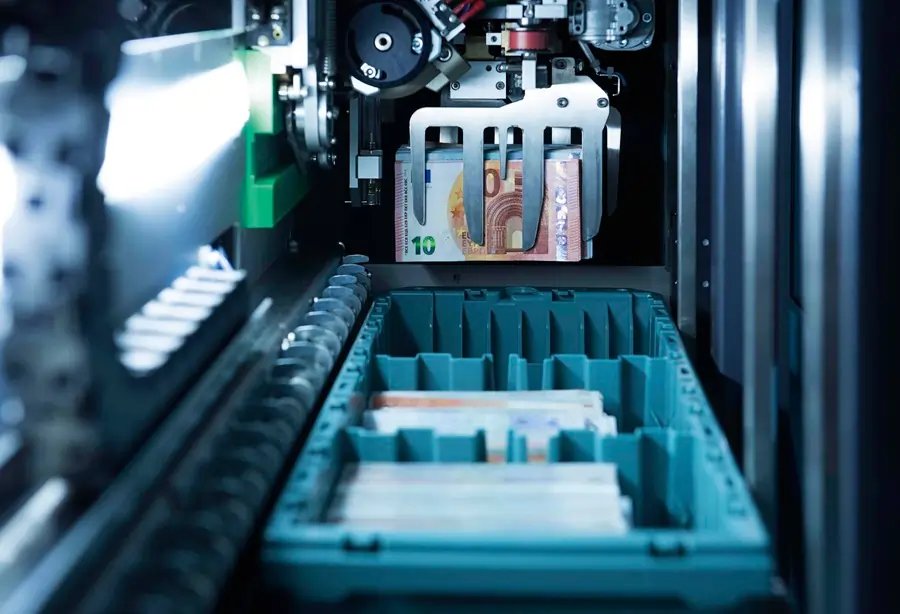
Published by Wanda Rich
Posted on May 14, 2025
5 min readLast updated: January 23, 2026
Add as preferred source on GoogleBy Wolfgang Kneilmann, SVP, Head of Currency Management Solutions, G+D Currency Technology
Despite the rise in digital means of payment, one in five people in the UK still consider cash as their preferred payment method, and a total of 1.1 million people continue to use it for everyday transactions. The rise in the cost-of-living has also amplified reliance on cash, driving up its usage as people seek to keep track of their spending and budget more effectively.
Its universal usability, inclusivity and reliability highlight why cash remains indispensable. But maintenance of a reliable cash circulation system requires a number of steps: from issuance by commercial banks, to logistics for distribution and inspection and counting at cash centres, with sorting at the end of its lifecycle. Given the criticality of cost efficiency to the cash cycle, it’s vital to focus on approaches that reduce costs in the process chain and ensure sustainable practices.
Focusing on cash logistics
Given the role of logistics in ensuring a reliable flow of cash around the ecosystem, it’s a promising area for improvement. Regardless of whether banks opt to use regional cash centres for cash processing or outsourced services, such as cash-in-transit (CIT) companies, transportation, cash centre operations and banknote handling can all be made faster and more cost-effective. In cash logistics, standardisation and automated solutions are at the heart of removing redundant process steps to reduce costs, streamline operations and lessen complexity, but still keeping focus on a stable, reliable and scalable cash supply. It’s also important to address waste reduction and resource conservation.
The way that cash is transported is a prime example of where efficiencies can be improved. This is where trays offer significant value. With a uniform size and shape, trays can be easily loaded into transport and moved efficiently between locations. Handling times are reduced, transportation costs are lower, and transport vehicles reach their destination much quicker, with lower fuel consumption and reduced CO2 emissions.
The benefits of trays
As highly efficient solutions, trays are ideal for transporting banknotes. Instead of completing bundling, banding and packaging as separate processes, they offer a way of combining these processes into one seamless operation. They can be filled with loose banknotes and secured with lockable lids and seals for transportation from a cash centre to an ATM machine, for example. They are reusable, removing the need for paper and plastic waste, contributing to sustainability goals and keeping costs to a minimum.
One example of the tray approach is National Westminster Bank. Some years ago, the bank replaced its existing BPS 1000 banknote processing system with its successor, BPS M5, and a revolutionary tray loading module, increasing processing speeds by 50% to 1.5 million pounds per hour while significantly reducing plastic waste.
More broadly, the greatest efficiency potential of these kinds of trays could be realised if they were used throughout the entire cash circulation process - from central banks, branch banks and CIT companies to storage in cash centres. Standardisation of the process chain is a prerequisite for the next logical optimisation step: automation. Mechanically, it is possible to fully automate the filling and emptying of trays with appropriate banknote processing systems, eliminating manual intervention. In fact, technology has advanced to the point where human involvement is greatly reduced or made optional for certain tasks or specific workflows.
Digital innovations are also providing benefits to cash logistics processes. Accurate digital twins of each physical tray can be created, which gives organisations the visibility of each one in real-time and its location in the cash ecosystem, enabling it to be tracked throughout its journey. This improves operational transparency. Organisations can also track cash levels and tray contents, enabling better planning for replenishment and collection schedules, while avoiding overstocking or shortages. Accumulated data can help organisations identify future inefficiencies and predict demand patterns.
True flexibility in the logistics chain
Trays are also flexible because they can be used throughout the entire banknote transportation and processing logistics chain, or as a solution on their own. They can automate key elements of the logistics chain without requiring any changes elsewhere, and can work in conjunction with traditional cash provisions.
As an example, a supermarket may require a mix of bundles and trays depending on the use case. Coins can be delivered in bundles for quick verification by staff, but standardised trays can be more beneficial for other logistical tasks such as logistics and processing. This enables an ecosystem made up of both standardised and automated distribution techniques. While the cooperation of stakeholders will be needed to enable this transformation, the cash distribution system can become much more efficient and sustainable.
The use of cash may be evolving, but its role in the UK’s payment landscape remains vital, especially in providing inclusivity and reliability during challenging times. By embracing standardisation, automation and digital innovations, stakeholders can enhance operational efficiency, reduce costs and support sustainability goals, ensuring the seamless circulation of cash throughout the system. Whether through reusable trays or real-time digital tracking, these advancements contribute to a more adaptable cash supply chain. As we move forward, investing in smarter cash logistics will be essential to maintain cash as a viable and accessible payment option for all.

Cash logistics refers to the processes involved in the management, transportation, and distribution of cash within the financial ecosystem, ensuring a reliable flow of currency.
Cash management is the process of collecting, handling, and using cash efficiently to meet an organization's financial obligations and optimize liquidity.
Digital tracking in cash logistics involves using technology to monitor and manage the location and status of cash and cash handling equipment in real-time.
Sustainability in cash logistics refers to practices that minimize environmental impact, such as reducing waste and optimizing resource use during cash handling and transportation.
Explore more articles in the Business category









