Search
00
GBAF Logo
trophy
Top StoriesInterviewsBusinessFinanceBankingTechnologyInvestingTradingVideosAwardsMagazinesHeadlinesTrends

Subscribe to our newsletter

Get the latest news and updates from our team.

Global Banking and Finance Review

Global Banking and Finance Review - Subscribe to our newsletter

Company

    GBAF Logo
    • About Us
    • Profile
    • Privacy & Cookie Policy
    • Terms of Use
    • Contact Us
    • Advertising
    • Submit Post
    • Latest News
    • Research Reports
    • Press Release
    • Awards▾
      • About the Awards
      • Awards TimeTable
      • Submit Nominations
      • Testimonials
      • Media Room
      • Award Winners
      • FAQ
    • Magazines▾
      • Global Banking & Finance Review Magazine Issue 79
      • Global Banking & Finance Review Magazine Issue 78
      • Global Banking & Finance Review Magazine Issue 77
      • Global Banking & Finance Review Magazine Issue 76
      • Global Banking & Finance Review Magazine Issue 75
      • Global Banking & Finance Review Magazine Issue 73
      • Global Banking & Finance Review Magazine Issue 71
      • Global Banking & Finance Review Magazine Issue 70
      • Global Banking & Finance Review Magazine Issue 69
      • Global Banking & Finance Review Magazine Issue 66
    Top StoriesInterviewsBusinessFinanceBankingTechnologyInvestingTradingVideosAwardsMagazinesHeadlinesTrends

    Global Banking & Finance Review® is a leading financial portal and online magazine offering News, Analysis, Opinion, Reviews, Interviews & Videos from the world of Banking, Finance, Business, Trading, Technology, Investing, Brokerage, Foreign Exchange, Tax & Legal, Islamic Finance, Asset & Wealth Management.
    Copyright © 2010-2026 GBAF Publications Ltd - All Rights Reserved. | Sitemap | Tags | Developed By eCorpIT

    Editorial & Advertiser disclosure

    Global Banking and Finance Review is an online platform offering news, analysis, and opinion on the latest trends, developments, and innovations in the banking and finance industry worldwide. The platform covers a diverse range of topics, including banking, insurance, investment, wealth management, fintech, and regulatory issues. The website publishes news, press releases, opinion and advertorials on various financial organizations, products and services which are commissioned from various Companies, Organizations, PR agencies, Bloggers etc. These commissioned articles are commercial in nature. This is not to be considered as financial advice and should be considered only for information purposes. It does not reflect the views or opinion of our website and is not to be considered an endorsement or a recommendation. We cannot guarantee the accuracy or applicability of any information provided with respect to your individual or personal circumstances. Please seek Professional advice from a qualified professional before making any financial decisions. We link to various third-party websites, affiliate sales networks, and to our advertising partners websites. When you view or click on certain links available on our articles, our partners may compensate us for displaying the content to you or make a purchase or fill a form. This will not incur any additional charges to you. To make things simpler for you to identity or distinguish advertised or sponsored articles or links, you may consider all articles or links hosted on our site as a commercial article placement. We will not be responsible for any loss you may suffer as a result of any omission or inaccuracy on the website.

    Home > Business > Accelerating towards net zero: Transforming the pharmaceutical supply chain
    Business

    Accelerating towards net zero: Transforming the pharmaceutical supply chain

    Published by Jessica Weisman-Pitts

    Posted on August 7, 2024

    4 min read

    Last updated: January 29, 2026

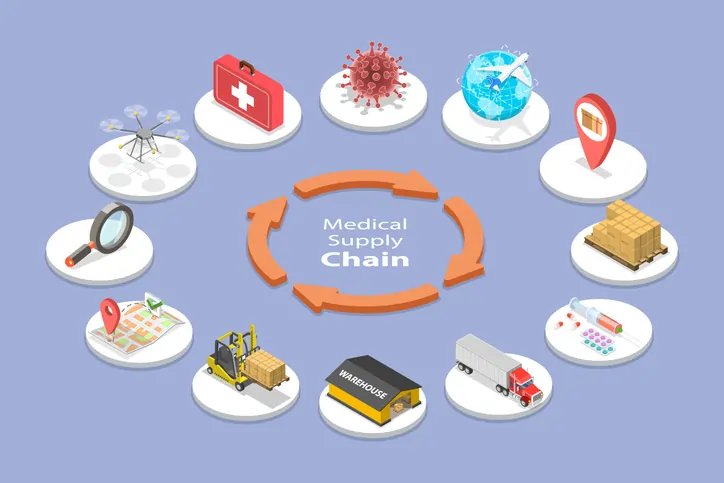
    An image depicting the transition of the pharmaceutical supply chain towards sustainability and net zero emissions, reflecting the industry's commitment to reducing Scope 3 emissions and enhancing environmental responsibility.
    Pharmaceutical supply chain transformation towards net zero emissions - Global Banking & Finance Review
    Why waste money on news and opinion when you can access them for free?

    Take advantage of our newsletter subscription and stay informed on the go!

    Subscribe

    Tags:sustainabilityinnovationfinancial servicesClimate Changeinvestment

    August 2024 – The pharmaceutical industry is making remarkable progress in its quest for decarbonisation, with emissions already on a significant decline. Yet, the journey to Net Zero remains fraught with challenges, particularly in curbing Scope 3 emissions within the workplace. Now more than ever, it is crucial for industry partners to drive improvements that support this global goal.

    Pharmaceutical companies are uniquely aware of the interconnected health of people and the planet. As early signatories to the UN’s Race to Zero campaign, these companies have swiftly calculated their carbon footprints, set science-based targets, and invested heavily in decarbonisation initiatives. Leading businesses like AstraZeneca have achieved notable results, halving their Scope 1 and 2 greenhouse gas emissions in seven years, and investing $1 billion in the Ambition Zero Carbon programme to tackle Scope 3 emissions throughout their value chain.

    Tackling Scope 1 and 2 emissions through renewable energy and green transport is relatively straightforward, but Scope 3 emissions – stemming from intricate networks of customers and suppliers – are far more complex and difficult to control. This is where facilities managers, like those from Sodexo, play a pivotal role. Every coffee brewed, dish served, product used, and ounce of waste generated by facility management providers adds to their clients’ Scope 3 emissions. In a mission to support clients, Sodexo is actively working with like-minded companies to address Scope 3 emissions through a new Community of Practice. In collaboration with FuturePlanet, the Community of Practice is a collaborative group through which professionals share knowledge, best practices and solutions related to common challenges within the ESG and sustainability sector. Through this initiative, issues within the sector have been reviewed and prioritised by participants to ensure a focused and tangible strategy to tackle them.

    In addition, Sodexo is accelerating efforts within its own supply chain, which includes 4,000 partners in the UK alone, accounting for £800 million in annual spend and 34% of its emissions. By January 2030, Sodexo will only collaborate with suppliers who demonstrate tangible progress on achieving a net zero supply chain through published reporting. Already, 75% of their supply chain emissions are being addressed. Sodexo is providing mentoring and support to help suppliers, with the first major requirement being a detailed annual Carbon Reduction Plan, with a focus on helping Small and Medium Enterprises (SMEs) and Voluntary, Community and Social Enterprises (VCSEs),decarbonise effectively.

    Net zero is a major factor in determining commercial success and therefore these activities are becoming integral for pharma companies globally. Setting deadlines for suppliers not only addresses the climate crisis but also provides a competitive edge, and sustainable supply chains support long-term continuity and cost certainty. With 75% of UK private sector workers expecting their employers to operate sustainably, and Gen Z particularly focused on green credentials, pharmaceutical companies have a prime opportunity to attract top talent by prioritising sustainability.

    The workplace is an ideal setting to showcase pharma companies’ net zero ambition. Research shows that workers’ top sustainability expectations include reductions in plastic usage, sensible energy consumption, and responsible waste management. Reducing food waste is especially critical, as food systems contribute to around a third of all greenhouse gas emissions. Building a net zero culture in the workplace requires clear commitments, visible action, and opportunities for sustainable choices.

    A net zero office encompasses both back-office functions and employee-facing services. This includes using sensors for detailed energy data, optimising energy management systems, preventing food waste through initiatives like WasteWatch. WasteWatch, for example, works by rapidly capturing food waste data and giving clear insights into what is being wasted and why. Teams can then bring in operational and behavioural changes to help end avoidable food waste, whether generated in the kitchen or by consumers. For employees, it means enjoying locally sourced, plant-forward food, using reusable items, and receiving clear information on the environmental impact of their choices.

    Pharmaceutical companies can take immediate action by engaging their workplace suppliers. This involves reviewing data, identifying gaps, and creating strategies that inspire. Embedding sustainability into operating practices, encouraging climate-friendly options, and incorporating the right metrics into supplier contracts are crucial steps. Transparent reporting and celebrating successes will help accelerate plans.

    By fostering a net zero workplace, pharmaceutical companies can exceed sustainability expectations, addressing the urgency of climate change and promote lower carbon choices. While immediate emission reductions are challenging, the growing popularity of plant-based dishes indicates a shift towards sustainable practices. By working with the right suppliers, pharmaceutical companies will remain ahead of the curve and significantly contribute to the fight against climate change.

    Frequently Asked Questions about Accelerating towards net zero: Transforming the pharmaceutical supply chain

    1What is decarbonisation?

    Decarbonisation refers to the process of reducing carbon dioxide emissions associated with energy production and consumption, aiming to mitigate climate change.

    2What are Scope 1, 2, and 3 emissions?

    Scope 1 emissions are direct greenhouse gas emissions from owned or controlled sources. Scope 2 includes indirect emissions from the generation of purchased electricity. Scope 3 encompasses all other indirect emissions.

    3What is a net zero supply chain?

    A net zero supply chain is one that balances the amount of greenhouse gases emitted with an equivalent amount removed from the atmosphere, aiming for zero net emissions.

    4What is a Community of Practice?

    A Community of Practice is a group of individuals who share a common interest or profession and collaborate to share knowledge, best practices, and solutions.

    5What is the significance of renewable energy in decarbonisation?

    Renewable energy sources, such as solar and wind, are crucial in decarbonisation as they produce little to no greenhouse gas emissions compared to fossil fuels.

    More from Business

    Explore more articles in the Business category

    Image for How Commercial Lending Software Platforms Are Structured and Utilized
    How Commercial Lending Software Platforms Are Structured and Utilized
    Image for Oil Traders vs. Tech Startups: Surprising Lessons from Two High-Stakes Worlds | Said Addi
    Oil Traders vs. Tech Startups: Surprising Lessons from Two High-Stakes Worlds | Said Addi
    Image for Why More Mortgage Brokers Are Choosing to Join a Network
    Why More Mortgage Brokers Are Choosing to Join a Network
    Image for From Recession Survivor to Industry Pioneer: Ed Lewis's Data Revolution
    From Recession Survivor to Industry Pioneer: Ed Lewis's Data Revolution
    Image for From Optometry to Soul Vision: The Doctor Helping Entrepreneurs Lead With Purpose
    From Optometry to Soul Vision: The Doctor Helping Entrepreneurs Lead With Purpose
    Image for Global Rankings Revealed: Top PMO Certifications Worldwide
    Global Rankings Revealed: Top PMO Certifications Worldwide
    Image for World Premiere of Midnight in the War Room to be Hosted at Black Hat Vegas
    World Premiere of Midnight in the War Room to be Hosted at Black Hat Vegas
    Image for Role of Personal Accident Cover in 2-Wheeler Insurance for Owners and Riders
    Role of Personal Accident Cover in 2-Wheeler Insurance for Owners and Riders
    Image for The Young Rich Lister Who Also Teaches: How Aaron Sansoni Built a Brand Around Execution
    The Young Rich Lister Who Also Teaches: How Aaron Sansoni Built a Brand Around Execution
    Image for Q3 2025 Priority Leadership: Tom Priore and Tim O'Leary Balance Near-Term Challenges with Long-Term Strategic Wins
    Q3 2025 Priority Leadership: Tom Priore and Tim O'Leary Balance Near-Term Challenges with Long-Term Strategic Wins
    Image for Using Modern Team Management Methods to Improve Collaboration in Hybrid Work Models
    Using Modern Team Management Methods to Improve Collaboration in Hybrid Work Models
    Image for Why Email Deliverability is a Business Risk Your Company Can’t Afford to Ignore
    Why Email Deliverability is a Business Risk Your Company Can’t Afford to Ignore
    View All Business Posts
    Previous Business PostFederal Government Advisors – Meet the Team Behind A Powerhouse in Federal Contract Consulting
    Next Business Postebb3 Standardises on ControlUp’s Digital Employee Experience Platform to Enhance Services for Customers Running Graphics Intensive Applications on VDI